Top Drum Container Manufacturers and Suppliers Worldwide
Choosing the right drum container manufacturer requires more than comparing prices. Material strength, closure design, capacity, and production consistency all affect daily handling. A reliable supplier should explain these details clearly. It should also provide traceable specifications, quality records, and practical support after delivery.
This guide examines leading drum container manufacturers and suppliers worldwide. It considers steel, plastic, and fiber options for industrial, commercial, and food-related applications. Each company is reviewed through manufacturing experience, material expertise, quality systems, and supply capability. We look at factory scale, customization, testing practices, minimum order quantities, and regional delivery performance. Small details matter. A poorly fitted lid can cause leakage, while a thin wall may deform during pallet movement. Experienced buyers also check stacking strength, corrosion resistance, surface finish, and storage conditions before ordering.
No supplier fits every application. A low-cost drum container may suit routine transport but fail demanding reuse cycles. A premium model may offer stronger protection but exceed a limited budget. Our comparison is not flawless, because product availability and certifications can change by region. Buyers should verify current documentation directly with each supplier. That step is easy to skip. It should not be.
The following overview is designed for procurement teams, distributors, and manufacturers seeking dependable global partners. It highlights practical differences instead of repeating broad marketing claims. By combining technical evidence with real purchasing considerations, readers can make a more confident and responsible decision.
Drum Container Types and Their Industrial Applications
Top Drum Container Manufacturers and Suppliers Worldwide
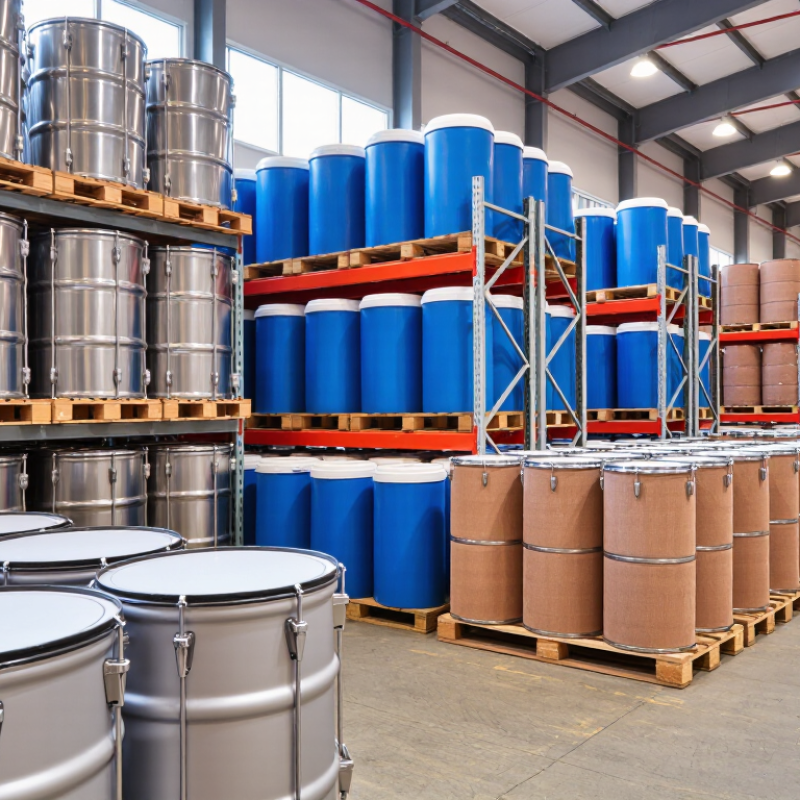
Drum containers serve different industrial needs, and their design affects safety, handling, and product quality. Tight-head steel drums suit liquid chemicals, lubricants, and industrial coatings. Open-head drums allow easier filling of powders, pastes, and dense materials. High-density polyethylene drums resist corrosion and support many water-based products. Fiber drums remain useful for dry goods because they are light and easy to handle.
Market evidence shows steady demand.
Grand View Research valued the global industrial drums market at approximately USD 14.7 billion in 2023. It also projects growth through 2030, driven by chemical, food, pharmaceutical, and construction sectors. These figures suggest scale, not automatic suitability. A large market can still hide poor storage decisions.
Industrial applications often determine the drum material. Steel performs well under stacking pressure and rough transport. Plastic reduces corrosion concerns and may lower handling weight. Stainless steel supports demanding hygiene requirements, especially in controlled processing areas. Fiber containers work best in dry, protected environments.
The Packaging Institute notes that container performance depends on closure design, wall strength, testing, and transport conditions. That detail matters. A supplier should provide capacity, thickness, compatibility, and performance-test records. I have found that users sometimes choose by price first, then discover leakage, deformation, or difficult emptying. That approach needs reconsideration.
Source: Grand View Research, Industrial Drums Market Report, 2024; The Packaging Institute, Packaging Performance Guidance.
Core Manufacturing Processes and Quality Standards
Top Drum Container Manufacturers and Suppliers Worldwide
Reliable drum production begins with controlled material preparation. Steel coils are inspected for thickness, surface defects, and chemical composition. The sheets are then cut, rolled, welded, and shaped into cylindrical bodies. Seams receive visual inspection and leak testing.
Plastic drums usually use high-density polyethylene, formed through extrusion or injection blow molding. Wall thickness must remain consistent, especially around openings and the base. Small defects matter. A thin corner can fail during stacking.
Small defects matter. A thin corner can fail during stacking.
Quality standards should guide supplier evaluation, not glossy finishes. ISO 15750 covers steel drums, while UN Recommendations on the Transport of Dangerous Goods specify drop, stacking, leakproofness, and pressure tests.
These checks should be supported by batch records, calibrated instruments, and retained samples. The United Nations Environment Programme’s Global Waste Management Outlook 2024 estimates global municipal waste will increase from 2.3 billion tonnes in 2023 to 3.8 billion tonnes by 2050.
That figure strengthens the case for durable, recyclable containers and clearly documented material choices. Still, compliance paperwork is not proof of perfect production.
I would inspect weld geometry, closure torque, coating adhesion, and dimensional tolerances on the factory floor.
Supplier audits should also review rejected units, not only successful samples.
The uncomfortable lesson is simple: quality can look excellent until a drum meets vibration, heat, moisture, and real handling.
Leading Drum Container Manufacturers by Global Region
Drum container manufacturing is strongly regional. According to Grand View Research, the global industrial packaging market exceeded USD 70 billion in 2023, supported by manufacturing, agriculture, and logistics demand. Drum suppliers respond differently to local transport distances, raw material access, and customer specifications. Capacity matters.
In North America, manufacturers commonly emphasize standardized steel and plastic drums, automated forming, and short delivery cycles. The region benefits from established recycling systems and mature quality controls. In Europe, suppliers focus more heavily on material efficiency, traceability, and circular design. The European Commission’s packaging policy reports continue to push higher recycling performance and reduced packaging waste. This pressure affects drum wall thickness, labeling, and recovery planning.
Asia-Pacific remains the largest manufacturing base for many industrial packaging formats. Reports from Mordor Intelligence identify Asia-Pacific as a leading growth region, driven by expanding chemical, food, and export industries. Suppliers in East and South Asia often compete through production scale, customization, and regional port access. The Middle East and Africa rely more on import networks, local filling demand, and durable containers suited to heat exposure. Latin American manufacturers usually prioritize flexible batch sizes and dependable regional distribution.
A reliable supplier should provide test records, dimensional tolerances, closure performance, and clear material declarations. ISO 15750 offers useful guidance for steel drum dimensions and performance. Yet regional compliance alone does not guarantee consistent quality. A drum may pass inspection but still arrive with weak seams or damaged closures. That practical gap deserves more attention. Suppliers should audit production samples, not only paperwork.
How to Evaluate Drum Container Suppliers
Top Drum Container Manufacturers and Suppliers Worldwide
How to Evaluate Drum Container Suppliers
Choosing a drum container supplier requires more than comparing prices on a spreadsheet. I examine material grade, wall thickness, closure design, and production consistency. For steel drums, ask about coating adhesion and weld inspection. For plastic drums, check resin quality, impact resistance, and molding accuracy. A reliable supplier should provide clear specifications, batch records, and test reports. Small details matter.
Request physical samples before approving a large order. Measure the drum opening, gasket fit, and empty weight. Fill a sample with water and inspect it after handling, stacking, and temperature changes. Ask how the supplier controls leakage, contamination, and dimensional variation. Their answers should be specific, not rehearsed. Site audits can reveal storage problems that certificates never show.
Review the supplier’s quality system, production capacity, and delivery history. Confirm whether inspection records can be traced to each batch. Check packaging methods, pallet stability, and protection from dust or moisture. My early mistake was trusting a polished catalog too quickly. The samples looked excellent, but communication during revisions was slow. That experience changed my evaluation process. I now test response time, documentation accuracy, and corrective-action skills before placing an order. A dependable supplier admits limitations and explains how they will improve them. Reliability is demonstrated repeatedly, not promised once.
Sustainability, Regulations, and Future Market Trends
Worldwide drum container manufacturers are facing a sharper sustainability test. The OECD’s Global Plastics Outlook reports that only 9% of global plastic waste was recycled in 2019. This figure pressures suppliers to reduce virgin plastic, improve steel recovery, and document material content. A reusable drum can be inspected, cleaned, and redeployed many times. That sounds simple. In practice, damaged rims, unreadable markings, and inefficient return routes still create avoidable waste.
Regulation is becoming more specific. The European Union’s Packaging and Packaging Waste Regulation 2025/40 entered into force in 2025, with broader application scheduled from August 2026. It increases expectations for recyclability, packaging minimisation, and producer responsibility. Suppliers serving international customers should prepare digital material records, clear recycling instructions, and traceable quality checks. The World Bank projects municipal waste could reach 3.4 billion tonnes annually by 2050, making packaging efficiency commercially important, not merely environmental.
Future-focused manufacturers are testing lighter steel gauges, recycled polymers, water-based coatings, and sensor-based inventory systems. These changes can reduce transport weight and reveal where containers disappear in distribution networks. However, lighter designs may reduce stacking tolerance if engineering is rushed. That weakness deserves more honest attention. The International Energy Agency also identifies material efficiency as an important path for reducing industrial emissions, yet many suppliers still measure only production output. Buyers should compare lifecycle data, repair rates, return distances, and verified recycled content before choosing a global supplier.
EU Packaging Recycling Targets Relevant to Industrial Drum Containers
Statutory recycling targets under EU Directive 94/62/EC provide a useful sustainability benchmark for steel, plastic, and composite drum packaging. The 2030 targets indicate the direction of future packaging supply chains toward higher recovery and recycled-material utilization.
Source: European Commission, Packaging and Packaging Waste Directive 94/62/EC, Annex I. Targets are expressed as a percentage of packaging waste by weight. Ferrous-metal targets are particularly relevant to steel drums, while plastic targets are relevant to plastic and composite containers.