
10 Best Stainless Steel Tanks for Global Buyers?
Choosing a stainless tank for international use is not simply a matter of comparing prices. Buyers must examine capacity, steel grade, weld quality, surface finish, insulation, fittings, and cleaning access. A polished tank may look impressive, yet poor internal drainage can create hygiene problems and costly maintenance. Small details matter.
“Tank reliability begins with material discipline and honest fabrication,” says stainless-steel equipment specialist Dr. Michael R. Latham. His point is practical. A tank should match the product, process, climate, and installation site. Food, beverage, pharmaceutical, chemical, and water applications each demand different design decisions. Grade 304 may suit many general uses, while grade 316L often provides stronger resistance in salty or aggressive environments. That choice should follow professional testing, not casual advice.
This guide reviews ten stainless tank options for global buyers. Each selection is considered through practical criteria, including working volume, pressure rating, corrosion resistance, weld consistency, sanitary design, documentation, delivery support, and after-sales service. We also consider regional realities, such as long shipping distances, temperature changes, replacement-part access, and local installation skills.
No ranking is perfect.
A low-cost tank can become expensive when seals fail, drawings are incomplete, or support disappears after delivery. Conversely, an advanced design may exceed the needs of a small facility. Buyers should verify certificates, inspection records, material traceability, and applicable local requirements before ordering. The strongest choice is not always the largest or most polished. It is the stainless tank that remains safe, cleanable, serviceable, and suitable for its actual working conditions.
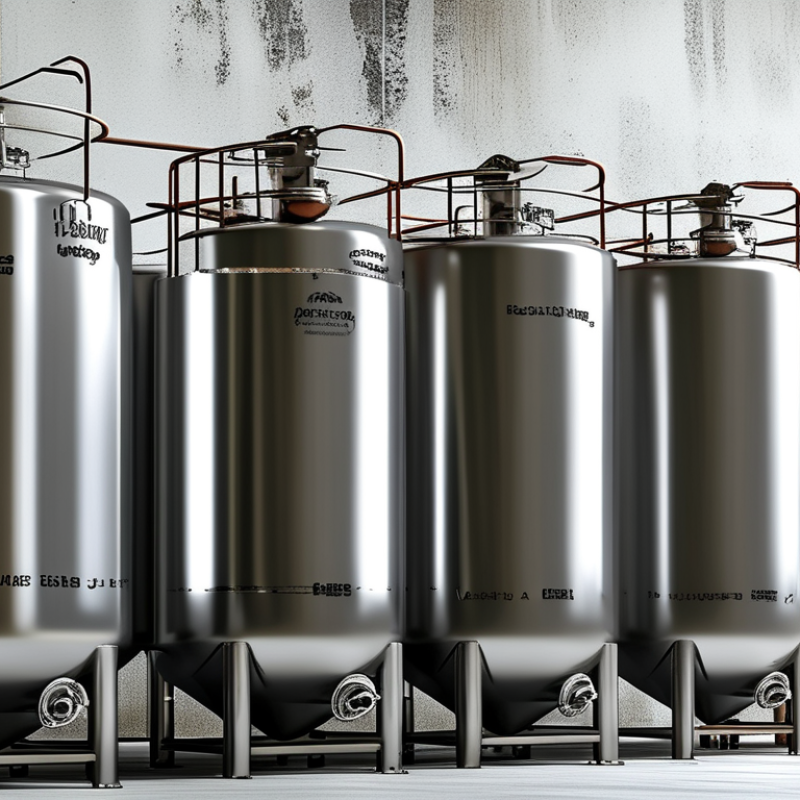
Stainless Steel Tank Types and Their Main Industrial Applications
10 Best Stainless Steel Tanks for Global Buyers?
Stainless steel tanks differ by duty, pressure, temperature, and cleaning method. The best choice depends on the process, not appearance. Vertical storage tanks suit water, edible oils, chemicals, and liquid raw materials. Horizontal tanks work well where ceiling height is limited. Cone-bottom tanks improve drainage and reduce product residue.
Mixing tanks include impellers, baffles, and optional heating or cooling jackets. Food processors use them for sauces, dairy ingredients, and beverages. Pharmaceutical plants often require 316L steel, polished interiors, and documented sanitary welds. Fermentation tanks support controlled temperature and gas release in biotechnology and beverage production. Pressure tanks need certified design calculations, relief devices, and inspection records. Small IBC-style tanks help laboratories and mobile production lines.
Choose carefully. A tank may look suitable but fail under repeated thermal cycling. I have seen purchasing teams focus on volume while overlooking outlet height, cleaning access, and foundation loads. These details create expensive installation changes. Confirm material certificates, weld procedures, surface finish, gasket compatibility, and local pressure requirements before ordering. For corrosive media, 316L may perform better than 304, but concentration and temperature still matter. Insulation reduces heat loss, while load cells improve batching accuracy. Some specifications remain uncertain until the process is tested with real viscosity and solids content. Global buyers should request drawings, inspection plans, maintenance guidance, and spare-part information in clear technical language.
| No. | Stainless Steel Tank Type | Typical Capacity Range | Common Material Grades | Typical Design Conditions | Main Industrial Applications | Key Advantages | Important Selection Factors |
|---|---|---|---|---|---|---|---|
| 1 | Sanitary Storage Tank | 100–100,000 L | 304L 316L | Usually atmospheric or low-pressure service; commonly fitted with spray-ball cleaning systems. | Food and beverage storage, dairy products, liquid ingredients, cosmetics, pharmaceutical intermediates. | Hygienic construction, smooth internal surfaces, easy cleaning, good corrosion resistance. | Product compatibility, internal finish, drainability, clean-in-place requirements, insulation needs. |
| 2 | Jacketed Process Tank | 200–50,000 L | 304L 316L | Atmospheric to moderate pressure; jacket may use hot water, steam, thermal oil, or chilled water. | Food processing, sauces, syrups, chemicals, personal-care products, heat-sensitive formulations. | Controlled heating and cooling, improved process consistency, optional insulation and agitation. | Heat-transfer area, jacket type, thermal-fluid pressure, agitator configuration, temperature range. |
| 3 | Agitated Mixing Tank | 100–30,000 L | 304L 316L | Atmospheric or vacuum-capable designs; fitted with top-entry or bottom-entry mixers. | Blending liquids, suspensions, detergents, paints, coatings, pharmaceutical and chemical formulations. | Uniform product composition, adjustable mixing intensity, compatibility with heating or cooling jackets. | Viscosity, solids content, shear sensitivity, mixer power, baffles, seal and impeller design. |
| 4 | Fermentation Tank | 500–100,000 L | 316L 304L | Typically controlled temperature and pressure; equipped with sanitary valves, sampling ports, and aeration systems. | Brewing, dairy cultures, industrial biotechnology, enzymes, organic acids, and microbial processes. | Precise temperature control, hygienic design, aeration capability, clean-in-place and sterilize-in-place options. | Oxygen transfer, agitation, sterile air supply, contamination control, pressure rating, instrumentation. |
| 5 | Pressure-Rated Process Vessel | 50–30,000 L | 304L 316L | Designed for positive pressure or vacuum service; requires engineered shell, heads, relief devices, and inspection. | Gas-liquid processing, chemical reactions, pharmaceutical production, compressed process fluids. | Supports controlled pressure operations, closed processing, and reduced exposure to contamination. | Design pressure and temperature, cyclic loading, relief protection, code compliance, weld inspection. |
| 6 | Vertical Bulk Storage Tank | 1,000–1,000,000 L | 304 316L | Most commonly atmospheric service; may include fixed or floating roofs, vents, ladders, and level instruments. | Water treatment, edible oils, chemicals, food ingredients, pharmaceutical liquids, and industrial utilities. | Efficient use of floor space, large storage capacity, long service life, and low maintenance requirements. | Foundation and wind loads, liquid density, seismic requirements, roof design, corrosion allowance, access. |
| 7 | Horizontal Storage Tank | 500–100,000 L | 304 316L | Usually atmospheric or low-pressure service; installed on saddles or structural supports. | Fuel and lubricant storage, water treatment, chemical feed systems, mobile or space-restricted installations. | Convenient installation at low building heights, good accessibility, and suitability for modular systems. | Support loads, liquid level, access clearance, shell deflection, transport limitations, venting. |
| 8 | Conical-Hopper Tank | 100–50,000 L | 304 316L | Atmospheric or low-pressure service; steep cone angles assist gravity discharge of solids and powders. | Powder handling, granules, starches, food ingredients, minerals, plastics, and chemical solids. | Improved product discharge, reduced material retention, easier batch changeover, and compact footprint. | Powder flowability, cone angle, bridging risk, outlet size, dust control, load cells, wear protection. |
| 9 | Vacuum Process Tank | 100–20,000 L | 304L 316L | Designed for vacuum or partial-vacuum operation; requires stiffening rings or reinforced geometry where necessary. | Evaporation, vacuum drying, deaeration, emulsification, solvent recovery, and low-temperature processing. | Lower boiling temperatures, reduced oxidation, improved deaeration, and controlled evaporation. | Full-vacuum rating, implosion protection, condenser sizing, seal performance, heating and cooling control. |
| 10 | Cryogenic Stainless Steel Tank | 100–100,000 L | 304L 316L | Double-wall, vacuum-insulated construction for very low-temperature liquids such as nitrogen, oxygen, or argon. | Industrial gases, medical gas supply, laboratories, food freezing, metal processing, and electronics manufacturing. | Low heat leakage, strong low-temperature performance, clean storage, and extended holding time. | Cryogenic design code, vacuum integrity, insulation system, pressure relief, oxygen compatibility, site safety. |
Related Posts
-
Top 10 Benefits of Using Stainless Tanks for Your Storage Needs
-
Top 10 Benefits of Using Stainless Tanks for Your Storage Needs
-

How to Choose the Best Plastic Drum Container for Your Needs?
-

Top Quality Tote Tanks for Global Procurement Needs?
-
Top 10 Benefits of Using a Tote Tank for Your Liquid Storage Needs
-

Top 10 Benefits of Using Plastic Drum Containers for Shipping



Get in touch with us,
We will contact you shortly!
What is the difference between Unline(Non-Epoxy Coated) or Lining(Epoxy Coated) Metal Drum?

What are Unline(Non-Epoxy Coated) and Lining(Epoxy Coated) drums compatible with?
What is the difference between Grade A and Grade B Metal Drum ?
What content is suitable to fill in a Recon Grade A or Grade B Drum?
What is the difference between Open Top and Close Top Drums and their usage?
What type of content are Metal or Plastic Drums suitable for?
Will there be any contamination in the reconditioned metal, plastic drums or IBC tanks?
What is the drum gauge(thickness) and weight for reconditioned metal drums?
Do you sell New Packaging Products too?
What additional services do you provide apart from selling reconditioned and new containers.?
Do you offer labelling and silkscreen on the containers ?
Are you able to ship overseas ?
Leading the Way
to Carbon Neutrality