What Is the Best IBC Water Tank Made in China?

Choosing the best ibc water tank made in China requires more than comparing price, capacity, or stainless-steel appearance. A reliable evaluation must examine resin quality, ultraviolet resistance, pallet strength, valve performance, and food-contact documentation. Grand View Research and Mordor Intelligence both identify expanding demand for intermediate bulk containers across water, chemicals, agriculture, and food applications. Their market analyses also show a clear shift toward reusable, safer, and more traceable transport solutions.

Water expert Dr. Peter Gleick has emphasized, “Water is a human right, not a commodity.” This principle matters when selecting storage equipment. A tank may look clean in a factory showroom, yet weak welds, recycled plastic, or poor sealing can create serious field problems. The strongest Chinese manufacturers usually provide UN 31HA1 certification where required, batch records, pressure testing, and clear material specifications. They should also explain how the tank performs under sunlight, temperature changes, and repeated handling.

Still, “best” is not universal. A 1,000-liter tank for potable water needs different evidence from one used for irrigation or industrial liquids. Certification alone does not prove long-term performance. Buyers should inspect production samples, request independent test reports, and ask about replacement valves and cages. This process takes time. It may also reveal uncomfortable gaps. A lower-priced ibc water tank can become expensive after one damaged outlet, contaminated load, or failed delivery. The following guide compares the practical indicators that separate dependable Chinese production from attractive but uncertain offers.
What Is the Best IBC Water Tank Made in China?

What Defines the Best IBC Water Tank Made in China?

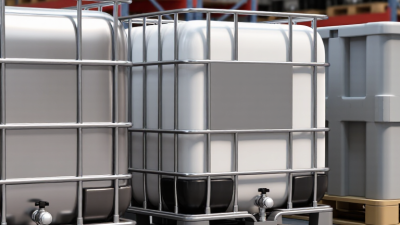
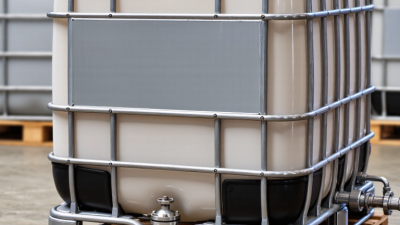
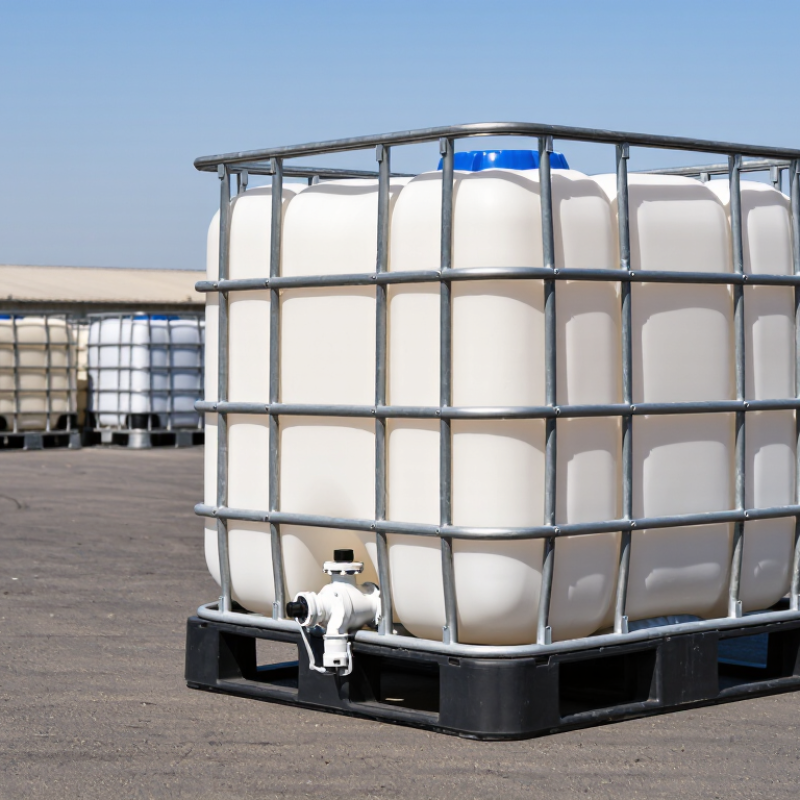
The best IBC water tank made in China is defined by more than a low purchase price. It should combine safe materials, strong construction, and consistent manufacturing control. A reliable tank normally uses food-grade HDPE with stable thickness across its walls. Uneven plastic can create weak points near the corners. The metal cage should resist rust and keep its shape during lifting and transport. A firm pallet also reduces movement on uneven floors.

Real quality appears in practical details. Check the valve seal, cap fit, welding points, and drain position. A dependable manufacturer should provide material information, production records, leak-test results, and clear inspection procedures. UV protection matters when tanks stand outdoors under strong sunlight. However, no tank is perfect. Even a well-tested unit can suffer from rough handling, poor cleaning, or incorrect storage. That part is often overlooked.

Tips: Ask for a sample before placing a large order. Fill it with water and inspect the base, valve, and seams after 24 hours. Compare wall thickness measurements from several areas, not just one. Confirm whether replacement valves and gaskets are available. A responsive factory should explain its testing process without vague promises. Photos help, but physical inspection is better. A glossy surface may look impressive, yet it cannot prove long-term performance. Reflect on the actual use: drinking water, irrigation, emergency storage, or industrial cleaning each demands different specifications.

Key Materials and Construction Features to Compare

When choosing an IBC water tank made in China, compare its materials before comparing its price. A reliable tank usually combines a food-grade HDPE inner container with a strong steel cage. Virgin polyethylene generally offers cleaner water contact and more consistent impact resistance. Recycled plastic may reduce cost, but its quality requires careful verification. Ask for resin specifications, wall thickness, and test records.

The cage should use corrosion-resistant steel with even welds and stable corner posts. Check the pallet carefully. A level base prevents tipping during storage and transport. Plastic pallets resist moisture, while steel pallets can handle rougher conditions. Inspect the outlet valve and gasket too. A stiff valve, uneven thread, or weak seal can cause slow leakage. It is a small detail, but often an expensive one.

Tips: Request food-contact documentation, UV-resistance information, and pressure or drop-test results. Confirm the tank dimensions match your storage area. Look inside for thin spots, sharp edges, odors, or cloudy plastic. Do not assume a heavier tank is automatically better. I have seen weight used as a selling point when the cage design was poorly reinforced. That mistake deserves reflection. Manufacturing consistency matters more than impressive specifications. Ask whether each production batch receives visual inspection and leak testing. Clear records are stronger evidence than promises.

How Chinese Manufacturers Ensure IBC Tank Water Safety

What Is the Best IBC Water Tank Made in China?

Chinese manufacturers ensure IBC tank water safety through controlled materials, careful production, and documented testing. For potable water, the inner bottle should use certified, food-contact-grade HDPE. The resin should have traceable batch records and no recycled material in the water-contact layer. Small details matter.

Production and Testing

Production starts with clean molding equipment and controlled temperatures. Operators inspect the bottle for thin walls, discoloration, and trapped particles. Welding seams around the filling neck and outlet need close attention. Each tank should undergo pressure, leak, and visual testing before shipment. Some factories also perform migration or odor testing through independent laboratories. That evidence matters.

Documentation and Shipment Preparation

Reliable manufacturers keep production records from resin delivery to final packing. They check valve seals, caps, gaskets, and pallet strength. Before shipment, workers should rinse or protect the tank according to its intended use. A buyer should request material declarations, test reports, inspection records, and clear cleaning instructions. Ask for recent documents. Old certificates may not represent current production.

Factory Inspection and Quality Improvement

No factory is perfect. A missed label or weak seal can still happen. Honest suppliers investigate defects, improve inspection points, and share corrective actions. During a factory visit, examine stored tanks, covered filling areas, and actual inspection routines. A clean showroom is useful, but the production floor tells more.

Capacity, Certifications, and Customization Options

When choosing an IBC water tank made in China, capacity should match daily use, transport, and storage space. The common 1,000-liter size suits farms, construction sites, and emergency water storage. Smaller 500- or 600-liter tanks fit narrow service areas. Larger models may reduce handling frequency, but they need stronger floors and suitable lifting equipment. Measure doorways, truck beds, and installation points before ordering.

Certifications deserve careful checking. For potable water, ask for food-contact compliance documents that match the destination market. Depending on the country, this may include FDA requirements, EU food-contact rules, or NSF-related standards. An ISO 9001 certificate can show process control, but it does not automatically prove safe tank materials. Request test reports, material declarations, batch records, and traceable production dates. Verify the documents independently. Paperwork can look convincing.

Customization can improve practical performance. Options may include UV-resistant plastic, a galvanized or painted cage, different valve sizes, reinforced pallets, inspection openings, and printed measurement marks. A stainless-steel outlet may help with frequent cleaning. A wider filling port can save time during manual filling. However, every added feature affects price, weight, and maintenance. I have seen buyers specify a large outlet but overlook hose compatibility. That mistake is avoidable. Ask for a sample drawing, wall-thickness data, leak-test results, and packaging photos before mass production. Some suppliers promise customization too quickly, so confirmed details should appear in the purchase contract.

What Is the Best IBC Water Tank Made in China?

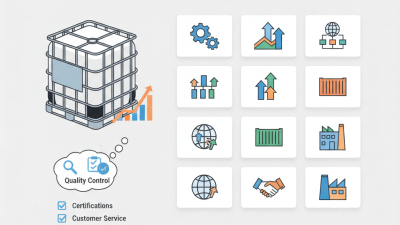
Capacity, certifications, and customization options for common industrial IBC water tank configurations

Common IBC water tanks are available in nominal capacities from approximately 300 to 1,200 liters. The 1,000-liter format is widely used because it provides a practical balance between storage volume, handling, transport efficiency, and compatibility with standard pallets.

For regulated transport, buyers should verify the applicable UN 31HA1 certification and confirm that the inner bottle, valve, cage, pallet, and labeling meet the intended liquid and transport requirements. Food-contact compliance, ISO 9001 manufacturing systems, UV-resistant materials, stainless-steel valves, different outlet sizes, color options, and custom labels may also be specified according to the application.

How to Choose the Right Chinese IBC Tank Supplier

What Is the Best IBC Water Tank Made in China?

How to Choose the Right Chinese IBC Tank Supplier

Choosing the right Chinese IBC tank supplier requires more than comparing prices. A reliable supplier should explain the tank’s polyethylene grade, cage material, valve design, and manufacturing process. For drinking water, request food-contact declarations and current test reports. Do not accept vague promises.

Ask for production samples before placing a large order. Check the tank wall for uniform thickness, clean molding, and visible deformation. Inspect the pallet, weld points, discharge valve, and cap seal. Small flaws can cause serious leakage during storage or transport. Request batch numbers, inspection records, and photographs from the actual production line.

Factory experience matters.

A capable supplier should provide clear technical drawings, agreed tolerances, and traceable quality procedures. Confirm whether testing includes leak pressure, drop resistance, stacking strength, and ultraviolet exposure. Also review export packaging, loading methods, replacement parts, and warranty terms. Communication is often overlooked; slow answers may become costly after payment.

A polished catalog proves little. An on-site audit or independent inspection offers stronger evidence. Still, no supplier is perfect. Even a careful factory may produce an occasional defective valve or delayed shipment. Discuss how problems are recorded, corrected, and compensated. Choose the supplier that shares limitations openly, not merely the one offering the lowest quotation.

What Is the Best IBC Water Tank Made in China? — How to Choose the Right Chinese IBC Tank Supplier

The best Chinese IBC tank depends on the intended liquid, capacity, transport requirements, applicable regulations, and supplier quality controls. The specifications below represent common industry configurations and practical purchasing benchmarks; exact values must be confirmed in the supplier’s technical documents.

Evaluation Dimension Common Industry Data or Option Why It Matters Recommended Selection Supplier Evidence to Request
Nominal Capacity Common sizes include approximately 600 L, 800 L, 1,000 L, and 1,200 L. The 1,000 L format is widely used for liquid storage and transport. Capacity affects freight efficiency, handling equipment, filling volume, and storage-space utilization. Technical drawing, internal volume, usable filling volume, tare weight, and maximum gross weight.
Inner Container Material High-density polyethylene (HDPE) is the most common material for reusable rigid IBC inner bottles. HDPE offers good impact resistance and broad compatibility with many water-based and non-corrosive liquids. Material specification, resin grade, batch traceability, and food-contact declaration where applicable.
Recycled Content Some industrial IBCs use recycled or multilayer plastic, while potable-water applications generally require stricter material controls. Recycled content can affect appearance, consistency, odor, regulatory acceptance, and suitability for drinking water. Written recycled-content statement, multilayer structure details, and applicable compliance documentation.
Cage Structure Typical cages use painted or galvanized steel tubing with horizontal and vertical reinforcement members. The cage protects the plastic bottle during stacking, lifting, and transport. Steel grade, tube dimensions, coating method, coating thickness, weld inspection, and corrosion-resistance records.
Pallet Base Common pallet materials include galvanized steel, plastic, or hybrid steel-plastic designs. Entry openings are usually designed for forklift or pallet-jack handling. The base influences warehouse handling, load distribution, hygiene, and compatibility with local equipment. Base dimensions, entry layout, static-load rating, dynamic-load rating, and pallet material details.
Stacking Performance Stacking limits vary by design, liquid density, temperature, pallet condition, and whether the IBC is full or empty. Incorrect stacking can deform the bottle, damage the cage, or create a safety hazard. Use only the manufacturer’s tested stacking limit; do not infer the limit from capacity alone. Stacking test report, maximum permitted stack height, load assumptions, and storage-temperature range.
Top Filling Opening Common top openings are approximately 150 mm or 225 mm in diameter, depending on the application and closure design. The opening affects filling speed, cleaning access, ventilation, and compatibility with filling equipment. Opening diameter, lid material, gasket material, vent design, torque requirements, and leak-test results.
Discharge Valve Common outlet sizes include approximately 50 mm and 75 mm. Butterfly and ball valves are widely used configurations. The valve determines discharge speed, residual liquid, cleaning access, and connection compatibility. Valve material, outlet dimensions, gasket specification, connection standard, pressure rating, and functional test records.
Water and Chemical Compatibility HDPE is commonly suitable for water and many mild, non-oxidizing liquids, but compatibility depends on concentration, temperature, and exposure time. A container suitable for general water may not be suitable for aggressive chemicals, solvents, fuels, or high-temperature liquids. Obtain a written compatibility assessment for any liquid other than ordinary water. Compatibility chart, SDS review process, temperature limits, and application-specific approval.
Potable-Water Suitability Industrial-grade IBC construction alone does not prove that the container is suitable for drinking water. Potable applications may require material, migration, hygiene, cleaning, and traceability controls that are not needed for industrial use. Food-contact declaration, migration testing where required, hygiene procedure, production controls, and lot traceability.
UN Dangerous-Goods Certification UN-marked IBCs are tested for regulated dangerous-goods transport under the applicable packaging requirements. Certification is not automatically included with every IBC. A UN certification may be required for certain hazardous liquids and transport routes, while it may be unnecessary for ordinary water. Purchase a UN-certified configuration only when the liquid and transport regulations require it. UN design-type test certificate, UN marking details, test scope, certificate validity, and production conformity records.
Leak and Pressure Testing Quality programs may include leak testing, dimensional inspection, valve testing, and visual inspection; test methods differ by supplier and application. Testing helps identify faulty welds, damaged fittings, molding defects, and valve leakage before shipment. Inspection plan, sampling level, leak-test pressure or method, acceptance criteria, and inspection records.
Traceability Traceability can include production date, mold or line identification, resin batch, inspection lot, and shipping records. Traceability makes claims, recalls, quality investigations, and repeat purchasing more manageable. Lot codes, inspection reports, raw-material records, packing lists, and retention period for quality documents.
Cleaning and Reuse Reusability depends on the liquid previously stored, cleaning method, valve condition, bottle integrity, and regulatory requirements. A used IBC may retain residues or odors and may not be appropriate for potable water or incompatible liquids. Cleaning instructions, inspection checklist, residual-risk guidance, and recommended replacement criteria.
Supplier Quality System Useful controls include incoming-material inspection, process inspection, final inspection, corrective-action procedures, and calibrated measuring equipment. A documented quality system reduces variation between batches and improves consistency in export orders. Quality manual or process overview, inspection records, calibration certificates, corrective-action examples, and audit access.
Pre-Shipment Verification Independent or buyer-authorized inspections can verify quantity, dimensions, markings, packaging, accessories, and visible defects before shipment. Pre-shipment inspection reduces the risk of receiving products that do not match the approved sample or purchase specification. Approved drawing, golden sample, inspection checklist, photographs, test reports, and nonconformity procedure.
Best Overall Buying Profile For general water logistics: HDPE inner bottle, galvanized steel cage, suitable pallet base, secure top lid, compatible discharge valve, and documented batch inspection. This configuration balances handling efficiency, durability, hygiene, and availability for many standard applications. Complete technical datasheet, drawings, compliance documents, sample approval, quality records, warranty terms, and after-sales contact process.

Note: Capacity, dimensions, valve sizes, stacking limits, material suitability, and certifications vary by design and market. Always confirm the final specification, applicable regulations, and test documentation before placing an order.

Get in touch with us,
We will contact you shortly!

Get in touch with us by filling up the enquiry form. We will contact you shortly!

    What is the difference between Unline(Non-Epoxy Coated) or Lining(Epoxy Coated) Metal Drum?

    What are Unline(Non-Epoxy Coated) and Lining(Epoxy Coated) drums compatible with?

    What is the difference between Grade A and Grade B Metal Drum ?

    What content is suitable to fill in a Recon Grade A or Grade B Drum?

    What is the difference between Open Top and Close Top Drums and their usage?

    What type of content are Metal or Plastic Drums suitable for?

    Will there be any contamination in the reconditioned metal, plastic drums or IBC tanks?

    What is the drum gauge(thickness) and weight for reconditioned metal drums?

    Do you sell New Packaging Products too?

    What additional services do you provide apart from selling reconditioned and new containers.?

    Do you offer labelling and silkscreen on the containers ?

    Are you able to ship overseas ?

    Leading the Way
    to Carbon Neutrality

    Drumming sustainability into every aspect of our operations, we strive to create a greener and more conscious future for generations to come.
    Contact Us
    WhatsApp
    Email
    Join Our Newsletter

    Sign up for our newsletter for exclusive discounts and latest news of new launches!

      Logo Logo Logo Logo Logo
      Scroll to Top