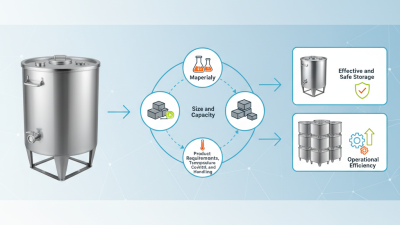
How to Choose the Right Stainless IBC Tote?
Choosing the right stainless IBC tote starts with the material inside it. A tote holding a food ingredient may need different fittings and cleaning access from one used for a dense industrial liquid. Product compatibility, capacity, outlet design, and handling conditions all matter. A polished finish alone does not guarantee a suitable choice.
“[Insert a verified quotation from a named stainless IBC tote expert here.]” A named expert quote should be checked against a reliable source before publication; no source or expert identity was provided for this draft. That matters because claims about corrosion resistance, weld quality, and service life depend on the alloy, fabrication, and actual operating conditions. Even stainless steel has limits.
Look closely at the details. Check the tank’s grade and wall construction, inspect welds and valve connections, and confirm that the outlet works with your transfer equipment. Consider how the tote will be cleaned, moved, and stored between uses. A few minutes spent checking a valve location can prevent awkward hose routing later. Small details count.
The best stainless IBC tote is not automatically the largest or most expensive. It is the one suited to the product, routine, and site. This guide explains what to compare, what questions to ask suppliers, and where buyers should pause before committing. Some specifications can look reassuring on paper. Verify them against the job.
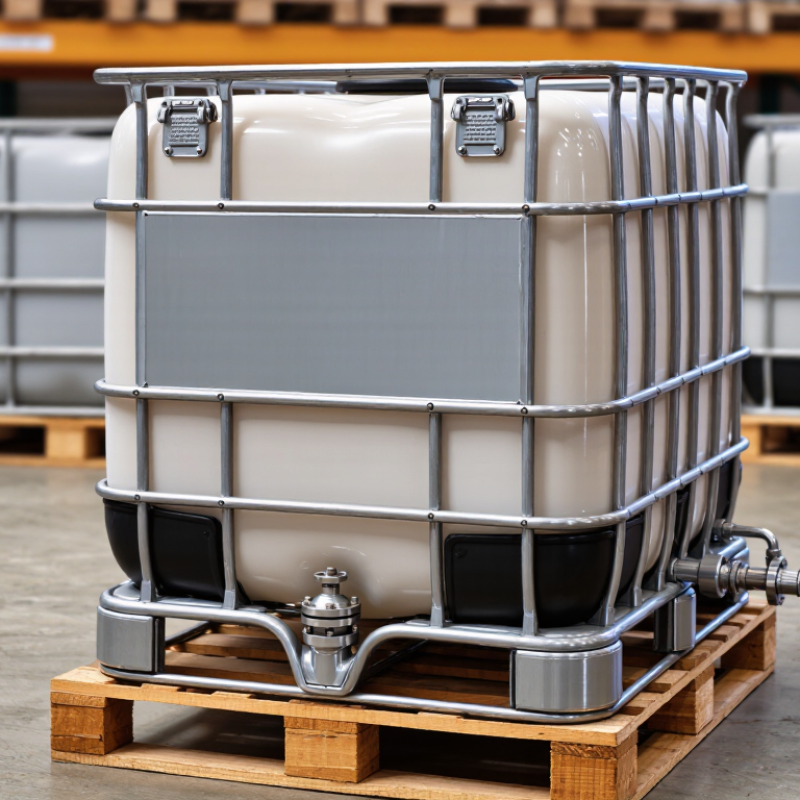
Define Product Hazards and Capacity: Metal IBCs Hold Up to 3,000 L
3,000 liters Stainless steel IBCs can hold up to 3,000 liters, but that figure is not a safe default for every product or site. Confirm the vessel’s rated volume, allowable fill level, and load limits in its technical documentation. A full tote can weigh several tonnes, especially when filled with dense liquids. Floor capacity and forklift ratings matter.
Start with the product’s hazards and handling conditions. Check its safety data sheet, then verify that the stainless grade, welds, valves, and seals are compatible. Acids, chlorides, cleaning agents, and elevated temperatures can affect materials differently.
The gasket may fail before the tank does. Ask for compatibility data when uncertain, and consider a small-scale test where appropriate. Not glamorous, but useful.
Also consider viscosity and residue: a thick liquid may drain slowly through a standard outlet, leaving product behind. For temperature changes or frequent transfers, confirm the IBC is designed for those conditions. Match capacity to the product, equipment, storage space, and filling process. Even experienced teams sometimes overlook awkward access around a valve.
Choose Wetted Alloy: 304 Has ≥18% Cr/≥8% Ni; 316 Adds 2–3% Mo
How to Choose the Right Stainless IBC Tote?
Start with the liquid that will contact the tank, not the tote’s appearance. Type 304 stainless steel typically contains at least 18% chromium and 8% nickel. Type 316 adds about 2–3% molybdenum, which can improve resistance to chloride-related pitting. That difference matters when handling salty solutions or using chloride-containing cleaning products. Neither alloy is immune to corrosion. Concentration, temperature, exposure time, and surface condition all affect performance.
Check every wetted part, including valves, fittings, welds, and the outlet area where liquid may linger. Ask for material documentation and confirm the alloy against your actual product and cleaning routine. A compatibility chart is a useful starting point, but it cannot replace a process-specific review. The higher alloy may not be necessary. Still, choosing 304 based only on price can be a false saving if pitting appears later.
Tips: Share the product’s composition, operating temperature, and cleaning chemicals with a qualified materials specialist. Inspect welds and low points after cleaning. Small details matter. Even a suitable alloy can disappoint when residue is left behind.
How to Choose the Right Stainless IBC Tote?
Compare the specified minimum alloy contents (weight percent) for common 304 and 316 stainless steel grades.
Typical ASTM grade specifications: 304 contains 18–20% chromium and 8–10.5% nickel. 316 contains 16–18% chromium, 10–14% nickel, and 2–3% molybdenum. The chart shows lower specification limits; zero for 304 molybdenum means no minimum is specified, not that the alloy contains none. Confirm material compatibility with the product and cleaning conditions.
Verify UN 31A Marking and U.S. DOT Rules Under 49 CFR 178.705
A stainless IBC tote can look robust and still be unsuitable for a particular service. Check its permanent UN marking before purchase. For liquid IBCs, “31A” identifies a steel IBC type; it does not, by itself, prove that every tote meets your needs. Stainless steel is still steel for this code. Read the full marking, including the performance level, test pressure, manufacturing date, and maker’s identification.
Look closely. The details matter. Under 49 CFR 178.705, metal IBCs must meet requirements for design and construction, including provisions for openings, closures, and structural integrity. Compare the tote’s design and documentation with the applicable requirements, rather than relying on a sales description or a familiar-looking code. The marking rules in 49 CFR 178.703 also help explain the information shown on the IBC. A UN mark is not blanket approval for every material, filling, or transport condition.
Ask for the test and inspection records, then check that the tote’s service history and condition are consistent with its intended use. Inspect welds, valves, gaskets, and the frame; a dent near a fitting can deserve a closer look. Confirm that the contents are compatible with the stainless steel and seals, and verify any applicable U.S. DOT requirements for the shipment. Regulations can be easy to misread. When a marking is damaged or records are missing, pause and seek qualified guidance before relying on the tote.
How to Choose the Right Stainless IBC Tote? - Verify UN 31A Marking and U.S. DOT Rules Under 49 CFR 178.705
| Selection Check | What to Verify | Why It Matters | Practical Action |
|---|---|---|---|
| IBC type code | For a steel IBC intended for liquids, check for the UN code 31A. In the metal-IBC code family, 31B identifies aluminum and 31N identifies metal other than steel or aluminum. | The code identifies the tested packaging design type; it does not by itself confirm that the IBC is suitable for a particular chemical. | Read the permanent UN marking on the IBC and compare the code with the applicable packaging authorization. |
| Performance level | The character after the IBC type code indicates the performance level: X for Packing Groups I, II, and III; Y for Packing Groups II and III; or Z for Packing Group III. | The hazardous material’s packing group must be compatible with the IBC’s performance level and the applicable shipping requirements. | Confirm the material’s packing group in the Hazardous Materials Table and check the relevant packaging provisions in 49 CFR Part 173. |
| Complete UN marking | Check that required design-type marking information is present and legible. Depending on the marking element, this can include the UN symbol, IBC code and performance level, manufacture date, authorizing country, maker or approval identification, maximum permissible gross mass, and stacking-test load where applicable. | A partial, damaged, or unreadable marking can make it difficult to establish the IBC’s design type and operating limits. | Check the marking against the requirements in 49 CFR 178.703 and retain the IBC’s supporting approval and inspection records. |
| DOT design and construction | 49 CFR 178.705 sets design and construction requirements for metal IBCs, including limits and construction requirements for the applicable design type. Metal IBC capacity is limited to 3,000 L under this section. | A stainless-steel appearance or stated capacity alone does not establish compliance with the applicable IBC design standard. | Verify that the specific IBC design is covered by the required approval and that its rated capacity and gross mass limits are not exceeded. |
| Chemical compatibility | Confirm that the product is compatible with the IBC’s actual wetted materials, including the stainless-steel grade, welds, valves, gaskets, and closure components. | The 31A designation identifies a steel IBC design type; it does not specify a stainless-steel grade or certify compatibility with every substance. | Obtain material specifications and assess chemical compatibility, concentration, temperature, and contact time before filling. |
| Use authorization | Determine whether the specific hazardous material may be shipped in an IBC and whether the applicable entry, special provisions, and packaging instructions permit the proposed packaging. | A UN mark is not blanket DOT authorization for every substance, route, or mode of transport. | Check the current Hazardous Materials Table in 49 CFR 172.101 and the applicable requirements in 49 CFR Part 173. |
| Closures and filling | Use the specified closures and follow the manufacturer’s closure instructions, filling limits, and operating limits. Inspect the body, fittings, and closures for damage or leakage. | The packaging must remain suitable and secure when prepared for transportation; incorrect closure or overfilling can compromise containment. | Follow the applicable general packaging requirements in 49 CFR 173.24 and IBC requirements in 49 CFR 173.35. |
| Inspection and testing status | Check the IBC’s test and inspection history, condition, and any applicable periodic inspection or test due dates. | IBC use is subject to inspection and testing provisions; a valid original design marking does not show that ongoing requirements have been met. | Review 49 CFR 173.35 for the requirements that apply to the IBC, its service, and its current condition. |
Regulatory note: Confirm the current text of the applicable U.S. Department of Transportation regulations and the requirements for the specific hazardous material before filling or offering an IBC for transportation.
Match Pressure, Temperature, Fittings, and Cleaning to Process Needs
Choose a stainless IBC tote by mapping the process envelope: operating pressure, temperature swings, product viscosity, and cleaning cycle. The shell’s material grade alone does not establish a safe working pressure. Check the vessel’s nameplate and design documentation, including allowable pressure at the intended temperature. ASME Boiler and Pressure Vessel Code, Section VIII, provides design rules for pressure vessels; a tote’s rating must come from its own certified design, not a generic rule of thumb. Small details matter.
Temperature affects both the product and the vessel. The British Stainless Steel Association’s technical-property tables list type 304 stainless steel’s mean thermal expansion at about 17.2 micrometres per metre per °C between 20°C and 100°C. Repeated heating and cooling can stress fittings and seals, so check their limits too. A hot wash followed by a cold rinse may be tougher on connections than steady operation. I would not assume that a vessel suitable for storage is suitable for every cleaning cycle.
Match outlet size, valve type, venting, and gasket material to the product’s flow and cleaning method. EHEDG hygienic-design guidance emphasizes drainability and avoiding hard-to-clean crevices. Look for sloped surfaces, accessible connections, and a bottom outlet that drains without leaving a puddle. One practical test: observe whether rinse water remains around the valve after draining. It’s easy to overlook. Confirm cleaning compatibility with the actual detergent, concentration, temperature, and contact time; a quick visual check is useful, but it cannot verify every hidden surface.
Compare Handling, Inspection, and Lifecycle Costs Before Supplier Approval
A stainless IBC tote should fit the way your site actually moves liquid, not just the stated capacity. Check forklift pocket spacing, loaded weight, center of gravity, and clearance around the outlet valve. A tote that fits the pallet area may still be awkward to drain or turn through a narrow doorway. Test the proposed layout with a loaded unit where practical. Small handling details matter.
Inspection planning deserves equal attention. Ask how welds, seams, valves, and gaskets are examined, and request sample inspection records. Confirm that materials and gasket choices suit the product, cleaning method, and operating temperature. Look for clear procedures for leak checks and corrosion review. Records should identify the unit and inspection date. Paperwork can look complete while missing useful details.
Compare lifecycle costs before approving a supplier: purchase price, cleaning labor, replacement seals, repair access, and expected downtime. Ask how quickly common parts are available and whether repairs require specialist service. A lower initial quote may cost more if valve maintenance is difficult. I still find this easy to overlook. Estimate costs across your expected service life, then check the assumptions against actual cleaning frequency and handling conditions. Some estimates will be imperfect; document them rather than treating them as facts.
Related Posts
-
How to Choose the Right Stainless IBC Tote for Your Storage Needs
-
How to Choose the Right Stainless Steel IBC for Your Needs?
-
China Top Stainless Steel IBC Suppliers Who Can You Trust?
-
China Top 10 Stainless IBC Tote Manufacturers?
-
Top 5 Benefits of Using Stainless Steel IBCs For Storage?
-
China Top 10 Benefits of Using Stainless Steel IBC Tanks for Storage

Get in touch with us,
We will contact you shortly!
What is the difference between Unline(Non-Epoxy Coated) or Lining(Epoxy Coated) Metal Drum?

Unline drums with internally bare metal surface is more susceptible to corrosion and rust while Lining drums are internally coated with Phenolic Epoxy Coating to provide a non-reactive barrier between the drum surface and your product, less risk of contamination. Note: Our Unline drums are coated with an anti-rust agent after washing to reduce risk of rust.
What are Unline(Non-Epoxy Coated) and Lining(Epoxy Coated) drums compatible with?

In Singapore, Recon Unline Drums are usually more costly than Recon Lining Drums. Hence, we recommend Recon Unline Drums to fill aromatics like Thinner, Xylene, Toulene& other solvents like Hexane, BA, CA, EA, MC, White spirit, etc.
We recommend the lower-priced Recon Lining Drums to fill hydrocarbons like IPA, Methanol, Ethanoland oil-based products like diesel, petrol, lubricants, engine, hydraulic, base, transmission fluid, additives, waste oil, etc.;
What is the difference between Grade A and Grade B Metal Drum ?

Grading of used drums are usually based on physical conditions like rustiness, deformities and residual contents. Grade A drums are totally free from internal rust, serious dents and are easy to clean. Grade B drums have different degrees of rust internally and aesthetically inferior compared to Grade A drums.
What content is suitable to fill in a Recon Grade A or Grade B Drum?

Recon Grade A drum is suitable to fill more costly virgin grade products while Recon Grade B drum is more suitable for recycled or waste products.
What is the difference between Open Top and Close Top Drums and their usage?

Closed top drums are for water and other liquid products. Open Top drums can be used for liquid too but are primarily for more viscous products. The Open Top (or open head with a lid) allows you to get in and out of the drum with your product easier.
What type of content are Metal or Plastic Drums suitable for?

Metal drums offer additional protection when dealing with potentially flammable substances. They provide superior fire resistance, impact protection, and longevity for storing class 1, 2, and 3 volatile chemicals.
Plastic HDPE Drums are suitable for corrosive chemicals like acids, alkaline and also water-based products.
Will there be any contamination in the reconditioned metal, plastic drums or IBC tanks?

All our reconditioned containers (metal/plastic drums, carboys, IBC tanks) are washed thoroughly with specially formulated cleaning agent, rinsed with clean water, dried, and tested for possible leakages during the recondition process. Stringent quality inspection is being conducted 100% on every reconditioned product before they are qualified for sale & delivery.
What is the drum gauge(thickness) and weight for reconditioned metal drums?

Reconditioned metal drums gauge can be 0.9mm to 1.0mm all round. Their weight can vary from 16 to 18kg.
Do you sell New Packaging Products too?

Yes, we are also a distributor for new pallets, metal drums, plastic drums, carboys, IBCs and stainless-steel tanks.
What additional services do you provide apart from selling reconditioned and new containers.?

We are an NEA licensed toxic industrial waste collector, who can collect and dispose of used toxic waste containers in Singapore.
Do you offer labelling and silkscreen on the containers ?

We can provide labelling and silk-screening on the containers.
Are you able to ship overseas ?

Yes, we can arrange export our products to any country in the world.
Leading the Way
to Carbon Neutrality