
China Top 10 Stainless IBC Tote Manufacturers?
Choosing among China’s top 10 stainless IBC tote manufacturers requires more than comparing prices or polished websites. A dependable supplier should demonstrate practical experience with 304 or 316L stainless steel, orbital or sanitary welding, surface finishing, valve assembly, and traceable quality records. Each detail matters. A poorly finished weld can collect residue. A weak gasket may leak during transport. An attractive quotation cannot correct either problem.
W. Edwards Deming, a respected quality-management expert whose principles influence process-equipment manufacturing, said, “In God we trust; all others must bring data.” That warning fits the stainless IBC tote market well. Buyers should request material certificates, weld-inspection evidence, pressure-test records, dimensional drawings, and clear information about cleaning procedures. Factory visits, sample inspections, and customer references can reveal more than promotional claims. Look closely.
This guide introduces ten Chinese manufacturers that deserve careful comparison. The selection should consider production capability, customization, export experience, hygienic design, delivery reliability, and after-sales support. Some companies may excel at large-volume orders, while others offer stronger engineering assistance for unusual capacities, discharge systems, or frame configurations. A manufacturer that produces many tanks is not automatically the best choice. Application fit remains essential.
There is also room for doubt. Published rankings rarely show every inspection result, rejected batch, or service response. Therefore, this overview is a starting point, not a final purchasing decision. Verify specifications independently, ask precise questions, and judge each supplier against your product, handling environment, and long-term operating needs.
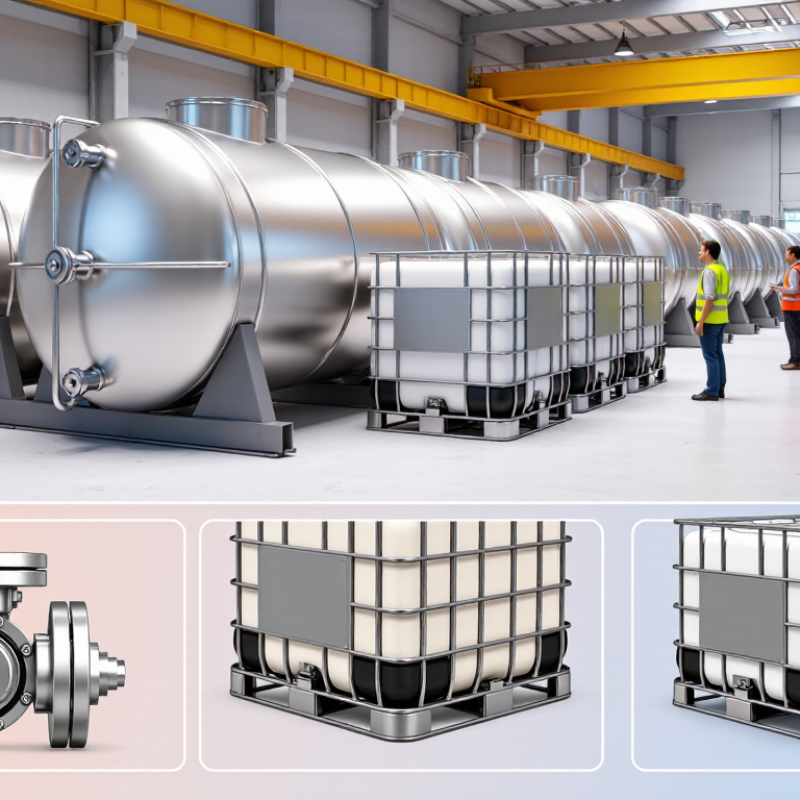
China’s Stainless IBC Tote Manufacturing Industry
China’s stainless IBC tote manufacturing industry has developed around practical engineering, controlled production, and export experience. Manufacturers commonly work with 304 or 316L stainless steel, depending on the stored material and cleaning requirements. Wall thickness, frame strength, valve design, and lifting points require careful coordination. Small errors can create large problems during transport.
A reliable production process begins with verified raw materials and clear drawings. Welding quality matters greatly. Smooth internal seams reduce residue buildup and simplify cleaning. Passivation can improve corrosion resistance when properly performed. Factories should also conduct leak checks, dimensional inspections, and load testing before shipment. These steps sound basic. They are often overlooked.
Professional buyers usually request material certificates, weld inspection records, surface-finish details, and batch traceability. Factory audits can reveal practical weaknesses, such as poor drainage, inconsistent polishing, or unclear inspection records. Not every manufacturer offers the same level of documentation. That difference deserves attention. Custom fittings, discharge heights, stacking frames, and protective coatings may also affect cost and lead time. Some suppliers promise flexibility but rely heavily on manual adjustments. The result may be acceptable, yet not perfectly consistent. Buyers should compare samples, verify production capacity, and discuss cleaning procedures before placing larger orders. Local manufacturing advantages include broad metalworking resources and competitive fabrication costs, but quality still depends on process discipline.
How to Evaluate Stainless IBC Tote Manufacturers in China
When evaluating stainless IBC tote manufacturers in China, production scale is only one signal. World Stainless reported global crude stainless steel production of about 58.4 million metric tonnes in 2023, with China remaining the largest producing region. Large output can support stable sourcing, but it does not prove reliable tote fabrication.
Inspect the factory, not only the catalog. Ask for heat numbers, material certificates, weld procedures, and passivation records. A serious supplier should identify the steel grade, typically 304 or 316L, and explain why it suits the stored liquid. Check weld interiors with boroscope photos. Rough seams can trap residue. Request hydrostatic, leak, and pressure-test records linked to each serial number. ISO 16103 provides performance guidance for IBC packaging, while ISO 9001 supports documented quality systems; neither replaces an on-site audit.
Review drawings carefully. Confirm working volume, stacking load, valve design, grounding points, and frame thickness. SGS’s 2024 supply-chain quality studies continue to emphasize traceability and supplier process control as practical risk reducers. Visit during production if possible. It reveals more than polished samples. I once saw a “finished” tote with clean external welds but incomplete internal polishing; the supplier corrected it, yet the inspection delay changed the delivery plan. That uncomfortable detail matters. Compare three quotations using the same specification, testing scope, spare-parts policy, and warranty terms. The lowest price may simply exclude critical inspection work.
China Top 10 Stainless IBC Tote Manufacturers? - How to Evaluate Stainless IBC Tote Manufacturers in China
A supplier-neutral comparison framework based on verifiable technical, regulatory, manufacturing, and after-sales criteria.
| No. | Evaluation Dimension | What to Verify from the Manufacturer | Relevant Technical Data or Evidence | Evaluation Priority |
|---|---|---|---|---|
| 1 | Material Grade and Traceability | Confirm the stainless-steel grade used for the shell, frame, valves, fittings, and product-contact parts. Request material certificates linked to the production batch. | 304 stainless steel 316L stainless steel Heat number traceability 316L is generally preferred for higher chloride exposure or more corrosive products, while 304 is widely used for less aggressive media. | Critical |
| 2 | Working Capacity and Dimensions | Check nominal volume, usable filling volume, external dimensions, tare weight, outlet position, and compatibility with the customer’s warehouse and transport equipment. | Stainless IBC totes are commonly offered around 500 L 800 L 1,000 L 1,250 L Actual dimensions and tare weight must be confirmed on the approved drawing. | High |
| 3 | Pressure, Vacuum, and Temperature Design | Determine whether the tote is atmospheric, pressure-rated, vacuum-rated, heated, insulated, or suitable for thermal cycling. Verify the design conditions for the intended liquid. | Request a design-pressure statement, temperature range, relief-device specification, and test records. Pressure capability is application-specific and must not be inferred solely from the container volume. | Critical |
| 4 | Welding and Surface Finish | Review welding procedures, weld inspection methods, internal polishing, pickling, passivation, and the surface-finish specification for product-contact areas. | Typical finish descriptions include 2B sheet finish Brushed finish Sanitary polished finish Ask for weld photographs, roughness requirements where applicable, and passivation records. | Critical |
| 5 | UN Certification and Dangerous-Goods Compliance | For hazardous materials, verify that the exact tote design, closure system, capacity, and service conditions are covered by the applicable approval. | Look for a valid UN specification marking such as 31A and the relevant performance level, including X Y or Z. Certificate scope must match the actual configuration. | Critical |
| 6 | Valve, Gasket, and Fitting Compatibility | Confirm valve type, outlet size, gasket material, connection standard, sampling port, venting arrangement, and compatibility with the product and cleaning chemicals. | Common gasket materials include EPDM FKM PTFE. The selected elastomer must be checked against temperature, solvents, acids, alkalis, and food or pharmaceutical requirements. | Critical |
| 7 | Manufacturing Quality Control | Assess incoming-material inspection, dimensional inspection, weld inspection, leak testing, pressure testing where applicable, cleaning, and final documentation. | Request a quality-control plan, inspection checklist, calibration records, weld qualification documents, and batch-based test reports. ISO 9001 certification can support process control but does not replace product-specific inspection. | High |
| 8 | Cleaning, Hygiene, and Industry Suitability | For food, beverage, cosmetic, pharmaceutical, or biotechnology use, verify cleanability, drainability, dead-leg control, gasket documentation, and the required hygienic design standard. | Relevant evidence may include Cleaning procedure Rinse-water or residue test Food-contact declaration Pharmaceutical material documentation Requirements depend on the destination market and application. | Critical |
| 9 | Customization and Production Capability | Evaluate the manufacturer’s ability to produce special outlets, agitators, load cells, heating jackets, insulation, spray balls, sterile connections, and protective frames. | Ask for approved drawings, prototype or sample procedures, engineering-change control, production lead time, monthly capacity, and evidence of similar completed configurations without relying only on catalog images. | High |
| 10 | Documentation, Delivery, and After-Sales Support | Review quotation clarity, drawings, packing method, spare-parts availability, warranty terms, corrective-action procedures, export experience, and response time for technical issues. | A complete supply package should normally identify the material grade, dimensions, fittings, test requirements, certificates, inspection documents, packing method, delivery terms, and warranty conditions. | High |
China’s Top 10 Stainless IBC Tote Manufacturers
China’s Top 10 Stainless IBC Tote Manufacturers are usually compared through engineering quality, production experience, and service reliability. A serious manufacturer should provide clear material records for 304 or 316L stainless steel. It should also explain welding methods, surface finishing, valve options, and load testing. Factory experience matters.
Look for consistent weld beads, smooth internal corners, and a clean, passivated surface. A 1,000-liter tote should remain stable during filling, lifting, and transport. Reliable suppliers normally provide leak tests, dimensional reports, inspection records, and traceability documents. Some factories offer orbital welding and surface roughness control, which can support demanding hygiene applications. Still, a polished website proves little. I have seen attractive samples hide weak frames and uneven welds. That detail deserves attention.
Tips: Ask for a sample inspection before ordering. Check the frame thickness, drain clearance, pallet design, and lid seal by hand. Request recent test records, not old templates. Confirm whether the quoted price includes valves, certifications, packaging, and spare parts. A factory may promise customization, yet its drawings can remain vague. Require a signed technical specification. No ranking is perfect. Performance depends on the actual model, batch control, and after-sales response. A short video of the production line can help, but an independent inspection is stronger evidence.
Comparing Products, Certifications, and Production Capabilities
China’s top stainless IBC tote manufacturers should be compared through evidence, not catalogue photos. World Stainless reported 58.4 million tonnes of crude stainless steel production in 2022. This supports broad material availability, but steel grade still matters. Ask whether each tote uses 304 or 316L stainless steel, and request heat numbers for traceability. A clean 316L interior, continuous welds, and polished corners reduce residue around the 1,000-liter tank.
Certifications reveal production discipline. The ISO Survey 2022 recorded more than 1.2 million ISO 9001 certificates worldwide, yet certification alone proves little about welding quality. Check the certificate scope, issuing body, and current validity. For export use, verify UN 31A approval, pressure-test records, leak tests, and documented inspection procedures. Strong manufacturers can show sample reports, dimensional drawings, valve specifications, and batch-control records without hesitation.
Production capability also needs practical testing. Visit, or independently audit, laser cutting, orbital welding, passivation, and final-cleaning areas. Ask for monthly capacity, lead times, spare-part support, and inspection staffing. A factory may promise 500 units monthly, but bottlenecks often appear during polishing or testing. That matters. Our comparison should weigh repeatability, not only price. I would also score packaging and loading methods; one scratched valve or exposed flange can undermine an otherwise excellent shipment. Some data sheets remain vague, so buyers should treat unverified claims as incomplete evidence.
This chart compares representative nominal capacities commonly available in stainless steel IBC totes when evaluating Chinese manufacturers. Actual availability, dimensions, materials, and certifications vary by supplier and application. Certification requirements may include UN performance approval, ISO 9001 manufacturing systems, food-contact compliance, and ADR or DOT transport compliance.
How to Select the Right Chinese Stainless IBC Tote Supplier
China Top 10 Stainless IBC Tote Manufacturers?
Selecting the right Chinese stainless IBC tote supplier requires more than comparing prices. Grand View Research valued the global IBC market at approximately USD 18.2 billion in 2022, with continued growth expected through 2030. This expansion attracts capable factories and inconsistent suppliers. Treat rankings carefully. Your application matters more than a popular list.
Check the vessel grade, weld quality, and cleaning process. For corrosive materials, ask whether 316L stainless steel is available and properly documented. Request material certificates, weld inspection records, pressure-test results, and batch traceability. A reliable factory should explain passivation clearly. Look for smooth internal corners, polished welds, secure outlet valves, and a frame that remains stable under forklift handling.
The International Stainless Steel Forum reported global stainless steel production of about 58.4 million tonnes in 2023. Supply is broad, but quality still varies between mills and fabricators. Visit the plant, or arrange an independent inspection before shipment. Confirm dimensions, working volume, discharge height, and replacement-part availability. Ask for sample units and test them with your actual filling and cleaning routine. I once focused too heavily on surface polish; that was a mistake. Valve access and drainage mattered more. Also review communication speed, corrective-action records, and export packaging. A low quotation is not low cost if one damaged tote delays production.
Related Posts
-
China Top Stainless Steel IBC Suppliers Who Can You Trust?
-
Top 5 Benefits of Using Stainless Steel IBCs For Storage?
-
How to Choose the Right Stainless Steel IBC for Your Needs?
-
How to Choose the Best IBC Water Tank for Your Needs?
-
How to Choose the Right Stainless IBC Tote for Your Storage Needs
-
2026 Best Metal Barrel Options for Storage and More?

Get in touch with us,
We will contact you shortly!
What is the difference between Unline(Non-Epoxy Coated) or Lining(Epoxy Coated) Metal Drum?

Unline drums with internally bare metal surface is more susceptible to corrosion and rust while Lining drums are internally coated with Phenolic Epoxy Coating to provide a non-reactive barrier between the drum surface and your product, less risk of contamination. Note: Our Unline drums are coated with an anti-rust agent after washing to reduce risk of rust.
What are Unline(Non-Epoxy Coated) and Lining(Epoxy Coated) drums compatible with?

In Singapore, Recon Unline Drums are usually more costly than Recon Lining Drums. Hence, we recommend Recon Unline Drums to fill aromatics like Thinner, Xylene, Toulene& other solvents like Hexane, BA, CA, EA, MC, White spirit, etc.
We recommend the lower-priced Recon Lining Drums to fill hydrocarbons like IPA, Methanol, Ethanoland oil-based products like diesel, petrol, lubricants, engine, hydraulic, base, transmission fluid, additives, waste oil, etc.;
What is the difference between Grade A and Grade B Metal Drum ?

Grading of used drums are usually based on physical conditions like rustiness, deformities and residual contents. Grade A drums are totally free from internal rust, serious dents and are easy to clean. Grade B drums have different degrees of rust internally and aesthetically inferior compared to Grade A drums.
What content is suitable to fill in a Recon Grade A or Grade B Drum?

Recon Grade A drum is suitable to fill more costly virgin grade products while Recon Grade B drum is more suitable for recycled or waste products.
What is the difference between Open Top and Close Top Drums and their usage?

Closed top drums are for water and other liquid products. Open Top drums can be used for liquid too but are primarily for more viscous products. The Open Top (or open head with a lid) allows you to get in and out of the drum with your product easier.
What type of content are Metal or Plastic Drums suitable for?

Metal drums offer additional protection when dealing with potentially flammable substances. They provide superior fire resistance, impact protection, and longevity for storing class 1, 2, and 3 volatile chemicals.
Plastic HDPE Drums are suitable for corrosive chemicals like acids, alkaline and also water-based products.
Will there be any contamination in the reconditioned metal, plastic drums or IBC tanks?

All our reconditioned containers (metal/plastic drums, carboys, IBC tanks) are washed thoroughly with specially formulated cleaning agent, rinsed with clean water, dried, and tested for possible leakages during the recondition process. Stringent quality inspection is being conducted 100% on every reconditioned product before they are qualified for sale & delivery.
What is the drum gauge(thickness) and weight for reconditioned metal drums?

Reconditioned metal drums gauge can be 0.9mm to 1.0mm all round. Their weight can vary from 16 to 18kg.
Do you sell New Packaging Products too?

Yes, we are also a distributor for new pallets, metal drums, plastic drums, carboys, IBCs and stainless-steel tanks.
What additional services do you provide apart from selling reconditioned and new containers.?

We are an NEA licensed toxic industrial waste collector, who can collect and dispose of used toxic waste containers in Singapore.
Do you offer labelling and silkscreen on the containers ?

We can provide labelling and silk-screening on the containers.
Are you able to ship overseas ?

Yes, we can arrange export our products to any country in the world.
Leading the Way
to Carbon Neutrality