
What Are the 7 Best Stainless Steel IBC Tanks?
Choosing the seven best stainless steel IBC tanks requires more than comparing prices, capacities, or polished surfaces. A tank may look excellent outside yet fail practical expectations inside. Weld quality, stainless steel grade, valve design, drainability, and cleaning access often matter more than appearance.
In my evaluation, stainless steel IBC tanks should be matched to the stored material and handling environment. Grade 304 may suit many general applications. Grade 316L offers stronger resistance where chlorides, salt exposure, or aggressive cleaning agents exist. However, 316L is not automatically the best choice. Product chemistry, temperature, concentration, and cleaning routines must be reviewed carefully.
Corrosion specialist Dr. M. A. Streicher emphasized, “The passive film is the foundation of stainless steel’s corrosion resistance.” That principle remains important when selecting a stainless steel ibc. Poor welding, trapped liquid, or rough internal surfaces can weaken practical performance. Small details matter.
A useful comparison also considers capacity, stackability, frame strength, insulation, mobility, and outlet positioning. Certification and traceable manufacturing records add confidence. So does a clear inspection history. I have seen buyers focus on volume first, then discover that a low drain outlet complicates every transfer. That mistake is expensive in time.
This guide examines seven strong options for different operating needs. Some prioritize hygienic surfaces. Others emphasize transport stability or thermal control. No single tank wins every application. Even experienced teams can overlook maintenance access. The best choice is therefore the safest, most serviceable match, not simply the most expensive model.
What Defines a High-Quality Stainless Steel IBC Tank?
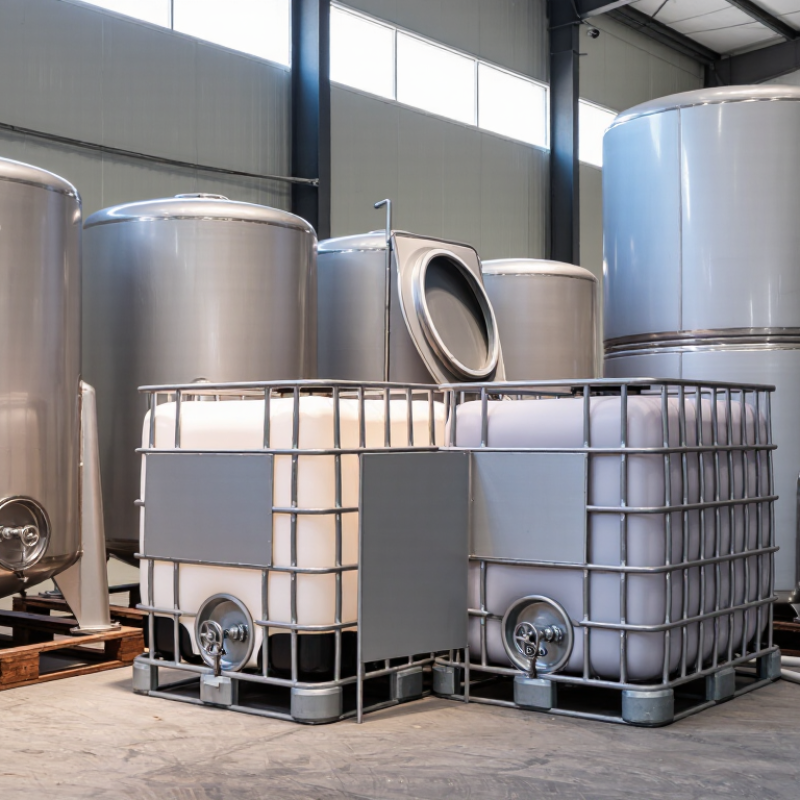
A high-quality stainless steel IBC tank begins with the right material grade. Food, pharmaceutical, and industrial applications may require different stainless steel specifications. The tank should resist corrosion from its intended liquid, not simply look polished. In practical inspections, weld quality often reveals more than surface shine. Smooth, continuous welds reduce crevices where residue and moisture can collect. Rough seams deserve closer attention.
Structural design matters under real handling conditions. A dependable tank needs a rigid frame, stable feet, and lifting points rated for its filled weight. Corner protection can reduce damage during transport and stacking. The inner vessel should have enough thickness for repeated use without unnecessary weight. A secure outlet valve and compatible gasket help prevent leaks. Small details matter.
Cleanability is another defining feature. A wide opening, accessible fittings, and a properly finished interior make washing and inspection easier. Dead spaces can trap liquid, even when the tank appears clean. Certification documents should identify material, capacity, pressure limits, and inspection procedures. Experienced buyers also check whether replacement parts remain available. I would not rely on a seller’s photographs alone. A tank can look excellent online and disappoint during handling. That is an uncomfortable lesson, but it protects long-term investment. A clear maintenance record, traceable manufacturing information, and practical user feedback provide stronger evidence of reliability.
Key Specifications for Comparing Stainless Steel IBC Tanks
What Are the 7 Best Stainless Steel IBC Tanks?
The best tank depends on measurable specifications, not appearance. The UN Recommendations on the Transport of Dangerous Goods, 23rd revised edition, allows metal IBCs up to 3,000 liters, but many operations use 1,000-liter units for safer handling. Compare working capacity, tare weight, stacking load, and forklift clearance. A tank that looks strong may still be inefficient when fully loaded.
Material grade matters. Type 304 stainless steel suits many general liquids, while 316L offers stronger resistance to chlorides and acidic cleaning agents. However, 316L is not automatically the better choice. Check weld quality, internal surface finish, and documented material certificates.
EHEDG hygienic-design guidance commonly supports smooth surfaces near Ra 0.8 micrometers, reducing residue around welds and outlets. Important details include valve diameter, gasket compatibility, drainability, insulation thickness, and thermal protection. Pressure and vacuum ratings must come from tested specifications, not sales language.
Look for traceability.
The 2024 International Stainless Steel Forum production figures exceeded 60 million tonnes globally, showing broad material availability, but availability does not prove tank quality. Ask for hydrostatic test records, cleaning validation, and inspection history. For food or pharmaceutical service, verify applicable sanitary requirements separately.
For transport, confirm the correct UN approval. I would also question highly polished tanks with weak discharge hardware. The finish attracts attention; the outlet often determines real performance.
Perfect selection is unlikely. The comparison should document compromises clearly.
The 7 Best Stainless Steel IBC Tanks by Use Case
What Are the 7 Best Stainless Steel IBC Tanks?
The best stainless steel IBC tank depends on the liquid, handling method, and working environment. In practical use, seven designs stand out by application.
A polished sanitary tank suits food, beverage, and cosmetic liquids. A high-purity tank fits pharmaceutical production and sensitive ingredients. For corrosive chemicals, choose a tank made with a more resistant stainless steel alloy. Heated or jacketed tanks handle syrups, oils, and other viscous liquids more effectively. Outdoor operations benefit from reinforced frames, protective fittings, and weather-resistant finishes. For frequent movement, select a stackable tank with certified transport features and secure valves. Small-batch manufacturers may prefer a compact tank with custom outlets, agitators, or level controls.
Tips: Check the liquid’s temperature, density, and chemical compatibility before purchasing. Inspect welds, gaskets, valves, and internal surfaces. A bright finish does not prove sanitary performance. I have seen tanks look excellent outside while hiding residue near fittings. That detail is easy to miss. Ask for material certificates, pressure ratings, cleaning guidance, and inspection records. Also consider the discharge height and forklift access. A technically suitable tank can still create daily problems when operators cannot drain or move it safely. Review the design with a qualified engineer when the liquid is valuable, reactive, or temperature-sensitive.
What Are the 7 Best Stainless Steel IBC Tanks? — The 7 Best Stainless Steel IBC Tanks by Use Case
These representative configurations reflect common stainless steel IBC requirements across major applications. Capacity, stainless steel grade, and hygienic design should be confirmed against the specific liquid, regulations, and handling conditions.
How to read the chart: Smaller 316L units are commonly preferred for pharmaceutical and high-purity applications, while 304 or 316L tanks around 1,000 liters are widely used for food, chemical, cosmetic, and hazardous-liquid handling. Larger 1,500-liter configurations are suited to lower-viscosity heating and cooling fluids when site access and transport limits allow.
Safety, Compliance, and Maintenance Considerations
The seven best stainless steel IBC tanks depend on product chemistry and handling conditions. Common choices include 304L tanks for general liquids and 316L tanks for chloride-rich or corrosive materials. Sanitary, jacketed, conical-bottom, stackable, insulated, UN-rated, and custom-built models each serve different operations. World Stainless reported approximately 58.4 million tonnes of crude stainless steel production in 2023. That scale supports material availability, but it does not replace engineering review.
Safety and compliance begin with the tank’s certification, weld quality, pressure rating, vent design, and lifting frame. Confirm compatibility with the stored liquid, cleaning chemicals, temperature, and filling method.
The U.S. Bureau of Labor Statistics recorded 1,495 fatal injuries in transportation and material-moving occupations during 2023. Secure placement, forklift pockets, readable labels, and controlled lifting therefore matter greatly.
A strong tank can still fail through careless movement. Inspectors should check valves, gaskets, welds, grounding points, and corrosion before every major use. Annual inspection alone may be insufficient in harsh service.
Tips:
- Keep inspection records with serial numbers and repair dates.
- Use clean, dry storage areas.
- Never mix incompatible cleaning agents.
- Watch the lower frame corners; impacts often hide beneath surface dirt.
- A polished finish looks reassuring, sometimes too reassuring.
- Replace damaged seals promptly, and ask a qualified engineer to review unusual pressure, heat, or corrosion conditions.
- Even experienced teams can miss small deformation near a discharge valve.
How to Choose the Right Stainless Steel IBC Tank
Choosing the right stainless steel IBC tank starts with the stored material, not the tank’s appearance.
In practical inspections, I check compatibility, capacity, fittings, and cleaning access before comparing prices. A 304 stainless steel tank suits many water-based products, while 316 stainless steel offers better resistance to chlorides and harsher environments. The difference matters near coastal facilities or salt-containing liquids.
The seven strongest options usually serve different needs: standard storage, insulated storage, jacketed heating, hygienic processing, reinforced transport, hazardous-area operation, and custom discharge systems.
Select the tank size carefully. A 1,000-liter model may fit a production line, but a smaller unit can reduce waste during frequent product changes.
Fit matters more. Confirm outlet diameter, valve material, gasket compatibility, and forklift clearance. A narrow doorway can turn a good purchase into an expensive problem.
Inspect weld quality, internal polishing, wall thickness, and frame strength. Ask for material certificates, pressure-test records, and load ratings from the supplier. Check whether the tank supports cleaning procedures used at your site, including temperature and chemical exposure.
Insulation can protect temperature-sensitive contents, but poor insulation design may trap moisture around fittings. I have seen specifications look complete while omitting drain slope or grounding details. That deserves a second review. Do not assume every “food-grade” claim means the same thing; verify the applicable testing and documentation for your operation.
Related Posts
-
China Top Stainless Steel IBC Suppliers Who Can You Trust?
-
China Top 10 Stainless IBC Tote Manufacturers?
-
2026 Top Stainless Steel IBC Types for Global Buyers
-
Top 5 Benefits of Using Stainless Steel IBCs For Storage?
-
How to Choose the Right Stainless Steel IBC for Your Needs?
-
How to Choose the Best IBC Water Tank for Your Needs?

Get in touch with us,
We will contact you shortly!
What is the difference between Unline(Non-Epoxy Coated) or Lining(Epoxy Coated) Metal Drum?

Unline drums with internally bare metal surface is more susceptible to corrosion and rust while Lining drums are internally coated with Phenolic Epoxy Coating to provide a non-reactive barrier between the drum surface and your product, less risk of contamination. Note: Our Unline drums are coated with an anti-rust agent after washing to reduce risk of rust.
What are Unline(Non-Epoxy Coated) and Lining(Epoxy Coated) drums compatible with?

In Singapore, Recon Unline Drums are usually more costly than Recon Lining Drums. Hence, we recommend Recon Unline Drums to fill aromatics like Thinner, Xylene, Toulene& other solvents like Hexane, BA, CA, EA, MC, White spirit, etc.
We recommend the lower-priced Recon Lining Drums to fill hydrocarbons like IPA, Methanol, Ethanoland oil-based products like diesel, petrol, lubricants, engine, hydraulic, base, transmission fluid, additives, waste oil, etc.;
What is the difference between Grade A and Grade B Metal Drum ?

Grading of used drums are usually based on physical conditions like rustiness, deformities and residual contents. Grade A drums are totally free from internal rust, serious dents and are easy to clean. Grade B drums have different degrees of rust internally and aesthetically inferior compared to Grade A drums.
What content is suitable to fill in a Recon Grade A or Grade B Drum?

Recon Grade A drum is suitable to fill more costly virgin grade products while Recon Grade B drum is more suitable for recycled or waste products.
What is the difference between Open Top and Close Top Drums and their usage?

Closed top drums are for water and other liquid products. Open Top drums can be used for liquid too but are primarily for more viscous products. The Open Top (or open head with a lid) allows you to get in and out of the drum with your product easier.
What type of content are Metal or Plastic Drums suitable for?

Metal drums offer additional protection when dealing with potentially flammable substances. They provide superior fire resistance, impact protection, and longevity for storing class 1, 2, and 3 volatile chemicals.
Plastic HDPE Drums are suitable for corrosive chemicals like acids, alkaline and also water-based products.
Will there be any contamination in the reconditioned metal, plastic drums or IBC tanks?

All our reconditioned containers (metal/plastic drums, carboys, IBC tanks) are washed thoroughly with specially formulated cleaning agent, rinsed with clean water, dried, and tested for possible leakages during the recondition process. Stringent quality inspection is being conducted 100% on every reconditioned product before they are qualified for sale & delivery.
What is the drum gauge(thickness) and weight for reconditioned metal drums?

Reconditioned metal drums gauge can be 0.9mm to 1.0mm all round. Their weight can vary from 16 to 18kg.
Do you sell New Packaging Products too?

Yes, we are also a distributor for new pallets, metal drums, plastic drums, carboys, IBCs and stainless-steel tanks.
What additional services do you provide apart from selling reconditioned and new containers.?

We are an NEA licensed toxic industrial waste collector, who can collect and dispose of used toxic waste containers in Singapore.
Do you offer labelling and silkscreen on the containers ?

We can provide labelling and silk-screening on the containers.
Are you able to ship overseas ?

Yes, we can arrange export our products to any country in the world.
Leading the Way
to Carbon Neutrality