
Why Do You Need a Check Valve?
A Check Valve may look like a small fitting, but its failure can send water, oil, or compressed air backward through a system. That can damage pumps, disturb process control, and trigger water hammer. The risk is easy to miss: a valve can be correctly installed and still perform poorly if its type, size, or closing behavior does not match the flow conditions.
The U.S. Department of Energy’s Improving Pumping System Performance sourcebook reports that pumping systems account for nearly 20% of global electricity demand. That figure is not a measure of check-valve savings; it shows why dependable flow management matters across energy-intensive systems. Valve Handbook author Philip L. Skousen offers a useful engineering perspective: in paraphrase, reverse-flow protection depends on selecting a valve suited to the system, not merely fitting one into the line. A spring-assisted model, for example, may close differently from a swing check when flow slows. Small details matter. So does maintenance.
This guide explains when a Check Valve is needed, how it prevents reverse flow, and what to consider when choosing one. It also looks at common trade-offs, including pressure loss, installation orientation, and the risk of slam. A check valve is not a cure-all. Real systems vary, and operating data should inform the choice. That is worth remembering.
What Is a Check Valve?
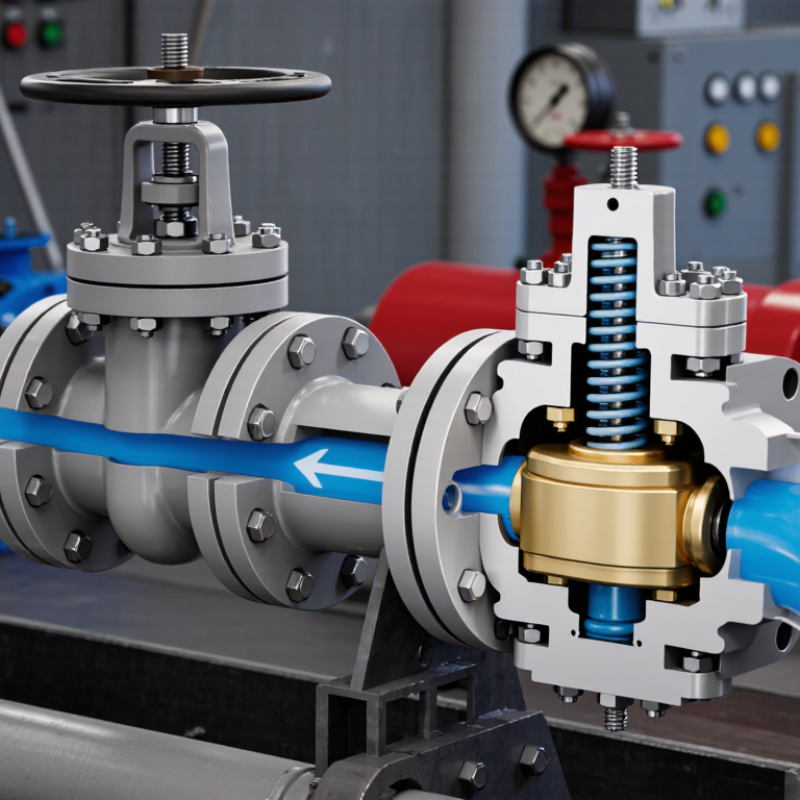
A check valve is a mechanical device that allows fluid to flow in one direction and restricts reverse flow. Unlike a hand-operated valve, it responds automatically to changes in pressure or flow. When forward pressure drops, an internal part—often a disc, ball, or flap—moves back toward its seat. No handle is needed.
The exact movement depends on the design. A swing check uses a hinged disc. A spring-loaded model may close quickly, while a lift check moves along a guide. The right choice depends on the fluid, pressure, pipe layout, and operating conditions. In a pump line, a check valve can limit reverse flow when the pump stops.
It may help protect pumps and other equipment, but it is not an isolation valve. A worn seat can still let fluid slip backward. Not foolproof. Sizing and installation matter, too. It is tempting to treat check valves as simple safeguards, yet real piping systems are rarely so tidy. Check technical specifications and inspect the valve according to its service conditions.



Get in touch with us,
We will contact you shortly!
What is the difference between Unline(Non-Epoxy Coated) or Lining(Epoxy Coated) Metal Drum?

What are Unline(Non-Epoxy Coated) and Lining(Epoxy Coated) drums compatible with?
What is the difference between Grade A and Grade B Metal Drum ?
What content is suitable to fill in a Recon Grade A or Grade B Drum?
What is the difference between Open Top and Close Top Drums and their usage?
What type of content are Metal or Plastic Drums suitable for?
Will there be any contamination in the reconditioned metal, plastic drums or IBC tanks?
What is the drum gauge(thickness) and weight for reconditioned metal drums?
Do you sell New Packaging Products too?
What additional services do you provide apart from selling reconditioned and new containers.?
Do you offer labelling and silkscreen on the containers ?
Are you able to ship overseas ?
Leading the Way
to Carbon Neutrality