
Why Choose Paper Cups for Global Sourcing?
A Paper Cup can look simple, yet global sourcing decisions rarely are. Buyers must consider material quality, production consistency, shipping distance, and end-use conditions. A cup used for hot coffee faces different demands from one used for chilled juice. Heat resistance matters. So does rim strength.
Experienced sourcing teams usually begin with clear specifications. They check paper weight, coating type, cup volume, printing quality, and packing methods. A sample may appear excellent under office lighting, then soften after fifteen minutes with hot liquid. Practical testing reveals details that product photos cannot show. Supplier audits, traceable documents, and independent laboratory reports can strengthen purchasing decisions. Requirements also differ across markets, so compliance should be verified before orders are placed.
Cost still matters, but it should not stand alone. A cheaper Paper Cup may create more waste through leakage, damaged cartons, or inconsistent sizing. Freight efficiency can also change the real purchase price. Nestable designs may reduce pallet space and handling costs. Recyclability claims deserve careful review, because coatings and local waste systems affect actual outcomes. This area is not always straightforward.
Reliable suppliers explain their materials and limitations clearly. They provide stable lead times, production samples, and responsive quality support. However, no supplier is perfect, and unexpected delays can occur. A realistic sourcing plan includes backup capacity and inspection points. The right choice balances performance, responsible production, customer expectations, and total cost. That balance requires evidence, not assumptions.
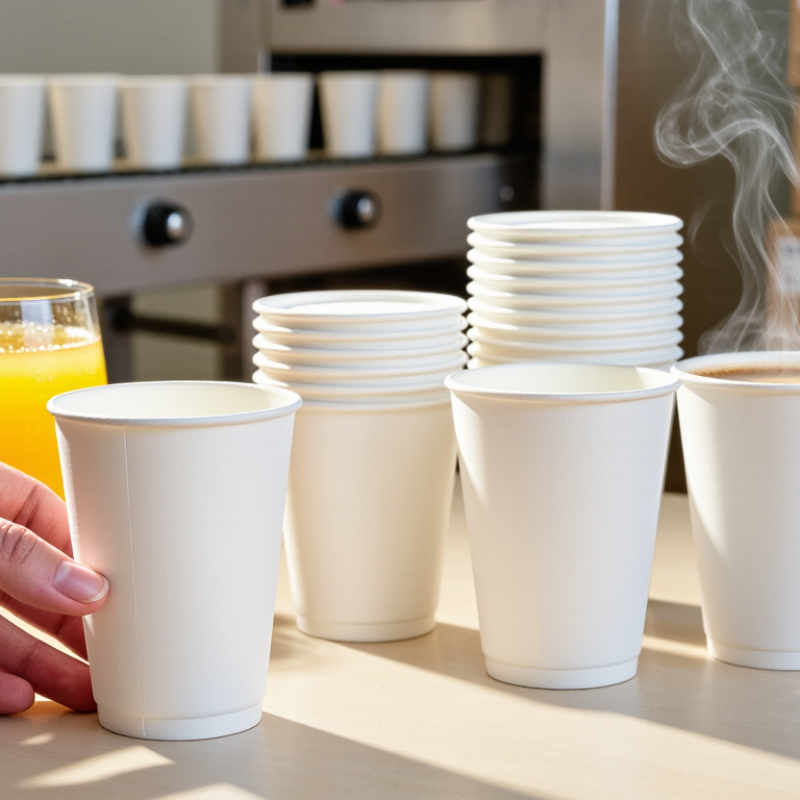
Paper Cups: Definition, Types, and Global Market Role
Paper cups are disposable containers made from paperboard, usually shaped with a sealed side seam and a rolled rim. A thin coating limits leakage and protects the fiber from hot or cold liquids. Common types include single-wall cups, double-wall cups, ripple-wall cups, and insulated takeaway formats. Coatings may use polyethylene, water-based barriers, or plant-based polymers.
Their global market role is expanding beyond coffee service. Grand View Research estimated the global paper cups market at about USD 13.6 billion in 2023, with continued growth expected through 2030. The report links demand to takeaway beverages, food delivery, and changing consumer preferences. Paperboard remains a major industrial material. FAO reported global paper and paperboard production above 400 million tonnes in 2022. These figures are not interchangeable. Different reports define the market differently.
For global sourcing, buyers should compare cup dimensions, rim diameter, coating performance, stacking strength, and shipping efficiency. A cup that survives a factory test may still soften during humid ocean transport. Practical sampling matters. Ask suppliers for food-contact documentation, fiber sourcing evidence, migration testing, and production consistency records. Certifications can support reliability, but they do not replace independent quality checks. Double-wall cups reduce the need for sleeves, yet they may consume more material and occupy more container space. Single-wall cups cost less, but users may need an added sleeve. The better choice depends on beverage temperature, filling speed, climate, and disposal infrastructure. Some assumptions still need testing.
Why Choose Paper Cups for Global Sourcing? - Paper Cups: Definition, Types, and Global Market Role
| Cup Type | Typical Capacity | Basic Construction | Common Barrier System | Thermal Performance | Typical Applications | Global Sourcing Role |
|---|---|---|---|---|---|---|
| Single-Wall Hot Cup | 180–360 ml (6–12 fl oz) | One formed paperboard wall, commonly made from food-contact-grade paperboard | Usually a thin polyethylene or water-based dispersion coating | Basic insulation; an outer sleeve may be needed for very hot beverages | Coffee, tea, cocoa, office catering, takeaway service | Lightweight and cost-efficient for high-volume foodservice programs |
| Double-Wall Hot Cup | 240–500 ml (8–17 fl oz) | Two paper layers with an air gap or secondary outer wall | Moisture-resistant inner coating; outer wall may be printed or uncoated | Better hand protection and heat retention than single-wall designs | Premium coffee service, delivery, events, and travel beverages | Reduces reliance on separate sleeves but uses more material per cup |
| Ripple-Wall Hot Cup | 240–500 ml (8–17 fl oz) | Inner cup combined with a corrugated or embossed outer paper layer | Food-contact barrier on the inner cup; outer layer provides structure | Strong grip and high insulation due to the textured air channels | Hot drinks, premium takeaway service, transport and delivery | Combines functional performance with a distinctive surface for printed designs |
| Cold Drink Cup | 300–700 ml (10–24 fl oz) | Single-wall paperboard formed with a rolled rim for lid compatibility | Moisture and grease barrier designed to resist condensation and leakage | Limited thermal insulation; intended mainly for chilled beverages | Soft drinks, iced tea, juice, smoothies, and fountain beverages | Suitable for seasonal demand and large-format beverage programs |
| Paper Soup or Food Cup | 240–960 ml (8–32 fl oz) | Thicker paperboard with a wider opening and reinforced rim | Liquid-, grease-, and heat-resistant inner coating | Designed for hot liquids and prepared foods; insulation depends on wall structure | Soup, noodles, porridge, desserts, salads, and prepared foods | Expands paper packaging beyond beverages and supports takeaway meal formats |
| Fiber-Based Compostable Cup | 180–500 ml (6–17 fl oz) | Paperboard or molded-fiber structure made for food-contact use | May use certified compostable biopolymer or water-based barrier technology | Performance varies by coating, wall thickness, and beverage temperature | Foodservice programs seeking compostable packaging options | Requires verification of applicable certification, local collection systems, and end-of-life claims |
| Custom-Printed Paper Cup | 90–960 ml (3–32 fl oz) | Any standard cup structure with customized graphics and dimensions | Barrier selected according to hot, cold, greasy, or acidic contents | Determined by the selected wall construction | Promotional campaigns, events, hospitality, and foodservice packaging | Enables localized artwork while using standardized global cup formats |
Paper cups are disposable containers formed from paperboard and equipped with a liquid-resistant inner barrier.
Common paperboard grammages are approximately 170–350 g/m², depending on capacity, stiffness, and wall design.
Standardized sizes, flat-packed shipping before forming, and multiple barrier options support international procurement.
Recyclability and compostability depend on the coating, fiber source, local regulations, and available waste infrastructure.

Key Benefits of Choosing Paper Cups for International Procurement
Why Choose Paper Cups for Global Sourcing?
Key Benefits of Choosing Paper Cups for International Procurement
Paper cups offer practical advantages for international procurement. They are lightweight, stackable, and efficient during container loading. These features can reduce storage pressure and freight-related costs. FAO’s FAOSTAT Forestry Production and Trade database recorded more than 400 million tonnes of global paper and paperboard production in 2022. This broad manufacturing base can support supplier diversification across regions.
Paper also supports clear printing and flexible cup specifications. Buyers can request different capacities, rim sizes, barrier layers, and packing formats. Responsible sourcing requires more than choosing a paper appearance. Many cups use plastic or water-based linings, which may affect recycling access. The choice is not automatically greener. CEPI reported a European paper recycling rate of about 79% in 2023, but cup recovery can remain lower because of food residue and mixed materials. Procurement teams should verify actual collection systems, not rely only on supplier claims. That detail is often missed.
Tips: Ask for food-contact documentation, migration test results, coating information, and factory quality records. Check whether the target market accepts the cup structure. Request production samples before approving large orders. Compare delivered cost, not only unit price. A cheaper cup may have weaker rims, higher damage rates, or unsuitable packing. Use third-party audits when supplier data seems incomplete. Keep a small test order. It exposes problems early.
Why Choose Paper Cups for Global Sourcing?
Paper cups are primarily made from paperboard, while a thin polymer lining provides liquid resistance. This lightweight structure supports efficient nesting, lower storage volume, and easier transport during international procurement. Actual composition varies by cup size, paperboard grade, coating type, and supplier specification.
Indicative material ranges for commonly used single-use PE-lined paper cups: approximately 90–95% paperboard and 5–10% polymer lining by weight.
Materials, Manufacturing Standards, and Product Quality Factors
Why Choose Paper Cups for Global Sourcing?
Paper cups begin with the right paperboard. Food-contact grade stock should have stable thickness, clean fibers, and controlled moisture. Coatings also matter. Polyethylene offers reliable liquid resistance, while plant-based coatings may support different disposal goals. Neither option is automatically better. Performance depends on use, temperature, and local waste systems.
In practical sourcing, documented manufacturing controls deserve close attention. Suppliers should explain pulp origin, coating specifications, batch tracking, and hygiene procedures. Certifications can support credibility, but a certificate alone proves little. Factory audits should review storage areas, printing controls, sealing temperatures, and worker training. Samples from several production batches provide stronger evidence than one attractive prototype. Small details matter.
Product quality needs measurable testing. Check cup weight, wall thickness, rim shape, seam strength, and leakage resistance. Fill samples with hot and cold liquids, then observe softening, odor, deformation, and surface sweating. Compression tests can reveal weaknesses during shipping. Packaging should protect the cups from dust and moisture. I have found that visual inspection often misses hidden coating defects. Laboratory testing helps, but it is not perfect. Testing methods may differ between facilities, so results require careful comparison. A reliable sourcing process combines technical data, factory evidence, repeat sampling, and honest discussion of defects. Even then, quality can vary when materials, equipment, or production teams change.
Sustainability, Compliance, and Environmental Considerations
Paper cups can support global sourcing when sustainability is treated as a specification, not a marketing claim.
The European Paper Recycling Council reported a 79.3% paper recycling rate in Europe in 2022. However, that figure covers paper overall, not every coated cup. Cup design, collection systems, and local sorting capacity still determine the real outcome.
Not every cup gets recycled.
Sourcing teams should request fiber origin records, coating details, and third-party test results. They should also verify whether the cup complies with food-contact requirements in its destination market.
ISO 18606 provides guidance for recyclable or compostable packaging, but certification does not guarantee suitable local infrastructure. A compostable cup may fail in a city without commercial composting facilities. That practical gap is easy to overlook.
Environmental review should include material weight, recycled content, production energy, transport distance, and end-of-life treatment.
The United Nations Environment Programme’s 2023 report states that global plastic pollution could be reduced by 80% by 2040 through reuse, recycling, and redesigned products. Paper cups can contribute to this shift, but only when their barriers and accessories are carefully selected.
A lighter cup is not automatically better. It may leak, deform, or require extra packaging.
In real procurement projects, small details matter: moisture resistance during shipping, clear disposal instructions, and consistent supplier documentation. Some assumptions will be wrong. They should be tested before large-volume orders.
Supplier Selection, Cost Evaluation, and Global Logistics
Global sourcing paper cups starts with supplier selection, not a low price. I examine production records, food-contact documentation, sample consistency, and carton strength. A capable supplier explains paper weight, lining material, rim design, and tolerances clearly. Request recent test reports and samples from regular production. One sample may look excellent. A second batch can reveal curled rims, weak seams, or unwanted odor. That comparison often changes the decision.
Cost evaluation should cover more than the unit price. Calculate printing, tooling, packaging, inspection, inland transport, freight, insurance, customs clearance, and storage. Ask about minimum order quantities, payment terms, replacement policies, and lead times. A slightly cheaper cup can become expensive after delays or poor container utilization. I once focused too heavily on quoted cost and underestimated warehouse handling. That was a preventable mistake.
Tips: Use a landed-cost worksheet for every supplier. Confirm carton dimensions and loading plans before ordering. Request a production schedule with inspection points. Build a small delay allowance into your launch plan. It may feel inefficient, but global logistics rarely follows the ideal timeline. Keep written records of specifications, approvals, and shipment changes. Clear records support better decisions when something goes wrong.
Article Source:
Get in touch with us,
We will contact you shortly!
What is the difference between Unline(Non-Epoxy Coated) or Lining(Epoxy Coated) Metal Drum?

Unline drums with internally bare metal surface is more susceptible to corrosion and rust while Lining drums are internally coated with Phenolic Epoxy Coating to provide a non-reactive barrier between the drum surface and your product, less risk of contamination. Note: Our Unline drums are coated with an anti-rust agent after washing to reduce risk of rust.
What are Unline(Non-Epoxy Coated) and Lining(Epoxy Coated) drums compatible with?

In Singapore, Recon Unline Drums are usually more costly than Recon Lining Drums. Hence, we recommend Recon Unline Drums to fill aromatics like Thinner, Xylene, Toulene& other solvents like Hexane, BA, CA, EA, MC, White spirit, etc.
We recommend the lower-priced Recon Lining Drums to fill hydrocarbons like IPA, Methanol, Ethanoland oil-based products like diesel, petrol, lubricants, engine, hydraulic, base, transmission fluid, additives, waste oil, etc.;
What is the difference between Grade A and Grade B Metal Drum ?

Grading of used drums are usually based on physical conditions like rustiness, deformities and residual contents. Grade A drums are totally free from internal rust, serious dents and are easy to clean. Grade B drums have different degrees of rust internally and aesthetically inferior compared to Grade A drums.
What content is suitable to fill in a Recon Grade A or Grade B Drum?

Recon Grade A drum is suitable to fill more costly virgin grade products while Recon Grade B drum is more suitable for recycled or waste products.
What is the difference between Open Top and Close Top Drums and their usage?

Closed top drums are for water and other liquid products. Open Top drums can be used for liquid too but are primarily for more viscous products. The Open Top (or open head with a lid) allows you to get in and out of the drum with your product easier.
What type of content are Metal or Plastic Drums suitable for?

Metal drums offer additional protection when dealing with potentially flammable substances. They provide superior fire resistance, impact protection, and longevity for storing class 1, 2, and 3 volatile chemicals.
Plastic HDPE Drums are suitable for corrosive chemicals like acids, alkaline and also water-based products.
Will there be any contamination in the reconditioned metal, plastic drums or IBC tanks?

All our reconditioned containers (metal/plastic drums, carboys, IBC tanks) are washed thoroughly with specially formulated cleaning agent, rinsed with clean water, dried, and tested for possible leakages during the recondition process. Stringent quality inspection is being conducted 100% on every reconditioned product before they are qualified for sale & delivery.
What is the drum gauge(thickness) and weight for reconditioned metal drums?

Reconditioned metal drums gauge can be 0.9mm to 1.0mm all round. Their weight can vary from 16 to 18kg.
Do you sell New Packaging Products too?

Yes, we are also a distributor for new pallets, metal drums, plastic drums, carboys, IBCs and stainless-steel tanks.
What additional services do you provide apart from selling reconditioned and new containers.?

We are an NEA licensed toxic industrial waste collector, who can collect and dispose of used toxic waste containers in Singapore.
Do you offer labelling and silkscreen on the containers ?

We can provide labelling and silk-screening on the containers.
Are you able to ship overseas ?

Yes, we can arrange export our products to any country in the world.
Leading the Way
to Carbon Neutrality