
Why Choose a Quartz Sink for Your Kitchen?
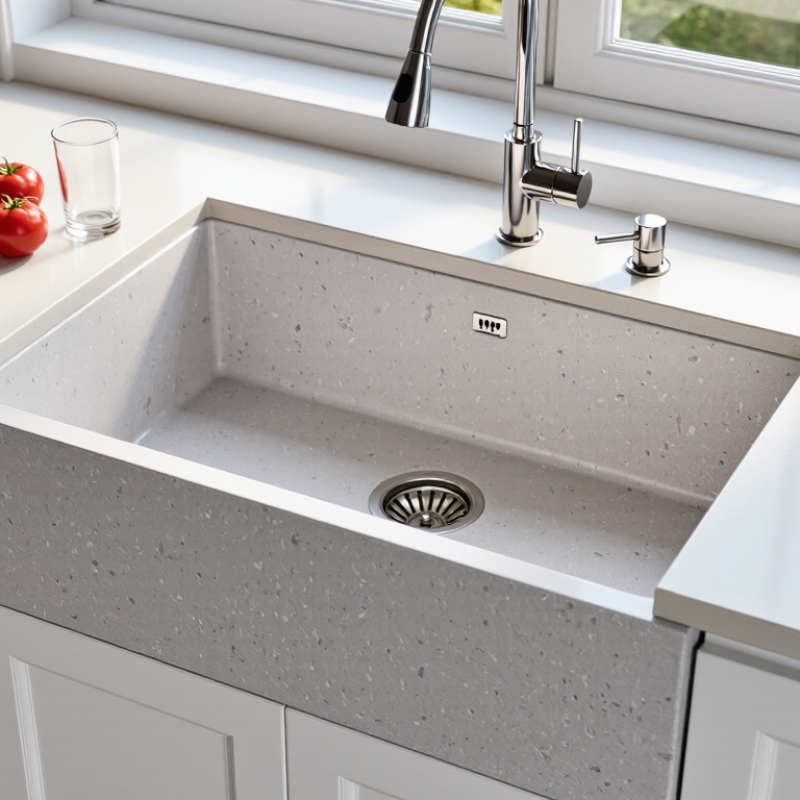
A quartz sink can change how a kitchen feels and functions every day. Its solid surface offers a clean, modern appearance without looking overly delicate. Under bright window light, subtle stone-like patterns can soften the sharp lines of white cabinets. The material also feels substantial when placing a heavy cast-iron pan inside.
quartz sinks are typically made from quartz particles combined with resins and pigments. This construction creates a dense, nonporous surface that resists many common kitchen stains. Coffee, tomato sauce, and muddy vegetables are less worrying when cleaned promptly. Still, no sink is completely maintenance-free. Hot cookware, abrasive cleaners, or sudden temperature changes may cause problems over time.
That matters.
Choosing a quartz sink requires more than liking its color. Homeowners should check the sink’s dimensions, bowl depth, mounting method, and manufacturer guidance. A professional installer can also confirm whether the countertop can support its weight securely. These details are easy to overlook during a showroom visit.
In my experience, a well-selected quartz sink feels quieter than stainless steel during washing. Water drops sound softer, and the surface often hides minor marks better. However, darker finishes may reveal pale mineral residue, especially in hard-water areas. Regular rinsing and a soft cloth usually help. The material is durable, but it is not indestructible. That honest limitation makes the decision more practical, not less appealing. A quartz sink works best when its appearance, maintenance needs, and installation requirements match the household’s daily habits.
What Is a Quartz Sink?
A quartz sink is an engineered kitchen sink made from finely ground quartz minerals and a binding resin. It is not carved from one solid piece of natural quartz. The mixture is compressed and cured under controlled conditions, creating a dense, colored material with a stone-like appearance.
In daily use, a quartz sink feels substantial and quiet. Water falling from a faucet usually sounds softer than it does in a thin metal basin. Its smooth, nonporous surface resists many common stains, food odors, and bacterial buildup when cleaned properly. Still, “resistant” does not mean stain-proof. Strong dyes, harsh chemicals, or standing coffee can leave marks, especially on lighter colors.
The material also handles normal heat, but extreme temperature changes deserve care. Placing a hot pan directly inside may cause damage over time, so a protective rack is sensible. I once assumed a heavy sink would always be more durable; that was too simple. Quality, installation support, cabinet strength, and everyday habits matter too. Because quartz sinks can weigh considerably more than standard metal models, the base cabinet may need reinforcement. Wipe the basin with mild soap and a soft cloth, then rinse away residue. Avoid abrasive powders that can dull the finish. Real kitchens are messy, and even a well-made quartz sink needs regular attention.
Why Choose a Quartz Sink for Your Kitchen? - What Is a Quartz Sink?
| Aspect | Typical Quartz Sink Data | Kitchen Benefit or Consideration |
|---|---|---|
| Definition | A solid-surface composite sink made from natural quartz aggregate, resin binder, and color pigments. | It combines the appearance of natural stone with the practicality of a molded sink. |
| Quartz content | Many products contain approximately 70–80% quartz aggregate by weight; the exact formulation varies by manufacturer and model. | A high mineral content contributes to a dense, durable surface. |
| Surface porosity | The finished composite surface is generally nonporous and does not require periodic sealing. | It helps reduce absorption of common food and liquid stains when cleaned properly. |
| Durability | The dense material is resistant to everyday impact, abrasion, and normal kitchen use, but it is not indestructible. | Suitable for frequent washing and food preparation; avoid dropping heavy cookware on edges or corners. |
| Scratch resistance | Good resistance to ordinary scratching, although sharp tools, abrasive grit, or heavy dragging can damage the finish. | Use a cutting board and avoid scouring powders or abrasive pads. |
| Heat performance | The material tolerates normal hot water and routine cooking use, but sudden exposure to very hot cookware may cause thermal stress or surface damage. | Place trivets or heat-resistant pads under hot pans and follow the product care instructions. |
| Stain resistance | Generally resistant to common food stains, but prolonged contact with strongly colored substances can leave discoloration on some finishes. | Rinse spills promptly, especially coffee, tea, wine, oils, and strongly colored foods. |
| Cleaning method | Use warm water, a soft cloth or sponge, and a mild pH-neutral dish detergent for routine cleaning. | Daily maintenance is simple and typically does not require polishing or sealing. |
| Noise level | The thick, dense composite construction usually produces less metallic ringing than a thin stainless-steel basin. | A quieter washing experience, particularly when rinsing dishes or running water. |
| Color and finish | Available in various solid, speckled, and stone-inspired colors with matte or textured finishes. | Makes it easier to coordinate the sink with countertops, cabinetry, and other kitchen surfaces. |
| Weight | Typically heavier than a comparable thin-gauge stainless-steel sink because of its dense mineral composition. | The cabinet and mounting system should be checked for adequate support before installation. |
| Best suited for | Kitchens where durability, low maintenance, quieter operation, and a stone-like appearance are important priorities. | A practical choice for busy households, provided that proper cleaning and heat-protection habits are followed. |

How Quartz Sinks Are Made and Structured
Why Choose a Quartz Sink for Your Kitchen?
A quartz sink is usually engineered stone, not solid natural quartz. Manufacturers blend roughly 70–80% crushed quartz with resin, pigments, and mineral fillers. The mixture enters a mold under vacuum and vibration. This removes air pockets and creates a dense, uniform body. Heat then cures the resin. CNC tools shape the basin, drain opening, and rim with controlled accuracy.
The structure matters during daily use. A dense quartz-rich body resists stains, while the resin helps absorb minor impact. I once assumed every dark sink had identical strength. That assumption was too simple. Filler ratios, curing temperature, and edge thickness can vary between factories. Thin edges may chip when heavy cookware falls. Matte textures can also hold fine grease if cleaning is delayed.
Industry data supports the demand for durable surfaces. The NKBA 2024 Kitchen Trends Report identifies durability and easy maintenance as leading kitchen priorities. The U.S. Geological Survey reported about 105 million metric tons of industrial sand and gravel production in 2023, showing the scale of mineral-based manufacturing. These figures do not measure sinks directly, but they explain the mature supply chain behind engineered mineral products. Ask for composition details and performance testing before purchase. Look for resistance data, dimensional tolerances, and care instructions. Small differences matter.
Key Benefits of Quartz Sinks in the Kitchen
Why Choose a Quartz Sink for Your Kitchen?
Quartz sinks combine natural quartz particles with a durable resin binder. The result feels solid, quiet, and substantial. When water hits the basin, the sound is noticeably softer than stainless steel. The nonporous surface also resists everyday stains from coffee, tomato sauce, and cooking oils. According to the 2024 Houzz U.S. Kitchen Trends Study, 75% of renovating homeowners selected undermount sinks. Quartz works especially well with this installation because its clean edge supports continuous countertop lines.
Key Benefits of Quartz Sinks in the Kitchen
Daily maintenance is simple. A soft sponge, mild soap, and warm water usually remove residue. The surface does not require sealing, unlike many natural stone materials. Its dense construction can also tolerate heavy cookware and frequent washing. The National Kitchen & Bath Association’s 2024 Kitchen Trends Report continues to identify durability and low maintenance as important kitchen design priorities. That supports quartz’s practical appeal, not merely its appearance.
Still, quartz is not indestructible. Very hot cookware may cause thermal damage, and abrasive cleaners can dull the finish. I have found that careless handling creates problems faster than normal cooking does. Dark finishes may also reveal mineral deposits more clearly. These drawbacks deserve attention before selection. A deeper bowl, rounded corners, and properly supported installation can improve real-world performance, especially in busy family kitchens.
Quartz Sink Styles, Sizes, and Installation Options
A quartz sink combines mineral particles with resin, creating a dense, stone-like surface for daily kitchen work. Its matte texture softens glare and hides small water marks better than highly polished finishes. Common styles include single-bowl, double-bowl, low-divide, and workstation designs. Each supports different habits. A single bowl suits large pans, while a divided bowl helps separate washing and rinsing. Color choices often range from white and gray to charcoal, but lighting can change how each shade looks.
Measure the cabinet before choosing a size. A compact 24-inch sink may fit a narrow kitchen, while 30- to 36-inch models provide more washing room. Check the bowl depth too. Deep basins hold tall cookware, yet they may feel uncomfortable for shorter users. Installation can be top-mount, undermount, or flush-fit, depending on countertop material and cabinet support. Undermount edges are easy to wipe, but they demand precise cutting and careful sealing. A small mistake can leave an uneven rim. I have learned that appearance should not outrank access and comfort.
Tips: Place a paper template on the counter before cutting. Test the faucet reach with a real pot. Leave room for plumbing bends and future repairs. Quartz surfaces are durable, but they are not invulnerable. Avoid sudden thermal shock and dragging heavy cast-iron cookware across the bowl. Use a soft cloth and mild cleaner; abrasive products may dull the finish. One detail is easy to overlook: confirm the sink’s drain position before ordering the cabinet.
How to Maintain and Compare a Quartz Sink
A quartz sink is usually made from quartz particles blended with durable resin, not solid natural quartz. This construction gives it a dense surface, consistent color, and strong resistance to everyday scratches. Compared with stainless steel, it feels quieter under running water and hides minor water spots better. Compared with ceramic, it is less likely to chip from ordinary kitchen impact, although sharp force can still cause damage.
Daily care is simple. Rinse away food particles after use, then wipe the basin with warm water and a soft cloth. For grease, use mild dish soap and a non-abrasive sponge. Drying the surface matters. It reduces mineral marks, especially in hard-water areas. Avoid steel wool, harsh scouring powders, and leaving strong cleaners inside the bowl. A hot pan should rest on a trivet, not directly on the sink.
I once treated a dark sink like a maintenance-free surface. That was careless. Pale mineral rings appeared around the drain, and they needed extra cleaning. For stubborn marks, a diluted, manufacturer-approved cleaner is safer than experimenting with bleach or abrasive chemicals. Quartz composite can be heavier than stainless steel, so cabinet support and professional installation deserve attention. It also costs more than basic stainless steel, but its quiet performance and solid appearance may justify the difference for frequent cooks. The choice is personal. Very personal.
Article Source:
Get in touch with us,
We will contact you shortly!
What is the difference between Unline(Non-Epoxy Coated) or Lining(Epoxy Coated) Metal Drum?

Unline drums with internally bare metal surface is more susceptible to corrosion and rust while Lining drums are internally coated with Phenolic Epoxy Coating to provide a non-reactive barrier between the drum surface and your product, less risk of contamination. Note: Our Unline drums are coated with an anti-rust agent after washing to reduce risk of rust.
What are Unline(Non-Epoxy Coated) and Lining(Epoxy Coated) drums compatible with?

In Singapore, Recon Unline Drums are usually more costly than Recon Lining Drums. Hence, we recommend Recon Unline Drums to fill aromatics like Thinner, Xylene, Toulene& other solvents like Hexane, BA, CA, EA, MC, White spirit, etc.
We recommend the lower-priced Recon Lining Drums to fill hydrocarbons like IPA, Methanol, Ethanoland oil-based products like diesel, petrol, lubricants, engine, hydraulic, base, transmission fluid, additives, waste oil, etc.;
What is the difference between Grade A and Grade B Metal Drum ?

Grading of used drums are usually based on physical conditions like rustiness, deformities and residual contents. Grade A drums are totally free from internal rust, serious dents and are easy to clean. Grade B drums have different degrees of rust internally and aesthetically inferior compared to Grade A drums.
What content is suitable to fill in a Recon Grade A or Grade B Drum?

Recon Grade A drum is suitable to fill more costly virgin grade products while Recon Grade B drum is more suitable for recycled or waste products.
What is the difference between Open Top and Close Top Drums and their usage?

Closed top drums are for water and other liquid products. Open Top drums can be used for liquid too but are primarily for more viscous products. The Open Top (or open head with a lid) allows you to get in and out of the drum with your product easier.
What type of content are Metal or Plastic Drums suitable for?

Metal drums offer additional protection when dealing with potentially flammable substances. They provide superior fire resistance, impact protection, and longevity for storing class 1, 2, and 3 volatile chemicals.
Plastic HDPE Drums are suitable for corrosive chemicals like acids, alkaline and also water-based products.
Will there be any contamination in the reconditioned metal, plastic drums or IBC tanks?

All our reconditioned containers (metal/plastic drums, carboys, IBC tanks) are washed thoroughly with specially formulated cleaning agent, rinsed with clean water, dried, and tested for possible leakages during the recondition process. Stringent quality inspection is being conducted 100% on every reconditioned product before they are qualified for sale & delivery.
What is the drum gauge(thickness) and weight for reconditioned metal drums?

Reconditioned metal drums gauge can be 0.9mm to 1.0mm all round. Their weight can vary from 16 to 18kg.
Do you sell New Packaging Products too?

Yes, we are also a distributor for new pallets, metal drums, plastic drums, carboys, IBCs and stainless-steel tanks.
What additional services do you provide apart from selling reconditioned and new containers.?

We are an NEA licensed toxic industrial waste collector, who can collect and dispose of used toxic waste containers in Singapore.
Do you offer labelling and silkscreen on the containers ?

We can provide labelling and silk-screening on the containers.
Are you able to ship overseas ?

Yes, we can arrange export our products to any country in the world.
Leading the Way
to Carbon Neutrality