
What Are the Best Coffee Bags From China?

What Are the Best Coffee Bags From China? The answer depends on coffee type, shipping conditions, budget, and packaging goals. A bag that protects freshly roasted beans may not suit ground coffee or sensitive single-origin products. Strong Coffee Bags usually combine reliable barrier layers, clean seals, and a suitable one-way degassing valve. Some use kraft paper outside, plastic film inside, and aluminum foil for stronger protection. Others choose recyclable mono-material structures. Each option has trade-offs.

In practical sourcing, packaging performance matters more than attractive artwork. Ask suppliers for material specifications, thickness data, seal-strength results, and food-contact documentation. Request samples before placing a large order. Fill them with real coffee, then inspect the seals after transport and storage. Notice the small details. Does the zipper close smoothly? Does the valve release gas without leaking aroma? Does the printed surface scratch during handling? These checks reveal more than a polished catalogue.

Reliable Chinese manufacturers should explain their production controls clearly. Look for traceable batches, documented quality inspections, and consistent communication. Certifications can support trust, but they should be verified against the actual factory and product. A trader may offer lower prices, yet factory capability can be harder to confirm. That is where buyers often misjudge value.

There is no single “best” Coffee Bags supplier for every brand. My view may change after testing, especially when moisture, oxygen, and shipping time differ. A better decision balances protection, appearance, sustainability, minimum order quantity, and long-term consistency. The ideal bag is not merely beautiful. It keeps the coffee fresh from the roaster’s table to the customer’s first grind.
What Are the Best Coffee Bags From China?

Types of Coffee Bags Made in China

What Are the Best Coffee Bags From China?

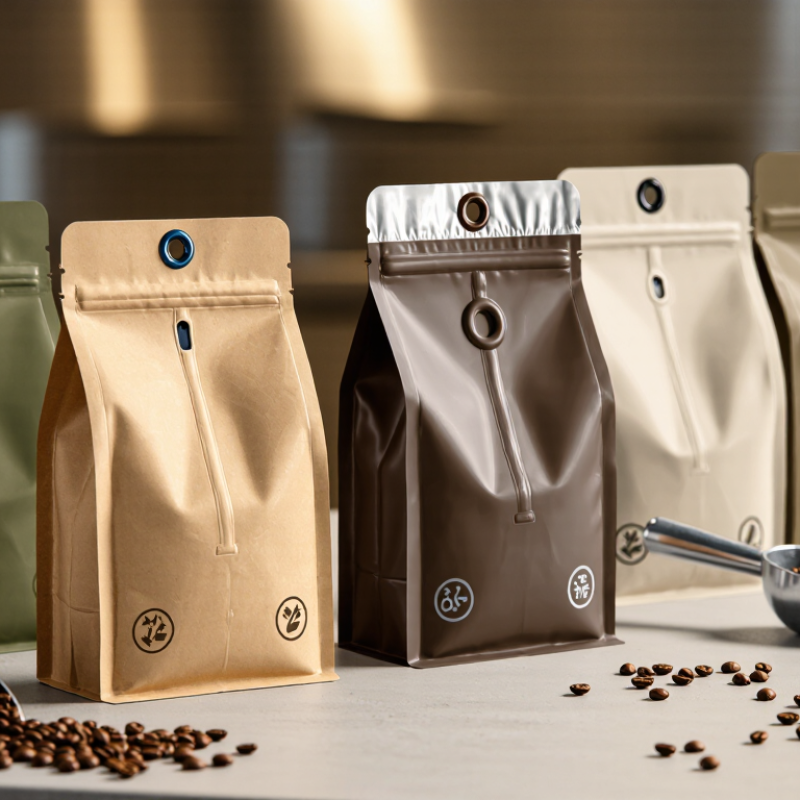
Coffee bags made in China come in several practical formats. Stand-up pouches use side gussets and a flat base, so they sit neatly on retail shelves. Flat-bottom bags provide stronger structure for larger coffee volumes. Quad-seal bags have four sealed corners and a firm, premium appearance. Each shape affects filling speed, storage space, and shipping costs.

Many Chinese coffee bags use kraft paper outside with plastic or aluminum layers inside. This construction gives the package a natural appearance while helping block moisture, oxygen, and light. Some bags include one-way degassing valves for freshly roasted coffee. Zipper closures improve daily use, but the zipper cannot replace a reliable heat seal. In production checks, buyers should review seal strength, valve placement, material thickness, and food-contact documentation.

Recyclable mono-material bags are also available, although their barrier performance may differ from foil-based structures. Compostable options can look attractive, but they may need stricter storage conditions. No format is perfect. A bag that works well for whole beans may perform poorly with fine grounds. I have seen packaging decisions focus too much on appearance and too little on oxygen protection. Requesting samples, drop tests, odor checks, and migration documentation can reveal problems before mass production. Printing quality matters too, especially around small text, roast dates, and batch information.


Key Materials Used in Chinese Coffee Bag Production

What Are the Best Coffee Bags From China?

Key Materials Used in Chinese Coffee Bag Production

Coffee bag performance depends on the material structure, not only its appearance. In Chinese production, kraft paper is often used as the outer layer. It gives the bag a natural texture and supports printed designs. However, paper alone cannot protect roasted coffee from moisture or oxygen.

The inner layers do the harder work. Polyethylene, often called PE, provides heat sealing and helps prevent leaks. Polyester, or PET, adds strength and resists punctures during transport. For coffee requiring stronger protection, an aluminum foil layer can block light, oxygen, and moisture effectively. It is useful for long storage, though it complicates recycling.

Some suppliers also use metalized PET or high-barrier films. These materials reduce exposure to oxygen while keeping the package lighter than foil-based structures. A one-way degassing valve may be fitted to release carbon dioxide from freshly roasted beans. The valve must match the roast style and filling process. Small details matter.

From practical sourcing experience, material claims should be checked through specifications and sample testing. Ask about thickness, seal strength, oxygen transmission, and moisture transmission rates. A bag may look premium but fail at the side seal. That happened during an early packaging review. The printed surface was excellent; the seal was not. Recyclable structures can be valuable, but they may offer less barrier protection in humid storage conditions.

How to Choose the Right Chinese Coffee Bag Design

What Are the Best Coffee Bags From China?

How to Choose the Right Chinese Coffee Bag Design

Choosing a Chinese coffee bag starts with the coffee, not the artwork. Dark roasted beans release more gas and need a reliable one-way valve. Light roasted coffee may need stronger oxygen protection for delicate aromas. Check the inner barrier, seal quality, and pouch thickness before choosing a surface finish.

A flat-bottom bag offers shelf stability and a wide display area. A side-gusset bag can hold larger volumes with less material. Fit matters. Measure the coffee after roasting, because bean density changes with roast level. A zipper feels convenient, but it cannot replace a heat seal. Ask for food-contact documents, material specifications, and production samples. Printing should keep roast dates and preparation details readable under warm warehouse lighting.

Small details matter. A matte surface hides fingerprints, while a glossy layer can make colors appear sharper. Test the valve with freshly roasted beans, not empty packaging. I once preferred a beautiful sample with a narrow opening, then found it messy during filling. That mistake was useful. Request samples in several sizes and test them for leakage, odor transfer, seal strength, and stacking. Suppliers should explain their quality checks clearly and provide consistent records. If a design needs too many decorative layers, reconsider it. Extra complexity can increase cost, waste, and production errors. A slightly plain bag may protect the coffee better.

Quality Standards for Coffee Bags From China

What Are the Best Coffee Bags From China?

Quality Standards for Coffee Bags From China

The best coffee bags from China are judged by performance, not appearance alone. In packaging inspections, I check the film structure, seals, valves, and printed surfaces. A neat pouch can still fail after filling. Coffee needs protection from oxygen, moisture, light, and aroma loss. High-barrier laminates commonly combine polyester, aluminum, or polyethylene layers. The correct structure depends on roast type, shelf life, and filling conditions.

Food-contact safety should be documented clearly. Ask for material specifications, migration test reports, and ink compliance records. Testing should match the destination market’s requirements. Reliable manufacturers also provide batch numbers and production records. These details support traceability when a problem appears. They matter more than attractive samples.

Seal strength deserves practical testing. Fill sample bags with roasted beans, store them under changing temperatures, and inspect the seams. A weak seal may look acceptable for several days. Then it slowly leaks. Degassing valves also need consistent airflow and firm bonding. I have seen small alignment errors affect freshness, especially on larger bags. That experience makes me cautious about relying only on factory claims. Independent testing adds confidence, although it increases cost and time. Some suppliers may resist it. That is worth treating as a warning.

Custom Ordering and Supplier Evaluation Steps

What Are the Best Coffee Bags From China?

Custom Ordering and Supplier Evaluation Steps

The best coffee bags from China depend on your roast, filling method, shelf-life target, and budget. Start with a clear specification sheet. Include bag size, material layers, finish, zipper style, valve type, printing colors, and monthly quantity. For freshly roasted coffee, request a high-barrier structure and a reliable degassing valve. Ask for food-contact documentation and recent test reports. Samples should match the proposed production material, not a cheaper substitute.

During supplier evaluation, compare more than the quotation. Check factory experience, production equipment, quality controls, and response speed. Request a sample batch with your artwork and inspect the seals, corners, zipper tension, and valve placement. Fill several bags with roasted beans. Store them for two weeks, then check odor, leakage, seal strength, and appearance. A simple compression test can reveal weak seams. It is not a laboratory test, but it exposes careless production.

I once focused too heavily on unit price. That decision caused extra artwork revisions and delayed delivery. A lower offer may exclude cylinders, sampling, inner cartons, or inspection costs. Confirm the minimum order quantity, production schedule, payment terms, packaging method, and replacement policy in writing. Ask how defects are recorded and corrected. Reliable suppliers accept measurable standards. Still, no supplier is perfect. Keep one approved sample, document every change, and review the first shipment before expanding the order.

What Are the Best Coffee Bags From China? - Custom Ordering and Supplier Evaluation Steps

Anonymous Supplier Profile Recommended Bag Format Typical Material Structure Suitable Coffee Use Indicative MOQ Typical Production Lead Time Customization Options Functional Features to Verify Quality and Compliance Documents to Request Evaluation Result
Supplier Profile 1 Flat-bottom bag with one-way degassing valve Kraft paper / PET / PE or kraft paper / aluminum foil / PE laminate Premium roasted coffee, retail shelf presentation, medium-to-large pack sizes Approximately 10,000–30,000 pieces per size and artwork Approximately 25–40 days after artwork approval and deposit Gravure printing, matte or glossy finish, custom dimensions, zipper, valve, tear notch Confirm valve fit, heat-seal strength, zipper performance, oxygen barrier, and bottom-gusset stability Food-contact declaration, material specification, migration test, seal-strength report, and lot-based quality records High potential
Supplier Profile 2 Side-gusset bag with tin tie or heat-sealed top Paper / PE laminate or paper / PET / PE laminate Traditional coffee packaging, wholesale packs, cost-sensitive retail programs Approximately 5,000–20,000 pieces per specification Approximately 20–35 days after final approval Custom width and height, printed paper, tin tie, fold-over top, optional valve Check crease accuracy, side-gusset symmetry, closure repeatability, moisture resistance, and print registration Food-contact declaration, ink and adhesive information, production sample, seal test, and packaging inspection report Good for practical programs
Supplier Profile 3 Quad-seal bag with zipper and one-way valve PET / aluminum foil / PE or PET / EVOH / PE high-barrier laminate Whole-bean coffee requiring enhanced aroma and oxygen protection Approximately 20,000–50,000 pieces per size and print design Approximately 30–45 days after approved proof Four-side printing, custom gussets, zipper, valve, laser scoring, rounded or square corners Verify oxygen transmission rate, moisture vapor transmission rate, valve opening pressure, seal integrity, and drop resistance Barrier test data, food-contact compliance, migration testing, valve specifications, and finished-bag inspection records Best for high-barrier needs
Supplier Profile 4 Recyclable mono-material stand-up pouch PE-based or PP-based mono-material structure with compatible zipper and valve Brands prioritizing simplified recycling streams and lightweight packaging Approximately 20,000–50,000 pieces per artwork and size Approximately 30–50 days, depending on barrier and valve configuration Digital or gravure printing, zipper, valve, tear notch, custom gusset and finish Confirm actual mono-material composition, recyclability claim conditions, barrier performance, zipper seal, and valve compatibility Full material declaration, recyclability substantiation, food-contact documents, barrier tests, and third-party migration results Promising, but verify claims
Supplier Profile 5 Compostable or paper-forward pouch with degassing valve Paper-based laminate with certified compostable polymer layers where applicable Shorter-life-cycle products and sustainability-focused coffee packaging Approximately 10,000–30,000 pieces per size and design Approximately 30–50 days after certification and artwork review Custom printing, paper texture, zipper or fold-over closure, valve, gusset size Check real barrier life, industrial versus home compostability, seal performance, valve durability, and storage conditions Valid compostability certificate, complete material breakdown, food-contact declaration, barrier data, and disposal instructions Use only with verified certification
Supplier Profile 6 Small-batch digital-printed stand-up pouch PET / PE or paper / PE laminate, depending on required barrier level New product launches, seasonal releases, test markets, and multiple short-run designs Approximately 500–5,000 pieces per design, subject to equipment limits Approximately 10–20 days after artwork approval Variable data printing, multiple artworks, custom size, zipper, valve, and low-volume sampling Confirm color consistency, minimum order rules, digital print resolution, seal strength, and repeat-order pricing Material specification, food-contact declaration, printed sample approval, seal test, and color-control procedure Best for market testing

Evaluation figures are typical purchasing ranges for custom coffee bags and should be confirmed through a written quotation, approved pre-production sample, material declaration, barrier test data, and final quality inspection before ordering.

Article Source:

Get in touch with us,
We will contact you shortly!

Get in touch with us by filling up the enquiry form. We will contact you shortly!

    What is the difference between Unline(Non-Epoxy Coated) or Lining(Epoxy Coated) Metal Drum?

    What are Unline(Non-Epoxy Coated) and Lining(Epoxy Coated) drums compatible with?

    What is the difference between Grade A and Grade B Metal Drum ?

    What content is suitable to fill in a Recon Grade A or Grade B Drum?

    What is the difference between Open Top and Close Top Drums and their usage?

    What type of content are Metal or Plastic Drums suitable for?

    Will there be any contamination in the reconditioned metal, plastic drums or IBC tanks?

    What is the drum gauge(thickness) and weight for reconditioned metal drums?

    Do you sell New Packaging Products too?

    What additional services do you provide apart from selling reconditioned and new containers.?

    Do you offer labelling and silkscreen on the containers ?

    Are you able to ship overseas ?

    Leading the Way
    to Carbon Neutrality

    Drumming sustainability into every aspect of our operations, we strive to create a greener and more conscious future for generations to come.
    Contact Us
    WhatsApp
    Email
    Join Our Newsletter

    Sign up for our newsletter for exclusive discounts and latest news of new launches!

      Logo Logo Logo Logo Logo
      Scroll to Top