
What Are A4 Adhesive Labels Used For?
A4 Adhesive Labels are simple sheets, yet they solve surprisingly varied identification problems. They help offices organize files, warehouses mark cartons, schools prepare folders, and small businesses present products clearly. Each sheet usually contains multiple peel-off labels, designed for inkjet or laser printing. That format makes short production runs practical. No expensive label press is required.
Industry consultant and label expert Mike Fairley captures their commercial value with the phrase, “Labels are the silent sales force.” His observation explains why a carefully printed A4 label can do more than display a name. It can show a product code, batch reference, barcode, price, address, or handling instruction. In a busy storeroom, a bold black barcode on a white label can save several minutes of searching. Small gains matter.
The best uses depend on adhesive strength, surface texture, moisture, temperature, and printer compatibility. Paper labels suit indoor documents and packaging. Synthetic materials may perform better on damp containers or frequently handled items. Still, “stronger” does not always mean “better.” A permanent adhesive can damage a box or leave residue. That is an easy detail to overlook.
This guide examines how A4 Adhesive Labels support shipping, inventory control, filing, branding, event preparation, and product identification. It also considers common mistakes, including poor alignment, overloaded designs, weak contrast, and unsuitable label materials. Practical results may vary. Testing one printed sheet first is often wiser than trusting the package description alone. The goal is not merely attractive labels. It is reliable information that remains readable, attached, and useful when work becomes busy.
What Are A4 Adhesive Labels?
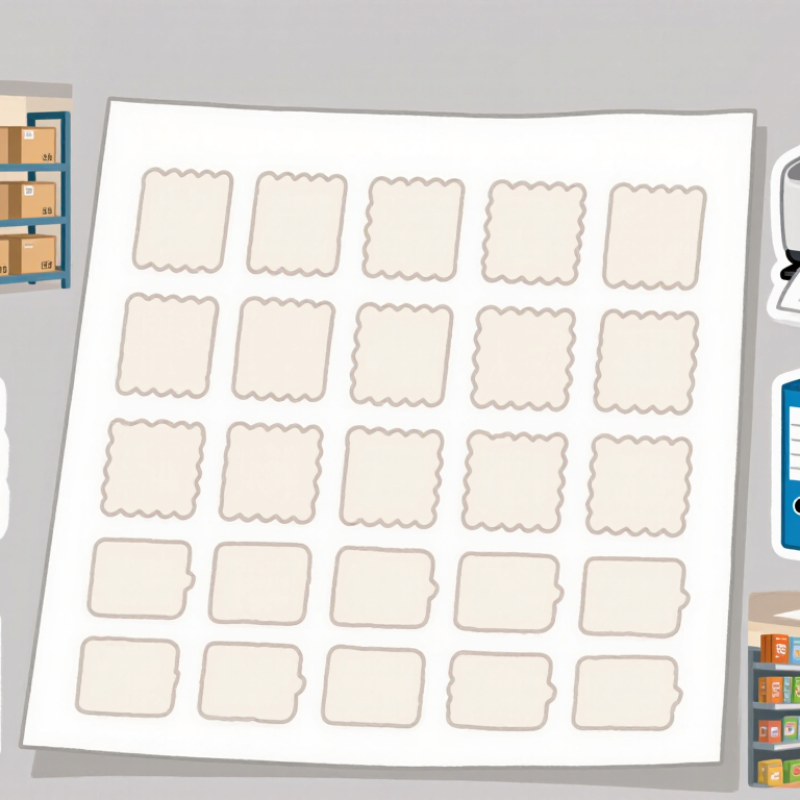
A4 adhesive labels are self-stick label sheets sized to 210 by 297 millimetres. Each sheet contains individual labels arranged in a fixed grid. The labels usually have a printable face, an adhesive layer, and a removable backing sheet. After printing, users peel away each label and apply it to a clean surface. Some sheets use permanent adhesive, while others are designed for easier removal.
These labels support everyday tasks in offices, warehouses, schools, and small workshops. They can identify envelopes, folders, storage boxes, product samples, cables, and parcels. A4 sheets also work well for barcodes, QR codes, price details, and return addresses. In my experience, neat alignment depends on the printer settings and the label template. A small margin error can shift every label.
Surface preparation matters. Dust, oil, and moisture can weaken the bond. Smooth cardboard, paper, glass, and sealed plastic usually provide better results. Rough or curved surfaces may cause lifting at the edges. They are not perfect for every job.
Users should check whether the sheets suit inkjet or laser printing. Heat-sensitive materials may react poorly inside certain printers. I once underestimated drying time on heavily printed labels, and smudging followed. That simple mistake showed why testing one sheet first is worthwhile. Storage also matters; excessive heat or humidity can affect the adhesive and paper.



Get in touch with us,
We will contact you shortly!
What is the difference between Unline(Non-Epoxy Coated) or Lining(Epoxy Coated) Metal Drum?

What are Unline(Non-Epoxy Coated) and Lining(Epoxy Coated) drums compatible with?
What is the difference between Grade A and Grade B Metal Drum ?
What content is suitable to fill in a Recon Grade A or Grade B Drum?
What is the difference between Open Top and Close Top Drums and their usage?
What type of content are Metal or Plastic Drums suitable for?
Will there be any contamination in the reconditioned metal, plastic drums or IBC tanks?
What is the drum gauge(thickness) and weight for reconditioned metal drums?
Do you sell New Packaging Products too?
What additional services do you provide apart from selling reconditioned and new containers.?
Do you offer labelling and silkscreen on the containers ?
Are you able to ship overseas ?
Leading the Way
to Carbon Neutrality