
Top Trace Oxygen Analyzers for Global Buyers

Choosing the right Trace Oxygen Analyzer can protect product quality, process safety, and purchasing budgets across international markets. Global buyers often compare sensitivity, response time, sample compatibility, certifications, and long-term service support. A low price may look attractive, but unstable readings can create expensive production decisions later.

This guide examines leading trace oxygen analyzers through practical buying criteria. These include detection ranges from parts per million to parts per billion, measurement stability, calibration methods, and data connectivity. We also consider stainless-steel sample lines, moisture control, pressure limits, and performance in gases such as nitrogen, argon, hydrogen, and carbon dioxide. Small details matter. A poorly prepared sample line can distort an otherwise accurate result.

Real purchasing conditions are rarely perfect. Delivery times change, local technicians may have limited training, and replacement sensors may cross several borders. Therefore, buyers should verify manufacturer documentation, regional support, warranty terms, and calibration traceability before placing an order. Independent test reports and application references add confidence, but they do not replace site-specific evaluation.

No shortlist is perfect. Some analyzers excel in laboratory environments but struggle with vibration, dust, or changing sample pressure. Others offer strong portability but limited automation. The best choice depends on the gas stream, required accuracy, installation conditions, and available maintenance skills. This overview aims to provide a careful, evidence-based starting point, while acknowledging that final validation should happen with representative samples and qualified technical advice.
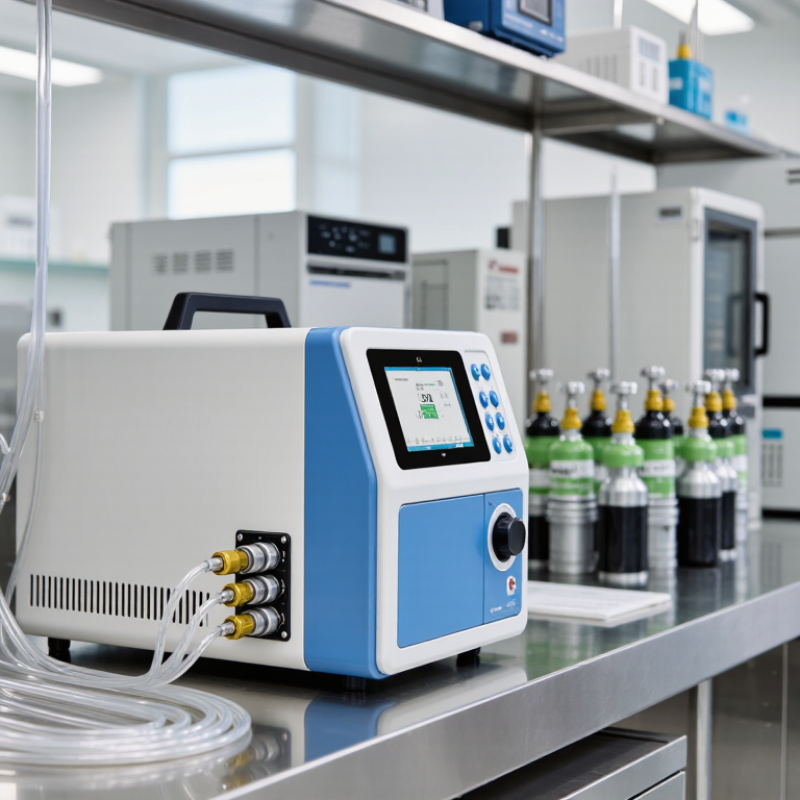
Top Trace Oxygen Analyzers for Global Buyers

What Trace Oxygen Analyzers Measure and Why They Matter

Trace oxygen analyzers measure very small oxygen concentrations in gases, often at parts-per-million or parts-per-billion levels. They help operators confirm whether an atmosphere is genuinely inert. A reading of 2 ppm can matter when oxygen-sensitive materials are exposed for hours. These instruments commonly support gloveboxes, gas pipelines, heat-treatment systems, and controlled manufacturing areas.

The measurement depends on the sensor, sample flow, pressure, temperature, and moisture level. Electrochemical sensors can be practical for routine monitoring, while laser-based systems offer fast, non-contact analysis. Accuracy is not automatic. A loose fitting or wet sample line can create a misleading result. In field work, technicians often compare the analyzer with a certified reference gas before trusting a critical reading. Small details matter.

Trace oxygen analysis also protects product consistency and process records. Unexpected oxygen may signal a leak, poor purging, contaminated gas, or a failing seal. However, the analyzer cannot explain the cause by itself. That part still requires careful inspection and sound process knowledge. Calibration intervals should reflect actual use, not only a manual’s suggested schedule. A dusty factory, frequent sensor changes, or unstable flow may require more frequent checks. The perfect reading is not always the most useful reading. A stable, documented measurement is usually more valuable than a single impressive number.


Key Technologies Used in Trace Oxygen Detection

Top Trace Oxygen Analyzers for Global Buyers

Trace oxygen detection is becoming more demanding as hydrogen, semiconductor, and pharmaceutical production expands. The IEA’s Global Hydrogen Review 2024 identifies nearly 49 million tonnes of announced low-emissions hydrogen capacity by 2030. Only a fraction has reached final investment decisions. That gap matters because future plants will need dependable purity monitoring.

Electrochemical sensors suit portable checks and low-cost maintenance. They can respond quickly, but electrolyte aging may distort readings. Zirconia analyzers perform well at elevated temperatures and continuous process control. They require stable temperature management. Paramagnetic systems offer strong selectivity and low drift, although vibration can affect performance. Tunable diode laser absorption spectroscopy measures oxygen without consuming the sample. It delivers fast responses, but alignment and optical cleanliness need attention.

Small leaks matter. ISO 14687 specifies a maximum oxygen concentration of 5 micromoles per mole for hydrogen fuel quality. Buyers should therefore examine the complete sampling system, not only the analyzer. Moisture traps, pressure regulators, heated lines, and leak-tested fittings can determine real accuracy. A 2024 MarketsandMarkets report estimates the global gas sensor market at approximately USD 2.2 billion, with growth toward USD 3.2 billion by 2029. That growth supports wider adoption, but market size does not guarantee measurement quality. In field work, I have found calibration intervals often receive less attention than display resolution. That is a mistake worth reconsidering. Temperature changes, response time, detection limit, and documented calibration uncertainty should guide international purchasing decisions.

How to Compare Analyzer Accuracy, Range, and Response Time

Top Trace Oxygen Analyzers for Global Buyers

Comparing oxygen analyzers requires more than reading the accuracy line. Accuracy may mean ±1% of reading or ±1% of full scale. These specifications produce very different results. At a 1% range, ±1% full scale equals ±100 ppm. That can overwhelm a 10 ppm measurement. U.S. EPA Method 3A uses a calibration-error limit of 2% of span, showing why span selection matters in compliance testing. ISO/IEC 17025 guidance also supports reporting measurement uncertainty, not accuracy alone.

Range should match the process, not merely look impressive. A trace analyzer covering 0–1,000 ppm may resolve low oxygen better than a 0–25% model. Check the lower detection limit, repeatability, and drift over time. Response time is commonly stated as T90, meaning the analyzer reaches 90% of its final reading. Tubing length, filters, moisture, and sample flow can slow it considerably. In field commissioning, a quick sensor can still deliver a late result. That detail is easy to miss.

Tips: Request calibration certificates with uncertainty values. Ask suppliers to test your actual gas matrix. Compare T90 at your planned flow rate. Confirm whether accuracy applies to reading or span. Watch for temperature effects. A clean datasheet is not proof of perfect performance. Real installations are less tidy.

Top Trace Oxygen Analyzers for Global Buyers - How to Compare Analyzer Accuracy, Range, and Response Time
Analyzer Type Typical Measurement Range Typical Accuracy Typical Response Time
(T90)
Best-Fit Applications Key Advantages Important Selection Considerations
Electrochemical Trace Oxygen Analyzer 0.1 ppm to 1% O₂ Typically ±1% of reading or ±0.1 ppm, depending on the sensor range and calibration conditions Approximately 10–60 seconds after sample-line stabilization Inert-gas quality control, glove boxes, welding gas, semiconductor support gases, and laboratory gas monitoring Strong sensitivity at ppm and sub-ppm levels; relatively simple operation; generally low power consumption Sensor lifetime is affected by oxygen exposure, moisture, acidic gases, and contaminants. Verify expected sensor life and replacement cost.
Paramagnetic Oxygen Analyzer 0.1% to 100% O₂ Typically ±0.1–0.5% O₂ absolute, depending on the measuring range and instrument configuration Approximately 2–15 seconds Industrial gas production, combustion control, medical gas verification, and process gas measurement Non-consumable measuring principle; good repeatability; suitable for continuous percentage-level oxygen measurement Usually not the first choice for ultra-trace measurement below the low-ppm range. Sample pressure, flow, vibration, and background gas composition can influence performance.
Laser-Based Oxygen Analyzer
(TDLAS)
Typically 1 ppm to 100% O₂ Commonly ±1–2% of reading, with application-dependent detection limits and calibration requirements Approximately 1–10 seconds; faster systems are available for optimized sample cells Fast process monitoring, hazardous-area installations, gas blending, pipeline systems, and high-purity gas applications Fast response; low routine sensor consumption; can provide selective measurement with limited cross-sensitivity when properly configured Optical path cleanliness, sample pressure, gas temperature, water vapor, and installation design must be controlled. Confirm suitability for the required gas matrix.
Zirconia Oxygen Analyzer Approximately 10 ppm to 100% O₂ Typically ±1–2% of reading in the calibrated operating range Approximately 5–30 seconds, excluding sample transport time Furnace atmospheres, combustion systems, heat treatment, flue gas, and high-temperature process control Wide measuring span; suitable for high-temperature and combustion environments; no liquid electrolyte replacement Requires elevated operating temperature. Reducing gases, combustible gas mixtures, particulates, and leaks can cause measurement errors or sensor damage.
Micro-Fuel Cell Oxygen Analyzer 0.1 ppm to 25% O₂ Typically ±1% of reading or ±0.1 ppm at low ranges, subject to sensor specification and calibration Approximately 10–60 seconds Portable gas testing, inerting verification, cylinder analysis, gas distribution, and confined-space support monitoring Compact design; good trace-oxygen capability; often available in portable and fixed configurations The sensor is consumable and has a finite service life. Check expected operating life, cross-sensitivity, pressure limits, and calibration-gas requirements.
Note: The figures shown are representative technical ranges for comparing analyzer technologies. Actual performance depends on sensor design, sample conditioning, gas composition, pressure, flow rate, temperature, calibration method, and sample-line length.

Applications Across Industries and Global Markets

Top Trace Oxygen Analyzers for Global Buyers

Trace oxygen analyzers support quality control across hydrogen, semiconductor, pharmaceutical, and food-packaging operations. In electrolyzers, oxygen measurements help detect membrane damage, air ingress, and unsafe gas mixing. The IEA Global Hydrogen Review 2024 reports that announced low-emissions hydrogen projects could reach 49 million tonnes annually by 2030. Only a fraction has secured final investment decisions, however. This gap makes dependable monitoring important during pilot and commercial expansion.

Semiconductor facilities often measure oxygen at extremely low concentrations inside inert-gas systems. A small leak can affect wafer yield, chamber cleanliness, or production records. The SEMI World Fab Forecast projects continued expansion in global wafer-fabrication capacity through 2025, increasing demand for stable gas monitoring. Pharmaceutical manufacturers also use analyzers in nitrogen blanketing and controlled packaging. Response time matters there. So does calibration traceability.

Global buyers should compare detection limits, sample conditioning, pressure tolerance, and local service capability. An analyzer that performs well in a dry laboratory may drift in a humid coastal plant. That detail is easy to miss. The World Bank’s Global Economic Prospects highlights uneven industrial growth across regions, so infrastructure and maintenance access deserve equal attention. No instrument is perfect. Sampling lines can leak, sensors can age, and operators can misread alarms. Practical trials under real process conditions remain more convincing than a polished specification sheet.

Top Trace Oxygen Analyzers: Typical Measurement Requirements Across Industries

Representative upper measurement ranges commonly specified for trace-oxygen monitoring in industrial applications. Actual operating ranges vary with process conditions, gas composition, and local standards.

Semiconductor and high-purity gas systems typically require ppb-level sensitivity, while food packaging, welding, and heat-treatment processes generally monitor oxygen at higher concentrations. This range diversity supports different analyzer technologies, including electrochemical, zirconia, and laser-based systems.

Selection, Installation, Calibration, and Maintenance Guidelines

Selecting a trace oxygen analyzer starts with the process, not the product label. Define the expected oxygen range, sample pressure, gas composition, temperature, and response time. A sensor designed for dry gas may drift in humid service. That detail is easy to miss.

Install the analyzer close to the sampling point to reduce response delay. Use clean, compatible tubing and keep bends gentle. Add a filter when dust or liquid carryover is possible. Leak-test every connection with an approved method. Small leaks can make a stable system look contaminated. In my field experience, poor sampling often causes more errors than the analyzer itself. Allow the instrument to reach operating temperature before calibration. Do not calibrate while the sample line is still purging. Use certified reference gases that bracket the working range, and record cylinder details, pressure, date, and operator. A single-point check is convenient, but it may hide span errors.

Calibration intervals should follow sensor behavior, process risk, and site history. Weekly verification may suit critical monitoring, while less demanding systems need a different schedule. Review the trend, not only the latest number. Replace filters before they become visibly blocked. Inspect tubing, regulators, seals, and sensor status during each service visit. Keep a clear maintenance log. It supports troubleshooting and strengthens measurement confidence. Even careful procedures can fail when ambient air enters during maintenance, so isolate and purge the system again. Mistakes happen. Record them honestly, then adjust the procedure.

Get in touch with us,
We will contact you shortly!

Get in touch with us by filling up the enquiry form. We will contact you shortly!

    What is the difference between Unline(Non-Epoxy Coated) or Lining(Epoxy Coated) Metal Drum?

    What are Unline(Non-Epoxy Coated) and Lining(Epoxy Coated) drums compatible with?

    What is the difference between Grade A and Grade B Metal Drum ?

    What content is suitable to fill in a Recon Grade A or Grade B Drum?

    What is the difference between Open Top and Close Top Drums and their usage?

    What type of content are Metal or Plastic Drums suitable for?

    Will there be any contamination in the reconditioned metal, plastic drums or IBC tanks?

    What is the drum gauge(thickness) and weight for reconditioned metal drums?

    Do you sell New Packaging Products too?

    What additional services do you provide apart from selling reconditioned and new containers.?

    Do you offer labelling and silkscreen on the containers ?

    Are you able to ship overseas ?

    Leading the Way
    to Carbon Neutrality

    Drumming sustainability into every aspect of our operations, we strive to create a greener and more conscious future for generations to come.
    Contact Us
    WhatsApp
    Email
    Join Our Newsletter

    Sign up for our newsletter for exclusive discounts and latest news of new launches!

      Logo Logo Logo Logo Logo
      Scroll to Top