
Best Solar Combiner Manufacturer in China?
China has become a major manufacturing base for photovoltaic equipment, including the Solar Combiner used in utility, commercial, and industrial systems. The International Energy Agency reported nearly 510 gigawatts of new renewable capacity worldwide in 2023. Solar photovoltaics represented about three quarters of that growth. This rapid expansion increases demand for reliable DC collection, overcurrent protection, monitoring, and weather-resistant enclosures.
Quality still matters more than volume.
A suitable Solar Combiner manufacturer should demonstrate tested designs, stable component sourcing, and documented production controls. IEC 61439 and IEC 62548 are useful reference points for low-voltage assemblies and photovoltaic array design. Buyers should also examine enclosure ratings, fuse coordination, surge protection, thermal performance, and inspection records. These details become practical on-site. A poorly sealed box can collect moisture. An undersized terminal can overheat beneath midday current. A missing monitoring function can delay fault diagnosis.
The IEA Photovoltaic Power Systems Programme, in its Trends in Photovoltaic Applications 2024 report, shows how quickly global PV deployment is expanding. However, market growth does not automatically prove factory capability. That assumption deserves caution. A serious Chinese supplier should provide traceable test reports, sample verification, production photographs, and clear after-sales procedures. Certifications alone are not enough. Buyers need evidence that the delivered product matches the approved sample.
This guide evaluates leading Chinese manufacturers through engineering capability, compliance evidence, customization options, delivery consistency, and field support. The best choice may not be the cheapest quotation. It should be the supplier that reduces electrical risk over years of outdoor operation.
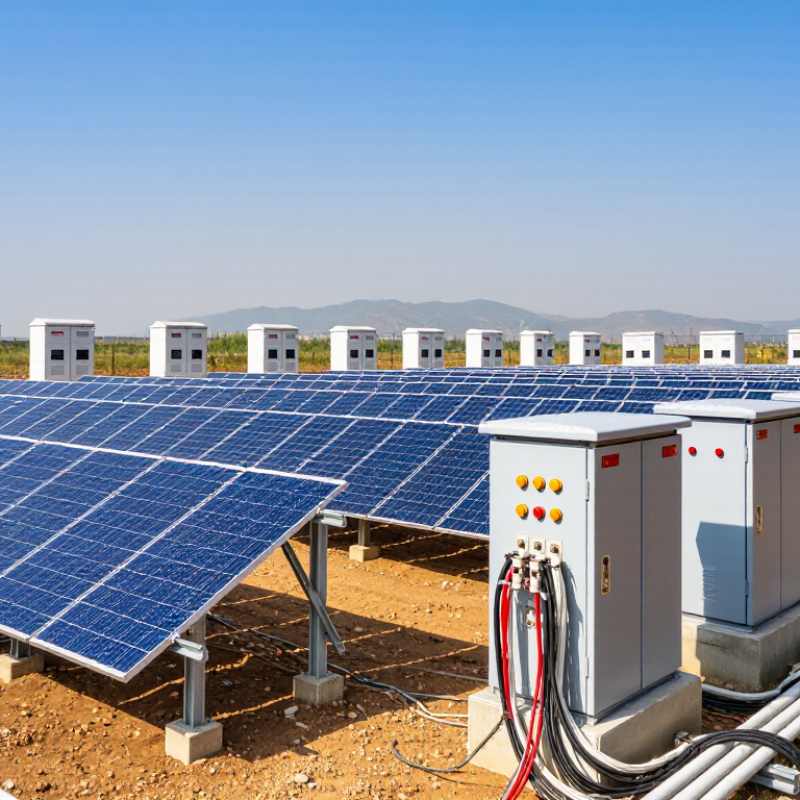
Solar Combiner Manufacturer Criteria: 1000–1500 V DC System Compatibility
Best Solar Combiner Manufacturer in China?
Solar Combiner Manufacturer Criteria: 1000–1500 V DC System Compatibility
A reliable manufacturer should prove compatibility with 1000–1500 V DC photovoltaic systems, not merely print a voltage label. The IEA PVPS Trends 2024 report recorded about 456 GW of new solar capacity in 2023. Larger arrays now demand higher-voltage designs, tighter insulation control, and safer maintenance procedures.
Check the complete electrical path. The combiner should match the array’s maximum open-circuit voltage under the lowest site temperature. Verify fuse ratings, short-circuit withstand capability, creepage distance, and DC disconnection performance. IEC 62548 supports structured PV design practices, while IEC 61439-2 provides a useful framework for low-voltage assembly verification. Small details matter.
Look inside the enclosure.
A professional supplier should provide routine test records, temperature-rise data, protection-device certificates, and traceable component batches. Ask for performance evidence at 1500 V DC, high humidity, and elevated ambient temperatures. NREL’s 2024 PV System Cost Benchmark reflects the industry’s continued use of 1500 V utility-scale architectures, but field conditions remain less predictable. I have seen clean drawings fail during installation because cable entries were cramped. That weakness deserves honest review. A factory audit, sample inspection, and thermal test under realistic load can reveal more than polished brochures.

Safety Standards: IEC 61439, IEC 60529, and Class II Surge Protection
When assessing the best solar combiner manufacturer in China, safety evidence should come before price. A reliable manufacturer should explain IEC 61439 compliance clearly. This standard covers low-voltage switchgear and controlgear assemblies, including design verification and routine production checks. Ask for enclosure data, wiring diagrams, temperature-rise results, and inspection records.
IEC 60529 defines protection against dust and water through IP ratings. Solar combiners often face rain, heat, dust, and condensation. Seals, cable glands, hinges, and door interfaces all matter. An IP65 label proves little if the tested enclosure differs from the shipped product. Check test conditions and configuration details. Dust can enter through one overlooked gland. This detail is often missed.
Class II surge protection, commonly called Type 2 protection, should match the system voltage and grounding arrangement. The manufacturer should provide discharge-current ratings, backup protection requirements, and coordination information. A visible status indicator helps maintenance teams identify a failed device quickly. Short wiring paths also improve protection performance. However, no surge protector can correct poor installation. I would question vague claims, even when documents look impressive. Traceable components, repeatable testing, and responsive engineering support reveal more than polished certificates.
Technical Comparison: 15–32 A Fuses, IP65–IP66 Enclosures, and Monitoring
Best Solar Combiner Manufacturer in China?
When comparing a solar combiner manufacturer in China, fuse selection deserves close attention. A 15 A fuse may suit lower-current strings, while 20 A, 25 A, or 32 A options require verified module and cable ratings. Higher capacity is not automatically safer. During commissioning, I check string short-circuit current, temperature correction, and the manufacturer’s fuse coordination data. Small details matter.
The enclosure rating also affects long-term reliability. IP65 protects against dust and water jets, while IP66 provides stronger resistance to powerful water jets. Neither rating solves every site problem. UV exposure, condensation, cable-gland quality, and drainage still need practical review. I have seen well-sealed boxes fail because installers left unused cable entries poorly closed. That mistake is easy to repeat.
Monitoring adds useful operational evidence. A reliable combiner can measure string current, DC voltage, fuse status, and enclosure temperature. RS485 or another industrial communication interface can send abnormal readings to the plant control system. Clear alarms help technicians locate a weak string before energy losses become obvious. However, monitoring is not a substitute for inspection. Sensors can drift, communication can stop, and software thresholds may be poorly configured. A serious technical comparison should include calibration records, surge protection, wiring diagrams, and accessible maintenance points. The best specification is the one technicians can verify in the field.
Quality Audits: Insulation Testing Above 1,000 V DC and Thermal Performance
Best Solar Combiner Manufacturer in China?
A dependable solar combiner manufacturer should prove performance with controlled, repeatable audits. Insulation testing above 1,000 V DC checks separation between live circuits and the enclosure. Technicians should inspect cables, terminals, seals, and creepage distances before applying voltage. The test area needs calibrated instruments, protective procedures, and clear records. A pass result matters only when the method is traceable.
Thermal performance deserves equal attention. During load testing, engineers should monitor terminal temperature, busbars, fuse holders, and cable entry points. Infrared images can reveal a loose connection before it becomes visible damage. Testing should cover rated current, enclosure conditions, and realistic ambient temperatures. Small details matter here.
No audit is perfect. A clean factory test cannot represent every rooftop or utility site. Dust, poor airflow, and uneven cable tightening may change results. This is where experienced manufacturers should review failures instead of hiding them. Their reports should show test dates, instrument calibration, sample identity, and corrective actions. Buyers should ask for raw evidence, not only certificates. A serious quality team also repeats thermal checks after design changes, because a minor terminal revision can alter heat distribution. That extra discipline builds trust.
Best Solar Combiner Manufacturer in China? - Quality Audits: Insulation Testing Above 1,000 V DC and Thermal Performance
| Audit Area | Measured Dimension | Reference or Project Benchmark | Audit Method | Required Evidence |
|---|---|---|---|---|
| DC System Rating | Rated operating voltage | 1,000 V DC or 1,500 V DC, according to the approved system design | Review nameplate, circuit diagram, component ratings, and test plan | Approved drawings, rating labels, and configuration records |
| Insulation Testing | Insulation resistance test voltage | Test voltage above 1,000 V DC; typical project levels include 1,500 V DC for 1,000 V-class assemblies or 2,500 V DC for 1,500 V-class assemblies | Use a calibrated insulation tester with the assembly isolated, discharged, and securely connected | Test voltage, duration, circuit configuration, operator, and instrument ID |
| Dielectric Strength | Withstand performance between live parts and enclosure or protective earth | No breakdown, flashover, or unacceptable leakage under the applicable standard and approved test plan | Apply the specified dielectric test after removing or protecting components that are not rated for the test | Pass/fail record, leakage-current record where applicable, and calibrated equipment certificate |
| Insulation Resistance | Resistance between conductors and accessible conductive parts | Must meet the minimum value defined by the applicable standard, product specification, and project acceptance criteria | Measure positive-to-earth, negative-to-earth, and positive-to-negative after correct isolation | Individual measurement results and environmental conditions during testing |
| Thermal Performance | Temperature rise at terminals, fuse holders, busbars, and cable entries | Temperature rise must remain within the limits of the applicable assembly standard and component datasheets; a 70 K terminal-rise reference is commonly used under relevant IEC 61439 conditions | Operate at the specified current until thermal stabilization; record ambient and component temperatures | Time-temperature curve, ambient temperature, load current, and thermal images |
| Current-Carrying Capacity | Continuous current of busbars, terminals, fuse holders, and cable connectors | Component current ratings must equal or exceed the design current after derating for ambient temperature and enclosure conditions | Compare design calculations with component datasheets and stabilized-load measurements | Load calculation, derating table, component certificates, and test report |
| Connection Integrity | Terminal torque and contact resistance | Torque values must follow the terminal or component manufacturer’s specification; resistance should be stable and free from abnormal heating | Use calibrated torque tools, visual inspection, and low-resistance measurement where required | Torque checklist, terminal photographs, and resistance results |
| Enclosure Protection | Ingress protection rating | IP54, IP65, or another specified rating according to installation location; classification should be verified under IEC 60529 | Inspect seals, cable glands, doors, drainage, and enclosure construction; conduct formal IP testing when required | IP test report, enclosure inspection record, and production photographs |
| Environmental Suitability | Operating temperature, humidity, UV exposure, and corrosion resistance | Typical outdoor project specifications use approximately −25 °C to +60 °C, but the final range must match the installation design | Review material selection, component datasheets, coating specifications, and environmental test results | Material certificates, coating records, environmental test reports, and warranty conditions |
| PV Fuse Protection | Fuse voltage, current rating, interrupting capacity, and polarity | Use photovoltaic-rated fuse links and holders selected for the system voltage, available fault current, and cable protection requirements | Verify fuse specifications, coordination calculations, and correct installation orientation | Fuse datasheets, coordination study, incoming inspection, and assembly checklist |
| Surge Protection | DC surge protective device rating and status indication | Selection should correspond to the maximum continuous operating voltage, earthing arrangement, and lightning-risk assessment; IEC 61643-31 is a relevant reference | Check UCPV, discharge-current rating, backup protection, wiring length, and visual status indicator | SPD datasheet, protection design, wiring inspection, and functional status record |
| Functional and Visual Inspection | Labeling, polarity, wiring layout, creepage, clearance, and component accessibility | Clear permanent markings and safe separation must comply with the approved design and applicable IEC requirements | 100% final inspection against drawings, wiring schedules, and workmanship criteria | Final inspection checklist, wiring photographs, serial traceability, and nonconformity closure |
| Calibration and Traceability | Test-equipment accuracy and product traceability | Measuring instruments should have valid calibration traceable to a recognized national or international standard | Audit calibration certificates, equipment IDs, batch numbers, and test-record linkage | Calibration certificates, test logs, production batch records, and corrective-action history |
Audit note: Test voltages, temperature-rise limits, ingress-protection levels, and acceptance criteria must be confirmed against the applicable IEC or regional standard, product rating, and project specification. Values shown above are structured audit benchmarks and should not replace the approved safety test plan.
Supplier Selection: Certifications, Customization, Warranty, and Global Delivery Data
Best Solar Combiner Manufacturer in China?
Supplier selection should begin with evidence, not attractive catalog photos. The IEA PVPS Trends 2024 report estimated 456 GW of new photovoltaic capacity in 2023. This scale increases pressure on combiner reliability and delivery control. Ask for current IEC 61439 test reports, surge protection compliance, insulation results, and independent laboratory records. ISO 9001 supports process consistency, but it does not prove product performance. A certificate alone is not enough. Check its scope, expiry date, and issuing body. Review enclosure materials, terminal torque records, thermal testing, and traceability for each production batch.
Customization matters when projects use different string counts, fuse ratings, monitoring systems, or cable entries. Require a controlled drawing before production. The drawing should show ratings, wiring, protection devices, and IP requirements. Warranty terms must state coverage, response time, replacement procedures, and exclusions. A practical benchmark is a five-year product warranty, supported by documented failure analysis. Longer coverage sounds better, yet unclear exclusions can weaken it. I would request warranty claims data, even if the supplier hesitates.
IRENA’s Renewable Capacity Statistics 2024 recorded 346 GW of solar additions in 2023. Global demand makes delivery evidence essential. Request the last twelve months’ on-time delivery rate, average lead time, destination countries, packaging photos, and damage records. Confirm export documents before payment. A realistic supplier should provide batch samples and a remote factory audit. My own concern is simple: supplier questionnaires often reward polished answers, not consistent execution. Verify the details through samples, references, and shipment records.
Best Solar Combiner Manufacturer in China? Supplier Selection Evidence
This chart shows the number of practical verification items buyers can request in four key areas: applicable standards, customization documentation, warranty terms, and global delivery paperwork. Relevant reference standards include IEC 61439-2, IEC 60947-2, IEC 61643-31, and IEC 60529. The figures represent checklist items rather than company or brand performance data.
Article Source:
Get in touch with us,
We will contact you shortly!
What is the difference between Unline(Non-Epoxy Coated) or Lining(Epoxy Coated) Metal Drum?

Unline drums with internally bare metal surface is more susceptible to corrosion and rust while Lining drums are internally coated with Phenolic Epoxy Coating to provide a non-reactive barrier between the drum surface and your product, less risk of contamination. Note: Our Unline drums are coated with an anti-rust agent after washing to reduce risk of rust.
What are Unline(Non-Epoxy Coated) and Lining(Epoxy Coated) drums compatible with?

In Singapore, Recon Unline Drums are usually more costly than Recon Lining Drums. Hence, we recommend Recon Unline Drums to fill aromatics like Thinner, Xylene, Toulene& other solvents like Hexane, BA, CA, EA, MC, White spirit, etc.
We recommend the lower-priced Recon Lining Drums to fill hydrocarbons like IPA, Methanol, Ethanoland oil-based products like diesel, petrol, lubricants, engine, hydraulic, base, transmission fluid, additives, waste oil, etc.;
What is the difference between Grade A and Grade B Metal Drum ?

Grading of used drums are usually based on physical conditions like rustiness, deformities and residual contents. Grade A drums are totally free from internal rust, serious dents and are easy to clean. Grade B drums have different degrees of rust internally and aesthetically inferior compared to Grade A drums.
What content is suitable to fill in a Recon Grade A or Grade B Drum?

Recon Grade A drum is suitable to fill more costly virgin grade products while Recon Grade B drum is more suitable for recycled or waste products.
What is the difference between Open Top and Close Top Drums and their usage?

Closed top drums are for water and other liquid products. Open Top drums can be used for liquid too but are primarily for more viscous products. The Open Top (or open head with a lid) allows you to get in and out of the drum with your product easier.
What type of content are Metal or Plastic Drums suitable for?

Metal drums offer additional protection when dealing with potentially flammable substances. They provide superior fire resistance, impact protection, and longevity for storing class 1, 2, and 3 volatile chemicals.
Plastic HDPE Drums are suitable for corrosive chemicals like acids, alkaline and also water-based products.
Will there be any contamination in the reconditioned metal, plastic drums or IBC tanks?

All our reconditioned containers (metal/plastic drums, carboys, IBC tanks) are washed thoroughly with specially formulated cleaning agent, rinsed with clean water, dried, and tested for possible leakages during the recondition process. Stringent quality inspection is being conducted 100% on every reconditioned product before they are qualified for sale & delivery.
What is the drum gauge(thickness) and weight for reconditioned metal drums?

Reconditioned metal drums gauge can be 0.9mm to 1.0mm all round. Their weight can vary from 16 to 18kg.
Do you sell New Packaging Products too?

Yes, we are also a distributor for new pallets, metal drums, plastic drums, carboys, IBCs and stainless-steel tanks.
What additional services do you provide apart from selling reconditioned and new containers.?

We are an NEA licensed toxic industrial waste collector, who can collect and dispose of used toxic waste containers in Singapore.
Do you offer labelling and silkscreen on the containers ?

We can provide labelling and silk-screening on the containers.
Are you able to ship overseas ?

Yes, we can arrange export our products to any country in the world.
Leading the Way
to Carbon Neutrality