
What Are the Top Rolled Metal Manufacturers in China?
China remains central to the global Rolled Metal supply chain, from hot-rolled coils to precision cold-rolled strip. According to the World Steel Association’s World Steel in Figures 2024, China produced about 1.019 billion tonnes of crude steel in 2023. That volume creates powerful manufacturing capacity, but it does not automatically identify the best supplier. Quality systems, rolling accuracy, coating performance, delivery reliability, and export experience matter just as much.
Scale is only one clue. The OECD’s latest steel market analysis has repeatedly highlighted China’s substantial production capacity and the continuing pressure of global overcapacity. Meanwhile, China Iron and Steel Industry Association data shows how strongly domestic mills influence regional supply and pricing. These reports support a practical comparison of leading producers, including Baowu Steel Group, Ansteel Group, HBIS Group, Shagang Group, and Jianlong Steel. Their capabilities differ. Some focus on automotive-grade sheet. Others perform strongly in construction plate, galvanized products, or customized coils.
The details are physical. A buyer may inspect coil edges, surface marks, thickness tolerance, mill certificates, and packaging before shipment. Small defects can become costly during stamping or slitting. As Edwin Basson, Director General of the World Steel Association, has stated, “Steel is a critical material for a low-carbon future.” That observation also applies to Rolled Metal sourcing. Manufacturers must now demonstrate lower emissions, traceable inputs, and dependable production—not merely impressive tonnage.
This ranking is not absolute. Data changes. Buyer requirements change faster. Therefore, the following review combines production scale, product specialization, technical credibility, certification, and customer experience. Perfect comparisons are impossible, but transparent criteria make them more useful.
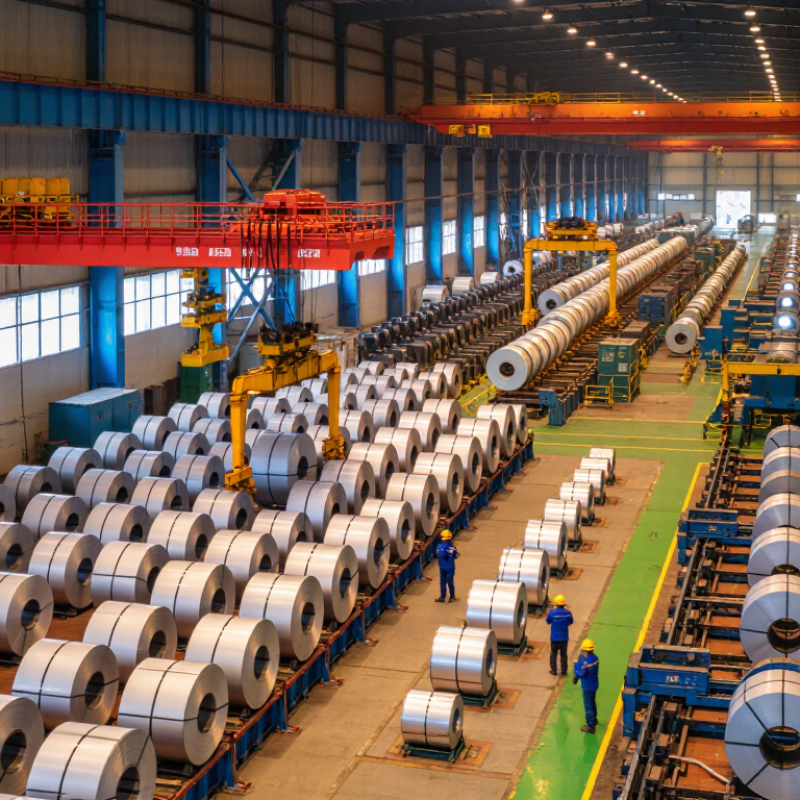
China’s Rolled Metal Market: 1.019 Billion Tons of Crude Steel in 2023
What Are the Top Rolled Metal Manufacturers in China?
China’s Rolled Metal Market: 1.019 Billion Tons of Crude Steel in 2023
China remains the world’s largest steelmaking base. The World Steel Association reported 1.019 billion tons of crude steel production in 2023. That represented about 54% of global output, which reached roughly 1.892 billion tons. China’s National Bureau of Statistics also recorded approximately 1.338 billion tons of finished steel products. This gap matters. Crude steel is not the same as rolled metal.
The strongest rolled-metal manufacturers typically combine blast furnaces, continuous casting, hot rolling, and cold rolling. Their product ranges often include plates, coils, bars, and galvanized sheets. Production scale helps, but it does not guarantee reliable quality. The China Iron and Steel Industry Association has repeatedly highlighted energy efficiency, product upgrading, and cleaner production as major industry priorities. Buyers should examine mill certificates, thickness tolerance, surface quality, and delivery records. Numbers can look impressive. Specifications reveal more.
Tips: Compare annual capacity with actual output. Check testing standards, not only price. Ask for recent inspection documents and traceability records. Also review export experience, because domestic success may not prove consistent international service. My own caution is simple: rankings can change quickly, and public capacity data may include facilities operating below their stated potential.

China’s Crude Steel Output, 2019–2023
China produced approximately 1.019 billion tonnes of crude steel in 2023, making it the world’s largest steel-producing market. The chart shows national output trends without company or brand-level data.
Source: World Steel Association, World Steel in Figures 2024. Figures are rounded and measured in million tonnes.
How Top Manufacturers Are Ranked by Capacity, Quality, and Certifications
China’s top rolled metal manufacturers are rarely ranked by production volume alone. Capacity matters, but it should be measured through usable output, equipment stability, and delivery consistency. A large mill may produce millions of tonnes annually, yet still struggle with small, customized orders. Experienced buyers inspect rolling lines, furnace controls, coil storage, and traceability systems. These details reveal practical capability better than impressive figures.
Quality ranking depends on measurable results. Look for thickness tolerance, surface finish, tensile strength, and batch consistency. Independent laboratory reports can support these claims. Certifications also matter, including ISO 9001 for quality management and ISO 14001 for environmental management. Industry-specific approvals may be necessary for construction, transport, energy, or food-related applications. However, certificates do not guarantee perfect performance. Audits, recent test records, and customer references provide stronger evidence. This is where many comparisons become imperfect.
Tips: Request a factory audit, not only a product brochure. Compare three months of delivery records and rejection rates. Ask whether testing is performed internally or by an independent laboratory. Confirm certificate numbers with the issuing organization. Also, review sample coils under real processing conditions, because polished samples can hide production variation. Capacity rankings can change quickly after equipment upgrades or market shifts. A careful buyer should update the comparison before signing a long-term supply agreement.
Baowu, Ansteel, and HBIS: Comparing China’s Leading Rolled Steel Producers
China’s rolled steel market is dominated by three large, integrated groups. The World Steel Association’s World Steel in Figures 2024 reports China produced 1,019.1 million tonnes of crude steel in 2023. That represented about 53% of global output. Scale matters.
The largest group produced approximately 130.8 million tonnes. Its broad network supports hot-rolled coil, cold-rolled sheet, galvanized products, and heavy plate. A northeastern producer ranked near 55.9 million tonnes, with strong capabilities in automotive sheet, structural steel, and rail-related products. A northern group recorded roughly 41.7 million tonnes and remains important in construction plate, coated steel, and industrial sheet. These figures show production strength, but they do not equal rolled-product shipments.
The comparison is imperfect. The World Steel Association ranks crude steel output, not surface finish, thickness control, or delivery reliability. Buyers should check mill certificates, yield strength, coating mass, coil width tolerance, and inspection records. A 2024 OECD steel-market update also highlights continuing pressure from excess capacity and weaker construction demand. That pressure can affect lead times and export pricing. In practical terms, a large mill may offer stable supply, while a smaller specialized line may deliver tighter specifications. I would not judge quality from tonnage alone. On a production floor, an uneven edge or inconsistent coating can matter more than another million tonnes.
Specialty Rolled Metals: Aluminum, Stainless Steel, and Precision Strip Leaders
China’s rolled metal industry serves demanding sectors, from battery housings to medical instruments. Its strongest manufacturers specialize rather than produce every alloy equally well. Aluminum rolling facilities often focus on lightweight sheet, corrosion resistance, and controlled temper conditions. Stainless steel producers compete through surface finish, thickness stability, and consistent mechanical properties. Precision strip suppliers work with narrow widths and tight tolerances for springs, sensors, and electrical contacts.
Production capability matters, but process discipline matters more. Experienced plants monitor furnace temperature, rolling force, edge quality, and surface cleanliness. They should provide mill test certificates, chemical analysis, dimensional reports, and traceability records. Independent testing can verify hardness, tensile strength, elongation, and coating performance. Small details count. A clean coil edge can prevent costly slitting problems later.
Buyers should inspect equipment, quality procedures, and sample history before placing large orders. A supplier may claim micron-level precision, yet practical results can change across different widths or alloys. This is where technical communication becomes essential. Share drawings, tolerances, packaging needs, and end-use conditions early. Request trial coils when possible. No factory is perfect, and even strong producers sometimes reveal weaknesses during unusual specifications. Careful audits, repeat sampling, and transparent corrective actions offer better evidence than promotional language.
Export Scale, Sustainability, and Technology Shaping China’s Metal Manufacturers
China’s leading rolled-metal manufacturers are judged by more than annual output. Their export reach matters. China’s General Administration of Customs recorded about 110.7 million tonnes of steel product exports in 2024. This scale supports stable supply for construction, machinery, energy, and automotive buyers. Yet shipment volume can hide differences in coating quality, dimensional control, and delivery reliability. Buyers should inspect mill certificates, production audits, and complaint records before selecting a supplier.
Technology is changing the strongest producers. Modern mills increasingly use automated gauge control, robotic inspection, and continuous-process monitoring. These systems help maintain tight thickness tolerances across large coils. Digital traceability also links heat numbers with test results and shipment documents. The World Steel Association reports that China produced roughly 1.005 billion tonnes of crude steel in 2024. That capacity gives manufacturers valuable process experience, although scale does not guarantee precision.
Sustainability is less settled. The International Energy Agency estimates that iron and steel create around 7% to 9% of global energy-related carbon dioxide emissions. Leading facilities are testing hydrogen-based reduction, electric furnaces, waste-heat recovery, and higher scrap use. Practical progress varies. A low-carbon claim should include measured emissions, electricity sources, recycled content, and verification methods. Environmental reporting is still uneven, and that weakness deserves scrutiny. The best manufacturer may not be the largest exporter, but the one that combines dependable coils, transparent data, and measurable improvement.
What Are the Top Rolled Metal Manufacturers in China? - Export Scale, Sustainability, and Technology Shaping China’s Metal Manufacturers
Industry-level benchmark data for evaluating Chinese rolled-metal manufacturers. Company and brand names are intentionally excluded.
| Evaluation Dimension | Verified Industry Data | Year / Status | Why It Matters for Rolled-Metal Buyers | Public Source |
|---|---|---|---|---|
| National steelmaking scale | China produced approximately 1,005.1 million tonnes of crude steel. | 2024 | Indicates the depth of China’s upstream supply base for hot-rolled coil, cold-rolled steel, coated sheet, plate, and other rolled products. | World Steel Association |
| Share of global crude-steel output | China accounted for approximately 53.4% of global crude-steel production. | 2024 | A large domestic production base supports broad product portfolios, multiple mill configurations, and high-volume export programs. | World Steel Association |
| Export scale | China exported approximately 110.7 million tonnes of steel products. | 2024 | High export volume suggests strong experience with international documentation, container and bulk logistics, and overseas customer specifications. | General Administration of Customs of China |
| Import-export balance | China imported approximately 6.8 million tonnes of steel products, creating a substantial net-export position. | 2024 | The net-export position reflects strong domestic production capacity and competitive availability across standard rolled-steel categories. | General Administration of Customs of China |
| Electric-arc-furnace adoption | Electric-arc furnaces produced approximately 9.8% of China’s crude steel. | 2023 | EAF capability can support higher scrap utilization, flexible production scheduling, and potentially lower emissions where low-carbon electricity is available. | World Steel Association |
| Ultra-low-emission transformation | China’s policy framework targets ultra-low-emission upgrades for approximately 80% of crude-steel capacity by 2025. | Policy target | Useful for assessing supplier progress on particulate matter, sulfur dioxide, nitrogen oxides, fugitive emissions, and environmental monitoring. | Ministry of Ecology and Environment of China |
| Carbon-reduction timetable | China has announced a national objective to peak carbon emissions before 2030 and achieve carbon neutrality before 2060. | National commitment | Manufacturers are increasingly evaluated on energy intensity, emissions reporting, renewable power use, and product-level carbon data. | State Council of China |
| Product breadth | China’s large steel sector supplies major rolled categories including hot-rolled coil, cold-rolled sheet, galvanized and other coated sheet, electrical steel, and heavy plate. | Current industry structure | Buyers can shortlist suppliers by grade, thickness, width, coating, surface finish, testing standard, and downstream application. | World Steel Association Statistics |
| Technology-screening indicators | Recommended verification points include automated gauge control, surface inspection, process traceability, laboratory certification, and digital mill-quality records. | Supplier due diligence | These indicators help distinguish a high-volume commodity supplier from a manufacturer capable of stable, specification-sensitive rolled products. | ISO Quality Management Guidance |
| Best-practice supplier qualification | A robust evaluation should combine production scale, export history, product certifications, environmental performance, delivery reliability, and third-party inspection results. | Recommended procurement method | No single national metric proves that a manufacturer is the best fit; technical compliance and verified performance should determine the final shortlist. | ISO Standards Portal |
Article Source:
Get in touch with us,
We will contact you shortly!
What is the difference between Unline(Non-Epoxy Coated) or Lining(Epoxy Coated) Metal Drum?

Unline drums with internally bare metal surface is more susceptible to corrosion and rust while Lining drums are internally coated with Phenolic Epoxy Coating to provide a non-reactive barrier between the drum surface and your product, less risk of contamination. Note: Our Unline drums are coated with an anti-rust agent after washing to reduce risk of rust.
What are Unline(Non-Epoxy Coated) and Lining(Epoxy Coated) drums compatible with?

In Singapore, Recon Unline Drums are usually more costly than Recon Lining Drums. Hence, we recommend Recon Unline Drums to fill aromatics like Thinner, Xylene, Toulene& other solvents like Hexane, BA, CA, EA, MC, White spirit, etc.
We recommend the lower-priced Recon Lining Drums to fill hydrocarbons like IPA, Methanol, Ethanoland oil-based products like diesel, petrol, lubricants, engine, hydraulic, base, transmission fluid, additives, waste oil, etc.;
What is the difference between Grade A and Grade B Metal Drum ?

Grading of used drums are usually based on physical conditions like rustiness, deformities and residual contents. Grade A drums are totally free from internal rust, serious dents and are easy to clean. Grade B drums have different degrees of rust internally and aesthetically inferior compared to Grade A drums.
What content is suitable to fill in a Recon Grade A or Grade B Drum?

Recon Grade A drum is suitable to fill more costly virgin grade products while Recon Grade B drum is more suitable for recycled or waste products.
What is the difference between Open Top and Close Top Drums and their usage?

Closed top drums are for water and other liquid products. Open Top drums can be used for liquid too but are primarily for more viscous products. The Open Top (or open head with a lid) allows you to get in and out of the drum with your product easier.
What type of content are Metal or Plastic Drums suitable for?

Metal drums offer additional protection when dealing with potentially flammable substances. They provide superior fire resistance, impact protection, and longevity for storing class 1, 2, and 3 volatile chemicals.
Plastic HDPE Drums are suitable for corrosive chemicals like acids, alkaline and also water-based products.
Will there be any contamination in the reconditioned metal, plastic drums or IBC tanks?

All our reconditioned containers (metal/plastic drums, carboys, IBC tanks) are washed thoroughly with specially formulated cleaning agent, rinsed with clean water, dried, and tested for possible leakages during the recondition process. Stringent quality inspection is being conducted 100% on every reconditioned product before they are qualified for sale & delivery.
What is the drum gauge(thickness) and weight for reconditioned metal drums?

Reconditioned metal drums gauge can be 0.9mm to 1.0mm all round. Their weight can vary from 16 to 18kg.
Do you sell New Packaging Products too?

Yes, we are also a distributor for new pallets, metal drums, plastic drums, carboys, IBCs and stainless-steel tanks.
What additional services do you provide apart from selling reconditioned and new containers.?

We are an NEA licensed toxic industrial waste collector, who can collect and dispose of used toxic waste containers in Singapore.
Do you offer labelling and silkscreen on the containers ?

We can provide labelling and silk-screening on the containers.
Are you able to ship overseas ?

Yes, we can arrange export our products to any country in the world.
Leading the Way
to Carbon Neutrality