
China Top Insulated Terminals Manufacturers and Suppliers

China has a broad base of electrical component manufacturers, including suppliers of Insulated Terminals for control panels, appliances, vehicles, and industrial equipment. From ring and fork terminals to quick-disconnect and pin styles, product choice depends on wire size, connection method, and operating conditions. These parts may look simple, yet a loose crimp or poorly fitted sleeve can cause heat, intermittent contact, or costly rework. Small details matter.

A dependable supplier should provide clear drawings, material information, dimensional tolerances, and inspection records. Buyers can request samples and check barrel fit, insulation coverage, and crimp performance with their own wire and tooling. Ask how production lots are checked, how packaging prevents damage, and whether custom specifications affect lead times. Not every catalog tells the whole story. Supplier comparisons should look beyond price and stated production capacity.

This guide introduces leading China-based manufacturers and suppliers while outlining practical ways to assess product range, quality controls, communication, and delivery capability. The best match is not automatically the largest factory. It is the partner whose specifications suit the application and whose answers remain consistent from quotation through sample approval. Review relevant test reports and certifications, and confirm their scope rather than relying on a logo alone. Discuss temperature, vibration, corrosion exposure, and customer requirements before ordering at scale. A small trial order can reveal packaging or fit problems that a datasheet misses. Even careful checks have limits. Supplier information can change, and performance depends on installation and use. Treat this guide as a starting point, not a substitute for technical validation.
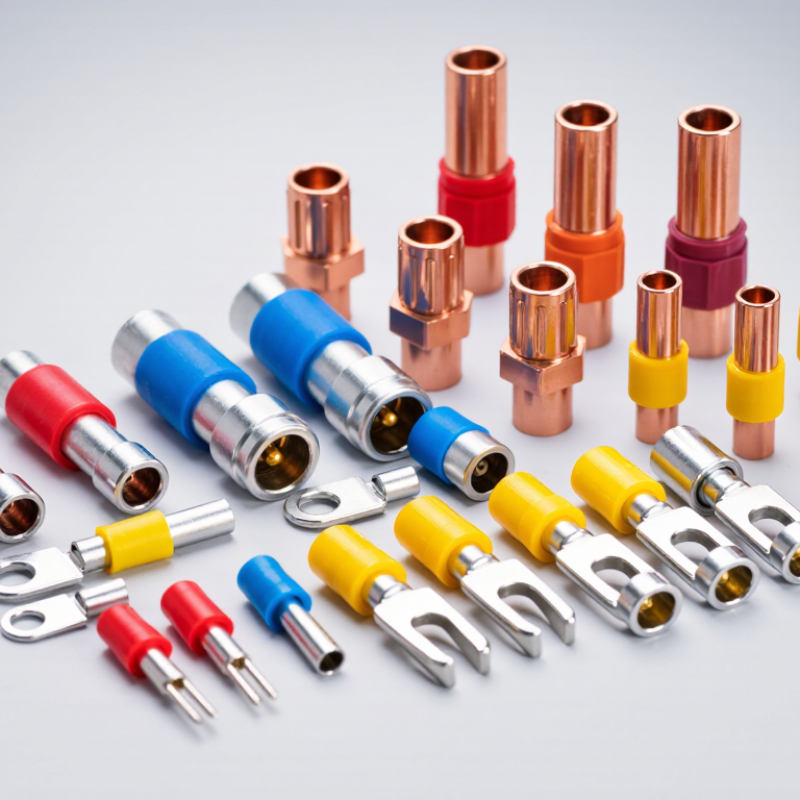
China Top Insulated Terminals Manufacturers and Suppliers

What Insulated Terminals Are and How They Work

Insulated terminals are metal connectors covered by a protective sleeve, commonly made from nylon or vinyl. The metal portion joins a wire to a screw, stud, or matching connector. The sleeve helps reduce accidental contact between conductive parts and nearby surfaces. Common forms include ring, fork, and quick-disconnect terminals.

A typical crimp terminal has a metal barrel and an insulated collar. The installer strips a short section of wire, places the conductor inside the barrel, and compresses it with a compatible crimping tool. This deforms the barrel around the wire strands, creating a mechanical and electrical connection. The sleeve supports the wire near the joint, but it does not make a poor crimp safe. That matters.

Choose a terminal that matches the wire size and connection point. A mismatched barrel may leave strands loose or crush them unevenly. A crimp can look neat and still be weak. Gently tug the wire after crimping, and check that no bare strands extend beyond the barrel. For a dependable result, use the tool specified for the terminal type; pliers are not a substitute. Even experienced installers should inspect each connection, because small defects are easy to miss.


Types, Materials, and Common Applications of Insulated Terminals

Insulated terminals connect prepared wires to electrical equipment while reducing the chance of accidental contact with exposed metal. Common types include ring, fork, pin, blade, and butt-splice terminals. Ring terminals stay secured beneath a screw or stud, making them useful where vibration may loosen a connection. Fork terminals are faster to remove, while pin terminals fit compact screw-clamp blocks. Small details matter.

Copper is widely used for its conductivity and workable crimping properties. Tinned copper adds a protective surface that can help resist corrosion in humid environments. Aluminum terminals suit compatible aluminum conductors, but conductor and terminal materials must match the application. The right crimp matters as much as the metal. A poorly matched tool can deform the barrel or leave a weak connection.

Insulation materials include PVC, nylon, and heat-shrink polyolefin. PVC is common for general wiring; nylon often offers greater toughness, while heat-shrink sleeves can provide a closer seal around the wire. These options appear in control cabinets, appliances, vehicles, and lighting systems. In a cabinet, color-coded terminals can make maintenance easier. Near moving equipment, vibration and temperature deserve extra attention. It is tempting to choose insulation by appearance alone, but ratings and wire size are more useful checks. A neat crimp still needs inspection.

How China’s Insulated Terminal Manufacturers Ensure Product Quality

China Top Insulated Terminals Manufacturers and Suppliers

How China’s Insulated Terminal Manufacturers Ensure Product Quality

Reliable insulated terminals begin with controlled materials and repeatable crimping. Chinese manufacturers commonly check copper thickness, plating coverage, insulation dimensions, and barrel geometry against drawings. Operators inspect crimp height and width with calibrated gauges, then test sample connections for pull-out strength. Small details matter. A slightly loose crimp can raise resistance and heat during service. Incoming material records and batch codes also help trace defects back to their source.

Qualification testing adds measurable evidence. IEC 61238-1-1:2018 describes connector test classes that include 1,000 current cycles for Class A and 500 for Class B, where the connector falls within the standard’s scope. These figures are useful benchmarks, not a substitute for testing the finished terminal in its intended wire and operating conditions. UL 486A-486B also provides requirements for wire connectors and their connection performance. Manufacturers can combine applicable standard tests with routine checks for insulation damage, dimensional variation, and crimp consistency. Still, testing has limits. A sample may pass while a poorly controlled production shift does not, so periodic audits and documented calibration matter.

Leading Insulated Terminal Manufacturers and Suppliers in China

China’s leading insulated terminal manufacturers and suppliers produce connectors for control panels, appliances, vehicles, and industrial wiring.

Common options include ring, fork, pin, and butt terminals, with copper or brass conductors and PVC or nylon insulation. Small details matter. Barrel dimensions, wire range, and sleeve fit can affect crimp quality and electrical reliability.

Buyers should compare more than catalog photos. Ask for material specifications, plating details, temperature ratings, and test records for the exact terminal series.

A sample crimped with the intended tool can reveal loose sleeves, uneven compression, or exposed conductor strands. For larger orders, confirm packaging and batch traceability before approving production.

Supplier documentation is not always equally clear. A polished catalog may still omit a critical barrel measurement, and that deserves a follow-up.

Even experienced purchasing teams can overlook small differences between nominal wire size and the size their installers actually use. Clear drawings, responsive technical support, and consistent inspection records help narrow the field of Chinese suppliers.

How to Evaluate and Source Insulated Terminals from China

When evaluating insulated terminals from China, begin with the application, not the catalog photo. Define the wire size, conductor material, operating temperature, and expected vibration. Ask suppliers for dimensional drawings showing barrel length, terminal thickness, and insulation fit. Small differences matter. A loose barrel can weaken a crimp, while oversized insulation may obstruct installation.

Request samples from the production process you intend to purchase. Crimp them with your specified tooling, then inspect the conductor strands and insulation for damage. Where practical, compare crimp height and pull-test results against your requirements. Check material and plating details, and request test reports with dates, methods, and product scope. Certificates are useful, but they do not replace product-level evidence. Details matter.

For a quotation, share an itemized specification and expected order volume, packaging needs, and delivery schedule. Confirm how changes to tooling or raw materials will be communicated, and whether batches can be traced to inspection records. A tidy catalog can create confidence too quickly; I would treat it as a starting point, not proof. Communication should be tested as carefully as the sample: unclear answers about tolerances or test methods can become costly once production begins.

China Insulated Terminal Sourcing: AWG-to-Conductor Area Reference

This chart shows nominal conductor cross-sectional areas for common AWG sizes, converted to mm² using standard AWG dimensions. Use it as a reference when checking a supplier’s stated wire range; confirm compatibility with the specific terminal, conductor type, crimping method, and applicable product standards.

Get in touch with us,
We will contact you shortly!

Get in touch with us by filling up the enquiry form. We will contact you shortly!

    What is the difference between Unline(Non-Epoxy Coated) or Lining(Epoxy Coated) Metal Drum?

    What are Unline(Non-Epoxy Coated) and Lining(Epoxy Coated) drums compatible with?

    What is the difference between Grade A and Grade B Metal Drum ?

    What content is suitable to fill in a Recon Grade A or Grade B Drum?

    What is the difference between Open Top and Close Top Drums and their usage?

    What type of content are Metal or Plastic Drums suitable for?

    Will there be any contamination in the reconditioned metal, plastic drums or IBC tanks?

    What is the drum gauge(thickness) and weight for reconditioned metal drums?

    Do you sell New Packaging Products too?

    What additional services do you provide apart from selling reconditioned and new containers.?

    Do you offer labelling and silkscreen on the containers ?

    Are you able to ship overseas ?

    Leading the Way
    to Carbon Neutrality

    Drumming sustainability into every aspect of our operations, we strive to create a greener and more conscious future for generations to come.
    Contact Us
    WhatsApp
    Email
    Join Our Newsletter

    Sign up for our newsletter for exclusive discounts and latest news of new launches!

      Logo Logo Logo Logo Logo
      Scroll to Top






