
Top Cordierite Saggar Manufacturers for Global Buyers?

Choosing the right Cordierite Saggar manufacturer requires more than comparing unit prices. These kiln furniture components face repeated heating, cooling, loading, and chemical exposure. A small crack can distort a tray, contaminate products, or interrupt an entire firing cycle.

Industry reports provide useful direction. Grand View Research’s advanced ceramics analysis highlights rising demand for materials with thermal stability and reliable performance. MarketsandMarkets also identifies ceramics for electronics, batteries, and technical manufacturing as expanding application areas. However, neither report isolates Cordierite Saggar shipments clearly. That gap deserves attention. Buyers should verify supplier claims through factory audits, test certificates, and production samples.

Professor I-Min Low, a recognized ceramic materials researcher, has stated, “Ceramic performance depends on composition, processing, and service conditions.” This principle is especially relevant to saggar selection. A strong supplier should explain cordierite content, apparent porosity, thermal expansion, wall thickness, firing temperature, and expected service cycles. Look closely at the details. Are corners reinforced? Are dimensions consistent after firing? Can the manufacturer provide batch traceability and export packaging evidence?

This guide examines leading Cordierite Saggar manufacturers for global buyers. It considers technical capability, quality systems, customization, delivery reliability, and after-sales communication. Some rankings may remain imperfect because public supplier data is uneven. That is precisely why practical verification matters. A polished catalog is not enough. The best choice is the manufacturer whose saggar performs consistently inside your actual kiln.
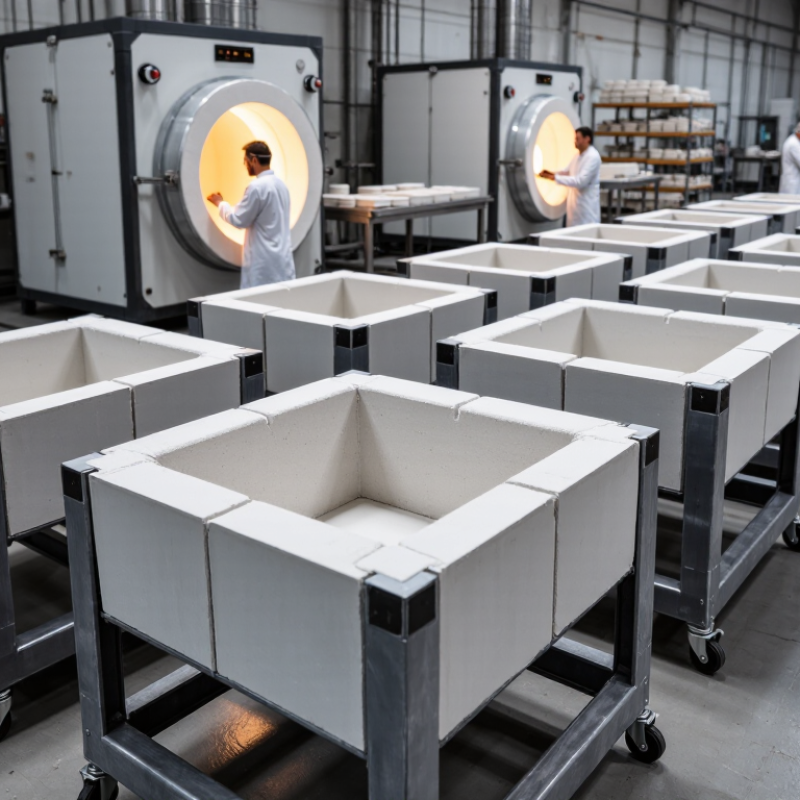
Top Cordierite Saggar Manufacturers for Global Buyers?

Cordierite Saggar Market Scope: Firing Temperatures Commonly Reach 1,300–1,400°C

Cordierite saggar selection depends heavily on repeated firing near 1,300–1,400°C. The European Commission’s Ceramics Manufacturing BREF identifies kiln operations reaching comparable high-temperature ranges. At these levels, low thermal expansion becomes critical. Cordierite helps reduce cracking during rapid heating and cooling, but it is not immune to thermal shock.

Industry kiln-furniture data commonly evaluates saggar performance through thermal expansion, load stability, wall thickness, and cycle life. The U.S. Geological Survey’s 2024 Minerals Yearbook also highlights the importance of refractory materials in high-temperature industrial processing, although cordierite is not reported as a separate market category. Buyers should request test results at the actual firing temperature, not only room-temperature specifications. A saggar that performs well at 1,200°C may deform sooner at 1,400°C. This detail is often overlooked.

Tips: Check maximum service temperature, thermal-expansion values, dimensional tolerance, and stacking strength. Ask for cycle-life evidence using your atmosphere and heating rate. Inspect corners carefully; small chips can become failure points. In my experience, thinner walls heat faster, but they may sacrifice rigidity. That trade-off deserves testing. Supplier claims should be compared with independent laboratory data, because “high-temperature” has no universal meaning across manufacturers.


Key Material Metrics: 90%+ Cordierite, Low Thermal Expansion, and Shock Resistance

Top Cordierite Saggar Manufacturers for Global Buyers

For global buyers, cordierite content deserves close technical review. A 90%+ cordierite body can provide stable firing performance, but percentage alone proves little. The ASM Handbook, Volume 4C, places cordierite ceramics among materials with exceptionally low thermal expansion, commonly near 2–3 × 10⁻⁶/K. This helps reduce cracking when saggars move from a hot kiln to a cooler loading area. Still, purity, porosity, wall thickness, and firing history can change the result.

Look for test evidence, not impressive wording. ASTM C1525 provides a recognized method for evaluating thermal-shock resistance in advanced ceramics. Ask manufacturers for repeated-cycle results, dimensional change, open porosity, and failure photographs. A saggar that survives one rapid temperature change may fail after fifty cycles. That distinction matters. In production, uneven loading can create local stress around corners and the base. Rounded edges, consistent density, and controlled drying often matter as much as chemistry. Some suppliers may report 90% cordierite while using different calculation methods. Buyers should verify whether the figure means mineral phase, raw-material content, or final fired composition.

Practical inspection remains valuable. Check a sample under magnification. Look for laminations, pinholes, and warped feet. The European Ceramic Society’s technical literature repeatedly links thermal-shock reliability with microstructure and crack control, not composition alone. A small batch trial under the buyer’s actual firing schedule is therefore essential. Reports guide decisions. Production reality decides them.

Top Manufacturer Selection: Capacity, Tolerance Control, Cycle Life, and Export Reach

Top Cordierite Saggar Manufacturers for Global Buyers?

Top Manufacturer Selection: Capacity, Tolerance Control, Cycle Life, and Export Reach

Selecting a cordierite saggar manufacturer requires more than checking annual output. Ask for monthly capacity, kiln size, forming methods, and actual delivery records. A factory may claim high production, yet struggle with urgent orders. Production consistency matters more than impressive figures. Request samples from different batches and inspect wall thickness, flatness, corner strength, and surface finish. These details affect loading efficiency and firing stability.

Tolerance control should match your firing process. Useful checks include length, width, height, squareness, and base warpage. For demanding applications, suppliers should provide inspection records and explain their measuring equipment. A saggar that varies by only a few millimeters can still cause stacking problems. Small errors become expensive at scale. I would not accept a tolerance promise without sample verification.

Cycle life must be tested under the buyer’s real temperature curve, atmosphere, loading weight, and cooling rate. One supplier’s “hundreds of cycles” may use gentle laboratory conditions. Ask for failure criteria, such as cracking, deformation, or contamination. Export capability also requires stronger evidence: moisture-resistant packaging, reinforced pallets, clear markings, reliable lead times, and complete shipping documents. A perfect brochure is not enough. I would still run a controlled trial shipment before approving regular orders. Mistakes happen, especially when packaging standards differ between ports.

Top Cordierite Saggar Manufacturers for Global Buyers? - Top Manufacturer Selection: Capacity, Tolerance Control, Cycle Life, and Export Reach

Selection Dimension Practical Benchmark for Qualified Suppliers Why It Matters in Production Recommended Buyer Verification
Cordierite composition Cordierite-dominant ceramic body; typical major oxide system includes approximately 45–60% SiO₂, 25–40% Al₂O₃, and 10–20% MgO, depending on formulation. The composition influences thermal expansion, thermal-shock resistance, strength, and compatibility with the fired product. Request a recent XRF report, technical data sheet, and representative sample tested from the intended production batch.
Maximum recommended service temperature Approximately 1,200–1,300 °C for common cordierite saggar applications; the exact limit depends on load, atmosphere, wall thickness, and firing schedule. A saggar should operate below its verified limit to reduce warpage, cracking, and premature failure. Compare the supplier’s temperature rating with your peak temperature, soak time, heating rate, cooling rate, and kiln atmosphere.
Thermal expansion control Low thermal expansion is a key requirement; many cordierite bodies are designed for approximately 2–4 × 10⁻⁶/K over a defined temperature range. Lower expansion generally improves resistance to thermal shock during repeated kiln cycles. Ask for the test temperature range and method, such as dilatometry, rather than accepting a single unqualified figure.
Dimensional tolerance For precision-formed products, a practical target is commonly ±1–2% on overall dimensions, with tighter limits agreed for critical locating surfaces. Consistent dimensions improve stacking, kiln utilization, product placement, and interchangeability between batches. Approve a dimensional drawing, define datum points, and inspect a statistically meaningful pre-shipment sample.
Flatness and warpage A typical purchasing specification may set maximum flatness deviation at 2–5 mm per metre, subject to saggar size and wall design. Excessive warpage can create unstable stacks, uneven loading, and contact damage during handling. Specify the measurement surface, gauge method, allowable deviation, and whether the value applies before or after firing.
Bulk density and open porosity Typical dense cordierite saggar bodies may fall around 1.8–2.2 g/cm³ bulk density and 15–30% apparent porosity, depending on grade and forming method. These properties affect weight, gas permeability, mechanical strength, glaze or powder interaction, and resistance to infiltration. Request values measured to a recognized ceramic test method and compare them using the same test basis.
Mechanical strength A practical room-temperature flexural-strength range for cordierite products is often approximately 15–50 MPa, varying with porosity, geometry, and firing condition. Adequate strength reduces breakage during loading, unloading, transport, and repeated handling. Confirm whether the reported result is average or minimum strength and require samples representing the actual saggar geometry.
Cycle-life capability Common service expectations range from approximately 50–300 firing cycles; premium performance depends strongly on load, thermal shock, handling, and contamination. Cycle life is often a more useful cost indicator than purchase price alone because it determines replacement frequency and downtime. Run a controlled trial using the buyer’s kiln profile and record cracks, warpage, edge chipping, mass change, and dimensional loss by cycle.
Manufacturing capacity For repeat industrial orders, a capable supplier should disclose monthly output by product size, forming route, kiln capacity, and available backup equipment. Capacity visibility helps prevent delivery delays when demand increases or when multiple sizes are required simultaneously. Request a capacity statement, current utilization estimate, standard lead time, peak-season lead time, and contingency plan.
Process consistency Preferred controls include batch traceability, controlled moisture, documented firing curves, calibrated inspection equipment, and final inspection records. Stable process control limits variation in shrinkage, porosity, strength, and shape between production lots. Audit the quality plan and request lot-level certificates of conformity for dimensions and key physical properties.
Customization capability Suitable suppliers should support custom length, width, height, wall thickness, ventilation features, stacking geometry, and tooling development. Correct geometry can increase kiln loading density and reduce product movement or contact damage. Use a signed drawing with tolerances, corner-radius requirements, allowable defects, sample approval, and tooling ownership terms.
Packaging for export Export-ready packaging normally includes separators, edge protection, moisture-resistant wrapping, strong pallets or crates, and visible handling marks. Ceramic saggars are vulnerable to impact and vibration even when their material properties are satisfactory. Approve packaging photographs, loading diagrams, drop or vibration precautions, and the claims procedure for transit damage.
Export reach and logistics A reliable exporter should provide commercial invoices, packing lists, certificates of origin when required, HS-code support, and experience with containerized fragile cargo. Accurate documentation and logistics planning reduce customs delays, demurrage, and damage risk. Verify the proposed Incoterm, port route, transit-time estimate, insurance responsibility, and import requirements in the destination country.
Total cost of ownership Evaluate purchase price together with freight, packaging, breakage allowance, usable capacity, cycle life, replacement labor, and production downtime. The lowest unit price may not deliver the lowest cost per usable firing cycle. Calculate cost per cycle using validated trial results and include rejected units, maintenance, and delivered logistics costs.

Note: The numerical ranges are general industry purchasing benchmarks for preliminary supplier screening. Final acceptance limits should be agreed through drawings, test methods, sample approval, and production trials under the buyer’s actual kiln conditions.

Global Buyer Comparison: MOQ, Lead Times, Certifications, and Custom Dimensions

A serious comparison of cordierite saggar manufacturers should begin with MOQ, lead time, and production evidence. MOQ often depends on kiln loading, mold preparation, and the size of each saggar. A low MOQ may look attractive, but it can increase unit cost. Ask for a written quotation showing packaging, tooling, and replacement terms.

Lead times commonly vary between sample approval and mass production. Standard sizes may ship faster, while custom dimensions need mold design and trial firing. Request a sample report with wall thickness, flatness, thermal shock results, and firing temperature.

Small delays matter. One missed kiln schedule can disrupt an entire production plan.

Certifications require careful checking. ISO 9001 can support process control, but it does not prove saggar performance. Ask for recent material test reports, batch traceability, and records of dimensional inspection. For custom work, provide length, width, height, corner radius, load weight, and stacking method. Cordierite shrinks during firing, so final dimensions need agreed tolerances. I have seen buyers approve drawings too quickly and regret it later. A second sample is sometimes worth the cost. Reliable manufacturers explain limits clearly, instead of promising every dimension without qualification.

Supplier Due Diligence: Testing Saggar Porosity, Strength, Warpage, and Service Cycles

For global buyers, saggar selection should begin with evidence, not catalog claims. A supplier due diligence visit can reveal how products behave beyond controlled samples. Ask for batch records, firing history, raw material controls, and retained test pieces. Porosity deserves special attention. Excessive open pores may absorb molten residues and accelerate chemical attack. Very low porosity can indicate a dense body, but it does not guarantee thermal shock resistance. Request measured values, test methods, sample conditioning, and acceptance limits. Then compare results from several production lots. One sample proves little.

Strength testing should cover cold crushing strength and handling damage after repeated firing. Inspect corners, lifting holes, and base edges, where small chips often begin. Warpage is easier to miss. Place each saggar on a certified flat table, measure corner lift with feeler gauges, and record distortion after firing. A supplier who documents deviations is more credible than one promising perfection.

In service-cycle trials, use the buyer’s actual temperature profile, loading weight, atmosphere, and cooling rate. Count cycles until cracking, unacceptable distortion, or contamination appears. Test conditions matter. Keep photographs and weighing records.

The practical question is not “How many cycles?” It is “How consistently?” A cautious trial may expose weaknesses that laboratory data hides. We once treated a high-strength result as decisive, then found poor lid fit after thermal cycling. That mistake was expensive, but useful. Review replacement lead times, packaging, technical support, and failure-response procedures. Reliable suppliers welcome independent retesting and explain borderline results without defensiveness. Supplier evaluation remains incomplete until test data matches production reality.

Get in touch with us,
We will contact you shortly!

Get in touch with us by filling up the enquiry form. We will contact you shortly!

    What is the difference between Unline(Non-Epoxy Coated) or Lining(Epoxy Coated) Metal Drum?

    What are Unline(Non-Epoxy Coated) and Lining(Epoxy Coated) drums compatible with?

    What is the difference between Grade A and Grade B Metal Drum ?

    What content is suitable to fill in a Recon Grade A or Grade B Drum?

    What is the difference between Open Top and Close Top Drums and their usage?

    What type of content are Metal or Plastic Drums suitable for?

    Will there be any contamination in the reconditioned metal, plastic drums or IBC tanks?

    What is the drum gauge(thickness) and weight for reconditioned metal drums?

    Do you sell New Packaging Products too?

    What additional services do you provide apart from selling reconditioned and new containers.?

    Do you offer labelling and silkscreen on the containers ?

    Are you able to ship overseas ?

    Leading the Way
    to Carbon Neutrality

    Drumming sustainability into every aspect of our operations, we strive to create a greener and more conscious future for generations to come.
    Contact Us
    WhatsApp
    Email
    Join Our Newsletter

    Sign up for our newsletter for exclusive discounts and latest news of new launches!

      Logo Logo Logo Logo Logo
      Scroll to Top