
Top 10 Biodegradable Pouches for Global Buyers?
Choosing sustainable packaging is rarely as simple as replacing plastic with a green-looking pouch. Global buyers need evidence, not attractive claims. This guide introduces the Top 10 Biodegradable Pouches for Global Buyers and examines their materials, barrier performance, sealing strength, printing quality, and end-of-life options. It considers kraft paper, cellulose films, starch blends, PLA structures, and other developing alternatives. Each option should be judged against its actual application.
Dr. Ramani Narayan, a professor at Michigan State University and a recognized compostable-plastics expert, states, “Biodegradability is not a material property; it is a system property.” That principle matters. A Biodegrade Pouches supplier should explain where the pouch breaks down, under which conditions, and within what timeframe. Industrial composting is not the same as backyard composting. Some regions have no suitable collection system. That weakness cannot be ignored.
The comparison also considers food contact documentation, moisture resistance, oxygen protection, minimum order quantities, lead times, and export handling. A pouch may look responsible, yet fail after exposure to humidity or rough shipping. A weak seal can waste the product inside. That is not sustainable.
There are no perfect choices here. Some biodegradable materials cost more. Others offer limited shelf life or unclear disposal routes. Buyers must ask difficult questions and verify current certifications before ordering. This introduction sets a practical foundation for comparing ten pouch solutions, while recognizing that performance, infrastructure, and local regulations can change the final decision.
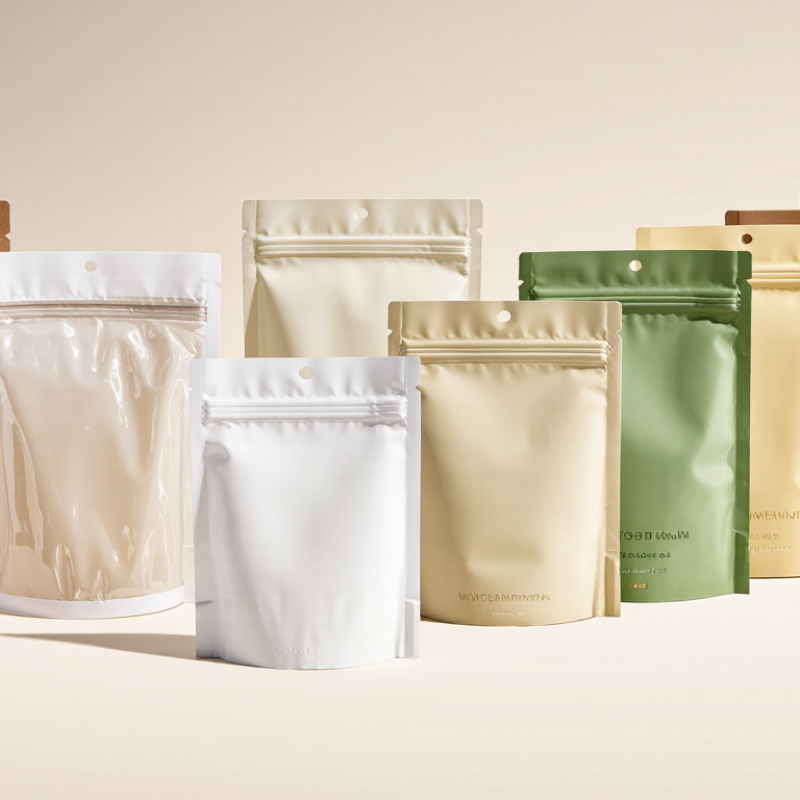
What Defines Biodegradable Pouches? EN 13432’s 90%-in-6-Month Test
Biodegradable pouches are not defined by a green appearance or a plant-based label. Under EN 13432, packaging must meet controlled composting requirements for biodegradation, disintegration, and material safety. The key test requires at least 90% conversion into carbon dioxide within six months. This result is measured under industrial composting conditions, not in a kitchen compost bin or open soil.
The test also examines whether the pouch physically breaks apart. After composting, no more than 10% of the original dry mass should remain above the permitted particle size. Heavy metals and other harmful substances must stay below strict limits. This matters because a pouch can disappear visually while leaving unsuitable residues behind. Testing should cover the complete structure, including films, inks, adhesives, valves, and zippers.
Look closely at the certificate.
A credible supplier should identify the tested product, laboratory method, sample thickness, and certification scope. A film certificate may not cover a finished pouch with printing and added layers. Material changes can also affect performance, even when the artwork stays the same. Buyers should request current test reports and confirm whether the product suits industrial composting facilities in the target market. That step is easy to overlook. It is also where many purchasing assumptions become unreliable. A pouch labelled biodegradable may perform well in one controlled system but remain unchanged for months in a household compost pile.
| No. | Pouch type / material system | Typical construction | Common applications | Barrier profile | Industrial-compostability status | Key buyer considerations |
|---|---|---|---|---|---|---|
| 1 | Paper–PLA laminate pouch | Kraft or bleached paper outer layer + polylactic acid (PLA) sealant or film layer | Dry foods, coffee-related secondary packs, snacks, powders | Medium oxygenLow–medium moisture | Can meet EN 13432 only when the complete pouch, inks, adhesives and closures are certified as a finished packaging system. | Paper appearance is attractive, but paper fibers alone do not make the laminated structure compostable. Verify seal strength and grease resistance. |
| 2 | Cellulose-film pouch | Regenerated cellulose film, often coated for improved moisture and heat-seal performance | Bakery products, confectionery, tea, dry snacks, small portions | Low–medium oxygenVariable moisture | Uncoated cellulose is biodegradable; coated grades require finished-packaging testing to confirm EN 13432 compatibility. | Check coating chemistry, humidity sensitivity, transparency requirements and whether the film is actually heat-sealable. |
| 3 | Starch-blend compostable pouch | Thermoplastic starch blended with biodegradable polyesters and compostable additives | Produce bags, dry goods, liners, lightweight retail packs | Low–medium oxygenMedium moisture | Some formulations are designed for EN 13432 industrial composting; compliance depends on the exact formulation and finished pouch. | Starch can increase moisture sensitivity. Request migration, odor, seal, puncture and shelf-life data for the intended product. |
| 4 | PBAT-based compostable pouch | Polybutylene adipate terephthalate (PBAT), frequently blended with PLA, starch or other compostable polymers | Flexible food packaging, liners, waste-collection bags, agricultural uses | Medium oxygenMedium moisture | PBAT-based films can be formulated for industrial compostability, but the complete package must pass the applicable requirements. | PBAT is biodegradable under suitable composting conditions but is not a proof of home compostability. Confirm additives and thickness limits. |
| 5 | PLA film pouch | Polylactic acid film or PLA-based laminate with a compatible compostable sealant | Dry foods, labels, sachets, lightweight consumer packaging | Good clarityMedium oxygenLimited heat resistance | PLA is generally intended for controlled industrial composting; it may not break down reliably in backyard compost or landfill conditions. | PLA has a relatively low heat-distortion temperature. Evaluate hot-fill, retort, sealing-temperature and storage-temperature requirements. |
| 6 | PHA-based pouch | Polyhydroxyalkanoate (PHA) film or PHA-containing multilayer structure | Food sachets, specialty packaging, selected agricultural and medical applications | Variable barrierGood biodegradation potential | PHA materials can biodegrade in several environments, but EN 13432 compliance still requires testing of the specific finished packaging. | Supply availability, film uniformity, sealing window and cost can vary by grade. Request independent test reports for the exact structure. |
| 7 | Compostable high-barrier laminate | Paper or cellulose substrate combined with compostable barrier and sealant layers | Coffee, powdered beverages, nuts, dry pet food and products needing stronger protection | Medium–high oxygenMedium–high moisture | High-barrier performance does not automatically indicate compostability; every layer, adhesive, ink and closure must be assessed. | Compare oxygen transmission rate, water-vapor transmission rate, aroma retention and shelf-life against conventional multilayer packs. |
| 8 | Compostable stand-up doypack | Stand-up pouch format made from a certified compostable multilayer film, with optional zipper or spout | Snacks, powders, pet treats, personal-care refills and dry household products | Medium barrierConvenient format | The pouch body may be compostable, but zippers, spouts, sliders and other components must also satisfy the relevant requirements. | Inspect bottom-gusset stability, drop resistance, zipper compatibility and whether the finished package is accepted by the target market’s composting system. |
| 9 | Compostable sachet or stick pack | Thin compostable film, commonly cellulose-, PLA-, starch- or biodegradable-polyester-based | Single-serve powders, seasonings, supplements, condiments and personal-care samples | Low–medium barrierLightweight | Thin structures may be suitable for EN 13432 industrial composting, subject to certification of the complete sachet and its contents-related components. | Check powder dust contamination, seal integrity, tear behavior, filling-line compatibility and the impact of very small pack sizes on collection. |
| 10 | Home-compostable-design pouch | Film or laminate specifically tested to a recognized home-composting specification, rather than only an industrial-composting standard | Garden products, selected food packs, refill pouches and household applications | Application-dependentLower infrastructure barrier | Home compostability is a separate claim from EN 13432. A pouch should not be labeled home-compostable without suitable home-compost testing and market authorization. | Confirm the exact destination-market standard, test conditions, decomposition time, residue limits and approved disposal wording. |



Get in touch with us,
We will contact you shortly!
What is the difference between Unline(Non-Epoxy Coated) or Lining(Epoxy Coated) Metal Drum?

What are Unline(Non-Epoxy Coated) and Lining(Epoxy Coated) drums compatible with?
What is the difference between Grade A and Grade B Metal Drum ?
What content is suitable to fill in a Recon Grade A or Grade B Drum?
What is the difference between Open Top and Close Top Drums and their usage?
What type of content are Metal or Plastic Drums suitable for?
Will there be any contamination in the reconditioned metal, plastic drums or IBC tanks?
What is the drum gauge(thickness) and weight for reconditioned metal drums?
Do you sell New Packaging Products too?
What additional services do you provide apart from selling reconditioned and new containers.?
Do you offer labelling and silkscreen on the containers ?
Are you able to ship overseas ?
Leading the Way
to Carbon Neutrality