
China Top 10 Metallized Film Manufacturers?
China’s Metallized Film industry has become an important part of modern flexible packaging, insulation, labeling, and capacitor production. This article, “China Top 10 Metallized Film Manufacturers,” introduces companies with different strengths, technologies, and market priorities. Some focus on high-barrier packaging films. Others serve electrical, industrial, or decorative applications.
Walter Soroka, a recognized packaging technology authority, describes packaging as “the science, art, and technology of enclosing and protecting products for distribution, storage, sale, and use.” His statement explains why Metallized Film requires more than a shiny appearance. Vacuum deposition, coating uniformity, adhesion, tensile strength, and oxygen transmission rates all influence practical performance. A thin aluminum layer can resemble a mirror, yet small defects may affect shelf life or electrical reliability.
The manufacturers discussed here should not be judged by production volume alone. Reliable evaluation also considers material consistency, quality-control systems, technical support, export experience, and evidence from real applications. Factory capability matters. So does transparent communication.
This overview is not a perfect ranking. Public data can be incomplete, and supplier claims may differ from independent testing. That limitation deserves attention. Buyers should request technical datasheets, sample rolls, compliance documents, and recent test results before making decisions. A low price may hide unstable coating performance or inconsistent roll quality. A premium supplier may still be unsuitable for a specialized product.
The goal is practical comparison. Readers can identify credible Chinese manufacturers and ask better questions about Metallized Film performance, customization, delivery, and long-term reliability.
What Is Metallized Film and Why Is It Important in China?
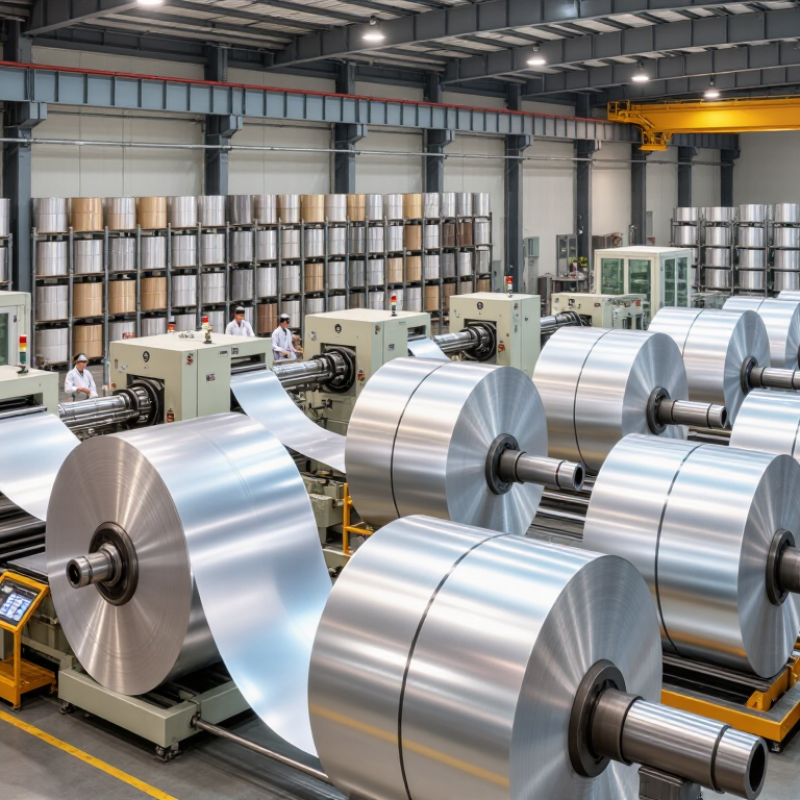
Metallized film is a polymer film coated with an extremely thin aluminum layer under vacuum. The coating often measures only tens of nanometers. It creates a bright, mirror-like surface while improving light, oxygen, and moisture protection. This combination reduces material use compared with aluminum foil. It also supports flexible packaging, electrical capacitors, insulation, and solar-related components.
The commercial value is growing. Mordor Intelligence’s 2024 assessment estimates the global metallized film market at about US$2.7 billion in 2024. It projects nearly US$3.8 billion by 2029. China matters because its large converting and packaging base supports fast production scale. The National Bureau of Statistics reported about 74.8 million tonnes of plastic product output in China during 2023. Metallized film is only a small share, but the figure shows the depth of the supply ecosystem.
Quality is more than appearance. Experienced buyers check optical density, coating adhesion, thickness tolerance, tensile strength, and moisture transmission. Poor vacuum control can create pinholes or uneven silvering. That failure may appear months later. It is an uncomfortable reminder: low price does not always mean efficiency. China’s leading manufacturers should therefore be judged by process stability, laboratory records, traceability, and application testing, not by catalog size alone. Data references: Mordor Intelligence, Metallized Film Market, 2024; China National Bureau of Statistics, 2023 industrial output data.

How to Identify China’s Top Metallized Film Manufacturers
Identifying a leading Chinese metallized film manufacturer requires more than comparing prices. Examine its coating equipment, laboratory controls, and production experience. Ask whether the factory produces films for packaging, capacitors, insulation, or specialized applications. Each use requires different thickness, adhesion, conductivity, and barrier performance. Request technical data sheets with test methods and acceptable tolerances. Samples reveal more.
A reliable supplier should provide batch numbers, raw material records, and inspection reports. Check whether operators measure metal deposition, surface tension, thickness, and winding quality during production. Visit the facility if possible. Look at clean working areas, calibrated instruments, storage conditions, and finished rolls awaiting shipment. Records matter. Independent testing can verify oxygen barrier, moisture resistance, tensile strength, and heat-sealing behavior. Do not accept impressive claims without recent evidence.
Communication also shows manufacturing maturity. Competent engineers explain limitations instead of promising every result. Discuss minimum order quantities, trial production, core sizes, packaging, and complaint handling before signing an agreement. A manufacturer should offer a controlled sample run and explain how defects are traced. No factory is perfect. Even strong suppliers may have uneven delivery during peak seasons or need improvement in documentation. That is why a practical evaluation should include repeated orders, not one successful sample. A clear quality agreement, realistic tolerances, and regular performance reviews create stronger purchasing decisions.
Profiles of the Top 10 Chinese Metallized Film Manufacturers
China’s metallized film sector is broad, specialized, and increasingly export-oriented. Industry assessments from Grand View Research and Mordor Intelligence indicate market growth of roughly 5% annually through 2030. Demand comes from flexible packaging, insulation, labels, and capacitor applications.
This profile reviews ten leading Chinese manufacturer types. Integrated BOPP producers emphasize stable gauge control. PET specialists focus on high-temperature packaging and insulation. CPP manufacturers supply heat-sealable structures. Capacitor-film producers require extremely clean surfaces. Decorative-film makers prioritize gloss and uniform color. Barrier-film suppliers combine aluminum coating with moisture resistance. Packaging converters offer printed, laminated rolls. Narrow-web specialists serve labels and smaller orders. Recycled-content producers respond to sustainability targets. Export-focused factories usually provide stronger documentation and multilingual support.
The actual ranking remains difficult. Public production figures are inconsistent, and some factories report group capacity rather than metallized-film capacity. That limitation deserves attention. Buyers should verify coating width, optical density, oxygen transmission rate, and monthly output directly. A glossy sample is not enough.
Tips: Request three recent batch reports. Check adhesion after lamination. Compare core dimensions and winding tension. Confirm whether recycled content affects sealing performance. Also, ask for failure-response times, not only certificates. A lower quotation may hide higher scrap costs.
How Chinese Manufacturers Compare by Products and Capabilities
China Top 10 Metallized Film Manufacturers?
How Chinese Manufacturers Compare by Products and Capabilities
China’s leading metallized film manufacturers differ more in capability than in product names. Many produce metallized BOPP, PET, and CPP films for flexible packaging, labels, insulation, and decorative applications. Common options range from 8 to 25 microns, with surface treatments designed for printing, lamination, or heat sealing. A capable supplier should provide clear data on optical density, coating adhesion, tensile strength, oxygen transmission, and moisture resistance.
Production scale is another important comparison. Larger factories may operate wide vacuum metallizing lines, automated slitting systems, and laboratory testing equipment. They can often maintain stable roll widths and reduce variation between batches. Smaller specialists may respond faster to unusual thicknesses, narrow rolls, or customized surface finishes. That flexibility can matter.
Quality control is not always consistent.
Reliable manufacturers normally keep batch records, inspect incoming polymer, and test finished rolls before shipment. Independent audits and sample trials offer stronger evidence than impressive brochures. I have found that technical communication can reveal more than capacity figures. Some suppliers explain limits honestly; others promise every performance target too quickly. That should invite careful review. Buyers should compare trial results, core dimensions, packaging quality, lead times, and corrective-action procedures. Environmental claims also need verification, especially when structures combine metalized layers with multiple polymers.
China Top 10 Metallized Film Manufacturers? - How Chinese Manufacturers Compare by Products and Capabilities
| Rank | Anonymous Manufacturer Profile | Main Film Substrates | Typical Film Thickness | Metallization Capability | Typical Optical Density | Web Width Capability | Surface Treatment | Typical Applications | Capability Strength |
|---|---|---|---|---|---|---|---|---|---|
| 1 | Manufacturer Profile 01 | BOPP, PET, CPP | 2.8–50 μm | Vacuum aluminum coating; single- and double-sided options | 1.8–3.0 | Up to approximately 2,450 mm | Corona treatment; printable grades | Flexible packaging, snack packs, labels, decorative laminates | Broad product portfolio and high-volume production |
| 2 | Manufacturer Profile 02 | PET, BOPP | 6–25 μm | High-uniformity aluminum deposition for barrier packaging | 2.0–3.2 | Approximately 1,600–2,200 mm | One-side corona; enhanced adhesion grades | Coffee packaging, retort structures, confectionery and dry-food packs | Consistent coating density and lamination performance |
| 3 | Manufacturer Profile 03 | BOPP, PET, PE-based films | 3–40 μm | Aluminum metallization with customized coating levels | 1.7–2.8 | Up to approximately 2,000 mm | Corona and primer-compatible surfaces | Personal-care sachets, household products, gift packaging | Flexible customization for medium-volume orders |
| 4 | Manufacturer Profile 04 | PET, BOPP, PA | 8–30 μm | Aluminum coating for reflective and barrier functions | 2.0–3.0 | Approximately 1,500–2,000 mm | Corona treatment; heat-sealable laminate compatibility | Meat and cheese packaging, pharmaceutical packs, industrial laminates | Strong barrier-film and multilayer-lamination capability |
| 5 | Manufacturer Profile 05 | BOPP, PET, CPP | 2.8–35 μm | Standard and high-barrier vacuum metallization | 1.8–3.0 | Up to approximately 2,300 mm | Print-receptive and adhesive-lamination grades | Tobacco overwrap, food packaging, flower wrap, consumer packaging | Balanced cost, output, and product flexibility |
| 6 | Manufacturer Profile 06 | PET, BOPP, holographic films | 6–25 μm | Aluminum coating for decorative and security effects | 1.5–2.8 | Approximately 1,250–1,850 mm | Corona, embossing-compatible, and printable surfaces | Decorative films, gift wrap, labels, anti-counterfeit packaging | Decorative appearance and specialty-film development |
| 7 | Manufacturer Profile 07 | BOPP, PET, metallized CPP | 3–50 μm | Metallized films for heat-seal and packaging structures | 1.7–2.9 | Up to approximately 2,100 mm | Corona treatment and heat-seal-compatible grades | Snack bags, frozen food, bakery products, flow-wrap packaging | Good heat-sealing and converting compatibility |
| 8 | Manufacturer Profile 08 | PET, BOPP, coated paper | 8–30 μm | Vacuum aluminum coating for paper and film laminates | 1.6–2.8 | Approximately 1,300–1,900 mm | Adhesion-enhanced and laminating grades | Paper cups, gift packaging, cigarette packaging, decorative laminates | Film-to-paper lamination and decorative applications |
| 9 | Manufacturer Profile 09 | PET, BOPP, PA, CPP | 4–50 μm | Customized metallization for food and industrial packaging | 1.8–3.1 | Up to approximately 2,000 mm | Corona and specialty primer systems | Industrial insulation, food packaging, pharmaceutical and chemical packaging | Multi-substrate sourcing and technical customization |
| 10 | Manufacturer Profile 10 | BOPP, PET, biodegradable film options | 3–30 μm | Aluminum coating with selected recyclable-structure options | 1.6–2.8 | Approximately 1,200–1,800 mm | Corona treatment; water-based ink compatibility | Sustainable packaging trials, labels, dry-food and consumer products | Flexible development for recyclable and lower-material structures |
Note: The figures shown are representative market-reference ranges commonly used for Chinese metallized-film production and should be verified against each supplier’s current technical data sheet, test method, order quantity, and production line.
What to Consider When Choosing a Metallized Film Manufacturer
Choosing a Chinese metallized film manufacturer requires more than comparing quotations. Flexible packaging demand is expanding, yet published forecasts differ by scope and geography. Smithers estimates the global flexible packaging market exceeded 300 billion US dollars in 2024, with further growth expected through 2029. Its research highlights sustainability, downgauging, and barrier performance as major development priorities. That makes application data more useful than sales claims.
Ask for recent WVTR and OTR results. Require test conditions, film thickness, coating weight, and laboratory methods. A barrier value without temperature and humidity context is incomplete. For food or pharmaceutical packaging, review migration documentation, GMP controls, and traceability from resin receipt to finished rolls. ISO 9001 helps, but it does not replace process evidence. ASTM F1249 and ASTM D3985 are commonly used for water-vapor and oxygen transmission testing. Independent verification matters.
A polished sample can mislead. Pilot rolls should run on your actual laminator, ink system, sealing temperature, and line speed. This exposes blocking, curl, delamination, and unstable tension before commercial commitment. Check monthly capacity, backup equipment, maintenance records, lead times, and emergency allocation rules. Recyclability claims also need scrutiny because metallization may affect recovery, depending on the package structure and local infrastructure. The Ellen MacArthur Foundation stresses designing packaging for real collection systems. That point is easy to overlook. I would score suppliers with a documented matrix, then challenge my assumptions after the first trial. Price still matters, but an inconsistent roll is rarely cheap.
China Top 10 Metallized Film Manufacturers? What to Consider When Choosing a Metallized Film Manufacturer
The chart presents an illustrative procurement-weighting model based on commonly evaluated metallized film requirements. Barrier performance, thickness consistency, adhesion, conductivity, mechanical strength, converting capability, quality control, and compliance should be assessed before comparing manufacturers.
The percentages represent evaluation priorities rather than the performance of any specific company or brand.
Article Source:
Get in touch with us,
We will contact you shortly!
What is the difference between Unline(Non-Epoxy Coated) or Lining(Epoxy Coated) Metal Drum?

Unline drums with internally bare metal surface is more susceptible to corrosion and rust while Lining drums are internally coated with Phenolic Epoxy Coating to provide a non-reactive barrier between the drum surface and your product, less risk of contamination. Note: Our Unline drums are coated with an anti-rust agent after washing to reduce risk of rust.
What are Unline(Non-Epoxy Coated) and Lining(Epoxy Coated) drums compatible with?

In Singapore, Recon Unline Drums are usually more costly than Recon Lining Drums. Hence, we recommend Recon Unline Drums to fill aromatics like Thinner, Xylene, Toulene& other solvents like Hexane, BA, CA, EA, MC, White spirit, etc.
We recommend the lower-priced Recon Lining Drums to fill hydrocarbons like IPA, Methanol, Ethanoland oil-based products like diesel, petrol, lubricants, engine, hydraulic, base, transmission fluid, additives, waste oil, etc.;
What is the difference between Grade A and Grade B Metal Drum ?

Grading of used drums are usually based on physical conditions like rustiness, deformities and residual contents. Grade A drums are totally free from internal rust, serious dents and are easy to clean. Grade B drums have different degrees of rust internally and aesthetically inferior compared to Grade A drums.
What content is suitable to fill in a Recon Grade A or Grade B Drum?

Recon Grade A drum is suitable to fill more costly virgin grade products while Recon Grade B drum is more suitable for recycled or waste products.
What is the difference between Open Top and Close Top Drums and their usage?

Closed top drums are for water and other liquid products. Open Top drums can be used for liquid too but are primarily for more viscous products. The Open Top (or open head with a lid) allows you to get in and out of the drum with your product easier.
What type of content are Metal or Plastic Drums suitable for?

Metal drums offer additional protection when dealing with potentially flammable substances. They provide superior fire resistance, impact protection, and longevity for storing class 1, 2, and 3 volatile chemicals.
Plastic HDPE Drums are suitable for corrosive chemicals like acids, alkaline and also water-based products.
Will there be any contamination in the reconditioned metal, plastic drums or IBC tanks?

All our reconditioned containers (metal/plastic drums, carboys, IBC tanks) are washed thoroughly with specially formulated cleaning agent, rinsed with clean water, dried, and tested for possible leakages during the recondition process. Stringent quality inspection is being conducted 100% on every reconditioned product before they are qualified for sale & delivery.
What is the drum gauge(thickness) and weight for reconditioned metal drums?

Reconditioned metal drums gauge can be 0.9mm to 1.0mm all round. Their weight can vary from 16 to 18kg.
Do you sell New Packaging Products too?

Yes, we are also a distributor for new pallets, metal drums, plastic drums, carboys, IBCs and stainless-steel tanks.
What additional services do you provide apart from selling reconditioned and new containers.?

We are an NEA licensed toxic industrial waste collector, who can collect and dispose of used toxic waste containers in Singapore.
Do you offer labelling and silkscreen on the containers ?

We can provide labelling and silk-screening on the containers.
Are you able to ship overseas ?

Yes, we can arrange export our products to any country in the world.
Leading the Way
to Carbon Neutrality








