
Who Are the Top 10 Galvanized Wire Manufacturers in China?
China is an important source of galvanized wire for buyers in construction, agriculture, fencing, and manufacturing. Yet choosing a supplier involves more than comparing prices. Wire that looks similar on a product page can differ in zinc coating, tensile strength, diameter tolerance, and performance in damp or outdoor conditions.
This guide introduces ten Chinese manufacturers and outlines what buyers may want to check before requesting a quotation. A capable Galvanized Wire Manufacturer should provide clear product specifications, consistent production, and practical answers about packaging and delivery. Look for details such as wire gauge, coating weight, coil size, surface finish, and available test documents. A sample coil can also reveal how evenly the wire unwinds and whether its coating appears uniform.
Small details matter.
The companies in this list are presented as potential suppliers, not as a universal ranking for every project. Production capacity, export experience, customization, and communication can help distinguish one factory from another, but requirements vary by application and destination. A fencing contractor may prioritize long coils and corrosion resistance, while a mesh producer may need tight diameter tolerances and reliable repeat orders. No single checklist guarantees a good purchase. Buyers should verify current specifications, request relevant quality records, and confirm sample performance before placing a large order. Those checks take time, admittedly, but they can prevent avoidable surprises later.
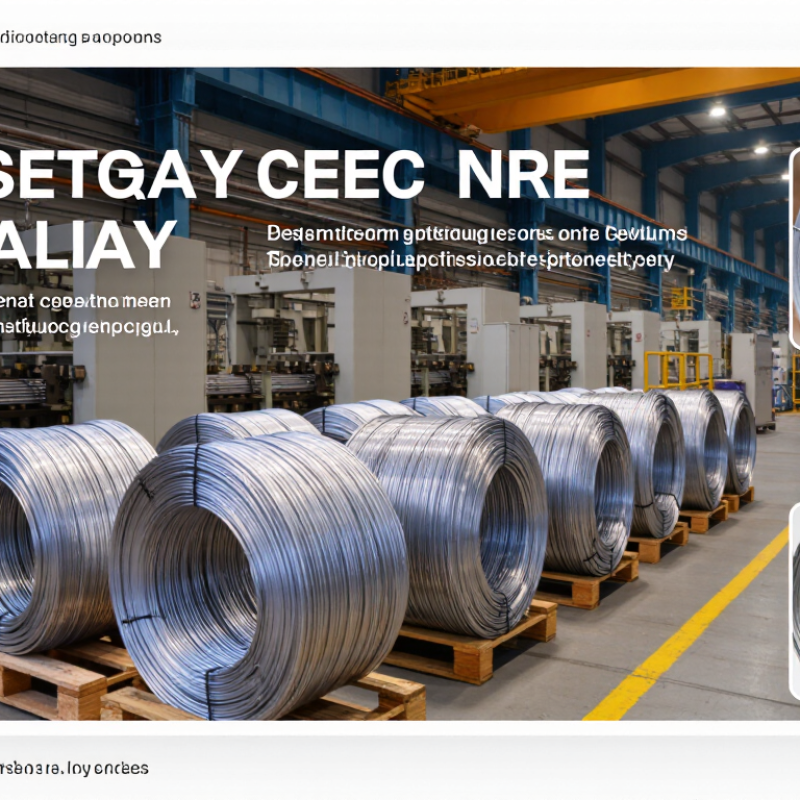
What Is Galvanized Wire and How Is It Classified?
Galvanized wire is steel wire protected by a zinc coating, which slows rust when moisture reaches the surface. It is commonly classified by coating process, zinc coating mass, wire diameter, tensile strength, and steel grade. Continuous hot-dip galvanizing passes wire through molten zinc, leaving a visible metallic finish; electro-galvanizing applies zinc electrically and often produces a smoother, thinner layer. Neither method alone guarantees service life. Exposure, scratches, and coating thickness matter.
Standards help make specifications comparable. ASTM A641/A641M covers zinc-coated carbon steel wire, while EN 10244-2 specifies non-ferrous metallic coatings on steel wire. Buyers should check coating class or mass, diameter tolerance, and tensile requirements, not just the word “galvanized.” The labels can mislead. The World Steel Association’s World Steel in Figures 2025 reports 1,882.6 million tonnes of global crude steel production in 2024, while the USGS Mineral Commodity Summaries 2025 estimates world zinc mine production at 12 million tonnes. These figures describe the material supply context, not galvanized-wire output. That distinction matters when comparing supplier claims.

Galvanized Wire: Steel-Core Carbon Classification
Galvanized wire is steel wire protected by a zinc coating. One way to classify its steel core is by carbon content. The chart shows common approximate ranges by weight; exact category boundaries can vary by convention and product specification.
Another classification: galvanized wire is also described by its zinc-coating process, such as hot-dip galvanizing or electrogalvanizing, and by coating requirements specified for its intended application.
How Is Galvanized Wire Produced in China?
Who Are the Top 10 Galvanized Wire Manufacturers in China?
How Is Galvanized Wire Produced in China?
Galvanized wire production usually begins with low-carbon steel wire rod. Workers draw it through dies to reach the required diameter. The wire is then cleaned to remove oil, rust, and scale. For hot-dip galvanizing, it passes through a zinc bath, forming a protective coating. Electro-galvanizing uses an electrical current to deposit zinc instead. The method and coating thickness depend on the intended use.
After coating, the wire is cooled and checked for surface consistency, diameter, and coating adhesion. Some lines use wiping equipment to control excess zinc and create a smoother finish. Coils are then wound and labeled for shipment. Actual results can vary with steel quality, bath temperature, line speed, and process control. In practice, cleaning is easy to underestimate. Small residues may affect coating quality.
Tips: Ask for the wire diameter, coating weight, and test method. Check whether the product suits outdoor exposure or a specific application. A shiny surface alone is not proof of uniform protection. Request a sample when specifications are critical.
Who Are the Top 10 Galvanized Wire Manufacturers in China? - How Is Galvanized Wire Produced in China?
This table outlines ten production and quality factors for evaluating galvanized wire suppliers. It does not present a verified ranking of individual manufacturers.
| No. | Production or Evaluation Factor | Factual Detail | What Buyers Can Check |
|---|---|---|---|
| 1 | Steel Wire Rod | Galvanized wire is commonly made from low-carbon steel wire rod. The chosen steel grade and chemistry affect strength, ductility, and suitability for subsequent drawing. | Request the steel grade, chemical composition, and material inspection records. |
| 2 | Wire Drawing | Wire rod is drawn through dies to reduce its diameter. Drawing schedules and intermediate annealing, when required, depend on the target wire size and mechanical properties. | Confirm finished diameter, diameter tolerance, tensile strength, and elongation requirements. |
| 3 | Surface Cleaning | Before hot-dip galvanizing, the wire surface is cleaned to remove contaminants and scale. Cleaning methods can include degreasing, pickling, rinsing, and fluxing, depending on the production line. | Ask how surface preparation is controlled and how the line prevents contamination before coating. |
| 4 | Hot-Dip Galvanizing | In hot-dip galvanizing, prepared steel wire passes through molten zinc, forming a zinc coating on the steel surface. Coating characteristics depend on process conditions and product requirements. | Specify the required zinc coating mass or coating designation and request test results for the delivered lot. |
| 5 | Electrogalvanizing | Electrogalvanizing deposits zinc from an electrolyte using electric current. It is a different coating process from hot-dip galvanizing and may produce different coating characteristics. | Identify the coating process explicitly; do not treat electrogalvanized and hot-dip galvanized wire as interchangeable. |
| 6 | Coating Control | For continuous hot-dip lines, wiping or other process controls can regulate excess molten zinc and help achieve a more consistent coating. Actual coating levels must be verified against the applicable specification. | Check coating-mass test methods, sampling frequency, and acceptance criteria in the purchase specification. |
| 7 | Cooling and Optional Treatment | After coating, wire is cooled. Additional treatments, such as passivation, may be specified for particular applications; their use and purpose should be confirmed for each product. | State any requirements for surface treatment, appearance, storage, or compatibility with the end use. |
| 8 | Mechanical Testing | Tensile strength and elongation are common mechanical properties assessed for steel wire. Required values vary with wire grade, diameter, and intended application. | Compare test results with the agreed product specification rather than relying on a generic value. |
| 9 | Coating and Dimensional Inspection | Finished wire can be inspected for diameter, coating mass, coating adhesion, and visible surface condition. The applicable test method and acceptance limits depend on the governing specification. | Request traceable inspection records and confirm that testing covers the relevant production lot. |
| 10 | Packaging and Traceability | Galvanized wire is supplied in coils or other specified forms. Packaging protects the wire during handling and transport, while lot identification supports product traceability. | Agree on coil weight, dimensions, wrapping, labeling, and batch documentation before shipment. |
What Criteria Help Identify Leading Chinese Manufacturers?
A credible “top 10” list should compare evidence, not factory size alone. The World Steel Association’s World Steel in Figures 2024 reports that China produced 1,019.1 million tonnes of crude steel in 2023. That scale supports a broad supplier base, but it does not prove that a plant makes consistent galvanized wire. Big numbers can mislead.
Check product specifications against ASTM A641/A641M, which covers zinc-coated carbon steel wire. Ask for recent test certificates showing wire diameter, tensile strength, and zinc coating class or mass. Then compare those results with the actual order—not a sample from another production line. Look closely at coil weight, surface uniformity, and packaging; uneven coating or loose wraps can create problems during feeding. Ask how each batch is traced and how rejected coils are handled. Small details matter.
Capacity and delivery records matter too. Request production schedules, monthly output for the specified wire grades, and references for comparable shipments. A factory tour or live video inspection can help confirm machinery and testing equipment, though neither replaces independent inspection. Be cautious when a supplier promises every specification without qualification. That claim deserves scrutiny. The ranking should also disclose its evidence and scoring method; otherwise, “top 10” is only a label. Even good records have limits, so buyers should verify requirements before placing a large order.
Who Are the Top 10 Galvanized Wire Manufacturers in China?
Identifying the top 10 galvanized wire manufacturers in China starts with the wire itself, not a polished company profile. Compare zinc coating weight, wire diameter tolerance, tensile strength, and coil weight against your actual application. A fence project may need different properties from a cable core or construction mesh. Ask for recent inspection records and a sample from the production batch you plan to order. The sample should have an even coating, without bare patches, sharp zinc buildup, or loose winding. Small details matter.
A dependable manufacturer should explain its process clearly, including wire drawing, galvanizing method, packaging, and routine quality checks. Check whether the supplier can maintain consistent specifications across repeat orders, not just produce one acceptable sample. Ask how coils are protected from moisture during storage and shipping; simple wrapping can make a real difference. That matters. Public rankings may rely on different criteria, and sales claims are not independent evidence. Treat any “top 10” list as a starting point, then verify factory capability, testing documents, lead times, and communication directly. I would also compare rejected samples and delivery records when available. There is no perfect shortlist. A little uncertainty remains until real production is checked.
How Do Their Products Serve Different Industries?
Who Are the Top 10 Galvanized Wire Manufacturers in China? How Do Their Products Serve Different Industries?
Galvanized wire is selected by how it performs on site, not just by its zinc coating. In construction, it ties reinforcing bars, supports mesh, and helps form gabions for retaining slopes. For farms, heavier wire makes fences that face rain, soil contact, and animal pressure. Lighter gauges suit trellises and crop supports. Worldsteel’s World Steel in Figures 2024 reports that China produced 1,019.1 million tonnes of crude steel in 2023. That scale supports a broad supply base, but it does not guarantee consistent coating thickness or tensile strength.
Manufacturers also serve packaging, fencing, and communications projects. Drawn wire can be formed into staples, binding wire, and protective mesh, while higher-strength products may suit cable-related applications. Buyers should match wire diameter, coating mass, tensile range, and coil weight to the job. A specification that works for a dry warehouse may fail near coastal spray. The difference can be costly.
Tips: Request test certificates for coating mass and tensile strength. Check samples for bare spots and uneven coating. Confirm coil dimensions before ordering. A shiny surface alone proves little; that is an easy detail to overlook.
Article Source:
Get in touch with us,
We will contact you shortly!
What is the difference between Unline(Non-Epoxy Coated) or Lining(Epoxy Coated) Metal Drum?

Unline drums with internally bare metal surface is more susceptible to corrosion and rust while Lining drums are internally coated with Phenolic Epoxy Coating to provide a non-reactive barrier between the drum surface and your product, less risk of contamination. Note: Our Unline drums are coated with an anti-rust agent after washing to reduce risk of rust.
What are Unline(Non-Epoxy Coated) and Lining(Epoxy Coated) drums compatible with?

In Singapore, Recon Unline Drums are usually more costly than Recon Lining Drums. Hence, we recommend Recon Unline Drums to fill aromatics like Thinner, Xylene, Toulene& other solvents like Hexane, BA, CA, EA, MC, White spirit, etc.
We recommend the lower-priced Recon Lining Drums to fill hydrocarbons like IPA, Methanol, Ethanoland oil-based products like diesel, petrol, lubricants, engine, hydraulic, base, transmission fluid, additives, waste oil, etc.;
What is the difference between Grade A and Grade B Metal Drum ?

Grading of used drums are usually based on physical conditions like rustiness, deformities and residual contents. Grade A drums are totally free from internal rust, serious dents and are easy to clean. Grade B drums have different degrees of rust internally and aesthetically inferior compared to Grade A drums.
What content is suitable to fill in a Recon Grade A or Grade B Drum?

Recon Grade A drum is suitable to fill more costly virgin grade products while Recon Grade B drum is more suitable for recycled or waste products.
What is the difference between Open Top and Close Top Drums and their usage?

Closed top drums are for water and other liquid products. Open Top drums can be used for liquid too but are primarily for more viscous products. The Open Top (or open head with a lid) allows you to get in and out of the drum with your product easier.
What type of content are Metal or Plastic Drums suitable for?

Metal drums offer additional protection when dealing with potentially flammable substances. They provide superior fire resistance, impact protection, and longevity for storing class 1, 2, and 3 volatile chemicals.
Plastic HDPE Drums are suitable for corrosive chemicals like acids, alkaline and also water-based products.
Will there be any contamination in the reconditioned metal, plastic drums or IBC tanks?

All our reconditioned containers (metal/plastic drums, carboys, IBC tanks) are washed thoroughly with specially formulated cleaning agent, rinsed with clean water, dried, and tested for possible leakages during the recondition process. Stringent quality inspection is being conducted 100% on every reconditioned product before they are qualified for sale & delivery.
What is the drum gauge(thickness) and weight for reconditioned metal drums?

Reconditioned metal drums gauge can be 0.9mm to 1.0mm all round. Their weight can vary from 16 to 18kg.
Do you sell New Packaging Products too?

Yes, we are also a distributor for new pallets, metal drums, plastic drums, carboys, IBCs and stainless-steel tanks.
What additional services do you provide apart from selling reconditioned and new containers.?

We are an NEA licensed toxic industrial waste collector, who can collect and dispose of used toxic waste containers in Singapore.
Do you offer labelling and silkscreen on the containers ?

We can provide labelling and silk-screening on the containers.
Are you able to ship overseas ?

Yes, we can arrange export our products to any country in the world.
Leading the Way
to Carbon Neutrality