
China Top 10 Overflow Dyeing Machine Manufacturers?
China’s dyeing equipment industry serves textile mills across cotton, polyester, nylon, and blended fabrics. This guide introduces ten notable Chinese manufacturers associated with Overflow Dyeing Machine production and export. It focuses on practical evidence rather than attractive brochures.
The comparison considers machine capacity, fabric movement, liquor ratio, heating control, and pressure stability. It also examines stainless-steel construction, nozzle design, PLC interfaces, energy consumption, and wastewater-related features. These details matter during real production. A poorly matched machine may create rope marks, uneven shades, or unnecessary reprocessing. Therefore, buyers should compare test reports, reference installations, warranty terms, and available spare parts before making a decision.
Factory experience remains valuable. A serious supplier should explain how its machine handles a 300-kilogram polyester batch, not only show polished photographs. Technical discussions should include loading methods, maximum operating temperature, pump performance, cleaning access, and operator training. Export experience also requires dependable documentation and communication. However, no ranking is permanently perfect. Manufacturer capabilities change, product lines are updated, and customer results can differ between factories. That weakness deserves attention.
This article offers a structured starting point for evaluating China’s top Overflow Dyeing Machine manufacturers. It does not replace factory audits or sample trials. Buyers should request current specifications and verify performance with comparable fabrics. Careful questioning often reveals more than a sales presentation. Reliability is built through evidence, service, and consistent results.
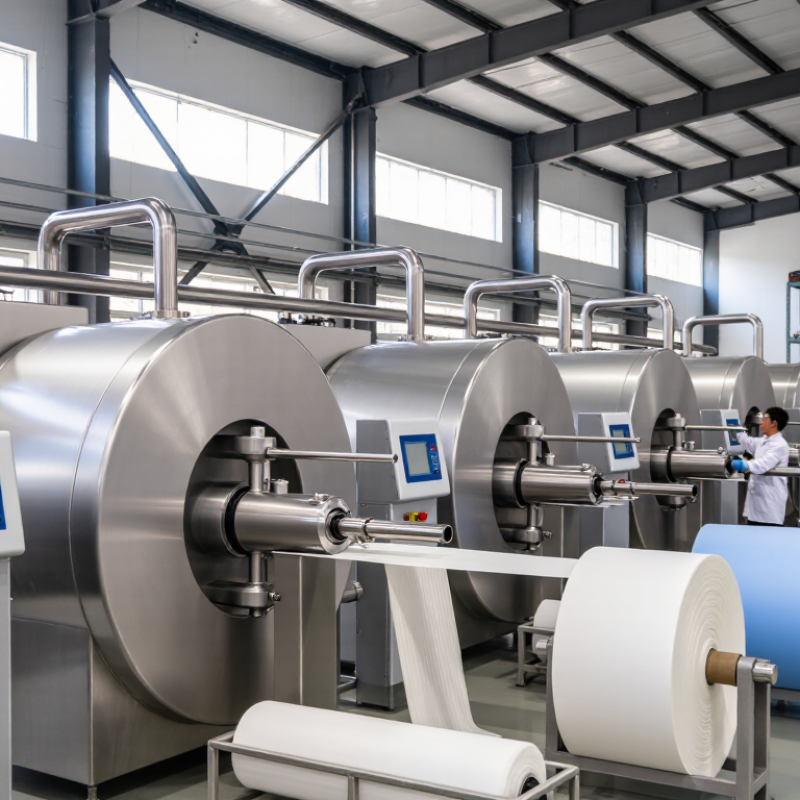
What Is an Overflow Dyeing Machine?
An overflow dyeing machine colors fabric in a continuous rope form. Heated dye liquor flows over the fabric, carrying it through a soft, curved chamber. Unlike high-tension systems, the fabric moves with limited mechanical stress. This makes the machine suitable for knitted cotton, polyester blends, viscose, and other flexible textiles. The fabric repeatedly circulates through the bath. Color gradually penetrates each fiber.
A typical machine includes a dye tank, circulation pump, heat exchanger, fabric nozzle, and programmable control system. The pump controls liquor movement, while the nozzle guides the fabric smoothly. Operators adjust temperature, circulation speed, bath ratio, and processing time. For example, a technician may raise the temperature slowly to reduce crease marks on delicate knitted fabric. Excessive speed can create rope marks. Poor circulation may cause uneven shades.
From practical production experience, overflow dyeing offers gentle handling and consistent color when loading, pH, and fabric weight are carefully controlled. It can also reduce water use compared with older batch methods, although the result depends on machine design and process discipline. The machine is not a magic solution. I have seen shade problems blamed on equipment when the real cause was inaccurate chemical dosing. Regular cleaning matters, especially around filters and nozzles. A reliable manufacturer should provide clear technical data, safety instructions, testing support, and spare-parts access. Buyers should inspect sample results, energy records, control accuracy, and after-sales response before choosing among the top manufacturers.

How China’s Top Manufacturers Are Selected
China Top 10 Overflow Dyeing Machine Manufacturers: How China’s Top Manufacturers Are Selected
Selecting China’s top ten overflow dyeing machine manufacturers requires more than catalog images or export volume. The process should examine factory experience, engineering depth, and documented performance in real dyehouses. Auditors can review frame welding, vessel finishing, pump stability, and control-system testing. A reliable supplier provides material records, pressure-test reports, and clear capacity data. Engineers should explain liquor-ratio targets, fabric loading, heating curves, and maintenance access without vague promises. Experience matters. Evidence matters more.
Selection also compares customization ability, quality consistency, and after-sales response. Inspectors may visit the assembly floor, trace a machine from components to final inspection, and observe a trial run with fabric. They should ask how technicians handle uneven dyeing, rope tangling, leakage, or excessive energy use. Customer references are useful, but they need verification. One successful installation proves little. No ranking is completely objective. Production conditions differ between mills, so this limitation should be stated honestly.
Tips: Request independent test records, applicable safety documentation, and a detailed spare-parts list. Ask for energy data under defined operating conditions, not general claims. Check whether remote support is practical in your time zone. Review warranty wording carefully. A polished showroom can impress, but long-term reliability often appears in weld quality, service logs, and the manufacturer’s willingness to discuss past failures.
Profiles of China’s Ten Leading Overflow Dyeing Machine Manufacturers
China’s ten leading overflow dyeing machine manufacturers represent different strengths rather than identical production models. One focuses on high-temperature vessels for polyester fabrics. Another develops compact machines for small-batch orders. A third emphasizes low-liquor-ratio systems, helping mills reduce water and heating demand. These differences matter on the factory floor.
Several manufacturers combine stainless-steel construction with programmable controls and automatic dosing. One profile stands out for tubular fabric processing, while another serves denim and heavy knitted materials. A technical-textile specialist may offer stronger circulation pumps and reinforced internal screens. An export-oriented producer usually provides multilingual manuals, installation guidance, and spare-parts planning. These practical details often reveal more than polished brochures.
The remaining profiles show strengths in customization, energy monitoring, and after-sales support. Some factories can adjust nozzle design, fabric capacity, or heating systems after testing customer samples. Others maintain demonstration lines where operators check fabric movement, color uniformity, and crease risks. I would request test records, pressure-vessel documentation, electrical compliance files, and references from comparable mills. Claims about water savings need measured data, not attractive percentages. Service quality can also vary between regions. A machine may perform well, yet delayed technical support can disrupt production. Careful buyers should inspect weld quality, drain access, control-panel logic, and cleaning time before signing a purchase agreement. Ten strong profiles still require independent verification.
China’s Top 10 Overflow Dyeing Machine Manufacturers — Industry Capacity Profile
The chart summarizes representative nominal batch-capacity levels commonly specified for overflow and soft-flow dyeing machines supplied by Chinese manufacturers. The values are industry reference points rather than company-specific figures or a manufacturer ranking.
Comparison of Machine Features, Capacity, and Production Support
China’s top ten overflow dyeing machine manufacturers should be compared by usable capacity, fabric handling, and production support, not brochure claims. Typical machines serve batches from about 50 to 500 kilograms, but actual output depends on liquor ratio, fabric weight, and cycle time. A 300-kilogram rating may shrink under delicate knitted fabrics.
Energy and water performance now deserve equal attention. The Textile Exchange Materials Market Report 2024 states that polyester represented roughly 57% of global fiber production in 2023. Therefore, buyers should test machines with polyester blends, elastane, and recycled fibers. Important features include adjustable nozzle pressure, low-tension transport, automatic temperature control, and recipe repeatability. Small details matter. Uneven rope movement can create visible shade bands.
Capacity comparisons should include loading time, draining speed, and daily batch records. A machine completing six stable batches may outperform a larger unit with frequent stoppages. The International Textile Machinery Federation’s 2024 shipment statistics show continuing global investment in textile equipment, yet shipment volume does not prove dyeing quality. It is only market evidence.
Production support separates experienced suppliers from weak ones. Ask for commissioning records, operator training hours, spare-part availability, and remote troubleshooting response times. On-site testing remains essential. One overlooked issue is local water hardness; it can alter chemicals and shade results. Claims about water savings also need independent measurement. In practice, factories often report inconsistent figures because they measure different stages. That deserves closer review.
Key Factors for Choosing a Chinese Overflow Dyeing Machine Manufacturer
Choosing among China’s top overflow dyeing machine manufacturers requires more than comparing catalog prices. Start with fabric trials. Ask the factory to run your actual polyester, nylon, or blended fabric at the intended liquor ratio. Record crease marks, shade variation, heating time, and water consumption. A reliable manufacturer should provide test data, equipment drawings, and a clear list of wetted materials. Vague answers are warning signs. Look for stainless steel grade, pump capacity, nozzle adjustment, and temperature-control accuracy. These details affect dye circulation and batch consistency.
Supplier verification also matters. Review installation records, operator training, spare-parts availability, and response times for technical support. Ask whether the control system stores recipes and tracks alarms. Request references from mills using similar fabrics, not only large showcase installations. Factory visits can reveal practical weaknesses, such as poor drainage, crowded maintenance areas, or unfinished welds. Small details speak. Price still matters, but a cheaper pump or thinner insulation may increase energy use and downtime. An experienced buyer should calculate total ownership cost over several years. I once treated a polished brochure as evidence of quality; that was a mistake. Performance must be witnessed. Include acceptance criteria for shade uniformity, cycle time, noise, leakage, and water use before signing. Even strong manufacturers can miss a requirement when specifications remain informal.
| No. | Key Evaluation Factor | What to Verify with the Manufacturer | Practical Benchmark or Data Point | Why It Matters |
|---|---|---|---|---|
| 1 | Machine Capacity and Configuration | Confirm nominal load, number of tubes, fabric type, maximum fabric rope length, and whether the machine can be configured for both samples and bulk production. | Typical industrial overflow machines are offered in multiple configurations, commonly from tens of kilograms to more than 1,000 kg per machine, depending on the number of tubes and fabric construction. | Correct sizing prevents underloading, overloading, poor circulation, and unnecessary energy consumption. |
| 2 | Fabric Compatibility | Request trials using the actual fabric, including knitted, woven, synthetic, cellulosic, blended, lightweight, and delicate materials. | Overflow machines are generally designed for rope-form fabric processing; nozzle, winch, bath-flow, and tension settings must match fabric weight and construction. | Fabric-specific testing is essential for avoiding crease marks, stretching, abrasion, and uneven dye penetration. |
| 3 | Liquor Ratio and Water Consumption | Ask for the tested liquor ratio at minimum, standard, and maximum loading conditions, including rinsing and cleaning water requirements. | Low-liquor configurations may operate around 1:5–1:8, while conventional processes can be higher; the actual ratio depends on fabric, machine design, and process recipe. | A lower validated liquor ratio can reduce water, salt, dyes, heating demand, and wastewater volume. |
| 4 | Temperature and Pressure Capability | Check the maximum operating temperature, design pressure, safety interlocks, pressure-vessel documentation, and suitability for polyester and other high-temperature processes. | High-temperature overflow dyeing systems commonly support processes up to approximately 130–140°C, subject to the specific machine design and applicable regulations. | The correct temperature range is required for reliable dye fixation and safe processing of synthetic fibers. |
| 5 | Dyeing Uniformity and Fabric Tension Control | Evaluate nozzle design, fabric speed control, liquor circulation, temperature uniformity, dosing accuracy, and repeatability between batches. | Acceptance testing should compare shade variation, levelness, color fastness results, and defect rates against an agreed production standard. | Stable hydraulic and mechanical control directly affects shade consistency and first-pass yield. |
| 6 | Automation and Recipe Management | Review PLC and HMI functions, recipe storage, automatic dosing, data logging, alarm history, remote diagnostics, and compatibility with factory communication systems. | A production-ready system should record key process variables such as temperature, time, flow, pressure, dosing steps, and operator changes. | Traceable automation improves repeatability, reduces operator dependence, and supports quality investigations. |
| 7 | Energy Efficiency | Request measured steam, electricity, compressed-air, and water consumption from a comparable production recipe rather than relying only on catalog claims. | Energy consumption varies with liquor ratio, loading, insulation, heat recovery, cycle time, and process temperature; compare results per kilogram of fabric. | Transparent consumption data provides a more reliable basis for calculating operating cost and carbon impact. |
| 8 | Materials, Components, and Build Quality | Inspect stainless-steel grade, weld quality, pumps, valves, heat exchangers, seals, electrical components, corrosion protection, and spare-parts availability. | Product-contact areas should use corrosion-resistant materials suitable for dyes, salts, alkalis, acids, and repeated high-temperature washing. | Durable construction reduces leakage, corrosion, unplanned downtime, and long-term maintenance expense. |
| 9 | Safety, Compliance, and Documentation | Request risk assessment, pressure-system documentation, electrical drawings, operating manuals, maintenance schedules, test records, and conformity documents required for the destination market. | ISO 9001 certification can indicate a formal quality-management system; CE conformity may be relevant for machinery placed on the European market, depending on the complete installation and applicable legislation. | Complete documentation supports legal compliance, safe operation, commissioning, and future maintenance. |
| 10 | After-Sales Service and Total Cost of Ownership | Assess installation support, commissioning, operator training, response time, warranty scope, remote service, local technicians, consumables, and critical spare-parts lead time. | Compare the full ownership cost over the planned service life, including purchase price, installation, utilities, labor, maintenance, spare parts, wastewater, and downtime. | Reliable service can have a greater financial effect than a small difference in the initial equipment price. |
Note: The benchmarks are industry-oriented comparison guidelines rather than claims about any individual manufacturer. Final selection should be based on witnessed fabric trials, a detailed technical specification, verified references, and a written performance acceptance test.
Get in touch with us,
We will contact you shortly!
What is the difference between Unline(Non-Epoxy Coated) or Lining(Epoxy Coated) Metal Drum?

Unline drums with internally bare metal surface is more susceptible to corrosion and rust while Lining drums are internally coated with Phenolic Epoxy Coating to provide a non-reactive barrier between the drum surface and your product, less risk of contamination. Note: Our Unline drums are coated with an anti-rust agent after washing to reduce risk of rust.
What are Unline(Non-Epoxy Coated) and Lining(Epoxy Coated) drums compatible with?

In Singapore, Recon Unline Drums are usually more costly than Recon Lining Drums. Hence, we recommend Recon Unline Drums to fill aromatics like Thinner, Xylene, Toulene& other solvents like Hexane, BA, CA, EA, MC, White spirit, etc.
We recommend the lower-priced Recon Lining Drums to fill hydrocarbons like IPA, Methanol, Ethanoland oil-based products like diesel, petrol, lubricants, engine, hydraulic, base, transmission fluid, additives, waste oil, etc.;
What is the difference between Grade A and Grade B Metal Drum ?

Grading of used drums are usually based on physical conditions like rustiness, deformities and residual contents. Grade A drums are totally free from internal rust, serious dents and are easy to clean. Grade B drums have different degrees of rust internally and aesthetically inferior compared to Grade A drums.
What content is suitable to fill in a Recon Grade A or Grade B Drum?

Recon Grade A drum is suitable to fill more costly virgin grade products while Recon Grade B drum is more suitable for recycled or waste products.
What is the difference between Open Top and Close Top Drums and their usage?

Closed top drums are for water and other liquid products. Open Top drums can be used for liquid too but are primarily for more viscous products. The Open Top (or open head with a lid) allows you to get in and out of the drum with your product easier.
What type of content are Metal or Plastic Drums suitable for?

Metal drums offer additional protection when dealing with potentially flammable substances. They provide superior fire resistance, impact protection, and longevity for storing class 1, 2, and 3 volatile chemicals.
Plastic HDPE Drums are suitable for corrosive chemicals like acids, alkaline and also water-based products.
Will there be any contamination in the reconditioned metal, plastic drums or IBC tanks?

All our reconditioned containers (metal/plastic drums, carboys, IBC tanks) are washed thoroughly with specially formulated cleaning agent, rinsed with clean water, dried, and tested for possible leakages during the recondition process. Stringent quality inspection is being conducted 100% on every reconditioned product before they are qualified for sale & delivery.
What is the drum gauge(thickness) and weight for reconditioned metal drums?

Reconditioned metal drums gauge can be 0.9mm to 1.0mm all round. Their weight can vary from 16 to 18kg.
Do you sell New Packaging Products too?

Yes, we are also a distributor for new pallets, metal drums, plastic drums, carboys, IBCs and stainless-steel tanks.
What additional services do you provide apart from selling reconditioned and new containers.?

We are an NEA licensed toxic industrial waste collector, who can collect and dispose of used toxic waste containers in Singapore.
Do you offer labelling and silkscreen on the containers ?

We can provide labelling and silk-screening on the containers.
Are you able to ship overseas ?

Yes, we can arrange export our products to any country in the world.
Leading the Way
to Carbon Neutrality








