
Top 10 Cement Plant Manufacturers in the World?
Cement remains one of the world’s most important construction materials, supporting roads, bridges, housing, ports, and energy infrastructure. The United States Geological Survey estimated global cement production at approximately 4.1 billion tonnes in 2023. China alone produced nearly half of that volume, showing why regional scale strongly influences manufacturer rankings.
The International Energy Agency reports that cement production creates roughly 7% of global energy-related carbon dioxide emissions. This pressure is changing the meaning of leadership. A major Cement Plant manufacturer now needs more than large kilns and extensive distribution networks. Fuel efficiency, alternative raw materials, waste-heat recovery, clinker reduction, and carbon-capture research increasingly matter.
This article examines ten leading cement plant manufacturers worldwide. The comparison considers production capacity, geographic reach, technology, project experience, and reported sustainability progress. Data references include the USGS Mineral Commodity Summaries, the IEA’s cement-sector analysis, and CemNet’s Global Cement Directory. These sources offer valuable industry benchmarks, but their methods and reporting periods differ.
No ranking is perfectly neutral.
Some companies publish detailed capacity figures, while others disclose limited information. Corporate acquisitions can also change market positions quickly. Therefore, this list should be viewed as a practical industry guide rather than an absolute league table. Readers should verify current capacity, local certifications, service coverage, and equipment performance before selecting a supplier. A modern plant may look impressive on paper, yet daily reliability is proven beside the kiln, during maintenance, and under real production pressure.
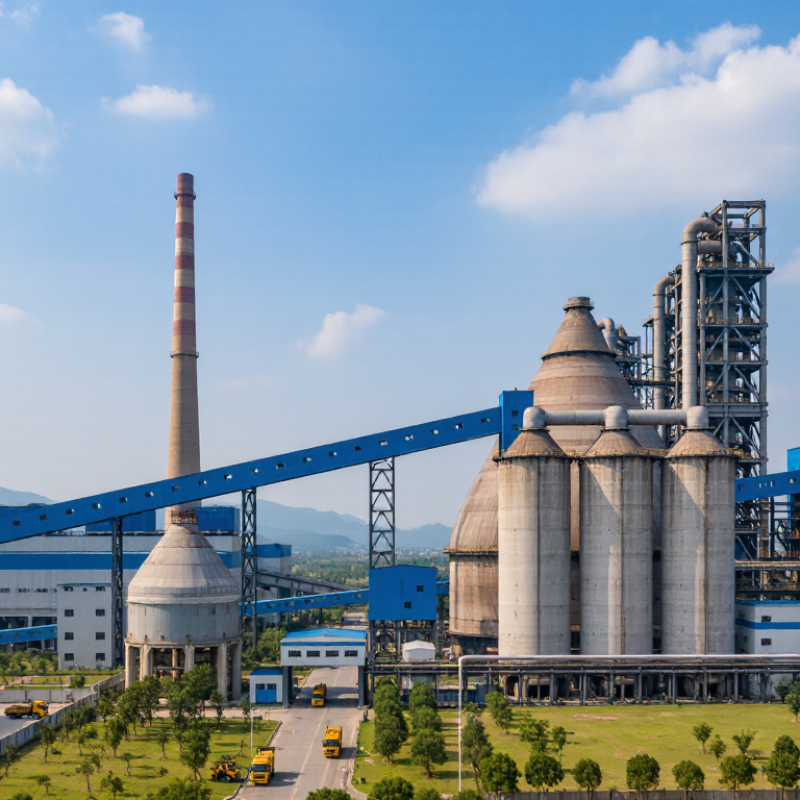
What Defines a Leading Cement Plant Manufacturer
Top 10 Cement Plant Manufacturers in the World?
A leading cement plant manufacturer is not defined by kiln size alone. It is judged by measurable performance after commissioning. The U.S. Geological Survey estimated global cement production at 4.1 billion metric tons in 2023. That scale makes reliability, spare parts, and operator training commercial necessities. Not just machinery.
Strong suppliers design systems around heat recovery, alternative fuels, dust control, and stable clinker quality. The International Energy Agency reports that cement production creates about 7% of global carbon dioxide emissions. Therefore, a credible proposal should disclose energy use, emissions boundaries, and testing methods. It should also guarantee output, power consumption, plant availability, and product strength. ISO 50001-aligned energy management and ISO 14001-based environmental controls add useful discipline. Still, certificates do not replace site evidence.
During evaluation, buyers should inspect reference plants, maintenance records, laboratory data, and response times. A practical audit follows material from limestone feed to dispatch. Engineers should ask what happens during voltage drops, feed chemistry changes, or a failed fan. Those details separate a robust partner from an impressive brochure. No scorecard is perfect. Cost often dominates early decisions, but a cheaper line may create higher fuel, downtime, and retrofit costs. The strongest manufacturers combine engineering depth, transparent data, local support, and honest limits. That last quality is easy to overlook.
Top 10 Cement Plant Manufacturers in the World? - What Defines a Leading Cement Plant Manufacturer
| Rank | Evaluation Dimension | Typical Industry Benchmark | What a Leading Manufacturer Demonstrates | Why It Matters to Buyers |
|---|---|---|---|---|
| 01 | Proven Plant Capacity | Approximately 0.5–10.0 million tonnes of cement per year, depending on plant configuration. | Modular designs that can be scaled from regional facilities to integrated, multi-line plants. | Capacity flexibility helps match capital investment with market demand and future expansion plans. |
| 02 | Process Technology | Modern dry-process lines with preheater and precalciner systems are the prevailing high-efficiency configuration. | Integrated engineering for crushing, raw milling, pyroprocessing, finish grinding, storage, and dispatch. | A complete process solution reduces interface risks between equipment packages and contractors. |
| 03 | Electrical Energy Performance | Roughly 90–120 kWh per tonne of cement for many modern, integrated dry-process plants; actual performance varies by raw materials and product mix. | Guaranteed power figures supported by efficient mills, high-efficiency separators, variable-speed drives, and heat recovery where appropriate. | Lower specific power consumption reduces operating costs and exposure to electricity-price volatility. |
| 04 | Thermal Efficiency | Approximately 2.9–3.5 GJ of thermal energy per tonne of clinker is a common reference range for efficient modern lines. | Optimized preheater cyclones, precalciner design, kiln sealing, combustion control, and stable heat distribution. | Thermal efficiency directly influences fuel consumption, production cost, and process emissions. |
| 05 | Environmental Performance | Well-designed systems target compliance with applicable particulate, NOx, SOx, and greenhouse-gas regulations. | Dust collectors, selective non-catalytic or catalytic reduction options, low-NOx combustion, and continuous monitoring provisions. | Environmental compliance protects operating permits, community relations, and long-term plant continuity. |
| 06 | Alternative Fuel Capability | Alternative-fuel substitution can range from 10% to more than 50% of thermal input, depending on fuel quality, permits, and feeding systems. | Safe storage, dosing, feeding, combustion control, and bypass arrangements for variable alternative fuels. | Fuel flexibility can reduce fossil-fuel dependence and improve resilience against energy-market changes. |
| 07 | Automation and Digital Control | Distributed control systems, process instrumentation, online analyzers, and predictive-maintenance tools are standard features in advanced projects. | Stable control loops, centralized data visibility, remote diagnostics, alarm management, and operator training. | Better process control improves product consistency, reduces downtime, and supports data-based optimization. |
| 08 | Product Quality Flexibility | Equipment should support relevant cement specifications such as ASTM C150/C595 or EN 197-1, subject to local certification requirements. | Flexible grinding, blending, dosing, and quality-control systems for multiple cement types. | Product flexibility enables manufacturers to respond to construction standards and changing customer demand. |
| 09 | Project Delivery Capability | Large projects commonly require engineering, procurement, construction support, commissioning, and performance testing under a coordinated delivery plan. | Clear schedules, risk registers, interface management, local compliance support, and documented acceptance tests. | Strong project execution reduces schedule overruns, construction conflicts, and commissioning delays. |
| 10 | Lifecycle Support and Reliability | A competitive plant should be designed for maintainability, planned shutdowns, spare-parts availability, and long-term technical support. | Maintenance manuals, critical-spares planning, service training, equipment upgrades, and measurable availability targets. | Lifecycle support protects production continuity and helps maintain performance over decades of operation. |

Criteria for Ranking the World’s Top Cement Plant Manufacturers
Ranking the world’s top cement plant manufacturers requires more than comparing annual sales or installed capacity. A credible assessment begins with engineering performance across different climates, raw materials, and production scales. Verified plant references matter, especially facilities operating reliably after several years. Independent data should confirm clinker output, fuel consumption, power use, and equipment availability. Numbers can mislead.
Energy efficiency deserves close attention. A strong manufacturer should offer efficient kilns, effective heat recovery, and practical controls for stable operation. Emissions performance must also be measured through documented monitoring systems, not attractive promises. Dust control, alternative fuel readiness, water use, and maintenance requirements reveal the plant’s real environmental value. Small details matter, such as access to critical spare parts and the clarity of operator training.
The ranking should also examine safety records, commissioning support, upgrade capability, and lifecycle costs. A low purchase price may hide expensive maintenance or frequent stoppages. Technical teams should inspect project schedules, warranty terms, and performance guarantees with care. Customer feedback from comparable plants adds useful field experience, although it is rarely fully objective. Financial resilience and long-term service capacity strengthen confidence in a supplier. Still, no ranking is perfect. Local contractors, grid reliability, and changing regulations can affect results beyond the manufacturer’s control. A transparent scoring model should disclose these limits and separate verified evidence from marketing claims.
Profiles of the Top 10 Cement Plant Manufacturers
Global rankings change with project size, location, and technology. The strongest manufacturers are usually judged by kiln reliability, energy performance, service coverage, and commissioning records.
A European engineering group is known for integrated plants and long-term process research. A northern European supplier focuses on low-energy grinding systems. A German specialist often develops vertical mills, separators, and dust-control equipment. An Indian turnkey builder serves fast-growing markets with local installation teams. A Chinese manufacturer competes through large production capacity and practical cost control. A Turkish exporter offers flexible plant layouts for regional investors.
A Japanese equipment maker emphasizes precision, automation, and strict quality checks. An Italian engineering house is experienced in upgrading older kilns without replacing every machine. A North American process-control supplier improves fuel use through sensors, software, and operator training. A modular plant producer targets smaller projects with compact equipment and shorter installation periods. Details matter. A strong brochure cannot replace stable operation in dust, heat, and vibration.
Experienced buyers should inspect reference plants, spare-part access, warranty terms, and local technical support. Site visits can reveal issues hidden in polished presentations, such as uneven material flow or difficult maintenance access. No manufacturer is perfect. Some systems promise impressive efficiency but require highly trained operators. Others reduce initial costs while increasing future service demands. Reliable selection depends on verified performance data, realistic budgets, and careful commissioning plans.
Top 10 Cement Plant Manufacturers in the World — Global Market Context
Cement plant manufacturers serve markets with different production scales and investment needs. This chart compares estimated cement production in ten major markets in 2023, providing context for the global demand addressed by leading plant engineering and equipment suppliers.
Unit: million metric tons. Source: U.S. Geological Survey, Mineral Commodity Summaries 2024, Cement.
Core Technologies and Services Offered by Leading Manufacturers
Top 10 Cement Plant Manufacturers in the World?
Leading cement plant manufacturers compete through engineering depth, not equipment size alone. Their core work covers raw material crushing, grinding, clinker production, and cement milling. Modern plants often use vertical roller mills to reduce energy use and floor space. Preheater systems recover heat from kiln gases before fuel is burned again. Clever engineering.
Automation is another major service. Distributed control systems monitor kiln temperature, feed rates, pressure, and vibration in real time. Predictive maintenance tools can identify unusual bearing noise before a shutdown occurs. Manufacturers also provide laboratory systems for testing strength, setting time, fineness, and chemical composition. These services help operators maintain stable quality across changing limestone conditions.
Strong suppliers support the entire project lifecycle. Their teams may conduct site surveys, process simulations, equipment selection, civil interface design, installation supervision, commissioning, and operator training. Experienced engineers also review dust collection, fuel handling, emissions control, and workplace safeguards. Independent performance tests should confirm capacity, power consumption, and product quality. Promises need evidence.
However, plant performance rarely depends on machinery alone. Moisture changes, weak maintenance routines, and inconsistent raw materials can reduce expected output. No supplier gets every forecast right. That limitation deserves honest discussion. Buyers should request documented references, service response times, spare-part plans, and clear warranty terms. A reliable manufacturer explains both the benefits and the operating risks of its technology.
Global Markets and Future Trends in Cement Plant Manufacturing
Top 10 Cement Plant Manufacturers in the World?
Global cement plant manufacturing is shifting from scale toward efficiency, resilience, and lower emissions. The U.S. Geological Survey estimated global cement production at about 4.1 billion metric tons in 2023. This immense market still depends on reliable kilns, grinding systems, automation, and maintenance support. However, a capacity-based top-ten ranking can mislead. A large factory is not always the most advanced one.
Regional demand is changing unevenly. Asia remains the largest production center, while Europe is investing heavily in carbon reduction and energy efficiency. The International Energy Agency reports that cement production contributes nearly 7% of global carbon dioxide emissions. This pressure is accelerating demand for waste-heat recovery, alternative fuels, low-clinker binders, and carbon capture equipment. Manufacturers with strong engineering data and local service teams may gain more contracts than those offering only low prices. In practice, delivery delays and weak spare-parts networks still damage otherwise impressive projects. That detail is often overlooked.
Tips: Compare thermal energy use, electrical consumption, emissions controls, and after-sales response times. Request verified test results, not attractive brochures. Check whether the supplier has handled local raw materials, climate conditions, and grid limitations. Digital monitoring can reduce downtime, but it cannot replace experienced operators. The market is moving quickly, yet some forecasts remain too optimistic about carbon capture costs. Buyers should leave room for technical revisions, because cement technology is improving but not perfectly predictable.
Get in touch with us,
We will contact you shortly!
What is the difference between Unline(Non-Epoxy Coated) or Lining(Epoxy Coated) Metal Drum?

Unline drums with internally bare metal surface is more susceptible to corrosion and rust while Lining drums are internally coated with Phenolic Epoxy Coating to provide a non-reactive barrier between the drum surface and your product, less risk of contamination. Note: Our Unline drums are coated with an anti-rust agent after washing to reduce risk of rust.
What are Unline(Non-Epoxy Coated) and Lining(Epoxy Coated) drums compatible with?

In Singapore, Recon Unline Drums are usually more costly than Recon Lining Drums. Hence, we recommend Recon Unline Drums to fill aromatics like Thinner, Xylene, Toulene& other solvents like Hexane, BA, CA, EA, MC, White spirit, etc.
We recommend the lower-priced Recon Lining Drums to fill hydrocarbons like IPA, Methanol, Ethanoland oil-based products like diesel, petrol, lubricants, engine, hydraulic, base, transmission fluid, additives, waste oil, etc.;
What is the difference between Grade A and Grade B Metal Drum ?

Grading of used drums are usually based on physical conditions like rustiness, deformities and residual contents. Grade A drums are totally free from internal rust, serious dents and are easy to clean. Grade B drums have different degrees of rust internally and aesthetically inferior compared to Grade A drums.
What content is suitable to fill in a Recon Grade A or Grade B Drum?

Recon Grade A drum is suitable to fill more costly virgin grade products while Recon Grade B drum is more suitable for recycled or waste products.
What is the difference between Open Top and Close Top Drums and their usage?

Closed top drums are for water and other liquid products. Open Top drums can be used for liquid too but are primarily for more viscous products. The Open Top (or open head with a lid) allows you to get in and out of the drum with your product easier.
What type of content are Metal or Plastic Drums suitable for?

Metal drums offer additional protection when dealing with potentially flammable substances. They provide superior fire resistance, impact protection, and longevity for storing class 1, 2, and 3 volatile chemicals.
Plastic HDPE Drums are suitable for corrosive chemicals like acids, alkaline and also water-based products.
Will there be any contamination in the reconditioned metal, plastic drums or IBC tanks?

All our reconditioned containers (metal/plastic drums, carboys, IBC tanks) are washed thoroughly with specially formulated cleaning agent, rinsed with clean water, dried, and tested for possible leakages during the recondition process. Stringent quality inspection is being conducted 100% on every reconditioned product before they are qualified for sale & delivery.
What is the drum gauge(thickness) and weight for reconditioned metal drums?

Reconditioned metal drums gauge can be 0.9mm to 1.0mm all round. Their weight can vary from 16 to 18kg.
Do you sell New Packaging Products too?

Yes, we are also a distributor for new pallets, metal drums, plastic drums, carboys, IBCs and stainless-steel tanks.
What additional services do you provide apart from selling reconditioned and new containers.?

We are an NEA licensed toxic industrial waste collector, who can collect and dispose of used toxic waste containers in Singapore.
Do you offer labelling and silkscreen on the containers ?

We can provide labelling and silk-screening on the containers.
Are you able to ship overseas ?

Yes, we can arrange export our products to any country in the world.
Leading the Way
to Carbon Neutrality