Essential Tips for Using HPMC in Liquid Detergents?
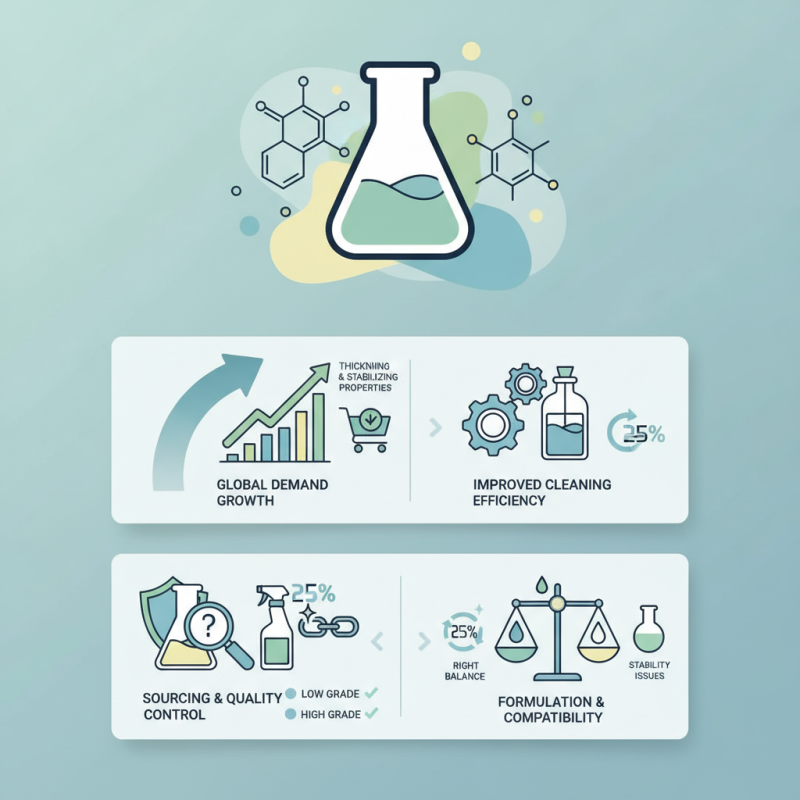
The use of HPMC for Liquid Detergents has gained significant attention in the cleaning industry. Hydroxypropyl Methylcellulose (HPMC) is a versatile additive known for its thickening and stabilizing properties. Industry reports indicate that the global demand for liquid detergents is expected to grow steadily, driven by increasing consumer preferences for convenience and effectiveness. HPMC can enhance the viscosity and texture of formulations, making these products more effective and appealing.
In recent years, a market research report revealed that products containing HPMC can improve cleaning efficiency by up to 25%. This indicates that formulators are focusing on quality and performance. However, not all HPMC sourcing is equal. Some suppliers may offer lower-grade materials that do not meet industry standards. Inconsistent quality can lead to performance issues, complicating the manufacturing process.
Attention to detail is crucial when integrating HPMC into liquid formulations. It’s essential to thoroughly test compatibility with other ingredients. Striking the right balance in concentration is challenging yet necessary. Miscalculations can lead to products that either underperform or present stability issues. Embracing HPMC for Liquid Detergents can be beneficial, but formulators must also remain vigilant about sourcing and formulation specifics.
Understanding HPMC and Its Role in Liquid Detergents
Hydroxypropyl methylcellulose (HPMC) is gaining ground in the detergent industry. Its unique properties make it a valuable ingredient in liquid detergents. HPMC acts as a thickener, improving the texture of the product. This thickening capability ensures a smooth and consistent application. Customers often prefer a well-textured liquid.
Moreover, HPMC enhances the stability of liquid detergents. It helps maintain viscosity even under varying conditions. However, using the right concentration is crucial. Too much HPMC can lead to a pasty texture. Finding the ideal balance takes experimentation. Various formulations may yield different results.
The role of HPMC extends beyond thickening. It also helps in keeping the product homogeneous. Settling can occur in liquid detergents. HPMC can minimize this issue, ensuring uniform distribution. Yet, the interaction with other ingredients is complex. Some might clash, affecting performance. Testing different combinations can be a learning experience. Each trial is an opportunity for improvement and reflection.
Key Properties of HPMC for Enhanced Detergent Formulation
HPMC, or Hydroxypropyl Methylcellulose, plays a significant role in liquid detergent formulations. Its unique properties bring several advantages to the formulation process. One key feature is its thickening ability. HPMC can enhance the viscosity of the detergent without affecting its clarity, which is often a desired trait in liquid products. This can help improve the overall user experience.
Another important characteristic of HPMC is its film-forming capability. This allows for better adherence to surfaces during cleaning, increasing efficiency. HPMC also aids in maintaining the stability of the formulation over time. However, it is crucial to ensure proper concentrations are used. Too much HPMC can lead to excessive viscosity, making the product difficult to dispense.
Moreover, HPMC can affect the texture of the product. The balance between thickness and usability is delicate. Some formulations may feel too heavy or slimy if not properly adjusted. Regular testing and reformulation may be necessary to achieve the desired consistency. It’s a continuous learning process, one that requires careful observation and adjustment.
Essential Tips for Using HPMC in Liquid Detergents
| Property | Description | Benefits in Detergent Formulation |
| Viscosity | HPMC provides a control of viscosity in liquid detergents. | Improves texture and stability of the product. |
| Film-Forming | Creates a protective film on surfaces. | Enhances cleaning performance and protects fabrics. |
| Thickening Agent | Increases the thickness of the detergent solution. | Provides a better user experience during application. |
| Solubility | Dissolves easily in cold water. | Allows for versatile formulations without heating. |
| Stability | Maintains its properties over a range of pH levels. | Ensures consistency in performance across different products. |
Incorporating HPMC: Dosage Guidelines and Best Practices
When incorporating hydroxypropylmethylcellulose (HPMC) into liquid detergents, the dosage is crucial. A typical starting point for HPMC is around 0.5% to 2% of the total formulation weight. This range helps achieve optimal viscosity without making the product too thick. However, adjusting the dosage according to specific needs is essential. For example, a highly concentrated formula may require less HPMC than a standard one.
Mixing HPMC requires attention. It should be dispersed evenly to avoid clumping. Premixing HPMC with other liquid ingredients is advisable before adding to the formula. This step helps achieve uniformity. Some formulators overlook this, leading to inconsistent viscosity. Experimenting with different mixing techniques can help refine the process. Remember, temperature can impact HPMC's solubility and performance. Warmer temperatures can improve dissolution but may also affect stability.
Monitoring the final product's performance is key. If the detergent does not meet expectations, consider revisiting the HPMC dosage or mixing method. Adjustments can lead to better results. Testing various formulations will help in identifying the most effective HPMC use. This approach fosters continuous improvement and innovation in your products.
Stability and Compatibility: Testing HPMC in Liquid Formulations
When it comes to formulating liquid detergents, Hydroxypropyl Methylcellulose (HPMC) plays a crucial role. Stability is vital in ensuring that products maintain their effectiveness over time. According to industry research, HPMC enhances viscosity while providing excellent suspension properties. Yet, testing its stability in liquid formulations requires attention. Factors like pH, temperature, and ionic strength can affect HPMC performance.
Consider these tips to enhance compatibility. First, always conduct small-scale tests before large production runs. This helps identify any undesirable reactions between HPMC and other ingredients. Use a combination of stability tests. Check for phase separation or sedimentation in various conditions. This will uncover potential pitfalls early in the formulation process.
Another vital point is the concentration of HPMC. Too much can lead to undesired thickening, while too little can reduce cleaning efficacy. Aim for a balanced formulation. Regularly review your process based on feedback loops. Adjust formulations as needed to maintain product performance and customer satisfaction. Remember, minor tweaks can significantly impact overall results.
Common Challenges and Solutions When Using HPMC in Detergents
HPMC, or Hydroxypropyl Methylcellulose, is a common thickening agent in liquid detergents. However, its use can pose challenges. One significant issue is its solubility in cold water. Many manufacturers report that HPMC may clump or not dissolve completely. This is especially problematic when formulating concentrated products.
A study indicates that over 40% of detergent manufacturers face formulation inconsistencies due to HPMC. In response, it is advised to pre-dissolve HPMC in warm water. This practice enhances its dispersibility. Another common challenge is achieving the right viscosity. Excessive use of HPMC can lead to overly viscous products.
Tip: Always conduct small-scale tests to optimize HPMC levels. Balance is key here. For example, aim for a final viscosity of 600-800 cP for effective cleaning without excessive thickness.
In addition to formulating issues, HPMC's interaction with surfactants can alter performance. Using the wrong concentration may reduce cleaning efficiency. Regular evaluations of HPMC's impact on overall product performance are essential. Adjusting pH levels can also improve stability, particularly for sensitive formulations.
Tip: Monitor your product’s performance regularly. It helps in identifying areas needing adjustment or reformulation. A proactive approach ensures that any challenges are met with effective solutions.