7 Tips for Choosing a Variable Frequency Converter
Choosing a Variable Frequency Converter is not simply a matter of matching the motor’s rated kilowatts. The right unit must suit the load, supply voltage, operating environment, and control needs. The International Energy Agency’s 2011 report, Energy-Efficiency Policy Opportunities for Electric Motor-Driven Systems, estimates that these systems account for about 46% of global electricity use. That figure is not a promise of savings from any one converter. Actual results depend on how the machine operates. A pump running against a throttled valve, for example, may offer different savings potential from a conveyor running at nearly constant speed. Small details matter. So does checking the motor nameplate before ordering.
These seven tips will guide readers through practical checks: load profile, converter sizing, overload capacity, input power quality, cooling, protection, and commissioning support. They also encourage a useful pause: does the application truly need variable speed, or is a fixed-speed drive enough? Amory Lovins, a recognized energy-efficiency expert, is often quoted as saying, “The cheapest energy is the energy you don’t use.” It is a useful reminder, though not a selection formula. A converter cannot compensate for poor system design, and a sales datasheet rarely tells the whole story. Compare specifications with real operating conditions, such as enclosure temperature, dust, and daily start-stop cycles. A careful choice can improve control and reduce wasted energy. But savings should be measured, not assumed.
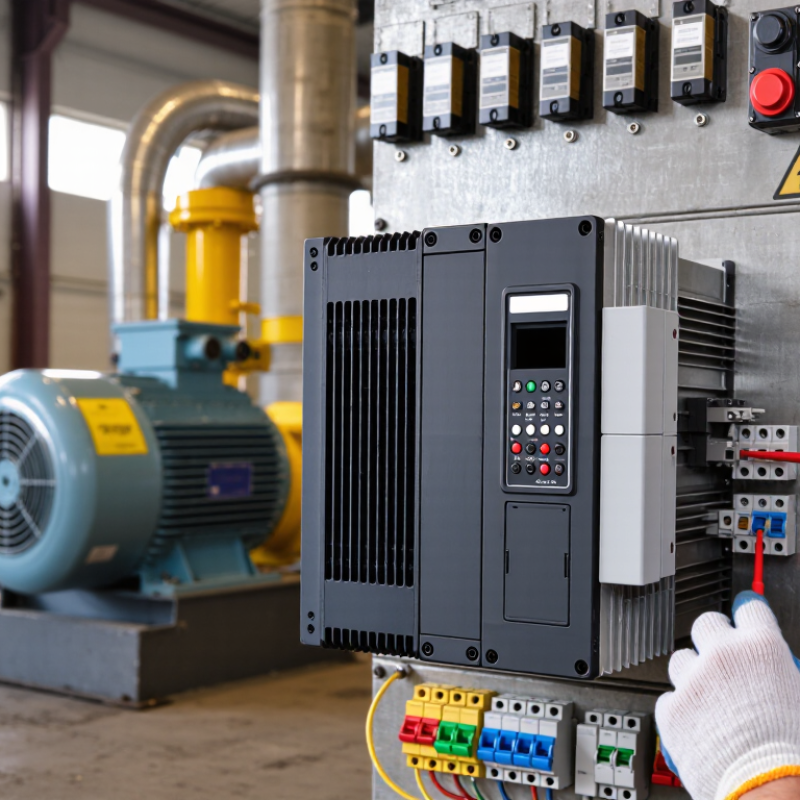
Identify the Motor Type and Load Requirements
Identify the motor before comparing converter ratings. Read its nameplate for voltage, rated current, frequency, speed, and connection type. Check the converter’s output current against the motor’s rated current, not horsepower alone.
Check the nameplate. A three-phase induction motor may suit a standard variable-frequency drive, while permanent-magnet or single-phase motors can require different control equipment. Confirm compatibility in the motor and converter manuals; similar-looking ratings do not guarantee a safe match.
Then map the load across its operating cycle. A fan or centrifugal pump usually needs less torque as speed falls, while a conveyor may demand near-full torque at low speed. That difference affects overload capacity, acceleration settings, cooling, and converter sizing.
Do not guess. The IEA’s 2011 report, Energy-Efficiency Policy Opportunities for Electric Motor-Driven Systems, estimated that motor-driven systems use about 45% of global electricity, making careful matching consequential beyond one machine.
For a pump, note the flow and pressure range; for a loaded conveyor, record startup conditions and peak current.
One detail is easy to miss: a motor’s own cooling fan may lose effectiveness at low speed. Check whether separate cooling or a minimum operating speed is needed, and verify the proposed setup under the actual load.
Match Converter Capacity to the Application
A variable frequency converter should be sized around the motor’s actual demands, not just its horsepower rating. Check the motor nameplate current and compare it with the converter’s continuous output-current rating. A unit with a matching kilowatt figure can still be undersized if its current rating is too low. Consider how the machine operates: a fan or pump often needs less torque at low speed, while a loaded conveyor may need strong starting and running torque. The difference matters.
Tip: Match the converter to the toughest normal operating condition. Allow for brief overloads only when the manufacturer’s ratings support them. Check the supply voltage, motor current, and load type together. Small details matter.
Also account for the installation environment. High ambient temperatures, limited airflow, elevated locations, or a high switching frequency can reduce a converter’s usable capacity. Read the derating guidance in its technical documentation, and leave room for ventilation around the enclosure. A little margin can help, but oversizing is not a substitute for correct settings or wiring. I would verify the expected load with measured operating current when possible; estimates can miss a jammed belt or a pump that starts under pressure. Recheck the choice after commissioning, especially if the motor runs hot, trips, or struggles to accelerate.
Verify Voltage, Frequency, and Control Compatibility
Before choosing a variable frequency converter, match its voltage to both the supply and the motor nameplate. These are not always the same. A converter designed for single-phase input may provide three-phase output, but its ratings and capacity still need checking. Confirm the number of phases, voltage range, and motor current—not just the horsepower figure. A mismatch can cause nuisance trips, poor starting, or overheating.
Frequency matters too. Check the converter’s output range against the motor’s required operating speeds. A wider range is not automatically better; running a motor too slowly can reduce cooling, while high speeds may exceed mechanical limits. Picture a small pump running in a warm utility room. Its fan, load, and ventilation all affect how safely it can slow down. Read the motor documentation, and ask a qualified technician when the intended speed range is unclear. I would not guess here.
Then verify how the converter will receive commands. Does the system need a keypad, digital start/stop inputs, or an analog speed reference? Check signal type, wiring terminals, and control voltage before installation. Small details matter. A control signal that looks compatible on paper may use a different range or common terminal. It is an easy detail to miss, and worth checking against both manuals before connecting anything.
7 Tips for Choosing a Variable Frequency Converter
Verify voltage, frequency, and control compatibility before selecting a converter.
This chart shows the theoretical synchronous speed of a four-pole motor at common operating frequencies, calculated as 120 × frequency ÷ pole count. Actual motor speed is slightly lower under load because of slip. Check that the converter’s input voltage matches the supply, its output voltage suits the motor nameplate, and its frequency range and control signals meet the application requirements.
Assess Protection Features and Installation Conditions
Protection features should match the motor and the risks around it. Check for overload, overcurrent, overtemperature, and input-phase protection, then confirm how each fault is signaled. A warning light is useful, but only if operators can see it. Verify protective functions in the unit’s manual; names and limits can differ. More protection is not automatically better.
Tip: Compare the converter’s enclosure rating with the actual site. Dust, dripping water, and metal debris can change what is suitable. Small details matter.
Installation conditions affect reliability, too. Measure the panel space and leave the manufacturer’s specified clearance for airflow. A cramped cabinet can trap heat, even when the room feels cool. Note ambient temperature, altitude, vibration, and cable routing before choosing a model. Keep power and control wiring separated where the instructions require it, and provide a sound ground connection. I would not assume a clean workshop today means a clean site next year; maintenance access deserves room as well. Have a qualified installer check the layout against the manual before energizing the equipment.
Compare Efficiency, Compliance, Support, and Total Cost
Match the converter to the real duty cycle, not just the motor’s nameplate. Record typical speed, load changes, and daily operating hours. Efficiency at full load can look impressive, yet low-speed operation may tell a different story. Ask for performance data across your expected range. Small details matter.
Check electrical compatibility, including motor voltage, current, insulation, and cable length. Confirm that the unit meets applicable safety and electromagnetic compatibility requirements at the installation site. A technically suitable converter can still need filters, shielding, or extra cooling. Verify these needs before comparing prices. It is easy to miss them.
Compare support by asking who handles commissioning, how quickly service responds, and whether replacement parts are readily available. Request clear manuals and practical troubleshooting guidance. Then estimate total cost: purchase, installation, energy use, maintenance, and possible downtime. A spreadsheet can miss the cost of a delayed repair. Not always obvious. Leave room for uncertainty, since actual loads and energy prices may differ from estimates. A lower purchase price is not automatically the lower-cost choice.