
7 Tips for Buying Galvanized Self Drilling Screws?
Buying Galvanized Self Drilling Screws can look simple: choose a length, pick a coating, and place an order. Yet a screw that spins on a thin steel panel or rusts around a damp seam can turn a small purchase into a costly repair. The right choice depends on the base material, panel thickness, exposure, and installation method. Details matter.
Bolting specialist William Eccles’ work emphasizes that fastener performance depends on the whole joint, not one component alone. A practical paraphrase of that principle is: “A reliable connection starts with matching the fastener to the materials and the way they will be installed.” This is not a verified verbatim quotation, so it should not be treated as one. The principle still offers a useful lens for comparing drill points, thread forms, head styles, and protective coatings.
These seven tips will help you assess those choices before buying. Check the manufacturer’s specifications, confirm the screw’s drilling capacity, and consider where water may collect after installation. A shiny coating is not proof of suitability. Nor is a higher price. Even experienced buyers can overlook a detail, especially when samples are small and job conditions are hard to reproduce. A careful comparison can reduce guesswork, though it cannot replace testing the screw in the actual material and assembly.
What Galvanized Self-Drilling Screws Are and Where They Are Used
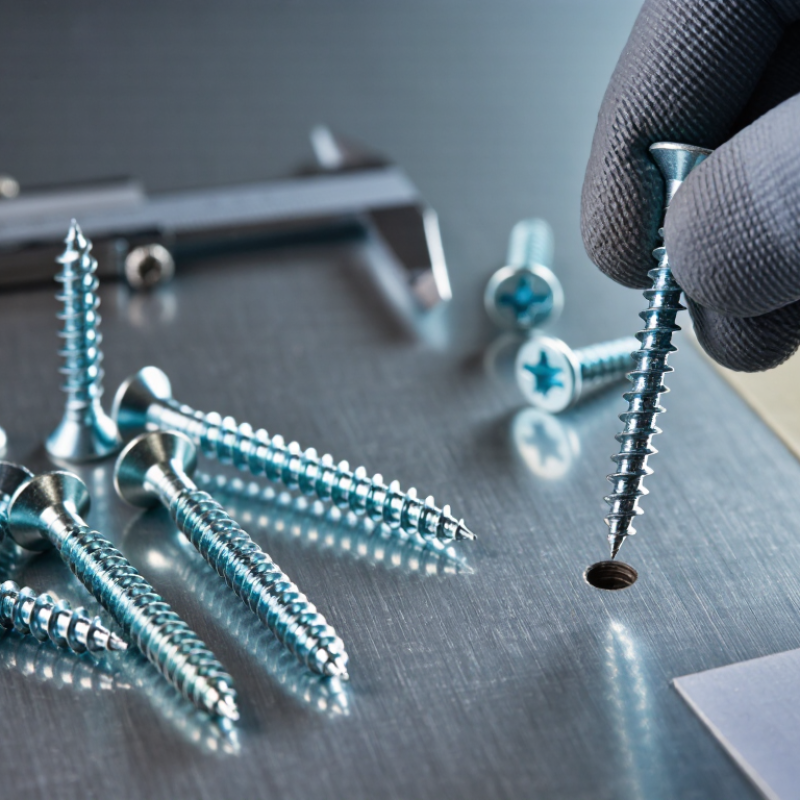
Galvanized self-drilling screws combine a drill-shaped point with a zinc coating. The point cuts through thin metal, while the threads secure the fastener without a separately drilled pilot hole. They are commonly used for metal roofing, sheet-metal panels, steel framing, and metal-to-wood connections. Choose the screw’s length and drill-point capacity for the materials being joined. Too short, and the threads may not engage properly.
“Galvanized” does not describe one uniform coating. ASTM A153/A153M, a specification for zinc coatings on iron and steel hardware, gives a minimum average coating weight of 1.25 ounces per square foot for certain small threaded articles. That is a useful reference, not a guarantee that every galvanized screw meets that class. ASTM F1941/F1941M covers electrodeposited coatings on threaded fasteners, with requirements that differ from hot-dip galvanizing. Check the coating method and specification, not just the label.
These screws suit many outdoor applications, but exposure matters. Persistent moisture, coastal salt, and contact with dissimilar metals can accelerate corrosion. Match the screw’s coating to the surrounding materials and conditions; a roof near the coast needs more careful selection than a dry indoor partition. Inspect the coating for scratches, especially around the head and drill point. Small details count. A coating may look intact, yet the site conditions can still make the choice unsuitable.

How to Match Screw Size and Drill Point to the Material
Matching a galvanized self-drilling screw to a job starts with the material’s thickness, not just its appearance. Measure every layer the screw must pass through, including cladding and brackets. Choose a length that leaves enough thread engaged in the supporting steel without protruding dangerously far. It matters. Check the screw’s stated drilling capacity against the thickest steel layer; a point that is too small may spin or overheat before it cuts through.
Match the drill point to the substrate. Fine points suit thin sheet metal, while longer, heavier points are designed for thicker steel. Hard or layered materials can demand more drilling capacity than their measurements suggest, so test a sample assembly when the material is unfamiliar. A practical check: the screw should form clean chips and seat firmly, not wobble or burnish the hole. Don’t assume a sharper-looking point is automatically the right one.
Size also affects holding strength. Use a diameter appropriate for the load and the receiving material, and select a head style that bears evenly on the panel. Too much driving torque can strip threads or damage the galvanized coating; too little can leave the joint loose. A clutch-controlled driver helps, though settings vary between tools. Inspect a few installed screws for snug seating, sound threads, and a coating that remains intact around the head.
7 Tips for Buying Galvanized Self-Drilling Screws: How to Match Screw Size and Drill Point to the Material
| Tip | Material or Application | Size and Drill-Point Guidance | What to Check |
|---|---|---|---|
| 1. Identify the material thickness | Single or stacked sheets of steel | Choose a drill point rated to drill through the combined steel thickness. Larger point numbers generally indicate greater drilling capacity, but ratings vary by screw design. | Use the screw maker’s stated drilling-capacity range for the exact point and material. Do not count coatings or an air gap as steel thickness. |
| 2. Match the point to the drilling load | Thin sheet metal or heavier steel sections | A smaller-capacity point is commonly suited to thinner sheet; a higher-capacity point may be needed for thicker steel. Avoid an oversized point for thin sheet if it could leave an unnecessarily large hole. | Confirm that the point can drill the full stack before its threads engage. Follow the product’s published capacity rather than relying on point number alone. |
| 3. Select a diameter for the load | Light-gauge panels, brackets, or structural connections | Common nominal screw sizes include #8 (about 0.164 in / 4.2 mm), #10 (0.190 in / 4.8 mm), #12 (0.216 in / 5.5 mm), and #14 (0.250 in / 6.3 mm). | Choose diameter based on required strength, hole size, and the connected material. These dimensions are nominal; verify the screw’s published specifications and project requirements. |
| 4. Choose enough length for the connection | Metal-to-metal fastening or fastening a panel to a support | Allow the point to pass through the materials and enough threaded length to form a secure connection. For a blind connection, account for the thickness of every layer being joined. | Do not select length from the drill point alone. Check the screw’s effective thread length and the required penetration or engagement for the application. |
| 5. Check the head and washer style | Panels requiring broad bearing or a flush finish | Choose a head style that suits the joint: a washer-style head can spread bearing pressure, while a lower-profile head may suit a more compact finish. | For exposed or weather-facing joints, use a compatible sealing washer where the design calls for one. Tighten only enough to seat the washer without damaging the panel. |
| 6. Match the galvanized finish to exposure | Indoor, outdoor, or damp environments | Galvanized coatings provide corrosion protection, but protection varies with coating type, coating thickness, and exposure conditions. | Check the coating specification and suitability for the site. Consider corrosion compatibility with the joined metals, and follow applicable project or building requirements. |
| 7. Check installation and sample-fit | Any self-drilling screw installation | Use a driver and bit that fit the head, and set the tool to avoid excessive speed or over-tightening. A correctly selected self-drilling screw usually does not need a separate pilot hole in the rated material. | Test on representative materials when possible. Confirm clean drilling, full thread engagement, and a properly seated head; stop if the point overheats or fails to penetrate. |
Note: Drill-point capacity, pull-out strength, and corrosion performance depend on the specific screw design, coating, substrate, and installation. Always verify published product data and applicable engineering or building requirements for the intended use.
How to Choose a Galvanized Coating for the Exposure Conditions
Choose a galvanized coating by the moisture, salt, and chemical exposure at the installation site—not by the word “galvanized” alone. In a dry, sheltered interior, a thin electroplated zinc layer may be adequate, while frequent condensation or rain calls for a more robust, specified coating. Salt changes everything. Coastal air deposits salt even beneath eaves, and road spray can keep lower wall fasteners wet for hours.
Hot-dip galvanizing generally provides a thicker zinc layer for demanding outdoor exposure, but coating thickness can affect thread fit and the sharp drilling point. Confirm that the coating is intended for self-drilling screws, and follow the supplier’s guidance for the material thickness and drill-point range. Don’t assume a heavier layer always performs better. An unsuitable coating can slow penetration or leave damaged protection around the hole.
Also check what the screw will touch. Wet, salt-laden timber, treated wood, and contact with other metals can accelerate corrosion; compatibility depends on the full assembly. Where exposure is severe, use a coating specification suited to that environment, and inspect damaged heads after installation. Salt-spray hours can help compare products, but they do not predict field life by themselves. I’d rather verify the exact coating and application than rely on a vague “outdoor” label.
How to Compare Screw Head, Thread, and Drive Features
7 Tips for Buying Galvanized Self-Drilling Screws: How to Compare Screw Head, Thread, and Drive Features
Compare the head with the material it must clamp. Hex washer heads provide a broad bearing surface and suit accessible metal-to-metal fastening. Pan or wafer heads may fit tighter clearances, but their smaller contact area can mark thin sheet. Check the head dimensions against the hole, washer, and installation space. Small details matter. The U.S. Federal Highway Administration’s 2002 corrosion-cost report estimated annual U.S. corrosion costs at $276 billion, or 3.1% of GDP. That figure covers many industries, not screws alone, but it shows why damaged coatings deserve attention.
Match the thread and drill point to the full material stack, not just the top sheet. Fine threads commonly suit thinner steel; coarser threads may be appropriate for other substrates. Confirm the manufacturer’s stated drilling capacity and grip range for your actual thickness. A point that is too small may overheat or stall; one that is too large can leave weak engagement. Check coating specifications, too. “Galvanized” can describe different zinc-coating processes and thicknesses, so verify suitability for the exposure and substrate.
Choose the drive for tool access and controlled seating. Hex drives are practical where a socket can reach; Phillips-style drives can be easier in restricted spaces, but may cam out under excessive pressure. Use a correctly sized bit and steady, perpendicular pressure. Not always obvious. A screw that seats crookedly can scrape its coating, and I would recheck the first few installations before committing to a full run. Compare head, thread, point, drive, and coating as one system.
How to Check Product Quality, Compatibility, and Supplier Details
7 Tips for Buying Galvanized Self Drilling Screws?
Check the coating, dimensions, drilling point, and supplier information before comparing prices. A bright finish alone does not prove consistent corrosion protection. Look for a specified coating type and thickness, then confirm that the product documentation matches the screws delivered. Small details matter.
Match the screw to the materials and thickness in your assembly. Check the manufacturer’s drilling-capacity range, thread style, length, and head type; a point designed for thin sheet may struggle with thicker steel. If possible, test a sample in the actual materials. Watch for slipping, excessive heat, damaged threads, or a head that sits unevenly. Fit is not guesswork. I would not rely on a quick hand test alone; installation speed and tool settings can affect results.
Ask suppliers for dimensional tolerances, coating details, inspection records, and clear batch identification. A traceable lot makes follow-up easier if a problem appears. Confirm packaging protects the threads and keeps sizes clearly separated. Also ask whether the screws are suitable for the intended exposure, since coating performance varies and dissimilar metals can create compatibility concerns. Compare like with like. A low quote may omit useful quality checks, but a polished datasheet is not proof of every batch. Request a small production sample and compare it with the stated specifications before placing a larger order.
Article Source:
Get in touch with us,
We will contact you shortly!
What is the difference between Unline(Non-Epoxy Coated) or Lining(Epoxy Coated) Metal Drum?

Unline drums with internally bare metal surface is more susceptible to corrosion and rust while Lining drums are internally coated with Phenolic Epoxy Coating to provide a non-reactive barrier between the drum surface and your product, less risk of contamination. Note: Our Unline drums are coated with an anti-rust agent after washing to reduce risk of rust.
What are Unline(Non-Epoxy Coated) and Lining(Epoxy Coated) drums compatible with?

In Singapore, Recon Unline Drums are usually more costly than Recon Lining Drums. Hence, we recommend Recon Unline Drums to fill aromatics like Thinner, Xylene, Toulene& other solvents like Hexane, BA, CA, EA, MC, White spirit, etc.
We recommend the lower-priced Recon Lining Drums to fill hydrocarbons like IPA, Methanol, Ethanoland oil-based products like diesel, petrol, lubricants, engine, hydraulic, base, transmission fluid, additives, waste oil, etc.;
What is the difference between Grade A and Grade B Metal Drum ?

Grading of used drums are usually based on physical conditions like rustiness, deformities and residual contents. Grade A drums are totally free from internal rust, serious dents and are easy to clean. Grade B drums have different degrees of rust internally and aesthetically inferior compared to Grade A drums.
What content is suitable to fill in a Recon Grade A or Grade B Drum?

Recon Grade A drum is suitable to fill more costly virgin grade products while Recon Grade B drum is more suitable for recycled or waste products.
What is the difference between Open Top and Close Top Drums and their usage?

Closed top drums are for water and other liquid products. Open Top drums can be used for liquid too but are primarily for more viscous products. The Open Top (or open head with a lid) allows you to get in and out of the drum with your product easier.
What type of content are Metal or Plastic Drums suitable for?

Metal drums offer additional protection when dealing with potentially flammable substances. They provide superior fire resistance, impact protection, and longevity for storing class 1, 2, and 3 volatile chemicals.
Plastic HDPE Drums are suitable for corrosive chemicals like acids, alkaline and also water-based products.
Will there be any contamination in the reconditioned metal, plastic drums or IBC tanks?

All our reconditioned containers (metal/plastic drums, carboys, IBC tanks) are washed thoroughly with specially formulated cleaning agent, rinsed with clean water, dried, and tested for possible leakages during the recondition process. Stringent quality inspection is being conducted 100% on every reconditioned product before they are qualified for sale & delivery.
What is the drum gauge(thickness) and weight for reconditioned metal drums?

Reconditioned metal drums gauge can be 0.9mm to 1.0mm all round. Their weight can vary from 16 to 18kg.
Do you sell New Packaging Products too?

Yes, we are also a distributor for new pallets, metal drums, plastic drums, carboys, IBCs and stainless-steel tanks.
What additional services do you provide apart from selling reconditioned and new containers.?

We are an NEA licensed toxic industrial waste collector, who can collect and dispose of used toxic waste containers in Singapore.
Do you offer labelling and silkscreen on the containers ?

We can provide labelling and silk-screening on the containers.
Are you able to ship overseas ?

Yes, we can arrange export our products to any country in the world.
Leading the Way
to Carbon Neutrality