
How to Ship from Ningbo to the US with DDP?
Shipping goods from Ningbo to the United States under DDP can make landed costs easier to estimate. Ningbo To US DDP Shipping generally means the seller arranges transport, handles import clearance, and pays applicable duties and taxes under the agreed delivery terms. The buyer receives the cargo at the named destination. That sounds simple. In practice, the quote should state exactly where delivery ends, such as a warehouse address or a business dock. A port, residential address, and commercial warehouse can involve very different handling needs.
Reliable planning begins with accurate cargo information. Share the product description, carton count, dimensions, gross weight, and pickup location before requesting a quote. Confirm whether the price includes origin handling, ocean or air freight, customs clearance, duties, final-mile delivery, and any appointment or unloading fees. Keep records. Clear invoices and packing lists help the logistics provider prepare the shipment, while realistic transit estimates should allow for inspections, congestion, or schedule changes. A useful DDP quote is specific, not just a low number in an email.
Before booking, ask who will serve as importer of record and what information they need from you. Responsibilities can depend on the destination, product, and service arrangement, so confirm them with your provider and qualified trade professionals. Compare the delivery address against the carrier’s access requirements. A missed detail can become an extra charge. Even experienced shippers sometimes overlook small fees, so review the written terms carefully before cargo leaves Ningbo.
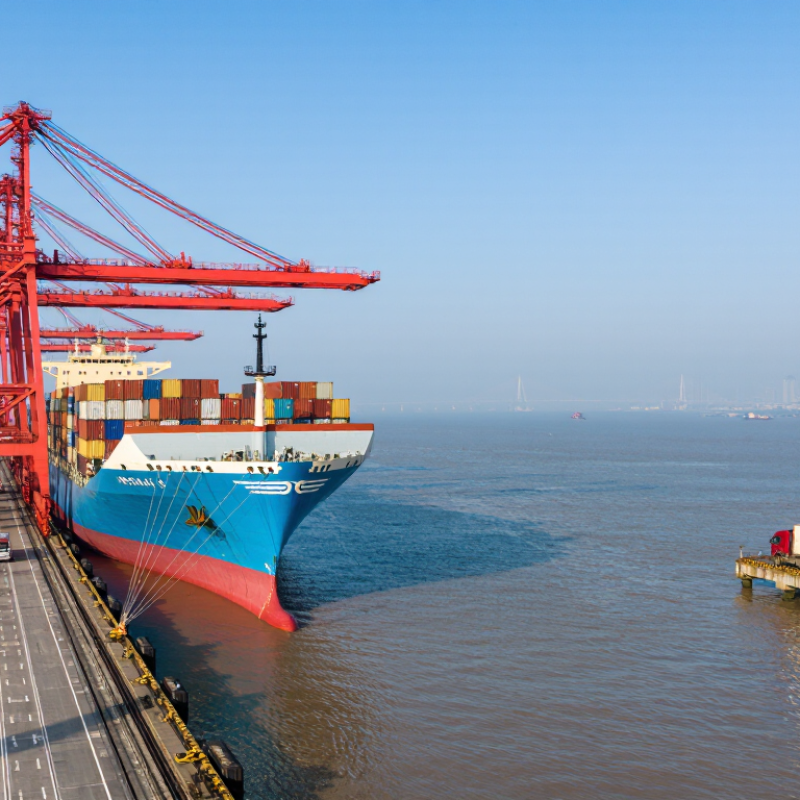
Understand DDP Shipping from Ningbo to the United States
DDP shipping from Ningbo means the seller arranges transport to the agreed US destination and is responsible for import clearance, duties, and applicable taxes under the agreed Incoterms® 2020 terms. The term sounds simple. In practice, it isn’t. The named delivery point matters: a warehouse dock, residential address, and construction site can involve very different costs.
Before booking, confirm what the quote includes. Ask whether it covers export handling in Ningbo, ocean or air freight, customs entry, duty, final-mile delivery, and any fuel or handling surcharges. Duties depend on the goods’ tariff classification, declared value, and country of origin. A precise product description and accurate commercial invoice help the customs broker assess the shipment. Guessing the classification can create delays or unexpected charges.
Clarify who will act as importer of record and provide the information required for US customs entry. DDP does not make accurate paperwork optional, and the buyer may still need to respond to questions or supply product details. Check how inspections, storage, delivery appointments, and failed delivery attempts are billed. A low quote may exclude them. I would also confirm the delivery address before cargo leaves Ningbo; changing it later can be costly, and that part is easy to overlook.

Prepare Your Cargo and Shipping Documents
For DDP shipping from Ningbo to the United States, prepare the cargo before requesting a final freight quote. Confirm each carton’s dimensions, gross weight, quantity, and product description. Use descriptions that clearly explain what the goods are; “parts” alone may not be enough. Check that carton marks match the packing list, especially when one shipment contains several product types. Photograph the packed cartons and record the measurements. Small differences can affect handling and charges. They happen.
Prepare a commercial invoice, packing list, and accurate shipment details. The invoice should show the seller and buyer, goods description, quantity, unit value, currency, and country of origin. Confirm the US delivery address and consignee details, including a reachable phone number. With DDP, clarify in writing who will arrange customs clearance and pay applicable import charges. Ask the freight provider to explain what the quoted service includes; delivery terms can be interpreted differently. I have seen paperwork look complete while one inconsistent value creates avoidable questions.
Tips: Compare invoice totals with the packing list. Check spelling, quantities, and carton counts. Keep editable copies, and send documents early enough to correct mistakes before cargo leaves Ningbo. Don’t guess product values.
Choose a Transport Mode and Plan the Route
For a Ningbo-to-US DDP shipment, choose the transport mode around cargo size, deadline, and delivery address. Full-container sea freight often suits bulky shipments with flexible schedules. Less-than-container loads can work for smaller volumes, though extra handling may add time. Air freight is faster for compact, urgent cargo, but costs more. Keep a margin for delays.
Next, map the route beyond the ocean crossing. A shipment may sail from Ningbo to a US West Coast port, then continue by truck or rail. East Coast deliveries may use a different port and sailing route. The best option depends on the destination, available schedules, and final-mile access. A port name alone is not a complete plan.
DDP generally means the seller arranges transport, import clearance, duties, and delivery to the agreed destination. Confirm what the quote includes, especially customs-related charges, appointment fees, unloading, and residential delivery. Share the full address before comparing offers; a warehouse and a home need different final-mile plans. Details matter. A neat route on paper can still fail when a truck cannot reach the receiving dock. Check transit estimates against current schedules, and leave room for uncertainty. DDP can simplify coordination, but it does not make every delay predictable.
How to Ship from Ningbo to the US with DDP? - Choose a Transport Mode and Plan the Route
| Shipment profile | Transport mode | Typical route from Ningbo | Indicative door-to-door transit | Suitable for | DDP planning points |
|---|---|---|---|---|---|
| Large, non-urgent shipment; full container | Ocean FCL | Ningbo-Zhoushan Port → US West Coast port, such as Los Angeles/Long Beach, Oakland, or Seattle/Tacoma → customs clearance → truck or rail delivery | About 25–40 days; inland delivery and port congestion can extend the schedule | Regular replenishment, bulky cargo, and shipments large enough to use most of a container | Confirm container availability, destination and final-mile charges, customs entry details, and who will unload the cargo. |
| Small or medium shipment; shared container space | Ocean LCL | Ningbo → consolidation warehouse → US port and deconsolidation warehouse → customs clearance → local delivery | About 30–45 days; consolidation, deconsolidation, and warehouse handling affect timing | Cargo that does not require a full container and can tolerate extra handling | Check minimum charges, chargeable volume, warehouse fees, and whether the delivery location accepts palletized freight. |
| Time-sensitive cargo for a US West Coast destination | Air freight | Ningbo-area pickup → air cargo gateway in China → US airport → import clearance → truck delivery | About 5–12 business days, depending on flight space, customs, and delivery location | Higher-value or urgent cargo where faster delivery matters more than freight cost | Check chargeable weight, commodity restrictions, battery documentation where applicable, and the US delivery address requirements. |
| Small parcels or samples requiring fast delivery | International parcel service | Pickup in Ningbo → international air network → US import processing → residential or business delivery | About 3–8 business days for many service levels; remote areas and clearance may take longer | Samples, documents, and compact, low-weight shipments | Verify parcel size and weight limits, accurate product descriptions, recipient details, and whether the quoted service supports DDP billing. |
| Large shipment bound for the US East Coast | Ocean FCL, via an East Coast gateway | Ningbo-Zhoushan Port → ocean route via the Panama Canal or another carrier-planned routing → East Coast port → inland delivery | About 35–50 days; routing, vessel schedules, and inland distance affect the estimate | Non-urgent cargo delivered to the eastern or southeastern United States | Compare the full landed cost and total route time against West Coast entry with inland rail or trucking. |
| Cargo for an inland US destination | Ocean plus intermodal rail or truck | Ningbo → US West Coast port → rail ramp or truck network → final address | About 30–50 days, depending on the inland destination and rail or truck availability | Containerized cargo going to inland distribution centers or business locations | Confirm the final delivery ZIP code, whether the site has a loading dock, and any appointment or equipment requirements. |
Transit times are planning estimates, not guaranteed schedules. Actual timing depends on sailing or flight schedules, cargo readiness, customs processing, port conditions, and final-mile delivery. Under DDP (Incoterms® 2020), the seller arranges delivery and handles import clearance and applicable import duties and taxes; the buyer is generally responsible for unloading at the agreed destination. Confirm the importer-of-record arrangement, product classification, customs value, country of origin, and any product-specific import requirements before shipment.
Arrange U.S. Customs Clearance and Import Duties
How to Ship from Ningbo to the US with DDP?
For a Ningbo-to-U.S. DDP shipment, arrange customs clearance before the cargo leaves port. The seller generally coordinates import entry, pays applicable duties, and delivers to the agreed address. Confirm in writing who will act as importer of record and provide any required bond. That role carries real responsibilities. A customs broker can submit the entry, but the parties should verify that their arrangement meets U.S. requirements.
Accurate documents help prevent avoidable holds. The commercial invoice should show a clear product description, transaction value, currency, and country of origin. Match the packing list to the carton count and weights.
Tariff classification affects duty rates, while origin can affect the applicable treatment. Don’t rely on a rough online estimate. Rates and customs decisions can change, and officials may request supporting records.
DDP sounds simple; the paperwork is not. Ask for a written quote that identifies brokerage, estimated duties, and exclusions such as inspections, storage, or special delivery charges. Ask when duty estimates will be reconciled, too. Keep funds and documents ready. If customs reviews the shipment, release may take longer, so delivery dates are not guarantees. Even a complete-looking file can prompt questions when descriptions are vague or details do not match.
Track the Shipment Through Final Delivery
For a Ningbo-to-US DDP shipment, tracking should continue beyond the ocean voyage. Ask your forwarder for one shared timeline covering container loading, vessel departure, arrival, customs release, and final delivery. Under DDP, the seller arranges delivery and covers applicable import duties and taxes, so confirm who will handle each handoff before cargo leaves Ningbo. Keep the commercial invoice, packing list, bill of lading, and delivery instructions easy to access. Small discrepancies can slow a release.
Visibility matters. The World Bank’s 2023 Logistics Performance Index assessed 139 economies across six dimensions, including tracking and tracing. That makes shipment visibility a recognized logistics performance measure, not just a convenience. In practice, ocean tracking may pause between port scans. Ask for milestone updates, not constant location pings. A container can be moving while its public status appears unchanged.
After arrival at a US port, monitor customs release, terminal availability, drayage pickup, and the appointment window at the delivery address. Request the local carrier’s reference number and a realistic delivery estimate. Check whether unloading, residential access, or a limited receiving window requires advance coordination. Save the signed proof of delivery and note visible damage before signing, where possible. One weak spot: tracking systems can show “delivered” before your warehouse team has checked every carton. Reconcile the receipt against the packing list.
Article Source:
Get in touch with us,
We will contact you shortly!
What is the difference between Unline(Non-Epoxy Coated) or Lining(Epoxy Coated) Metal Drum?

Unline drums with internally bare metal surface is more susceptible to corrosion and rust while Lining drums are internally coated with Phenolic Epoxy Coating to provide a non-reactive barrier between the drum surface and your product, less risk of contamination. Note: Our Unline drums are coated with an anti-rust agent after washing to reduce risk of rust.
What are Unline(Non-Epoxy Coated) and Lining(Epoxy Coated) drums compatible with?

In Singapore, Recon Unline Drums are usually more costly than Recon Lining Drums. Hence, we recommend Recon Unline Drums to fill aromatics like Thinner, Xylene, Toulene& other solvents like Hexane, BA, CA, EA, MC, White spirit, etc.
We recommend the lower-priced Recon Lining Drums to fill hydrocarbons like IPA, Methanol, Ethanoland oil-based products like diesel, petrol, lubricants, engine, hydraulic, base, transmission fluid, additives, waste oil, etc.;
What is the difference between Grade A and Grade B Metal Drum ?

Grading of used drums are usually based on physical conditions like rustiness, deformities and residual contents. Grade A drums are totally free from internal rust, serious dents and are easy to clean. Grade B drums have different degrees of rust internally and aesthetically inferior compared to Grade A drums.
What content is suitable to fill in a Recon Grade A or Grade B Drum?

Recon Grade A drum is suitable to fill more costly virgin grade products while Recon Grade B drum is more suitable for recycled or waste products.
What is the difference between Open Top and Close Top Drums and their usage?

Closed top drums are for water and other liquid products. Open Top drums can be used for liquid too but are primarily for more viscous products. The Open Top (or open head with a lid) allows you to get in and out of the drum with your product easier.
What type of content are Metal or Plastic Drums suitable for?

Metal drums offer additional protection when dealing with potentially flammable substances. They provide superior fire resistance, impact protection, and longevity for storing class 1, 2, and 3 volatile chemicals.
Plastic HDPE Drums are suitable for corrosive chemicals like acids, alkaline and also water-based products.
Will there be any contamination in the reconditioned metal, plastic drums or IBC tanks?

All our reconditioned containers (metal/plastic drums, carboys, IBC tanks) are washed thoroughly with specially formulated cleaning agent, rinsed with clean water, dried, and tested for possible leakages during the recondition process. Stringent quality inspection is being conducted 100% on every reconditioned product before they are qualified for sale & delivery.
What is the drum gauge(thickness) and weight for reconditioned metal drums?

Reconditioned metal drums gauge can be 0.9mm to 1.0mm all round. Their weight can vary from 16 to 18kg.
Do you sell New Packaging Products too?

Yes, we are also a distributor for new pallets, metal drums, plastic drums, carboys, IBCs and stainless-steel tanks.
What additional services do you provide apart from selling reconditioned and new containers.?

We are an NEA licensed toxic industrial waste collector, who can collect and dispose of used toxic waste containers in Singapore.
Do you offer labelling and silkscreen on the containers ?

We can provide labelling and silk-screening on the containers.
Are you able to ship overseas ?

Yes, we can arrange export our products to any country in the world.
Leading the Way
to Carbon Neutrality








