
What Is Rice Harvesting Equipment and How Does It Work?
Rice Harvesting Equipment turns a mature rice field into grain ready for drying and storage. It can include reapers, threshers, and combine harvesters. Each machine handles different steps. A reaper cuts stalks and lays them in rows. A thresher separates rice grains from the panicles. A combine performs both tasks, often cleaning the grain as it moves.
Rice mechanization specialist Dr. Arvind Kumar puts the key idea this way: “A good harvest depends on matching the machine to the field, not simply choosing the largest machine.” In practice, that match depends on crop height, field size, soil firmness, and grain moisture. A tracked combine may cross soft, wet ground with less sinking than a wheeled model. Its header gathers stalks, while the threshing drum loosens the grains. Sieves then separate much of the chaff before grain enters the tank. Small details matter. A poorly adjusted drum can crack kernels or leave grain in the straw.
This guide explains the main types of Rice Harvesting Equipment and how their parts work together. It also looks at practical choices, routine checks, and common trade-offs. Some losses are easy to miss. Grain scattered behind a machine can disappear into wet straw, while overly damp grain may need careful drying after harvest. No machine removes every risk. Field conditions change, and even experienced operators sometimes need to adjust settings mid-row. That uncertainty deserves attention, not sales talk.
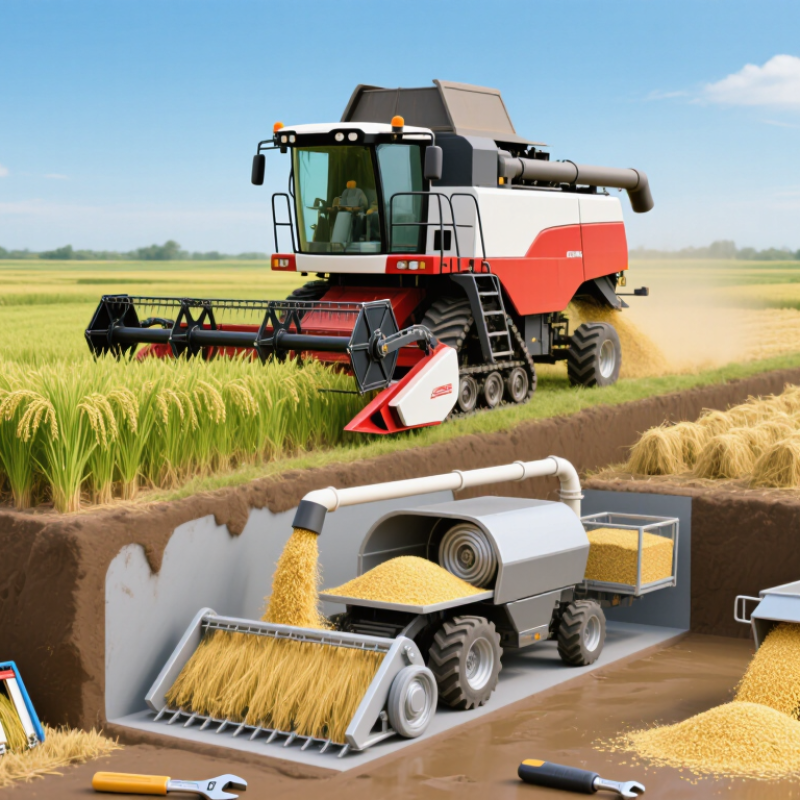
Rice Harvesting Equipment: Purpose and Main Functions
Rice harvesting equipment turns a mature field into grain ready for drying and storage. Its purpose is practical: cut stalks, separate kernels from straw, and collect the grain with as little delay and loss as conditions allow. FAOSTAT recorded about 776.5 million tonnes of paddy rice worldwide in 2022. At that scale, small improvements in field efficiency matter.
A combine harvester performs several jobs in one pass. Its cutter bar slices rice stems near the ground, while a reel guides them into the machine. Threshing components loosen grains from the panicles; sieves and airflow then separate grain from chaff and straw. The clean grain moves into a tank for unloading. On smaller or wetter plots, reapers and stationary threshers may be more suitable. Mud, lodged stalks, and uneven field edges can slow any machine.
The equipment’s performance depends on more than cutting speed. Harvest timing, grain moisture, machine settings, and operator skill all affect breakage and field losses. FAO’s 2019 State of Food and Agriculture estimated that 14% of food is lost globally between harvest and retail, across all food commodities—not rice alone. That figure gives useful context, but it cannot predict losses on a particular farm. A few missed rows still matter. After harvesting, grain should be moved promptly for drying; waiting in a warm, damp tank can undermine careful field work.

Common Machine Types and Their Essential Components
Rice harvesting equipment usually falls into three groups: reapers, threshers, and combine harvesters. Reapers cut and lay stalks for later handling. Threshers separate grain from harvested bundles. A combine performs both jobs in one pass. FAOSTAT’s 2022 production data records about 776.5 million tonnes of paddy rice worldwide, illustrating the scale of work these machines support. But field size, crop lodging, and wet ground can change which machine is practical.
A combine’s header gathers stalks, while its reel guides them toward the cutterbar. The feeder moves cut material into the threshing unit, where a drum or rotor loosens grain from straw. Concaves help separate the grain; sieves and a fan remove chaff before clean rice reaches the grain tank. It is not magic. Each part needs adjustment to crop height and field conditions. Excessive drum speed can crack grain, while poorly set sieves may send usable kernels out with the straw. That detail gets overlooked. Operators often inspect grain samples and field residue during work, then adjust settings as conditions shift. Machines save handling time, but they do not erase losses or replace careful setup.
| Machine Type | Essential Components | How It Works | What Happens to the Crop | Common Use |
|---|---|---|---|---|
| Hand sickle | Curved blade, handle, and sometimes a toothed cutting edge. | The operator cuts rice stems by hand, usually close to the ground or at a selected cutting height. | Cut stalks are gathered and carried for drying, threshing, or further processing. | Small plots, irregular fields, and areas where larger machinery cannot operate easily. |
| Motorized reaper | Cutting bar, reciprocating knife, crop divider, reel or crop guide, engine, transmission, and wheels or tracks. | The crop dividers separate a strip of rice; the knife cuts the stems as the machine moves through the field. | Cut stalks are laid in rows or discharged to one side. Threshing is normally performed separately. | Small to medium fields where harvesting is mechanized but threshing is done as a separate operation. |
| Reaper-binder | Cutting bar, crop divider, gathering mechanism, tying or binding unit, twine supply, and power unit. | It cuts the rice, gathers the stalks, and ties them into bundles as it travels through the crop. | Bundled stalks are left in the field for collection and later threshing. | Farms that handle harvested rice in bundles rather than threshing it directly in the field. |
| Combine harvester | Header, reel or crop-lifting components, cutter bar, feeder, threshing drum or rotor, concave, separating system, cleaning sieves, fan, grain elevator, grain tank, and unloading auger. | The header gathers and cuts the crop. The feeder moves it to the threshing unit, which separates grain from the straw. Sieves and airflow remove chaff and other light material before grain enters the tank. | Cleaned grain is stored temporarily in the grain tank and unloaded; straw and chaff are discharged or spread behind the machine, depending on its configuration. | Large or accessible fields where cutting, threshing, and cleaning are carried out in one pass. |
| Tracked rice combine | Combine components, plus crawler tracks, track frame, and undercarriage drive. | It performs the same cutting, threshing, separating, and cleaning operations as a combine, while tracks distribute the machine’s weight over a broader contact area than many standard wheels. | Grain is collected in the tank for unloading; straw and chaff are discharged separately. | Soft, wet, or muddy paddy fields where flotation and traction are important. Suitability depends on field conditions and machine design. |
| Stationary rice thresher | Feeding platform, threshing drum or rotor, concave or threshing surface, separation area, blower or cleaning system, grain outlet, and power source. | Operators feed cut rice stalks into the machine. The rotating threshing unit loosens grain from the panicles; separation and cleaning components direct grain away from straw and chaff. | Grain is collected at an outlet or container, while straw and chaff are discharged separately. | Harvest systems in which rice is cut and transported to a fixed threshing location. |
| Axial-flow rice thresher | Feed inlet, axial rotor, perforated cage or concave, grain separation surface, cleaning fan, sieves, and grain outlet. | Crop material moves along the rotor while rotating action threshes the panicles. Grain passes through separation openings and is cleaned by airflow and sieves. | Separated grain exits through a collection outlet; straw and lighter residues leave through separate discharge paths. | Stationary threshing operations where the crop is fed continuously or in batches, according to the machine design. |
How Harvesters Cut and Collect Rice Plants
A rice harvester cuts and gathers plants through its front header. A rotating reel guides stalks toward the cutter bar, which slices them near the ground. The cut crop moves onto a conveyor and into the machine for threshing. Timing matters. IRRI’s Rice Knowledge Bank recommends harvesting when about 80–85% of grains are straw-colored, typically at 20–25% grain moisture. These field signs help operators choose when to harvest, though ripening can vary across one field.
Inside the harvester, a threshing drum or rotor separates grains from the stalks. Sieves and airflow remove much of the chaff, while cleaned grain travels into a collection tank. Straw exits behind the machine, often in a loose windrow. FAOSTAT recorded about 776 million tonnes of rice paddy production worldwide in 2022, showing the scale of this harvest task. Yet capacity alone does not guarantee clean collection. Wet, lodged plants can feed unevenly, and grain may spill if settings do not match crop conditions. A careful operator watches the header, listens for changes in machine load, and checks the grain tank. Small adjustments matter.
How Threshing Separates Grain from Straw and Chaff
Rice harvesting equipment cuts mature rice and feeds the plants into a threshing unit. Threshing loosens the kernels from the panicles through controlled impact and rubbing. Inside the machine, a rotating drum moves the crop against a concave surface. The goal is to release grain without crushing it or breaking too much straw.
It is a balance. Too little contact leaves kernels attached to the straw. Too much can crack grain and create extra fine material. Loosened kernels and small particles fall through openings in the concave, while longer straw travels toward the rear. A fan then pushes lighter chaff away from the heavier grain. Sieves help sort the mixture, letting kernels collect for cleaning and storage. The process looks simple from outside. It isn’t.
Crop conditions change the result. Damp straw may clump, while very dry material can produce more chaff and broken pieces. Operators can adjust drum speed, clearance, airflow, and sieve openings to suit the crop. A useful check is to inspect the straw and the grain tank during operation: kernels still on the straw suggest incomplete threshing, while cracked kernels may point to excessive impact. A clean-looking sample can still hide losses. The settings are rarely as tidy as a manual suggests, so small adjustments and repeated checks matter.
What Is Rice Harvesting Equipment and How Does It Work?
How threshing separates grain from straw and chaff
A combine cuts and feeds rice stalks into the threshing unit. The drum and concave loosen the grains; separation components let grain fall through while straw moves onward. Sieves and airflow then help remove chaff and other light material. The chart numbers show the order of operations, not measured performance.
How Harvested Rice Is Cleaned and Prepared for Transport
After threshing, harvested rice still carries field debris, loose husks, and uneven moisture. Cleaning usually begins with screens and air flow: sieves remove straw and larger impurities, while lighter chaff is blown away. A stone trap or gravity separator can remove dense contaminants. The grain then passes over inspection points, where operators check for clumps, broken kernels, and blocked screens. Small details matter.
Drying is just as important as cleaning. The International Rice Research Institute’s Rice Knowledge Bank recommends drying paddy to about 14% moisture for safe storage. FAO’s rice post-harvest guidance reports that harvested paddy often arrives much wetter, around 20–25%, depending on conditions. Dryers use heated air, while sun drying spreads grain in thin layers for regular turning. Too much heat or uneven drying can crack kernels; a quick moisture reading can prevent costly rework.
Before transport, workers remove remaining foreign material, confirm moisture, and load grain into clean, dry bags or covered bulk containers. The FAO guidance identifies moisture control as a key factor in preventing deterioration during storage and handling. Keep loads protected from rain, damp floors, and contaminated equipment. In practice, the line is rarely perfect: a few wet pockets can escape sampling. Recheck readings across several points, especially after rain or a long delay between drying and loading.
Article Source:
Get in touch with us,
We will contact you shortly!
What is the difference between Unline(Non-Epoxy Coated) or Lining(Epoxy Coated) Metal Drum?

Unline drums with internally bare metal surface is more susceptible to corrosion and rust while Lining drums are internally coated with Phenolic Epoxy Coating to provide a non-reactive barrier between the drum surface and your product, less risk of contamination. Note: Our Unline drums are coated with an anti-rust agent after washing to reduce risk of rust.
What are Unline(Non-Epoxy Coated) and Lining(Epoxy Coated) drums compatible with?

In Singapore, Recon Unline Drums are usually more costly than Recon Lining Drums. Hence, we recommend Recon Unline Drums to fill aromatics like Thinner, Xylene, Toulene& other solvents like Hexane, BA, CA, EA, MC, White spirit, etc.
We recommend the lower-priced Recon Lining Drums to fill hydrocarbons like IPA, Methanol, Ethanoland oil-based products like diesel, petrol, lubricants, engine, hydraulic, base, transmission fluid, additives, waste oil, etc.;
What is the difference between Grade A and Grade B Metal Drum ?

Grading of used drums are usually based on physical conditions like rustiness, deformities and residual contents. Grade A drums are totally free from internal rust, serious dents and are easy to clean. Grade B drums have different degrees of rust internally and aesthetically inferior compared to Grade A drums.
What content is suitable to fill in a Recon Grade A or Grade B Drum?

Recon Grade A drum is suitable to fill more costly virgin grade products while Recon Grade B drum is more suitable for recycled or waste products.
What is the difference between Open Top and Close Top Drums and their usage?

Closed top drums are for water and other liquid products. Open Top drums can be used for liquid too but are primarily for more viscous products. The Open Top (or open head with a lid) allows you to get in and out of the drum with your product easier.
What type of content are Metal or Plastic Drums suitable for?

Metal drums offer additional protection when dealing with potentially flammable substances. They provide superior fire resistance, impact protection, and longevity for storing class 1, 2, and 3 volatile chemicals.
Plastic HDPE Drums are suitable for corrosive chemicals like acids, alkaline and also water-based products.
Will there be any contamination in the reconditioned metal, plastic drums or IBC tanks?

All our reconditioned containers (metal/plastic drums, carboys, IBC tanks) are washed thoroughly with specially formulated cleaning agent, rinsed with clean water, dried, and tested for possible leakages during the recondition process. Stringent quality inspection is being conducted 100% on every reconditioned product before they are qualified for sale & delivery.
What is the drum gauge(thickness) and weight for reconditioned metal drums?

Reconditioned metal drums gauge can be 0.9mm to 1.0mm all round. Their weight can vary from 16 to 18kg.
Do you sell New Packaging Products too?

Yes, we are also a distributor for new pallets, metal drums, plastic drums, carboys, IBCs and stainless-steel tanks.
What additional services do you provide apart from selling reconditioned and new containers.?

We are an NEA licensed toxic industrial waste collector, who can collect and dispose of used toxic waste containers in Singapore.
Do you offer labelling and silkscreen on the containers ?

We can provide labelling and silk-screening on the containers.
Are you able to ship overseas ?

Yes, we can arrange export our products to any country in the world.
Leading the Way
to Carbon Neutrality