
How to Choose Industrial Printing Systems?
Industrial Printing Systems influence production speed, product quality, and the daily cost of every printed item. Choosing one requires more than comparing machine prices or attractive brochures. A system that performs well on coated cartons may struggle with dusty labels, textured materials, or changing artwork. The right decision begins with the actual production environment.
This guide explains how to evaluate Industrial Printing Systems through practical, measurable criteria. It considers substrate compatibility, ink performance, resolution, print speed, drying methods, automation, maintenance access, and operator training. It also examines total cost, including consumables, energy use, downtime, spare parts, and service support. A machine may print quickly, yet become expensive when cleaning takes hours each week. Small details matter.
Real production experience often reveals weaknesses that specifications hide. Ask for samples using your own materials, not only the supplier’s demonstration stock. Check registration accuracy after long runs. Observe how easily staff replace printheads, filters, or ink containers. Request documented test results and clear warranty terms. Independent certifications and responsive technical support also strengthen a supplier’s credibility. Still, no recommendation is perfect. A compact printer may suit a growing workshop but limit future volume. A high-output line may create unnecessary complexity for modest demand. The best choice balances current requirements with realistic growth, verified evidence, and manageable operational risks. Expect to revise your assumptions.
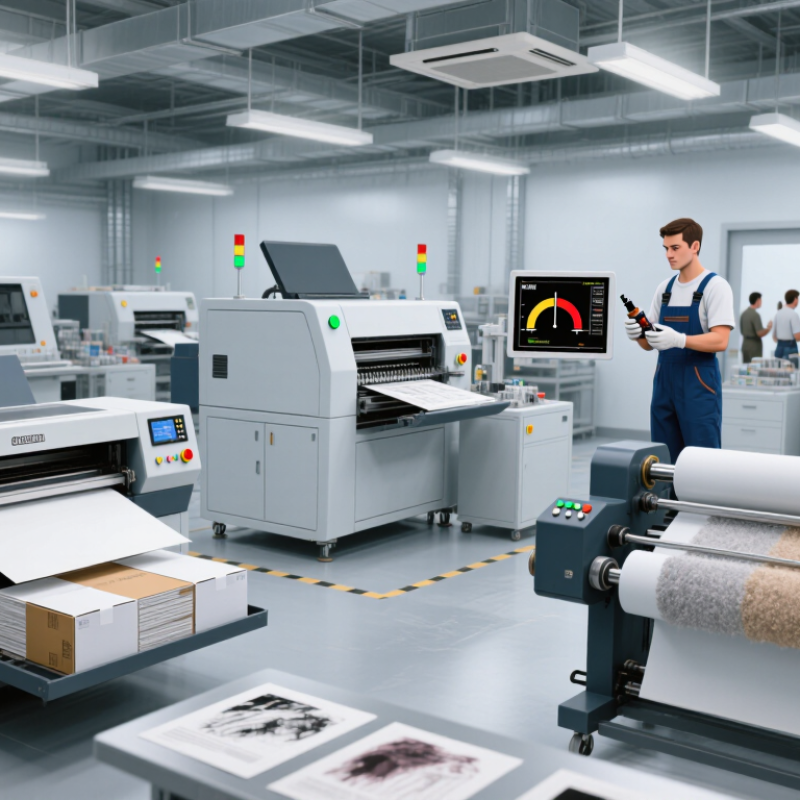
Define Substrates, Codes, and Throughput Needs (CIJ: up to 10 m/s)
Choosing an industrial printing system starts with the material moving under the printhead. Test the actual substrate, not a sample from a supplier. Corrugated cartons absorb ink differently from glossy film, metal caps, or dusty cables. Surface energy, temperature, moisture, and line vibration can change adhesion and readability.
Define the code before selecting equipment. A date, batch number, barcode, or two-line message may require different resolution and drying behavior. Measure the smallest character clearly. Then calculate throughput from real production conditions. Continuous inkjet, or CIJ, can support line speeds up to 10 m/s, but maximum speed is not always practical. Longer messages, porous surfaces, and frequent starts may reduce usable performance. Leave room for maintenance and small production delays. I have seen fast lines fail because the code looked acceptable at the start, then blurred after heat increased.
Tips: Run a substrate trial at the planned speed. Check contrast after drying, rubbing, condensation, and handling. Record nozzle stability, ink consumption, and restart quality. Keep samples from morning and night shifts; factory conditions are rarely identical. Ask operators to review the interface, too. A technically strong system can still create mistakes when settings are confusing.
Do not choose from speed claims alone. Compare verified test results, service response, spare-part access, and training quality. A modest line may need simplicity more than extreme throughput. That judgment is easy to miss.

Compare CIJ, TIJ, Piezo, Laser, and TTO Technologies (1–100 pL Drops)
Choosing an industrial printing system starts with the drop, substrate, and production speed. In real line trials, CIJ handles fast, non-contact coding on uneven surfaces. Its typical droplets sit within the tens-of-picolitres range. It suits dates, lot codes, and simple characters, but solvent management needs daily attention.
TIJ can produce sharper text with drops commonly around 10–80 pL. It works well on porous cartons and selected films. Piezo systems offer broader control, often covering approximately 1–100 pL. They can create fine graphics, variable data, and larger images. However, ink viscosity, nozzle condition, and waveform settings strongly affect consistency. Small drops reveal dust quickly.
Laser marking uses no ink droplets. It changes the surface through controlled energy, so there is no cartridge drying or ribbon replacement. The result depends on material response, contrast, ventilation, and validated power settings. TTO also differs from drop-based printing. It transfers heated ribbon ink onto flexible packaging, producing dense codes on films and labels. Wrinkled material or poor tension can weaken the print.
I once approved a beautiful sample after a short test. It failed after several hours of heat and vibration. That mistake changed my process. Test every technology at actual line speed, temperature, substrate variation, and cleaning intervals. Record readable height, contrast, adhesion, and reject rates. A 20 pL drop may look precise, yet a stable 60 pL drop can perform better in dusty production areas.
Evaluate Resolution, OEE, MTBF, IP Ratings, and 24/7 Duty Performance
How to Choose Industrial Printing Systems?
Resolution is only one part of print quality. A system producing 600 dpi text may still fail when vibration, dust, or line speed changes. Test a small barcode on the actual substrate, under production lighting. GS1 guidance stresses that barcode quality depends on contrast, edge definition, and verification, not resolution alone.
OEE exposes practical performance. Vorne’s widely cited OEE benchmark report places average manufacturing OEE near 60%, while 85% is commonly treated as world-class. Use availability, performance, and quality separately. A printer that runs quickly but causes rejected codes lowers OEE. Measure changeover minutes, cleaning time, missed marks, and restart delays. Small losses accumulate.
MTBF helps compare reliability, but it is usually a statistical estimate, not a promise. Ask how the figure was tested and what failure definition was used. IP ratings follow IEC 60529; IP65, for example, indicates dust protection and resistance to water jets, but not every chemical exposure. For continuous operation, confirm 24/7 duty capability, thermal limits, service intervals, and spare-part access. Leave headroom. A line running at its maximum speed may look efficient today, yet become fragile during a hot, dusty night shift. My own evaluation would include a 72-hour trial, because a polished demonstration can hide ordinary maintenance problems.
How to Choose Industrial Printing Systems? - Evaluate Resolution, OEE, MTBF, IP Ratings, and 24/7 Duty Performance
Representative technology benchmarks for industrial coding, marking, labeling, and variable-data printing applications
| System Type | Typical Resolution | Typical Line Speed | Indicative OEE Contribution | Typical MTBF Range | Common IP Rating | 24/7 Duty Suitability | Best-Fit Applications | Main Evaluation Consideration |
|---|---|---|---|---|---|---|---|---|
| Continuous Inkjet (CIJ) | 60–300 dpi; commonly 50–150 dpi for readable codes | Up to approximately 10 m/s, depending on character height and print layout | High when uptime, automatic start-up, and fast changeover are well managed | Often specified in the thousands to tens of thousands of operating hours; verify test conditions | Typically IP54–IP65 | Excellent for continuous production with scheduled maintenance | Beverage, food, cable, extrusion, electronics, and general product coding | Ink and makeup consumption, solvent handling, substrate distance, and print-head cleanliness |
| Thermal Inkjet (TIJ) | Up to approximately 600 dpi; higher resolutions are available for selected printheads | Typically 30–150 m/min, depending on resolution and print width | High for clean, planned operations; cartridge replacement can affect availability | System MTBF varies widely; print cartridges are consumables and should not be treated as MTBF evidence | Usually IP54–IP65 when integrated into a protected enclosure | Very good for stable environments and frequent message changes | Cartons, cases, labels, packaging films, and high-resolution text or barcodes | Print distance, ink compatibility, cartridge cost, humidity, and protection from dust or splash |
| Piezo Drop-on-Demand Inkjet | Typically 180–720 dpi; selected systems support higher imaging resolution | Approximately 30–300 m/min, dependent on ink, resolution, and print width | High after process tuning; ink-system maintenance and nozzle management influence uptime | Commonly several thousand to tens of thousands of hours for industrial modules; supplier data must be confirmed | Typically IP54–IP65; higher protection usually requires system-level enclosure design | Excellent when ink conditioning and maintenance are controlled | Corrugated packaging, porous materials, cartons, sacks, and large-character marking | Ink drying, nozzle reliability, printhead replacement cost, and required print width |
| Laser Marking | Typically 0.05–0.30 mm spot size; effective mark quality depends on optics and material | Often 30–300 m/min; speed depends strongly on mark content, contrast, and material | Potentially very high because there are no inks or ribbons, but extraction and guarding may add downtime | Often 20,000–50,000 hours for the laser source; complete-system MTBF may be lower | Typically IP54–IP65; laser safety enclosure requirements are separate from IP protection | Excellent for permanent marking and low-consumable operation | Metal, glass, rigid plastic, cable, automotive parts, electronics, and serialized components | Material response, fume extraction, laser class, safety interlocks, focus control, and contrast |
| Thermal Transfer Overprinting (TTO) | Typically 300–600 dpi | Commonly up to 100–200 packs/min, depending on message size and packaging machine timing | High on intermittent or constant-motion packaging lines when ribbon changes are planned | Printhead life is normally tracked by operating cycles or usage conditions rather than one universal MTBF figure | Commonly IP42–IP55; washdown installations require suitable protection and enclosure design | Good with correctly scheduled ribbon and printhead maintenance | Flexible packaging, films, pouches, snacks, frozen food, and date or batch coding | Ribbon length, printhead wear, seal-area clearance, film compatibility, and changeover time |
| Print-and-Apply Labeling | Typically 203–600 dpi | Approximately 20–150 labels/min, depending on label size, applicator type, and placement accuracy | High when label stock, applicator timing, and sensor alignment are stable | Typically several thousand to tens of thousands of hours for major modules; application cycles are also important | Typically IP54–IP65, depending on the printer, applicator, and control cabinet | Good to excellent for automated logistics and packaging operations | Cases, pallets, shipping cartons, warehouse automation, and regulatory labels | Label adhesion, applicator cycle rate, barcode verification, roll changes, and product presentation |
How to interpret the data
- OEE is a production result calculated from availability, performance, and quality; it is not a fixed property of a printer. Validate it with a representative production trial.
- MTBF values are only comparable when the test population, duty cycle, environment, maintenance policy, and failure definition are the same.
- An IP rating describes protection against solids and water under defined test conditions. It does not replace hygienic design, laser safety, chemical compatibility, or a suitable enclosure.
- For 24/7 operation, request verified data for warm-up time, automatic recovery, planned maintenance interval, consumable-change time, spare-part availability, and service response.
Calculate Total Cost of Ownership from Ink, Energy, Service, and Downtime
How to Choose Industrial Printing Systems
Choosing an industrial printing system requires more than comparing purchase prices. Total cost of ownership shows what production may really pay over several years. Start with ink usage per printed square meter, not cartridge price alone. Record coverage, purge cycles, rejected pieces, and cleaning waste from a comparable job. A low-cost ink can become expensive when frequent maintenance interrupts output. These details are easy to overlook.
Energy also deserves careful measurement. Ask for power use during printing, warm-up, standby, and drying. Multiply each figure by operating hours and local electricity rates. Service costs should include planned visits, replacement parts, technician travel, and operator training. Downtime is often the largest hidden expense. Estimate lost contribution margin per hour, then multiply it by realistic stoppage hours. Use your own maintenance records when possible. Supplier estimates may be optimistic. Mine once were.
Tips: Build a three-year spreadsheet with conservative and expected scenarios. Separate fixed costs from variable costs. Test the system during a demanding production week, including startup delays and cleaning routines. Ask operators whether controls remain clear under pressure. Check how quickly common faults can be diagnosed. Also calculate the cost of keeping spare capacity available. This may feel excessive, yet one missed delivery can outweigh months of small savings. Recheck assumptions quarterly because ink prices, workloads, and energy tariffs change. No model stays perfect.
How to Choose Industrial Printing Systems: Five-Year Operating Cost
Representative planning model for a continuous industrial printing application. Costs are shown in USD and include ink, electricity, scheduled service, and production downtime.
The model assumes 4,000 operating hours per year, average industrial electricity pricing of $0.12 per kWh, planned maintenance, and downtime valued at $450 per production hour. Downtime can become the largest cost category, so system reliability and service response should be evaluated alongside ink and energy consumption.
Validate Print Quality to ISO/IEC 15415 Grade C or Better Before Purchase
How to Choose Industrial Printing Systems?
Print quality should be verified before comparing speed, interfaces, or equipment size. For two-dimensional codes, request evidence of ISO/IEC 15415 Grade C or better. This grade indicates reliable readability under standardized testing conditions. Do not trust a bright showroom sample alone. I have seen attractive codes fail after dust, vibration, or a change in label material.
Ask the supplier to test your actual artwork, substrate, ink, and production speed. Use a calibrated verifier, not only a handheld scanner. Review symbol contrast, cell modulation, fixed pattern damage, unused space, and decoding performance. The report should identify the lowest grade across repeated samples. Test several codes from different positions on the web or carton. One perfect sample proves very little. It may be an uncomfortable finding, but real production variation matters.
Tips: Bring your smallest code and most challenging surface to the trial. Check codes immediately after printing and again after handling. Record results from multiple batches. Confirm the system maintains Grade C or better when print speed increases. Ask for raw verification reports, not verbal assurances. Also inspect edges under magnification; uneven cells often appear before scanners complain. A few defects may be acceptable, depending on the grade, but repeated failures need investigation. Choose a system that gives measurable control, not just impressive demonstrations.
Article Source:
Get in touch with us,
We will contact you shortly!
What is the difference between Unline(Non-Epoxy Coated) or Lining(Epoxy Coated) Metal Drum?

Unline drums with internally bare metal surface is more susceptible to corrosion and rust while Lining drums are internally coated with Phenolic Epoxy Coating to provide a non-reactive barrier between the drum surface and your product, less risk of contamination. Note: Our Unline drums are coated with an anti-rust agent after washing to reduce risk of rust.
What are Unline(Non-Epoxy Coated) and Lining(Epoxy Coated) drums compatible with?

In Singapore, Recon Unline Drums are usually more costly than Recon Lining Drums. Hence, we recommend Recon Unline Drums to fill aromatics like Thinner, Xylene, Toulene& other solvents like Hexane, BA, CA, EA, MC, White spirit, etc.
We recommend the lower-priced Recon Lining Drums to fill hydrocarbons like IPA, Methanol, Ethanoland oil-based products like diesel, petrol, lubricants, engine, hydraulic, base, transmission fluid, additives, waste oil, etc.;
What is the difference between Grade A and Grade B Metal Drum ?

Grading of used drums are usually based on physical conditions like rustiness, deformities and residual contents. Grade A drums are totally free from internal rust, serious dents and are easy to clean. Grade B drums have different degrees of rust internally and aesthetically inferior compared to Grade A drums.
What content is suitable to fill in a Recon Grade A or Grade B Drum?

Recon Grade A drum is suitable to fill more costly virgin grade products while Recon Grade B drum is more suitable for recycled or waste products.
What is the difference between Open Top and Close Top Drums and their usage?

Closed top drums are for water and other liquid products. Open Top drums can be used for liquid too but are primarily for more viscous products. The Open Top (or open head with a lid) allows you to get in and out of the drum with your product easier.
What type of content are Metal or Plastic Drums suitable for?

Metal drums offer additional protection when dealing with potentially flammable substances. They provide superior fire resistance, impact protection, and longevity for storing class 1, 2, and 3 volatile chemicals.
Plastic HDPE Drums are suitable for corrosive chemicals like acids, alkaline and also water-based products.
Will there be any contamination in the reconditioned metal, plastic drums or IBC tanks?

All our reconditioned containers (metal/plastic drums, carboys, IBC tanks) are washed thoroughly with specially formulated cleaning agent, rinsed with clean water, dried, and tested for possible leakages during the recondition process. Stringent quality inspection is being conducted 100% on every reconditioned product before they are qualified for sale & delivery.
What is the drum gauge(thickness) and weight for reconditioned metal drums?

Reconditioned metal drums gauge can be 0.9mm to 1.0mm all round. Their weight can vary from 16 to 18kg.
Do you sell New Packaging Products too?

Yes, we are also a distributor for new pallets, metal drums, plastic drums, carboys, IBCs and stainless-steel tanks.
What additional services do you provide apart from selling reconditioned and new containers.?

We are an NEA licensed toxic industrial waste collector, who can collect and dispose of used toxic waste containers in Singapore.
Do you offer labelling and silkscreen on the containers ?

We can provide labelling and silk-screening on the containers.
Are you able to ship overseas ?

Yes, we can arrange export our products to any country in the world.
Leading the Way
to Carbon Neutrality








