
How to Choose the Right Girder Cranes for Your Business?
Choosing the right Girder Cranes begins with the work, not the catalogue photograph. A crane that looks powerful may still be unsuitable. The real question is simple: what must it lift, move, and survive each day?
Mark Bridger, a lifting-equipment consultant, states, “The best crane is matched to the task, not oversized for appearance.” This principle deserves attention. Review the safe working load, span, lifting height, duty class, travel speed, and operating frequency. A ten-ton girder crane may handle ten tons safely, yet repeated impacts can shorten its service life. Measure the building columns, runway alignment, floor condition, and available headroom. Small errors become expensive quickly.
Think about the load path. Will operators move steel coils, moulds, machine parts, or irregular assemblies? Each load creates different control and positioning demands. Consider pendant controls, radio controls, variable-speed drives, brakes, hooks, and maintenance access. A dusty workshop may need different protection than a clean manufacturing area. Moisture matters too.
Do not ignore tomorrow.
Production can expand. Loads can change. A crane selected only for today may become a bottleneck within two years. However, buying excessive capacity also wastes capital and can increase structural demands. This is where practical engineering judgment matters. I would not trust a decision based only on supplier claims. Ask for duty calculations, inspection records, component specifications, and installation references. Compare proposals carefully. Even experienced buyers miss one detail: the crane must fit the building as precisely as it fits the load.
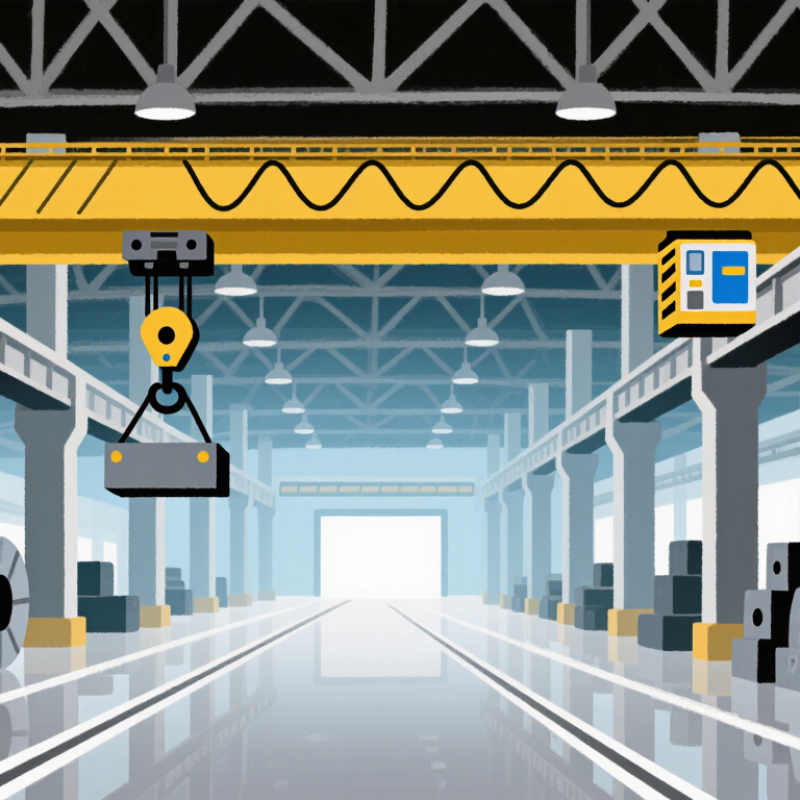
Define Your Lifting Requirements and Operating Conditions
Choosing the right girder crane starts with the load, not the catalogue. Record the maximum load, average load, lifting frequency, span, hook height, and travel distance. A 5-ton load lifted twice daily demands different equipment from a 3-ton load moved every five minutes. Include the load’s shape and center of gravity. Steel coils, molds, and machinery behave differently.
Operating conditions matter just as much. Measure available headroom and runway clearance at the lowest point. Check dust, heat, humidity, corrosive chemicals, outdoor wind, and temperature changes.
Specify the required lifting speed and positioning accuracy. For example, a fabrication bay may need slow, controlled movement, while a warehouse may prioritize repeated travel cycles.
ASME B30.2 and OSHA 29 CFR 1910.179 provide useful safety and inspection frameworks, but local requirements must also be verified.
The 2024 MHI Annual Industry Report found that 83% of supply-chain professionals planned to increase technology investment. That trend makes monitoring and maintenance features more attractive, but automation cannot correct poor capacity estimates. Calculate duty class from actual cycles, not optimistic assumptions.
A crane used 40 cycles per hour may experience far greater fatigue than its nameplate suggests. I have seen planning teams overlook future production growth. That mistake becomes expensive.
Leave sensible capacity and runway allowance, yet avoid excessive sizing, which can increase structure, power, and installation costs. Recheck the decision with a qualified engineer and a real site survey.



Get in touch with us,
We will contact you shortly!
What is the difference between Unline(Non-Epoxy Coated) or Lining(Epoxy Coated) Metal Drum?

What are Unline(Non-Epoxy Coated) and Lining(Epoxy Coated) drums compatible with?
What is the difference between Grade A and Grade B Metal Drum ?
What content is suitable to fill in a Recon Grade A or Grade B Drum?
What is the difference between Open Top and Close Top Drums and their usage?
What type of content are Metal or Plastic Drums suitable for?
Will there be any contamination in the reconditioned metal, plastic drums or IBC tanks?
What is the drum gauge(thickness) and weight for reconditioned metal drums?
Do you sell New Packaging Products too?
What additional services do you provide apart from selling reconditioned and new containers.?
Do you offer labelling and silkscreen on the containers ?
Are you able to ship overseas ?
Leading the Way
to Carbon Neutrality