
How to Choose the Right DC Surge Protection?
Choosing the right DC surge protection begins with understanding where damaging voltage comes from. Lightning is an obvious threat. Switching events, long cable runs, batteries, and nearby industrial equipment can also create dangerous transients. A suitable device helps limit this excess energy before it reaches controllers, sensors, inverters, or communication equipment. In practical installations, the small details matter. Cable length, grounding quality, operating voltage, and expected surge current can change the correct choice. Surge Protection Dc should never be selected by appearance alone. A compact device may look efficient, yet lack the discharge capacity required for an exposed rooftop system.
Reliable selection combines field experience with verified technical information. Check the system’s maximum continuous voltage, protection modes, response characteristics, and installation environment. Confirm that the product has appropriate testing records and clear manufacturer specifications. Standards and certification marks can support confidence, but they do not replace a proper site assessment. A qualified installer should also examine bonding, conductor routing, backup protection, and maintenance access. Keep the path short.
It is tempting to choose the highest-rated protector and move on. That approach is not always correct. Excessive ratings may reduce coordination with other protective devices, while undersized products can fail during a severe event. No selection is perfect. However, a documented assessment makes the decision more defensible and dependable. This guide explains the practical questions behind DC surge protection, helping readers compare solutions with greater clarity and fewer costly assumptions.
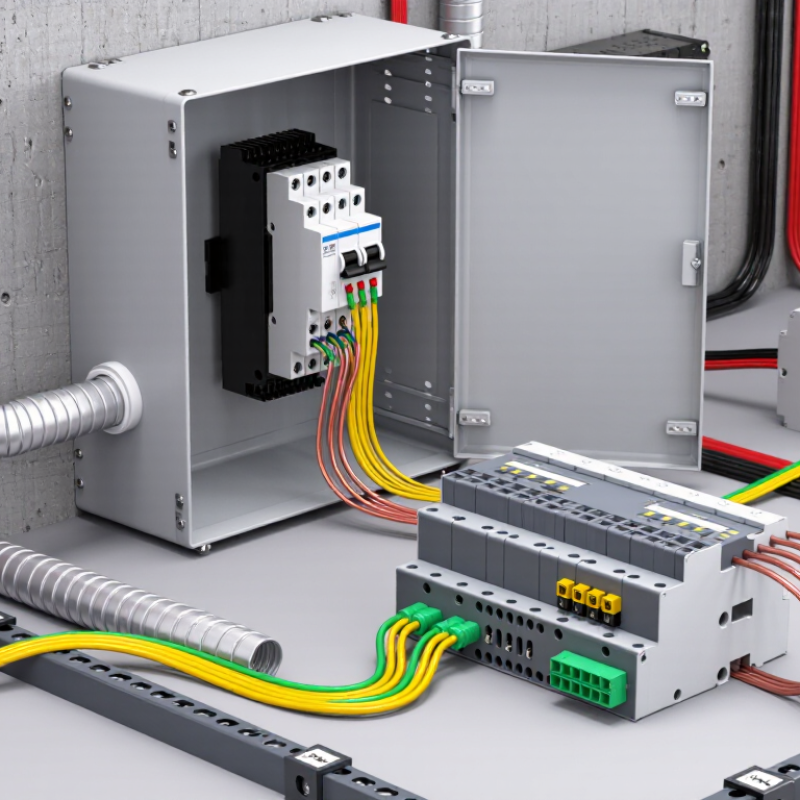
Understanding DC Surge Risks and Protection Requirements
How to Choose the Right DC Surge Protection?
Understanding DC surge risks begins with recognizing how often lightning and switching events occur. NASA satellite observations estimate about 1.4 billion lightning flashes worldwide each year. NOAA climatology records approximately 25 million flashes across the United States annually. A nearby strike can induce thousands of volts along PV cables, battery connections, and control wiring, even without a direct hit.
DC systems are especially exposed because they can maintain current after a fault begins. Long outdoor cables act like antennas. Parallel strings may also distribute surge energy across sensitive inverters and monitoring equipment. Choose a surge protective device according to the system’s maximum DC voltage, short-circuit current, discharge capacity, and grounding arrangement. IEC 61643-31 provides requirements for surge protective devices used on photovoltaic DC circuits. Protection should match the actual installation, not just the equipment label.
Field inspections often reveal simple weaknesses. Cables run beside metal frames. Earth connections are loose. Devices are installed far from the protected equipment. These details increase residual voltage and reduce protection performance. Use short, straight bonding conductors, coordinated protection at array and inverter locations, and appropriate backup disconnection. The National Renewable Energy Laboratory has repeatedly identified wiring, connectors, and inverters as important PV reliability concerns. That matters. However, designers sometimes rely too heavily on standards and overlook local lightning density, cable length, and maintenance history. The assumption is imperfect. Recheck it.
How to Choose the Right DC Surge Protection? - Understanding DC Surge Risks and Protection Requirements
| DC System or Application | Typical Maximum Operating Voltage | Common Surge Sources | Recommended Protection Approach | Key Selection Parameter |
|---|---|---|---|---|
| 12 V DC control and instrumentation circuits | 12 V DC nominal; allowable operating voltage depends on the equipment design | Inductive load switching, relay operation, nearby lightning, and ground-potential differences | Use a low-voltage DC SPD at the equipment or distribution entry point; protect signal and power wiring separately where required | Continuous operating voltage must exceed the highest normal DC voltage; verify polarity, leakage current, and clamping voltage |
| 24 V DC automation and control systems | 24 V DC nominal; many industrial power supplies operate over a wider input range | Switching power supplies, motors, solenoids, long cable runs, and lightning-induced transients | Install coordinated SPDs at the incoming DC supply and near sensitive controllers or remote I/O | Select an appropriate DC continuous operating voltage and confirm the required voltage protection level for the equipment |
| 48 V DC telecommunications and network power | Typically around 48 V DC, with system voltage varying by charging and operating conditions | Outdoor cable exposure, lightning, battery switching, rectifier transients, and bonding faults | Use a DC SPD at the power distribution point and coordinate it with protection on metallic communication lines | Check maximum battery or rectifier voltage, short-circuit current, connection polarity, and backup-power requirements |
| 120 V DC industrial or utility control circuits | 120 V DC nominal; charging voltage and system tolerances must be included | Lightning, inductive switching, battery-bank faults, and long outdoor conductors | Use a DC-rated SPD with suitable interrupting and follow-current characteristics; install short, low-inductance connections to the bonding system | Verify Uc, voltage protection level, DC short-circuit rating, and compatibility with the system grounding arrangement |
| Solar photovoltaic strings up to 600 V DC | Up to 600 V DC, depending on the array design and the maximum open-circuit voltage at the lowest expected temperature | Direct or nearby lightning, induced lightning current, and cable-loop transients | Use a PV-specific DC SPD at the combiner box and inverter side when cable length, exposure, or risk assessment requires it | UCPV must be at least the calculated maximum PV open-circuit voltage; check PV short-circuit current and polarity |
| Solar photovoltaic arrays up to 1,000 V DC | Up to 1,000 V DC for many commercial and utility-scale PV designs | Lightning current sharing, induced surges on long string cables, and differences in earth potential | Apply coordinated PV DC SPDs at array, combiner, inverter, and boundary locations according to the installation risk assessment | Confirm UCPV, nominal discharge current, impulse current where required, voltage protection level, and enclosure environmental rating |
| Battery energy storage systems | Common system voltages range from tens of volts to several hundred volts DC | Inverter switching, battery contactor operation, lightning, and transients transferred from AC or communication circuits | Use SPDs specifically rated for the battery voltage and fault conditions; coordinate DC, AC, and communication protection | Check maximum charge voltage, available short-circuit current, DC interruption behavior, thermal protection, and isolation requirements |
| Electric vehicle charging DC circuits | May range from several hundred volts to approximately 1,000 V DC, depending on the charging system | Utility-side lightning, switching transients, long charging cables, and power-conversion equipment | Install coordinated surge protection on the AC input, DC output, and data or control interfaces as required by the equipment design | Match the SPD to the maximum DC output voltage, prospective fault current, charging mode, enclosure rating, and required response time |

Identifying the Right DC Voltage, Current, and System Type
Choosing a DC surge protective device begins with three checks: voltage, current, and system type. IRENA’s Renewable Capacity Statistics 2024 recorded about 1,419 GW of global solar capacity at the end of 2023. More DC installations also mean more exposed cable and equipment.
Do not select protection from the panel’s nominal voltage alone. Calculate the maximum open-circuit voltage, including the lowest expected temperature. The device’s continuous operating voltage must exceed that value. Cold mornings can raise string voltage sharply. A small margin is not enough.
Current selection requires equal care. Check short-circuit current, parallel string count, and the installation’s prospective fault current. For battery systems, consider both charging and discharge paths. Then identify the system type: photovoltaic, battery storage, control, or telecommunications. Confirm whether the DC circuit is grounded, floating, or isolated. IEC 61643-31 applies to photovoltaic DC surge protection, while IEC 60364-7-712 addresses PV installation design. The IEA PVPS Trends 2024 report also describes 2023 as a record year for solar deployment, making consistent protection practices more important. In field inspections, the common mistake is matching voltage correctly but ignoring backup protection and short-circuit ratings. That decision deserves a second review.
How to Choose the Right DC Surge Protection?
Compare the DC system voltage with the surge protective device's maximum continuous operating voltage (UCPV), then select an appropriate maximum discharge current (Imax) for the installation environment.
The voltage values are representative selection examples based on common DC system classes. UCPV must be higher than the system's maximum continuous voltage, including charging and photovoltaic open-circuit voltage. The Imax values show commonly used rating classes; final selection should also consider lightning exposure, cable routing, grounding arrangement, prospective short-circuit current, and applicable IEC requirements.
Comparing DC Surge Protective Device Designs and Ratings
Choosing a DC surge protective device requires more than matching voltage. Field engineers should compare Ucpv, Up, In, Imax, and short-circuit current ratings. For photovoltaic systems, IEC 61643-31 defines DC SPD performance requirements, while UL 1449 addresses safety and testing in North American installations. These standards are useful filters, not substitutes for site assessment.
Design matters during a fault. Metal-oxide varistor devices respond quickly and suit many compact DC panels. However, repeated surges can degrade their protection level. Spark-gap designs may handle higher impulse energy, but their follow-current behavior needs careful evaluation. DC arcs do not naturally cross zero like AC arcs. A reliable device should include thermal disconnection, clear failure indication, and a backup protection strategy.
Small details matter.
NOAA’s National Lightning Detection Network records millions of cloud-to-ground flashes across the United States annually, confirming that lightning exposure is not rare. NREL’s photovoltaic reliability research also identifies inverter and balance-of-system faults as recurring operational concerns. Therefore, installers should compare the SPD’s nominal discharge current with the site’s lightning environment, cable length, grounding layout, and expected Isc. A Type 2 SPD may be adequate on a protected rooftop, while exposed arrays may require Type 1 or combined Type 1+2 protection. This decision is not always obvious. Overrating can increase cost without improving coordination, while underrating may leave a damaged device unnoticed. Test records, maintenance access, and replacement indicators deserve equal attention.
Evaluating Installation Locations, Wiring, and Grounding
How to Choose the Right DC Surge Protection?
The installation location strongly affects a DC surge protective device’s performance. Mount it close to the equipment or DC source it protects. Short connections reduce voltage rise during a transient event. Keep the device accessible for inspection and replacement. Avoid placing it beside heat sources, water paths, or cramped cable bends. A common field mistake is choosing a convenient location instead of the electrically shortest route.
Wiring deserves equal attention. Use conductors rated for the system’s voltage, current, and installation environment. Follow the manufacturer’s specified wire size and local electrical requirements. Route positive, negative, and grounding conductors neatly, with minimal loops. Long, coiled leads can weaken protection. The grounding conductor should be short, straight, and bonded to a verified grounding point. Do not treat grounding as an afterthought. In practice, a well-selected device can perform poorly when its connections are loose, undersized, or poorly routed. I have seen designs that looked correct on paper but needed revision after cable paths were measured.
Tips: Measure the actual cable length before selecting the mounting position. Tighten terminals to the specified torque. Check bonding continuity with suitable test equipment. Inspect indicators during routine maintenance. If the DC system has unusual grounding, floating circuits, or battery storage, consult a qualified electrical professional before installation. A second review often catches details that the first inspection misses.
Checking Standards, Maintenance Needs, and Long-Term Reliability
How to Choose the Right DC Surge Protection?
Choosing a DC surge protective device starts with the system, not the product label. Confirm the operating voltage, maximum continuous voltage, short-circuit current, and grounding arrangement. For photovoltaic systems, check whether the device follows IEC 61643-31 or applicable national requirements. Battery and control circuits may require different specifications. Also review discharge ratings, protection modes, and backup fuse requirements. A device with a high surge rating may still be unsuitable for a poorly matched circuit.
Tips: Read the installation guide carefully. Compare Ucpv or Uc with the real system voltage. Inspect cable length, terminals, and enclosure ratings. Keep records of test dates and replacement decisions. A label alone can mislead.
Maintenance determines long-term reliability. During inspections, look for cracked housings, loose connections, discoloration, moisture, or a changed status indicator. Thermal stress and repeated surges can weaken internal components without obvious damage. Field checks should include grounding continuity and protective device coordination. After a major lightning event, inspect the unit even when the indicator appears normal. Replacement intervals should reflect exposure, local weather, and surge history rather than a fixed calendar date. This is where planning can become imperfect. Maintenance teams sometimes check indicators but overlook cable torque or corrosion. A documented inspection routine reduces that risk. Consider heat, ultraviolet exposure, dust, and vibration when selecting the enclosure. Reliability is built into the whole installation.
Article Source:
Get in touch with us,
We will contact you shortly!
What is the difference between Unline(Non-Epoxy Coated) or Lining(Epoxy Coated) Metal Drum?

Unline drums with internally bare metal surface is more susceptible to corrosion and rust while Lining drums are internally coated with Phenolic Epoxy Coating to provide a non-reactive barrier between the drum surface and your product, less risk of contamination. Note: Our Unline drums are coated with an anti-rust agent after washing to reduce risk of rust.
What are Unline(Non-Epoxy Coated) and Lining(Epoxy Coated) drums compatible with?

In Singapore, Recon Unline Drums are usually more costly than Recon Lining Drums. Hence, we recommend Recon Unline Drums to fill aromatics like Thinner, Xylene, Toulene& other solvents like Hexane, BA, CA, EA, MC, White spirit, etc.
We recommend the lower-priced Recon Lining Drums to fill hydrocarbons like IPA, Methanol, Ethanoland oil-based products like diesel, petrol, lubricants, engine, hydraulic, base, transmission fluid, additives, waste oil, etc.;
What is the difference between Grade A and Grade B Metal Drum ?

Grading of used drums are usually based on physical conditions like rustiness, deformities and residual contents. Grade A drums are totally free from internal rust, serious dents and are easy to clean. Grade B drums have different degrees of rust internally and aesthetically inferior compared to Grade A drums.
What content is suitable to fill in a Recon Grade A or Grade B Drum?

Recon Grade A drum is suitable to fill more costly virgin grade products while Recon Grade B drum is more suitable for recycled or waste products.
What is the difference between Open Top and Close Top Drums and their usage?

Closed top drums are for water and other liquid products. Open Top drums can be used for liquid too but are primarily for more viscous products. The Open Top (or open head with a lid) allows you to get in and out of the drum with your product easier.
What type of content are Metal or Plastic Drums suitable for?

Metal drums offer additional protection when dealing with potentially flammable substances. They provide superior fire resistance, impact protection, and longevity for storing class 1, 2, and 3 volatile chemicals.
Plastic HDPE Drums are suitable for corrosive chemicals like acids, alkaline and also water-based products.
Will there be any contamination in the reconditioned metal, plastic drums or IBC tanks?

All our reconditioned containers (metal/plastic drums, carboys, IBC tanks) are washed thoroughly with specially formulated cleaning agent, rinsed with clean water, dried, and tested for possible leakages during the recondition process. Stringent quality inspection is being conducted 100% on every reconditioned product before they are qualified for sale & delivery.
What is the drum gauge(thickness) and weight for reconditioned metal drums?

Reconditioned metal drums gauge can be 0.9mm to 1.0mm all round. Their weight can vary from 16 to 18kg.
Do you sell New Packaging Products too?

Yes, we are also a distributor for new pallets, metal drums, plastic drums, carboys, IBCs and stainless-steel tanks.
What additional services do you provide apart from selling reconditioned and new containers.?

We are an NEA licensed toxic industrial waste collector, who can collect and dispose of used toxic waste containers in Singapore.
Do you offer labelling and silkscreen on the containers ?

We can provide labelling and silk-screening on the containers.
Are you able to ship overseas ?

Yes, we can arrange export our products to any country in the world.
Leading the Way
to Carbon Neutrality