
How to Choose the Right AC Condensers?
Choosing the right Ac Condensers is not simply a matter of selecting the largest cooling capacity. The condenser must match the evaporator coil, compressor, refrigerant, airflow, and electrical supply. A mismatch can produce weak cooling, noisy operation, or premature component failure. Sometimes, bigger is worse.
HVAC educator John Barba offers a practical reminder: “A good installation starts with the right match.” That principle guides this article. It encourages buyers and technicians to examine the complete system rather than judge one specification. Model compatibility matters. So does climate.
Imagine a condenser placed beside a sunny exterior wall. Its coil collects dust, airflow becomes restricted, and head pressure rises during a hot afternoon. A coastal property faces another concern: salt can attack unprotected metal surfaces. These details affect real performance. They also show why product selection requires experience, not only catalog reading.
This guide will explain how to compare AC Condensers by capacity, efficiency rating, refrigerant compatibility, coil design, sound level, and service access. It will also discuss sizing methods and installation conditions. Manufacturer data should be checked carefully. Local codes and certified professional advice remain essential.
There is no perfect choice for every building. Even experienced installers can overlook small details, especially when replacing an older unit. That uncertainty deserves attention, not confidence without evidence. A reliable decision considers the home’s heat load, existing equipment, budget, climate exposure, and long-term maintenance needs. The right condenser should cool consistently, operate safely, and remain practical to service for years.
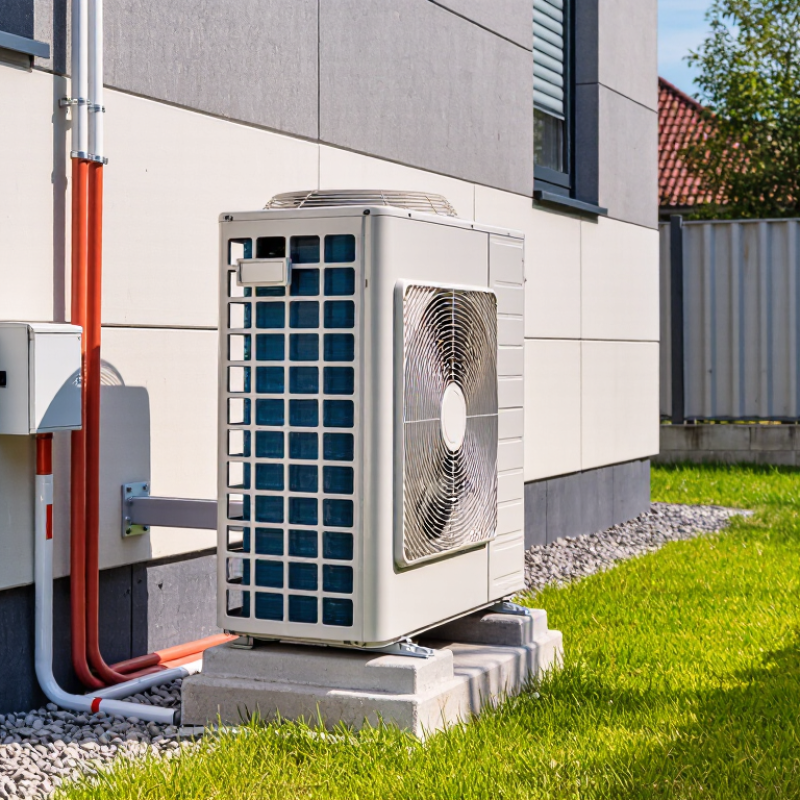
AC Condenser Basics: Heat Rejection, Coils, Fans, and Refrigerant Flow
How to Choose the Right AC Condensers?
AC Condenser Basics: Heat Rejection, Coils, Fans, and Refrigerant Flow
An AC condenser removes indoor heat and releases it outdoors. The hot, high-pressure refrigerant enters the coil and gives up heat to surrounding air. It then changes into a high-pressure liquid. This phase change depends on adequate coil area, clean fins, and suitable outdoor temperature.
Coil design matters. Copper tubing transfers heat efficiently, while aluminum fins expand the contact area. Fin spacing should match the environment. Tight fins may perform well in clean air but clog quickly near dust, leaves, or traffic pollution. Corrosion resistance also deserves attention. A shiny coil is not always a durable coil.
Airflow matters. A fan must move enough air across the coil without creating excessive noise or electrical demand. Poor airflow raises condensing pressure and can shorten compressor life. Refrigerant flow must match the compressor, expansion device, coil capacity, and operating conditions. Size matters.
In field inspections, I have found that a condenser chosen only by cooling capacity can disappoint. Design ambient temperature, installation clearance, voltage, and airflow resistance all affect performance. I once underestimated clearance beside a wall, and the unit rejected heat poorly during the afternoon peak. That mistake still influences how I compare equipment. Manufacturer data should be checked carefully, but real installation conditions deserve equal weight.



Get in touch with us,
We will contact you shortly!
What is the difference between Unline(Non-Epoxy Coated) or Lining(Epoxy Coated) Metal Drum?

What are Unline(Non-Epoxy Coated) and Lining(Epoxy Coated) drums compatible with?
What is the difference between Grade A and Grade B Metal Drum ?
What content is suitable to fill in a Recon Grade A or Grade B Drum?
What is the difference between Open Top and Close Top Drums and their usage?
What type of content are Metal or Plastic Drums suitable for?
Will there be any contamination in the reconditioned metal, plastic drums or IBC tanks?
What is the drum gauge(thickness) and weight for reconditioned metal drums?
Do you sell New Packaging Products too?
What additional services do you provide apart from selling reconditioned and new containers.?
Do you offer labelling and silkscreen on the containers ?
Are you able to ship overseas ?
Leading the Way
to Carbon Neutrality












