
What Is Fish Collagen Peptide and How Does It Work?

Fish Collagen Peptide has moved from a niche marine ingredient into mainstream beauty, nutrition, and functional food products. Grand View Research identifies collagen as a rapidly expanding global biomaterials market, supported by rising demand for protein-based wellness products. However, market growth does not automatically prove every product claim. That distinction matters.

The raw material story is substantial. The Food and Agriculture Organization’s State of World Fisheries and Aquaculture 2024 reported approximately 185 million tonnes of global aquatic animal production in 2022. Fish skin, scales, and bones can therefore provide valuable collagen sources that might otherwise become processing waste. Through enzymatic hydrolysis, manufacturers break collagen into smaller peptides. These peptides contain amino acids such as glycine, proline, and hydroxyproline. Their smaller size may support easier digestion and absorption.

But the mechanism is more nuanced than advertising often suggests. After ingestion, peptides enter the digestive system and appear in the bloodstream as amino acids and short peptide fragments. Some studies associate these compounds with signals involved in skin structure, hydration, and connective tissue maintenance. Research summarized in peer-reviewed nutrition reviews suggests potential benefits, especially when supplementation is consistent. The evidence remains product-specific.

Not every peptide behaves identically. Molecular weight, dosage, extraction method, and fish species can change performance. Quality depends on traceability, allergen controls, contaminant testing, and accurate labeling. The market still moves faster than the science. A careful explanation must acknowledge that limitation while examining how Fish Collagen Peptide works, where evidence is strongest, and where expectations should remain realistic.
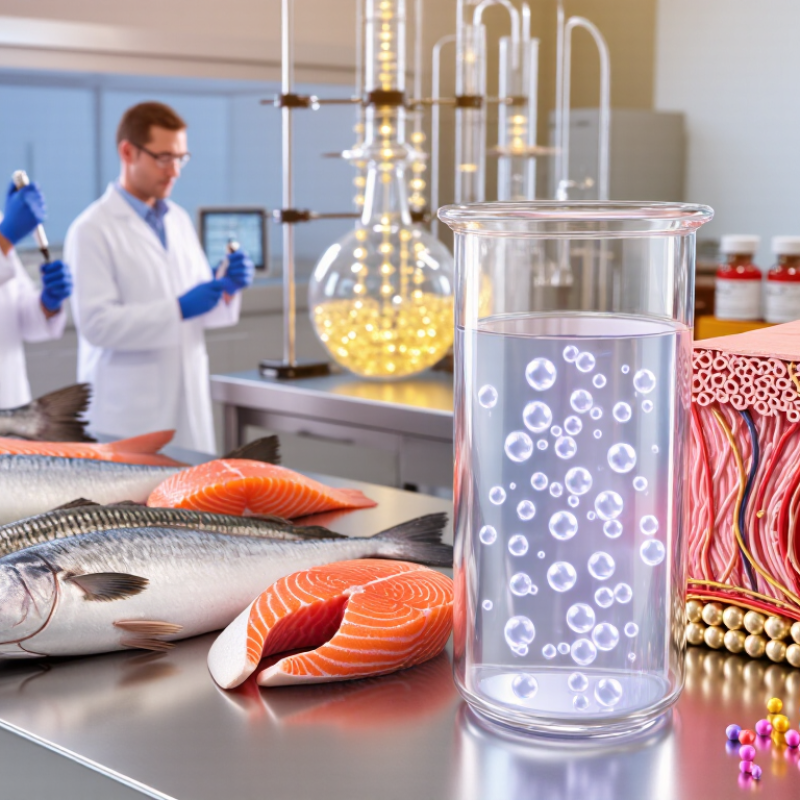
What Is Fish Collagen Peptide and How Does It Work?

What Is Fish Collagen Peptide?

Fish collagen peptide is collagen protein broken into smaller chains through enzymatic hydrolysis. It commonly comes from fish skin, scales, or bones. These materials are cleaned, processed, and converted into a powder that dissolves easily in water. Most fish collagen belongs to type I collagen, which supports skin, tendons, ligaments, and bones.

Its amino acid profile includes glycine, proline, and hydroxyproline. After digestion, some peptides and amino acids enter the bloodstream. They may provide building materials for collagen production. Certain peptides might also signal skin cells to increase collagen-related activity. The effect is not instant. It depends on diet, age, sleep, sun exposure, and individual biology. Results can vary.

The science is promising, but not tidy. Small clinical studies report possible improvements in skin hydration, elasticity, or joint comfort. However, study quality and product formulas differ. Fish collagen is not a magic repair system. It cannot replace protein-rich meals or medical care. People with fish allergies should avoid it. Product quality also matters, including purification, testing, and clear ingredient labeling. A healthcare professional can help assess suitability, especially during pregnancy or when taking medication. Fresh information is still needed.


How Fish Collagen Peptides Are Produced

Fish collagen peptides begin as materials many people overlook: skin, scales, and connective tissue from edible fish. Processors wash these parts, remove fat and odor, then reduce them into smaller pieces. They are not instantly powder. The raw material must be tracked to its species, harvest area, and handling conditions. That record supports safety and consistent quality.

After pretreatment, manufacturers use controlled acids, alkalis, or enzymes to open collagen’s structure. Enzymatic hydrolysis is common because it can produce shorter, water-dispersible peptide chains under moderate conditions. These smaller chains dissolve more easily than intact collagen and can be digested into peptides and amino acids. Temperature, pH, time, and enzyme dosage require close monitoring. Small changes matter. The liquid is then filtered to remove insoluble particles and concentrated before drying. Spray drying often creates a pale, free-flowing powder.

Reliable production does not end with appearance. Testing may examine molecular-weight distribution, moisture, microbes, heavy metals, and undeclared allergens. Fish-derived ingredients still require clear allergen labeling and suitable storage. One point deserves caution: hydrolyzed does not mean every batch behaves identically in the body. Peptide size, amino-acid profile, and digestion can vary. The process looks precise, yet biological materials remain variable. That limitation should shape honest claims about how fish collagen peptides work.

The Structure and Properties of Fish Collagen Peptides

What Is Fish Collagen Peptide and How Does It Work?

The Structure and Properties of Fish Collagen Peptides

Fish collagen peptide is a collection of short protein fragments produced from fish skin, scales, or bones. Native collagen has a firm triple-helix structure, supported by repeating glycine, proline, and hydroxyproline residues. Enzymatic hydrolysis breaks this large structure into smaller chains. These chains dissolve more easily in water and can pass through digestion more efficiently than intact collagen.

Small peptides matter. Their molecular size varies by species and processing method. Some fragments contain only two or three amino acids, while others are longer. Fish collagen often shows good solubility and a relatively low melting temperature. That feature reflects the fish’s biological environment. It also means heat can alter the peptide structure during manufacturing or cooking. Quality depends on purification, drying, and storage conditions.

After consumption, digestion releases amino acids and small peptide fragments into the bloodstream. Research suggests that some fragments may interact with cells involved in skin or connective-tissue formation. However, the exact mechanism remains incompletely understood. Results from laboratory studies cannot automatically predict visible human outcomes. The evidence is promising, but not perfectly consistent. Fish-derived ingredients may also require careful allergen labeling. A thoughtful assessment should consider the peptide profile, source transparency, and independent testing rather than relying on the word “collagen” alone.

What Is Fish Collagen Peptide and How Does It Work? - The Structure and Properties of Fish Collagen Peptides
Property or Dimension Typical Characteristics Why It Matters
Definition Fish collagen peptides are short peptide fragments produced by enzymatically hydrolyzing collagen obtained from fish tissues. Hydrolysis reduces the size of collagen molecules and generally makes them easier to dissolve and digest than intact collagen.
Common Raw Materials Skin, scales, bones, and connective tissues of fish are the main sources. Different tissues and fish species can produce peptides with different amino-acid profiles, molecular-weight distributions, and functional properties.
Main Collagen Type Type I collagen is the predominant collagen type in most fish skin, scales, and bones. Type I collagen provides a structural source of characteristic collagen peptides after hydrolysis.
Native Collagen Structure Native collagen consists of three polypeptide chains arranged in a right-handed triple helix, with a repeating Gly-X-Y sequence. The triple helix gives intact collagen strength and stability, while hydrolysis breaks it into smaller fragments.
Key Amino Acids Glycine occurs approximately at every third position in collagen. Proline and hydroxyproline are also characteristic, although amounts vary by species and tissue. These amino acids contribute to collagen’s repeating structure and influence peptide stability and biological activity.
Molecular Weight Hydrolyzed fish collagen products commonly contain peptide populations ranging from several hundred daltons to several thousand daltons; the exact distribution depends on processing. Molecular size affects solubility, digestion, absorption, taste, and the types of peptides present.
Triple-Helix Status After Hydrolysis Most collagen peptides no longer retain the complete native triple-helix structure because enzymatic hydrolysis cleaves the collagen chains. The resulting peptides behave differently from gelatin or intact collagen and are generally more readily soluble in water.
Solubility Fish collagen peptides are generally water-soluble, although solubility varies with peptide size, pH, temperature, concentration, and processing conditions. Good solubility supports use in beverages, powders, nutrition products, and laboratory formulations.
Thermal Behavior Native collagen from many fish species has a lower denaturation temperature than collagen from many land mammals; the exact value varies by species and habitat. Fully hydrolyzed peptides do not have one defined native-collagen denaturation temperature. Temperature control is important during extraction, drying, storage, and formulation.
Digestion and Absorption After oral intake, collagen peptides are further digested into amino acids and small peptides. Some hydroxyproline-containing peptides have been detected in the bloodstream after ingestion. Small circulating peptides may act as available building blocks or signaling molecules, although their effects depend on sequence and dose.
Proposed Biological Actions Research has examined effects related to extracellular-matrix formation, fibroblast activity, skin moisture, connective-tissue metabolism, and bone or joint biology. Potential activity is sequence-specific and should not be assumed for every collagen peptide preparation.
Protein Quality Collagen is rich in glycine, proline, and hydroxyproline but lacks tryptophan and is relatively low in some essential amino acids. Collagen peptides should not be considered a complete dietary protein source.
Taste and Odor Sensory properties depend on fish species, raw-material treatment, purification, hydrolysis, and deodorization. Mild marine notes may remain in some preparations. Sensory quality can influence consumer acceptance and the choice of formulation.
Digestive Stability Peptides are exposed to gastric and intestinal enzymes, which can further cleave them into smaller fragments and free amino acids. The final absorbed peptide profile may differ from the original profile in the powder.
Allergen Consideration Fish-derived collagen may be unsuitable for people with fish allergy, and cross-contact during manufacturing should be considered. The source should be clearly identified and appropriate allergen labeling should be followed.
Evidence Interpretation Laboratory, animal, and human studies do not necessarily produce identical results. Outcomes depend on peptide sequence, dose, duration, participant characteristics, and product composition. General claims about collagen peptides should be evaluated against evidence for the specific preparation being studied.
Note: Values and characteristics described as “typical” can vary according to fish species, tissue source, extraction method, enzyme system, hydrolysis conditions, purification, and analytical method.

How Fish Collagen Peptides Work in the Body

What Is Fish Collagen Peptide and How Does It Work?

Fish collagen peptides are small protein fragments made from fish skin, scales, or bones. Enzymes break collagen into shorter chains through hydrolysis. This process makes the protein easier to digest and absorb. Fish collagen mainly contains glycine, proline, and hydroxyproline. These amino acids help form connective tissues, including skin, cartilage, tendons, and bone.

How Fish Collagen Peptides Work in the Body

After digestion, some collagen fragments enter the bloodstream as amino acids and small peptides. Certain peptides may act as signals for skin cells called fibroblasts. These cells help produce collagen and other structural proteins. The body may also use the absorbed amino acids to repair or maintain connective tissue. However, the peptides do not simply travel intact into the skin. That common explanation is too simple.

Vitamin C supports normal collagen formation, while overall protein intake supplies additional building materials. Clinical studies suggest that regular collagen peptide use may modestly improve skin hydration, elasticity, or joint comfort in some adults. Results differ with age, diet, health status, and product quality. The evidence is promising, but not perfect. Some studies are small or industry-funded. That deserves attention. A sensible view treats fish collagen as a nutritional supplement, not a guaranteed treatment or a replacement for balanced meals.

Uses, Benefits, and Safety Considerations of Fish Collagen Peptides

Fish collagen peptides are hydrolyzed proteins made from fish skin, scales, or bones. Hydrolysis breaks collagen into smaller peptides for easier digestion. After consumption, these peptides supply amino acids, including glycine and proline. Some may also signal skin cells to support collagen production. The exact mechanism remains uncertain. That limitation matters.

Uses commonly include skin hydration, elasticity, nail support, and joint comfort. A 2023 meta-analysis covering 26 randomized trials reported improvements in skin hydration and elasticity. However, the studies examined different collagen sources, doses, and durations. Results should not be treated as fish-specific proof. The FAO’s State of World Fisheries and Aquaculture 2024 reported 185.4 million tonnes of aquatic animals produced in 2022. This supports growing interest in marine by-products, but sustainability still requires careful sourcing. Fish collagen is not suitable for people with fish allergies. Digestive discomfort can occur. Product purity also depends on testing for contaminants and accurate labeling.

Tips: Choose hydrolyzed peptides with a clearly identified fish source. Check allergen warnings and third-party testing. Follow the studied serving size, not the largest scoop. Consider vitamin C-rich foods, though extra supplements may be unnecessary. Evidence is promising, but not tidy. Discuss regular use with a qualified healthcare professional, especially during pregnancy, chronic illness, or medication use.

What Is Fish Collagen Peptide and How Does It Work?

Fish collagen peptides are hydrolyzed collagen fragments, commonly derived from fish skin or scales. After ingestion, they are digested into amino acids and small peptides, including hydroxyproline-containing peptides. Human collagen-peptide research has examined several daily intake ranges for skin, joint, and bone outcomes.

The chart summarizes representative daily dose ranges examined in published human collagen-peptide studies: approximately 2.5–10 g for skin-related outcomes, 5–10 g for joint-related outcomes, and 5–10 g for bone-related outcomes. These ranges are not medical recommendations, and many studies used collagen peptides from sources other than fish. Product quality, allergen status, individual health conditions, and the evidence for a specific benefit should be considered before use.

Evidence context: Moskowitz RW, Current Medical Research and Opinion, 2000; Bello AE and Oesser S, Current Medical Research and Opinion, 2006; Porfírio E and Fanaro GB, International Journal of Dermatology, 2016.

Get in touch with us,
We will contact you shortly!

Get in touch with us by filling up the enquiry form. We will contact you shortly!

    What is the difference between Unline(Non-Epoxy Coated) or Lining(Epoxy Coated) Metal Drum?

    What are Unline(Non-Epoxy Coated) and Lining(Epoxy Coated) drums compatible with?

    What is the difference between Grade A and Grade B Metal Drum ?

    What content is suitable to fill in a Recon Grade A or Grade B Drum?

    What is the difference between Open Top and Close Top Drums and their usage?

    What type of content are Metal or Plastic Drums suitable for?

    Will there be any contamination in the reconditioned metal, plastic drums or IBC tanks?

    What is the drum gauge(thickness) and weight for reconditioned metal drums?

    Do you sell New Packaging Products too?

    What additional services do you provide apart from selling reconditioned and new containers.?

    Do you offer labelling and silkscreen on the containers ?

    Are you able to ship overseas ?

    Leading the Way
    to Carbon Neutrality

    Drumming sustainability into every aspect of our operations, we strive to create a greener and more conscious future for generations to come.
    Contact Us
    WhatsApp
    Email
    Join Our Newsletter

    Sign up for our newsletter for exclusive discounts and latest news of new launches!

      Logo Logo Logo Logo Logo
      Scroll to Top