
China Top 10 Aluminum Ferrule Manufacturers How to Choose?
Choosing among China’s top 10 Aluminum Ferrule manufacturers requires more than comparing catalog prices. A ferrule may look simple, yet its performance depends on alloy consistency, wall thickness, surface treatment, and forming accuracy. In practical sourcing, small details matter. A clean crimp, smooth edge, and stable inner diameter can prevent delays during assembly.
This guide examines manufacturers through measurable and practical criteria. These include production capacity, quality-control procedures, material traceability, customization ability, and export experience. Reliable suppliers should provide clear alloy specifications, dimensional tolerances, inspection records, and sample approvals. Certifications can support credibility, but they should not replace factory verification. Ask for recent test reports and inspect samples from different production batches.
Numbers can mislead. A large factory is not always the best choice for a specialized order. A smaller manufacturer may offer closer communication and more flexible tooling. However, limited capacity can create delivery risks during peak seasons. Buyers should compare response speed, packaging quality, lead times, and after-sales support beside the unit price. These details often reveal the real purchasing cost.
The ranking presented here should be viewed as a practical starting point, not a permanent judgment. Supplier capabilities can change with equipment upgrades, management shifts, or new certifications. Factory visits, video audits, and independent inspections remain valuable when the order is important. A careful selection process helps buyers find an Aluminum Ferrule partner that balances quality, cost, reliability, and long-term cooperation. Mistakes still happen. Good sourcing leaves room to detect and correct them early.
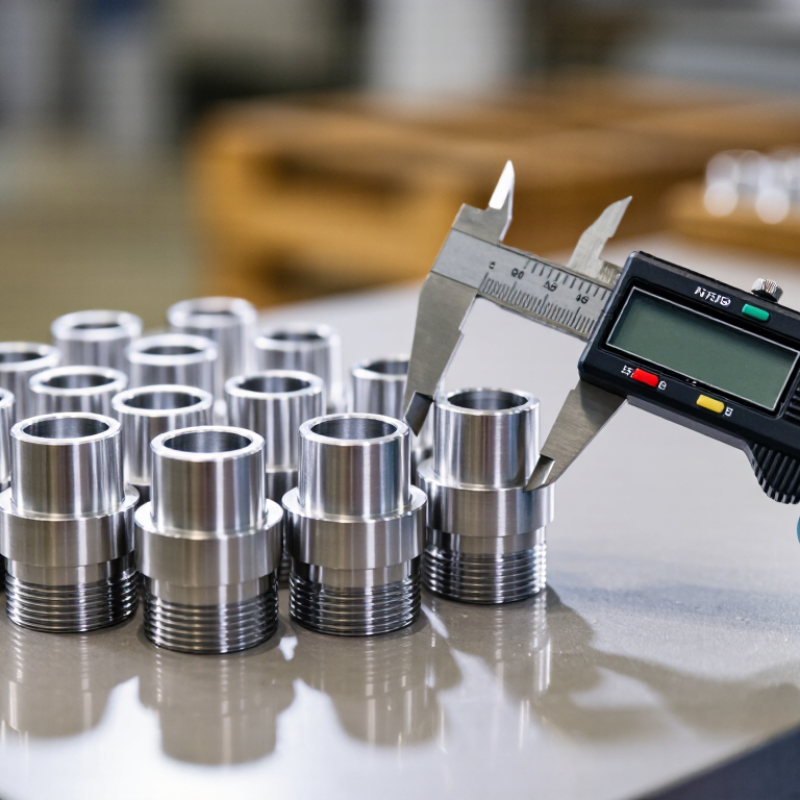
Define Aluminum Ferrules: Alloys, Sizes, Tolerances, and ISO 9001 Requirements
When comparing China’s top aluminum ferrule manufacturers, define the product before reviewing prices. An aluminum ferrule is a sleeve crimped around a cable, wire rope, or assembly. Its alloy affects strength, forming behavior, and corrosion resistance. Alloy 6061 offers higher strength, while 3003 is easier to form. The best choice depends on load, environment, and crimping method.
Specify inside diameter, outside diameter, wall thickness, and length in millimeters. Include edge condition and surface finish. A ferrule that fits loosely may slip; one that is too tight can damage strands. Tolerances should match the application, not an impressive catalogue value. For example, request dimensional inspection records for every production batch. Also check burr control, ovality, and crimp recovery. I have seen drawings that looked complete but missed the required cable size.
Tips: Ask for alloy certificates, sample measurements, and traceability records. Confirm whether ISO 9001 covers the manufacturing site and current quality system. ISO 9001 supports controlled processes, but it does not automatically prove ferrule performance. Request crimp tests, tensile results, and a clear inspection plan. Small details matter. A useful supplier should explain deviations honestly, even when the first sample is not perfect. That response often reveals more than a polished sales sheet.

Aluminum Ferrule Alloy Selection Guide
Representative minimum tensile strength values for commonly specified aluminum sheet and strip conditions
Values shown are representative minimum tensile-strength levels commonly associated with these alloy-tempers; exact requirements depend on the applicable ASTM or EN material specification and product form. ISO 9001 certifies a supplier’s quality-management system and does not replace material, dimensional, or performance requirements.
Compare China’s Top 10 Manufacturers by Capacity, Lead Time, and Export Markets
Choosing among China’s top ten aluminum ferrule manufacturers requires more than comparing quoted prices. Ferrule data are rarely reported separately, so capacity claims need evidence. The U.S. Geological Survey’s Mineral Commodity Summaries 2024 estimates China produced about 41 million metric tons of primary aluminum in 2023. That scale supports strong material access, but it does not prove reliable ferrule production.
Compare verified monthly output, press capacity, mold availability, and inspection records. Capacity without utilization is misleading. For lead time, request separate figures for tooling, samples, and repeat orders. A practical purchasing benchmark is 15–30 working days for standard production, but custom dimensions may take longer. Confirm this with dated production schedules, not sales promises. Ask for recent certificates covering alloy composition, wall thickness, hardness, and dimensional tolerance. Small differences can affect assembly performance.
Export reach also matters. China Customs publishes broad aluminum-product categories, not a complete ferrule ranking. This is an important limitation. Request anonymized shipping evidence for markets such as Southeast Asia, Europe, North America, and the Middle East. Check packaging quality, port options, documentation accuracy, and experience with destination requirements. The International Aluminium Institute continues to emphasize recycling and lower-carbon aluminum production, so ask whether recycled content and emissions data are traceable. My own caution is simple: the cheapest quotation often hides longer approval time, weaker inspection, or unstable capacity. A spreadsheet cannot reveal everything.
Evaluate Material Quality: 99.5% Aluminum Purity and 0.1 mm Dimensional Tolerance
Choosing among China’s top 10 aluminum ferrule manufacturers requires more than comparing prices. Material purity and dimensional control directly affect crimp strength, corrosion resistance, and assembly fit. Require a mill certificate showing at least 99.5% aluminum purity. Ask whether laboratory results follow ASTM E1251 or an equivalent chemical-analysis method.
The 2024 USGS Mineral Commodity Summaries reported nearly 70 million metric tons of global primary aluminum production in 2023. This confirms a large supply base, but volume does not guarantee consistent ferrules. Review batch records, not only product samples. A ferrule with a 0.1 mm dimensional tolerance needs verified measurements across diameter, wall thickness, and length. Digital calipers may help, but critical orders deserve calibrated gauges or coordinate measurement equipment.
Tips: Request three production samples from separate batches. Measure them after surface treatment, because coating can change dimensions slightly. Check the inspection report’s equipment calibration date. Also examine cut edges and inner surfaces; rough burrs can damage cable coverings. A supplier may claim ±0.1 mm, yet measure only one point. That is a warning. I would also repeat testing after shipment, because packaging pressure and handling can distort thin ferrules. Purity alone is not enough. Tolerance alone is not proof. Reliable selection comes from traceable records, repeat measurements, and honest discussion of occasional variation.
Verify Compliance with ISO 15378, GMP, RoHS, and 100% Visual Inspection Standards
When comparing China’s top 10 aluminum ferrule manufacturers, compliance should guide the shortlist.
ISO 15378 certification indicates controlled production for pharmaceutical packaging materials. Check the certificate scope, issuing body, site address, and expiration date. A certificate alone does not prove consistent batch quality. Ask for recent audit records and corrective-action reports. Small details matter.
GMP practices should cover hygiene, personnel training, traceability, and contamination control. Visit the production area when possible. Look for clean storage, sealed packaging, and clear batch identification. RoHS documentation should confirm restricted-substance control in alloys, coatings, inks, and processing materials. Request material declarations and test reports for each relevant product series. Do not accept a generic file without product references.
100% visual inspection is more meaningful when the method is defined. Confirm lighting conditions, inspection speed, sampling records, and defect categories. Inspectors should check dents, burrs, scratches, coating gaps, blocked openings, and dimensional distortion. Ask how rejected pieces are isolated and recorded. Trial samples should be tested with your vial, stopper, and crimping equipment. A ferrule may look perfect yet crimp poorly.
No supplier is flawless. Even strong factories can miss an unusual defect during a busy shift. Reliable manufacturers admit this risk and improve controls instead of making absolute promises.
Select Suppliers Using MOQ, Cost per 1,000 Units, Defect Rate, and After-Sales Support
Choosing among China’s top 10 aluminum ferrule manufacturers requires more than comparing unit prices.
Global aluminum production exceeded 70 million metric tons in 2024, according to the U.S. Geological Survey’s Mineral Commodity Summaries 2025. That scale does not guarantee consistent ferrule quality. Request MOQ, tooling charges, and a clear cost per 1,000 units. Include anodizing, printing, packaging, and delivery. A low quotation can still become expensive after rework.
Defect rate deserves direct evidence. Ask for recent inspection records, sample sizes, and the testing method used. ISO 2859-1 sampling can help structure acceptance checks, but it does not replace dimensional testing. Measure wall thickness, neck finish, crimp fit, surface marks, and coating adhesion.
A supplier reporting 0.5% defects may sound reliable, yet the number means little without batch data. I once treated a “passed” sample as enough. That was a weak assumption. Production lots can behave differently.
Tips:
Compare suppliers with the same specification sheet. Calculate cost per 1,000 units using accepted pieces, not shipped pieces. Set a trial MOQ before annual purchasing. Ask how quickly they replace defective lots and who pays freight. Check response times during a real technical question. After-sales support is measurable. Record reply hours, corrective-action dates, and replacement terms. The International Aluminium Institute highlights energy and production-efficiency pressures across the aluminum sector, so stable process control matters. Select the manufacturer that balances MOQ, verified defects, transparent pricing, and practical support.
Article Source:
Get in touch with us,
We will contact you shortly!
What is the difference between Unline(Non-Epoxy Coated) or Lining(Epoxy Coated) Metal Drum?

Unline drums with internally bare metal surface is more susceptible to corrosion and rust while Lining drums are internally coated with Phenolic Epoxy Coating to provide a non-reactive barrier between the drum surface and your product, less risk of contamination. Note: Our Unline drums are coated with an anti-rust agent after washing to reduce risk of rust.
What are Unline(Non-Epoxy Coated) and Lining(Epoxy Coated) drums compatible with?

In Singapore, Recon Unline Drums are usually more costly than Recon Lining Drums. Hence, we recommend Recon Unline Drums to fill aromatics like Thinner, Xylene, Toulene& other solvents like Hexane, BA, CA, EA, MC, White spirit, etc.
We recommend the lower-priced Recon Lining Drums to fill hydrocarbons like IPA, Methanol, Ethanoland oil-based products like diesel, petrol, lubricants, engine, hydraulic, base, transmission fluid, additives, waste oil, etc.;
What is the difference between Grade A and Grade B Metal Drum ?

Grading of used drums are usually based on physical conditions like rustiness, deformities and residual contents. Grade A drums are totally free from internal rust, serious dents and are easy to clean. Grade B drums have different degrees of rust internally and aesthetically inferior compared to Grade A drums.
What content is suitable to fill in a Recon Grade A or Grade B Drum?

Recon Grade A drum is suitable to fill more costly virgin grade products while Recon Grade B drum is more suitable for recycled or waste products.
What is the difference between Open Top and Close Top Drums and their usage?

Closed top drums are for water and other liquid products. Open Top drums can be used for liquid too but are primarily for more viscous products. The Open Top (or open head with a lid) allows you to get in and out of the drum with your product easier.
What type of content are Metal or Plastic Drums suitable for?

Metal drums offer additional protection when dealing with potentially flammable substances. They provide superior fire resistance, impact protection, and longevity for storing class 1, 2, and 3 volatile chemicals.
Plastic HDPE Drums are suitable for corrosive chemicals like acids, alkaline and also water-based products.
Will there be any contamination in the reconditioned metal, plastic drums or IBC tanks?

All our reconditioned containers (metal/plastic drums, carboys, IBC tanks) are washed thoroughly with specially formulated cleaning agent, rinsed with clean water, dried, and tested for possible leakages during the recondition process. Stringent quality inspection is being conducted 100% on every reconditioned product before they are qualified for sale & delivery.
What is the drum gauge(thickness) and weight for reconditioned metal drums?

Reconditioned metal drums gauge can be 0.9mm to 1.0mm all round. Their weight can vary from 16 to 18kg.
Do you sell New Packaging Products too?

Yes, we are also a distributor for new pallets, metal drums, plastic drums, carboys, IBCs and stainless-steel tanks.
What additional services do you provide apart from selling reconditioned and new containers.?

We are an NEA licensed toxic industrial waste collector, who can collect and dispose of used toxic waste containers in Singapore.
Do you offer labelling and silkscreen on the containers ?

We can provide labelling and silk-screening on the containers.
Are you able to ship overseas ?

Yes, we can arrange export our products to any country in the world.
Leading the Way
to Carbon Neutrality