How to Choose the Right Open Top Steel Drums for Your Needs?
Choosing the right open top steel drums can be crucial for various industries. In 2022, the global steel drum market was valued at approximately $7.3 billion, with projections suggesting a steady growth rate of 4.2% annually. This growth indicates a rising demand for secure and efficient storage solutions.
When selecting open top steel drums, consider both durability and functionality. These drums are often used for liquids, chemicals, and other materials. Their design allows for easy loading and unloading. However, not all drums meet the same standards. Some may lack reliability, leading to potential leaks.
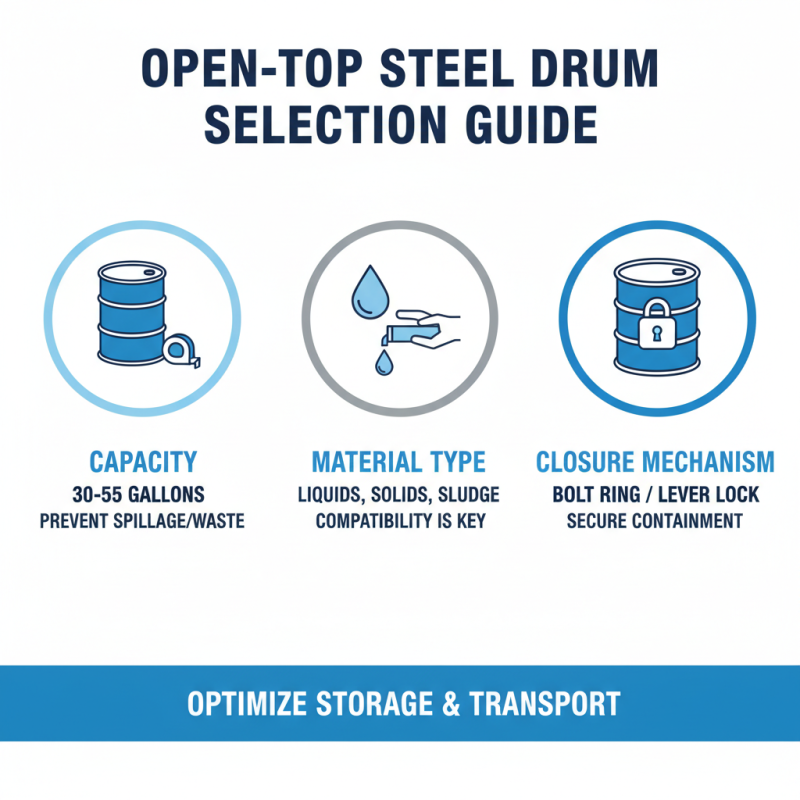
It's essential to evaluate the specifications of the open top steel drums you are considering. Look for drums that comply with industry standards, like the UN certification for hazardous materials. Pay attention to the drum's capacity, as this can impact transport costs. Making an informed choice can significantly enhance operational efficiency and safety in your workplace.

Factors to Consider When Selecting Open Top Steel Drums
When selecting open top steel drums, consider several crucial factors. The capacity of the drum is essential. Standard sizes range from 30 to 55 gallons. Understanding the volume of materials you handle is key. A drum that is too small may lead to spillage and waste.
Material compatibility is another important factor. Steel drums are often used for chemicals, oils, and other liquids. However, not every chemical is suitable for steel. Some substances can corrode or damage the drum. Referencing the Chemical Compatibility Chart can save you a lot of trouble. Industry reports indicate that nearly 35% of drum failures arise due to improper material selection.
Tips: Always check the drum's specifications. Look for certifications that ensure safety and compliance. Additionally, consider the weight of your materials. If the drum is too heavy when full, it could pose handling risks.
Durability is vital too. Open top drums should withstand harsh environments and rough handling. Research indicates that investing in high-quality drums reduces long-term costs. Cheaper options may lead to leaks or other failures. Maintaining safety and efficiency should always be your priority.
Understanding Different Sizes and Capacities of Steel Drums
When selecting open top steel drums, understanding sizes and capacities is crucial. Steel drums come in various sizes, typically ranging from 10-gallon to 55-gallon capacities. The 55-gallon drum is commonly used in industries for bulk storage and transportation. According to the Environmental Protection Agency, 55-gallon drums can hold up to 200 liters, making them ideal for many liquid materials.
Choosing the right size involves considering the intended application. For smaller operations, a 30-gallon drum may suffice. However, larger facilities often prefer 55-gallon drums for efficiency. Reports indicate that using larger drums reduces the frequency of refills, which can significantly save time and labor costs. Still, larger capacities may lead to overloading risks if not managed properly.
It's essential to reflect on the materials being stored. Some substances require smaller volumes for safety. Inadequate capacity can lead to spills and other hazards. A 2019 study showed that improperly selected drum sizes caused a 15% increase in leaks. Remember, safety should always be a priority. Always reassess your needs based on the specific application and potential risks involved.
Material Specifications and Durability of Open Top Drums
When selecting open top steel drums, material specifications and durability are crucial factors.
Steel drums are often made from carbon steel or stainless steel.
Carbon steel offers high strength and is cost-effective. However, it may corrode easily in harsh environments.
Stainless steel, while more expensive, provides superior resistance to rust and chemicals.
According to industry reports, using stainless steel can extend the lifespan of the drum by up to 50% in corrosive settings.
Another key consideration is the
thickness of the steel. Standard thickness ranges from
18 to 14 gauge.
Thicker drums are more resilient but also heavier. A study by the Steel Drum Institute indicates that thicker drums can withstand impacts better.
Yet, they may not be suitable for situations requiring mobility. It’s essential to balance
durability with practicality in real-world applications, like storage and transportation.
The lining of the drum also influences its
durability.
Some open top drums feature
interior coatings, which can protect against contamination.
Coatings can prevent rust and extend the life of the drum. However, not all coatings are suitable for every material.
Users should carefully consider the
chemical compatibility of the material and the lining.
This can often be overlooked but is vital to maintaining drum integrity.
Evaluating the Intended Use and Application for Steel Drums
When evaluating the intended use of open top steel drums, start by considering the materials you will store. If you plan to use the drums for liquids, confirm they are compatible with your substances. Certain chemicals may react poorly with particular metals. Your choice could lead to leaks or contamination, which is a significant concern.
Next, think about the environment where the drums will be kept. Will they be exposed to outdoor elements or extreme temperatures? Steel drums can rust if not properly maintained. If placed outdoors, consider options with protective coatings to enhance durability. Indoor storage is generally easier, but you still need to monitor for corrosion.
Additionally, assess the size and capacity you need. Common capacities range from 30 to 55 gallons. Larger drums can hold more but may be heavier and harder to maneuver. Is your team equipped to handle heavy weights safely? Too often, organizations overlook the ergonomic aspects of using these drums, which can lead to workplace injuries. Balance capacity with safety to optimize your operation.
Cost Analysis and Budgeting for Open Top Steel Drums
When considering open top steel drums, cost analysis is key. The average price for these drums varies widely. According to industry reports, units typically range from $80 to $150. This price fluctuates based on capacity, material quality, and supplier. Budgeting for these drums requires careful thought about your needs.
Assess the intended use of the drums. If you require drums for aggressive liquids, investing in higher quality grades might be crucial. A common mistake is compromising on durability for lower costs. Research found that using lower-end drums can lead to leaks and additional cleanup costs. Choose wisely, as cheaper options may not be cost-effective in the long run.
Consider maintenance and storage costs, too. Some drums may require frequent inspections or have specific storage requirements. This adds to overall expenses. Allocating funds for unforeseen issues is often overlooked. It’s vital to reevaluate your choices periodically. This can help in understanding whether the selected option truly fits your budget and needs. Explore multiple suppliers and gather data on total ownership costs before making a decision.
How to Choose the Right Open Top Steel Drums for Your Needs? - Cost Analysis and Budgeting for Open Top Steel Drums
| Drum Type |
Capacity (Gallons) |
Weight (lbs) |
Material Thickness (mm) |
Estimated Cost ($) |
Best Use Case |
| Open Top Steel Drum |
55 |
45 |
1.5 |
70 |
Chemical Storage |
| Open Head Steel Drum with Lid |
30 |
32 |
1.2 |
55 |
Food Grade Products |
| Corrosive Steel Drum |
55 |
50 |
1.8 |
85 |
Hazardous Material |
| Specialized Open Top Drum |
55 |
48 |
1.6 |
100 |
Industrial Waste |