
How to Choose the Right Mixing Machine for Global Sourcing?
Choosing the right Mixing Machine for global sourcing is a process decision, not a catalogue exercise. The equipment must match materials, batch size, viscosity, hygiene requirements, and local service conditions.
Grand View Research estimated the global industrial mixers market at approximately USD 7.9 billion in 2022. Its report also identifies food, chemicals, pharmaceuticals, and other process industries as important demand areas. MarketsandMarkets similarly highlights automation, customized production, and energy efficiency as major market influences. These figures show opportunity, but they do not identify the best machine for every factory.
John Bridgwater, a recognized authority in powder and particle mixing, described mixing as “the process of reducing non-uniformity.” That short definition is useful during supplier evaluation. A machine that runs quickly may still produce uneven color, moisture, or active ingredients. A smaller mixer may reduce waste, but it could increase cycle time. The cheapest quotation can become expensive after installation.
Buyers should request application trials using their actual materials. Observe discharge behavior, cleaning time, dust control, temperature rise, and batch consistency. Ask for test data, motor specifications, spare-parts availability, and references from comparable plants. Confirm electrical standards, documentation, commissioning support, and maintenance response before signing.
Supplier claims need evidence.
I would not rely on market growth alone. Reports describe broad trends, while your production line has its own stubborn details. Particle size, bulk density, shear sensitivity, and operator skill can change the result. A practical sourcing decision therefore compares verified performance, total ownership cost, and long-term support across regions. That approach is less impressive than choosing by price, but usually more dependable.
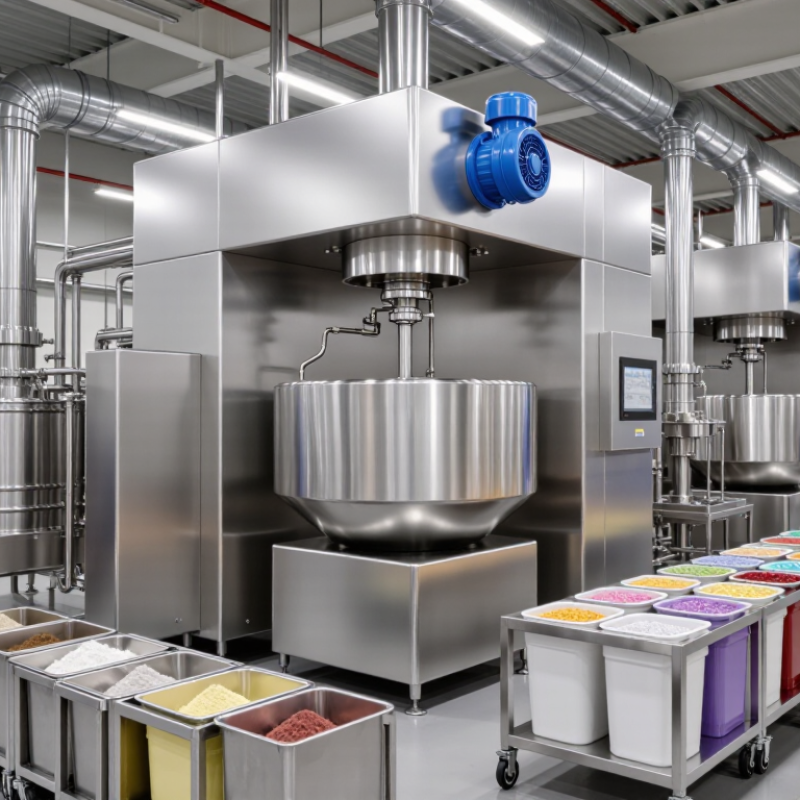
Define the Mixing Process and Material Requirements
Choosing the right mixing machine begins with defining the mixing process, not browsing equipment catalogs. Describe whether the task involves blending, dissolving, dispersing, emulsifying, or suspending materials. Each process demands different shear levels, mixing speeds, and vessel designs.
Material behavior matters just as much. Record viscosity at operating temperature, particle size, moisture content, density, and sensitivity to heat or air. A thick paste may need strong torque, while a fragile suspension can suffer from excessive shear. Note the required batch volume and target mixing time. Small laboratory tests can reveal problems that technical data sheets miss. They should not be skipped.
Think about the real production environment. Will operators add powders manually? Does the mixture stick to vessel walls? Is cleaning frequent? These details influence shaft design, access points, sealing, and temperature control. I have seen specifications focus heavily on motor power while ignoring discharge behavior. That was a costly oversight. A reliable evaluation compares test results, maintenance access, safety features, and documented material compatibility. Ask suppliers for measurable evidence, not broad performance claims. Even then, the first machine choice may need adjustment after pilot trials. Materials change, and assumptions age quickly.
How to Choose the Right Mixing Machine for Global Sourcing? - Define the Mixing Process and Material Requirements
| Mixing Process | Typical Material Profile | Indicative Viscosity | Recommended Machine Type | Shear Requirement | Typical Batch Volume | Key Material and Process Requirements | Important Sourcing Checks |
|---|---|---|---|---|---|---|---|
| Liquid blending | Water-like liquids, solvents, low-viscosity oils and solutions | Approximately 1–1,000 mPa·s | Propeller or turbine mixer | Low to medium shear | 50–10,000 L | Uniform circulation, controlled vortex, low air entrainment and compatible wetted parts | Motor power, impeller diameter, shaft speed, tank geometry, seal type and speed control |
| Powder incorporation into liquid | Powders, pigments, thickeners or salts added to water or oil phases | Approximately 1–20,000 mPa·s after incorporation | High-speed disperser or powder induction mixer | Medium to high shear | 20–5,000 L | Fast wetting, prevention of floating powder, lump reduction and dust control | Powder feed method, rotor–stator clearance, dust extraction, cleaning access and explosion-risk assessment |
| Emulsification | Immiscible liquid phases such as oil and water | Approximately 10–100,000 mPa·s | Rotor–stator emulsifier or inline high-shear mixer | High shear | 10–3,000 L per batch | Controlled droplet-size distribution, temperature management and reduced air entrainment | Rotor speed, recirculation rate, vacuum capability, seal design and validation of final particle or droplet size |
| High-viscosity blending | Creams, gels, pastes, adhesives and concentrated slurries | Approximately 10,000–1,000,000 mPa·s | Anchor, gate or helical-ribbon agitator | Low to medium shear with high torque | 50–10,000 L | Wall sweeping, adequate bottom clearance, high starting torque and optional scraper blades | Torque at start-up, gearbox service factor, heating or cooling jacket, shaft rigidity and discharge method |
| Powder blending | Dry powders, granules, pellets and free-flowing solids | Not normally expressed as liquid viscosity | Ribbon, paddle, ploughshare or conical screw mixer | Low to medium shear | 100–20,000 L | Particle-size distribution, bulk density, moisture sensitivity, segregation tendency and fill level | Explosion protection where combustible dust may be present, discharge residue, filter area and access for cleaning |
| Solid–liquid suspension | Mineral slurries, ceramic suspensions, coatings and abrasive mixtures | Approximately 10–50,000 mPa·s | Axial-flow turbine, hydrofoil or high-torque agitator | Low to medium shear | 100–20,000 L | Maintain solids uniformly, prevent settling and withstand abrasion from particles | Solids loading, particle density, wear-resistant materials, bottom geometry and required suspension speed |
| Vacuum mixing and deaeration | Air-sensitive creams, sealants, electronics compounds and viscous pastes | Approximately 10,000–10,000,000 mPa·s | Planetary vacuum mixer or vacuum-capable high-viscosity mixer | Medium shear with high torque | 1–5,000 L | Air removal, sealed vessel, controlled temperature and reliable discharge under vacuum or pressure | Vacuum level, leakage rate, vessel pressure rating, seal construction, torque monitoring and cleaning procedure |
| Temperature-controlled mixing | Materials whose viscosity, reaction rate or stability changes with temperature | Depends on formulation and operating temperature | Jacketed mixer with suitable agitator | Selected according to product sensitivity | 50–10,000 L | Required heating or cooling rate, maximum product temperature and uniform heat transfer | Jacket area, heat-transfer medium, insulation, temperature sensors, control accuracy and thermal expansion allowance |
Note: The operating ranges are indicative industry selection values. Final machine sizing should be confirmed using the actual formulation, density, solids content, rheology, batch size, temperature, cleaning method and required mixing time.

Compare Mixing Machine Types and Operating Principles
Choosing the right mixing machine starts with understanding how each type moves material. Ribbon mixers use horizontal helical blades to lift and fold dry powders. They suit flour, mineral blends, and other free-flowing materials. Paddle mixers create gentler movement, which helps protect fragile granules. However, both machines may struggle with sticky or highly viscous ingredients.
For liquids, an agitator uses an impeller to circulate fluid inside a tank. Propeller impellers work well with low-viscosity liquids, while turbine impellers provide stronger radial flow. High-shear mixers create intense local force through a narrow gap. They disperse powders, break droplets, and reduce particle size. The result can be impressive. It can also create heat, foam, or unwanted material damage.
Planetary mixers combine rotation around the bowl with rotation around each tool. This principle handles thick pastes, creams, and adhesive-like compounds. In plant evaluations, I check the batch size, viscosity, moisture level, cleaning access, and discharge method. A small test batch often reveals problems that specifications hide. Ask for measured results, not only capacity claims. Global sourcing also requires careful checks on voltage, control language, spare parts, documentation, and safety compliance. There is no perfect choice. A machine that works beautifully for a dry powder may perform poorly with a wet, sticky blend. My own preference is to leave room for doubt and test the hardest material first.
Evaluate Capacity, Performance, and Energy Efficiency
Choosing the right mixing machine for global sourcing starts with actual production needs, not catalog claims. Measure batch size, material density, loading frequency, and required mixing time. A machine rated for 1,000 kilograms may perform poorly with lightweight powders or sticky compounds. Leave operating space. Too much capacity can waste energy and reduce mixing consistency.
Performance should be tested with representative materials before purchasing. Ask for data on mixing uniformity, cycle time, discharge speed, and cleaning access. During factory visits, inspect welds, seals, shafts, and safety controls closely. I have seen impressive demonstrations fail when materials behaved differently in daily production. Request trial results, maintenance records, and clear acceptance standards. Small details matter.
Energy efficiency requires more than checking motor wattage. Compare energy used per finished batch, including loading, mixing, heating, and unloading. Variable-speed control can reduce consumption during gentle blending, but it may add maintenance demands. Check insulation quality and idle power use. A smaller motor is not always more efficient. Transport distance, spare-part availability, and local technical support also affect long-term performance. One overlooked issue is voltage compatibility; it can create delays after delivery. Build a realistic cost model, then challenge its assumptions before approval.
How to Choose the Right Mixing Machine for Global Sourcing
Typical operating benchmarks show the trade-off between batch capacity and energy efficiency. Ribbon and paddle mixers are suitable for high-volume dry materials, while high-shear mixers provide faster processing for more demanding applications but generally require more energy. Actual results vary with material density, moisture, formulation, fill level, and operating conditions.
Check Global Sourcing Standards, Costs, and Supplier Support
Choosing a mixing machine for global sourcing starts with standards, not catalog photos. Define batch size, viscosity, temperature, shear level, and cleaning method. Request drawings showing wetted materials, seals, motor ratings, and safety guards. ISO 9001 certification supports quality control, but it does not prove that a machine suits your process. Check applicable electrical, pressure, hygiene, and hazardous-area requirements in the destination market.
Costs also extend beyond the purchase order. Include tooling, spare parts, operator training, inspection, freight, import duties, installation, and energy use. The World Bank’s 2023 Logistics Performance Index surveyed professionals across 139 economies and showed that delivery reliability varies widely between markets. A low machine price may become expensive after delays, missing components, or weak local service. Ask suppliers for response times, remote troubleshooting procedures, spare-parts lead times, and references from similar applications. A video test using your actual material is more useful than polished photographs. Still, test data can be incomplete. Leave room for independent verification.
Tips: Build a weighted comparison sheet. Give standards, mixing results, lifetime cost, and support clear scores. Request two samples from the same batch. Confirm tolerances with an independent inspector. The International Energy Agency reports that industry remains a major source of global energy demand, so compare motor efficiency and idle consumption. A smaller motor is not automatically better. Poor mixing wastes more energy.
Verify Installation, Maintenance, Safety, and After-Sales Service
When sourcing a mixing machine internationally, installation details deserve close inspection. Ask for a site-ready installation guide, not a general brochure. Request drawings, foundation loads, power requirements, air connections, and lifting instructions. Check whether local technicians can complete the setup safely. A machine may look compact, yet require a high ceiling or reinforced flooring. Do not accept “easy to install” without evidence. Ask for commissioning records from similar installations.
Maintenance planning should begin before purchase. Review cleaning points, wear parts, lubrication schedules, and access around the mixing chamber. Confirm which spare parts are stocked near your facility. Also check the clarity of the maintenance manual. Vague instructions create expensive delays. I would request a practical training session for operators and technicians. However, training quality can vary. Record unanswered questions and ask for written clarification.
Safety documents must match the destination country and actual machine configuration. Inspect emergency stops, guards, interlocks, grounding, dust control, and noise protection. Ask who verifies these features after installation. After-sales service should include response times, remote troubleshooting, replacement-part procedures, and on-site support options. Get these details in the contract. A low purchase price can become costly when one sensor fails and no technician is available. No supplier answers every question perfectly. That is why a live factory acceptance test, with documented findings, is worth arranging before shipment.
Article Source:
Get in touch with us,
We will contact you shortly!
What is the difference between Unline(Non-Epoxy Coated) or Lining(Epoxy Coated) Metal Drum?

Unline drums with internally bare metal surface is more susceptible to corrosion and rust while Lining drums are internally coated with Phenolic Epoxy Coating to provide a non-reactive barrier between the drum surface and your product, less risk of contamination. Note: Our Unline drums are coated with an anti-rust agent after washing to reduce risk of rust.
What are Unline(Non-Epoxy Coated) and Lining(Epoxy Coated) drums compatible with?

In Singapore, Recon Unline Drums are usually more costly than Recon Lining Drums. Hence, we recommend Recon Unline Drums to fill aromatics like Thinner, Xylene, Toulene& other solvents like Hexane, BA, CA, EA, MC, White spirit, etc.
We recommend the lower-priced Recon Lining Drums to fill hydrocarbons like IPA, Methanol, Ethanoland oil-based products like diesel, petrol, lubricants, engine, hydraulic, base, transmission fluid, additives, waste oil, etc.;
What is the difference between Grade A and Grade B Metal Drum ?

Grading of used drums are usually based on physical conditions like rustiness, deformities and residual contents. Grade A drums are totally free from internal rust, serious dents and are easy to clean. Grade B drums have different degrees of rust internally and aesthetically inferior compared to Grade A drums.
What content is suitable to fill in a Recon Grade A or Grade B Drum?

Recon Grade A drum is suitable to fill more costly virgin grade products while Recon Grade B drum is more suitable for recycled or waste products.
What is the difference between Open Top and Close Top Drums and their usage?

Closed top drums are for water and other liquid products. Open Top drums can be used for liquid too but are primarily for more viscous products. The Open Top (or open head with a lid) allows you to get in and out of the drum with your product easier.
What type of content are Metal or Plastic Drums suitable for?

Metal drums offer additional protection when dealing with potentially flammable substances. They provide superior fire resistance, impact protection, and longevity for storing class 1, 2, and 3 volatile chemicals.
Plastic HDPE Drums are suitable for corrosive chemicals like acids, alkaline and also water-based products.
Will there be any contamination in the reconditioned metal, plastic drums or IBC tanks?

All our reconditioned containers (metal/plastic drums, carboys, IBC tanks) are washed thoroughly with specially formulated cleaning agent, rinsed with clean water, dried, and tested for possible leakages during the recondition process. Stringent quality inspection is being conducted 100% on every reconditioned product before they are qualified for sale & delivery.
What is the drum gauge(thickness) and weight for reconditioned metal drums?

Reconditioned metal drums gauge can be 0.9mm to 1.0mm all round. Their weight can vary from 16 to 18kg.
Do you sell New Packaging Products too?

Yes, we are also a distributor for new pallets, metal drums, plastic drums, carboys, IBCs and stainless-steel tanks.
What additional services do you provide apart from selling reconditioned and new containers.?

We are an NEA licensed toxic industrial waste collector, who can collect and dispose of used toxic waste containers in Singapore.
Do you offer labelling and silkscreen on the containers ?

We can provide labelling and silk-screening on the containers.
Are you able to ship overseas ?

Yes, we can arrange export our products to any country in the world.
Leading the Way
to Carbon Neutrality