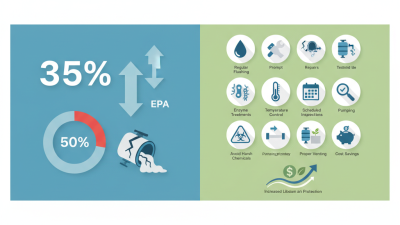
How to Choose the Best Waste Tank in 2026?
Choosing the best waste tank in 2026 begins with understanding what it must contain, where it will sit, and how it will be emptied. A tank for a seasonal cabin has different demands from one serving a busy workshop or a permanent home. Start with expected use, not the largest capacity available. Too small can mean frequent servicing; too large may waste space and money.
Measure the installation area carefully. Note door widths, ground access, pipe routes, ventilation needs, and the path a service vehicle may need. Then compare materials, tank capacity, inlet and outlet positions, access covers, and maintenance requirements. A few centimetres can matter. So can a lid that is awkward to reach after installation. Check the manufacturer’s specifications and ask a qualified installer to confirm that the model suits your site and intended use.
There is no single best choice for every buyer. Product descriptions may leave out practical details, and stated capacities do not always tell the whole story about daily performance. Compare clear technical information, warranty terms, service access, and support availability rather than relying on price alone. Keep records of your measurements and expected usage. Recheck them. A careful choice can reduce avoidable maintenance, but it cannot replace proper installation or routine inspection. This guide explains the main factors to weigh before buying, so you can choose a waste tank with fewer surprises and a better fit for your needs.
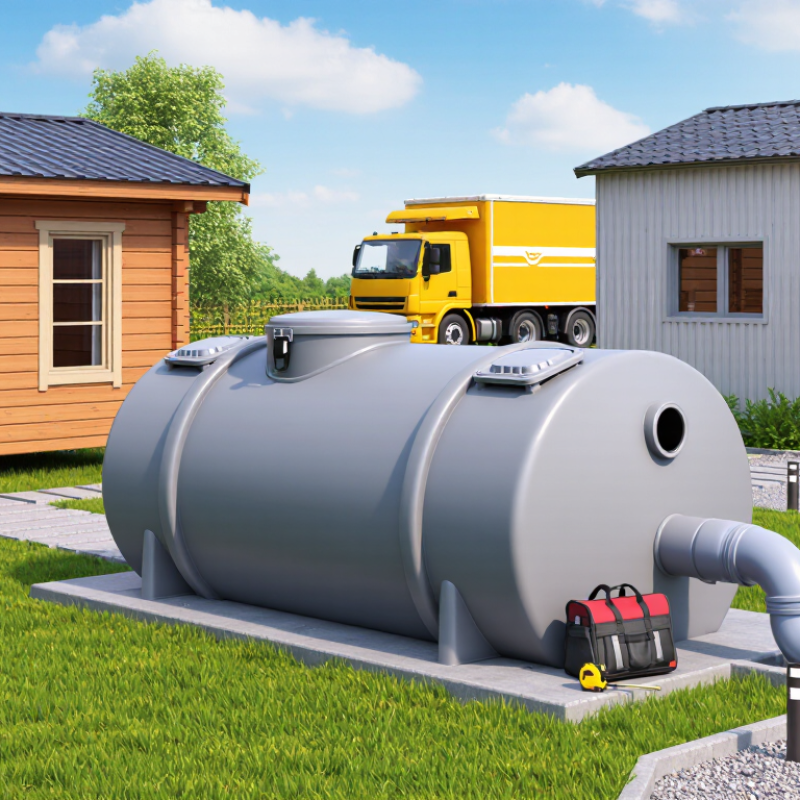
Classify the Waste Stream and Identify Applicable Environmental Regulations
Before selecting a waste tank, describe the waste stream in practical terms. Record its source, physical state, expected volume, temperature, and whether solids settle out. Review process records and safety data sheets, then confirm uncertain properties through appropriate testing. A clear liquid is not automatically harmless.
Keep different streams separate until their compatibility is understood. Note pH, oils, solvents, salts, and cleaning residues; even small amounts can affect tank materials or create troublesome reactions. I have seen routine wash water vary between shifts, so a single sample may not tell the whole story. Small details matter.
Next, check the environmental rules that apply where the waste is generated and stored. Requirements may cover waste classification, container labeling, storage time, inspections, spill containment, and approved transport. Confirm details with the relevant environmental authority or a qualified waste professional; rules differ by location and waste type. Do not guess. Use the confirmed classification to compare tank material, closure, capacity, and secondary containment needs. Keep test results and inspection records together, and revisit the classification when the process changes. A neat label helps, but it cannot replace evidence.
Size Capacity from Peak Flow; Use 1,000–2,000 Gallons as a U.S. Septic Benchmark
A waste tank should be sized for peak flow, not just an average day. Count expected users, fixtures, and busy periods, such as morning showers or a full house over a holiday weekend. A short surge can push more wastewater into the system than daily averages suggest. Small detail, big consequence.
For U.S. septic planning, 1,000–2,000 gallons is a common benchmark for many household systems. Treat it as a starting range, not a universal prescription. The right capacity depends on household size, expected flow, tank configuration, and local design requirements. A home with frequent guests may need a different assessment than a lightly used cabin. Do not guess.
Before settling on a tank, check the applicable local requirements and have a qualified wastewater professional review the flow estimate and site conditions. Ask how the calculation handles peak use, future occupants, and unusually heavy water use. Keep the assumptions in writing; they make later comparisons easier. I would recheck the estimate if the household changes, because a neat number can still rest on a shaky assumption.
Compare Tank Materials by Chemical Compatibility, Temperature, and Waste Density
How to Choose the Best Waste Tank in 2026?
Compare Tank Materials by Chemical Compatibility, Temperature, and Waste Density
A waste tank must suit the waste it will actually hold, not just its category. Check chemical compatibility against the tank material, liners, seals, and fittings. Acids, oils, and cleaning agents can affect these components differently. Review reliable compatibility data for the expected concentration and contact time. Temperature matters, too: hot waste or wash-down cycles can weaken materials or accelerate chemical reactions. A rating at room temperature may not tell the whole story.
Tips: Record the waste’s composition, concentration, and highest temperature. Check the safety data sheet and confirm details with the tank supplier. Small details matter. Don’t guess.
Waste density affects the load on the tank walls, supports, and foundation. A dense slurry can weigh far more than water at the same fill level. Polyethylene may suit many compatible, moderate-temperature applications, while other duties may call for polypropylene, fiberglass, or steel. None is universally best.
Compare the tank’s rated contents, operating temperature range, and structural limits with your real conditions. Leave room for process changes; forecasts are not always right. Inspect seals and fittings regularly, since a compatible tank body cannot prevent a failure at a weak connection.
Check ASTM D1998 and Local Codes for Polyethylene Tank Design and Installation
Choosing a waste tank starts with understanding what the standard actually covers. ASTM D1998 addresses vertical, aboveground polyethylene storage tanks, but it may not govern every septic, buried, or specialty waste tank. Check the current edition and confirm that the tank’s design and intended service fall within its scope. Waste can vary widely: a mild rinse stream is not the same as a solvent-bearing liquid. Ask the supplier for written compatibility guidance, and check the tank’s rated temperature and specific gravity. Small details matter. A warm liquid or heavier-than-water waste can change the design requirements.
Local codes shape the installation, too. Confirm rules for setbacks, foundations, venting, access, spill containment, and permits with the relevant authority before ordering. Requirements can differ between neighboring jurisdictions. For a real site, measure the available pad and route, then check that a delivery truck can reach the installation point. A level, properly prepared foundation helps support the tank evenly; anchoring may be needed where flooding or high winds are concerns. Do not assume an aboveground tank standard also approves an underground installation. That distinction is easy to miss. Even a detailed plan can overlook a cleanout location or future pump access, so review the layout with the installer and local reviewer before work begins.
How to Choose the Best Waste Tank in 2026?
Check ASTM D1998 and local codes for polyethylene tank design and installation.
Illustrative planning example: Required storage is calculated as daily wastewater flow multiplied by a three-day holding period. The figures are arithmetic examples, not code requirements or a tank recommendation. ASTM D1998 addresses vertical polyethylene tank design; verify the applicable standard edition, local codes, site conditions, usable capacity, and installation requirements with qualified professionals.
Assess Venting, Secondary Containment, Inspection Access, and Life-Cycle Costs
Choosing a waste tank starts with understanding what it will hold, how often it will be used, and where it will sit. Check chemical compatibility with the tank material using supplier data, not appearance alone. A liquid that seems mild can still damage seals over time. It happens.
Venting deserves close attention. Confirm that the vent can handle normal filling and emptying rates, and keep its outlet clear of obstructions. If vapors or odors are possible, ask a qualified engineer to assess the vent design and site conditions. Secondary containment should also match the credible spill volume and fit the installation area. Look for low points where rainwater, residue, or debris might collect; these details are easy to overlook.
Inspection access affects safety and maintenance costs. A tank with reachable ports, visible seams, and room for safe cleaning is easier to check than one boxed into a tight corner. Plan access before installation, including space for inspection tools and service work. Then compare life-cycle costs, not just purchase prices. Include routine inspections, cleaning, replacement seals, energy use, and eventual disposal. Estimates can be imperfect; record your assumptions and revise them after the first maintenance cycle.
How to Choose the Best Waste Tank in 2026? - Assess Venting, Secondary Containment, Inspection Access, and Life-Cycle Costs
| Tank configuration | Venting assessment | Secondary containment | Inspection access | Relative life-cycle cost | Best suited to |
|---|---|---|---|---|---|
| Single-wall aboveground tank with external containment | Provide a correctly sized normal vent for filling and withdrawal. Assess emergency venting where required by the tank design, stored material, and applicable codes. | Use a compatible, liquid-tight containment area. Required capacity and allowances for rainwater or other fluids depend on local rules and site conditions. | Generally straightforward: exterior surfaces, supports, valves, and the containment area are visible. Keep clearance for inspection and maintenance. | Lower initial cost; variable upkeep. Containment construction, coating repairs, and recurring checks affect total cost. | Sites that need visible, accessible storage and can provide suitable secondary containment and weather protection. |
| Double-wall aboveground tank | Size and configure normal and, where applicable, emergency vents for the specific tank and operating conditions. Do not assume the interstitial space replaces process venting. | The outer wall provides an integral secondary barrier when the tank is designed and installed for that purpose. Confirm interstitial monitoring and applicable containment requirements. | Exterior inspection is accessible; the space between walls is not normally visually accessible. Check the interstitial monitoring method and provide access to gauges, alarms, and fittings. | Moderate to high initial cost; potentially lower containment upkeep. Monitoring, inspection, and repair costs remain part of ownership. | Facilities seeking aboveground storage with integrated leak detection and a compact containment arrangement. |
| Double-wall underground tank | Venting must be designed for the stored material, tank configuration, and fill and withdrawal rates. Route and protect vent outlets as required by applicable codes and site rules. | A monitored interstitial space can provide secondary containment when designed, installed, and maintained accordingly. Verify required leak detection and monitoring arrangements. | The tank shell is buried, so routine inspection relies on monitoring systems and accessible openings, piping, and connections. Excavation may be needed for direct shell access. | High initial installation and potential replacement costs. Excavation, corrosion protection, monitoring, and future access can add cost. | Sites where aboveground space is limited and underground installation is permitted and appropriate for the soil and groundwater conditions. |
| Tank within a building or covered tank room | Evaluate tank vents and room ventilation separately. Vent discharge location and ventilation needs depend on the material, vapor hazards, and applicable fire and safety codes. | Provide containment compatible with the waste and sized to applicable requirements. Check floor penetrations, drains, and pathways that could allow a release to escape. | Access can be good if the room has adequate working space and safe routes to inspection points, manways, valves, and monitoring equipment. | Site-dependent. Building modifications, ventilation, fire protection, and spill-control upgrades can outweigh the tank purchase cost. | Operations needing weather protection or controlled access, provided building and life-safety requirements can be met. |
Selection note: Confirm waste compatibility, tank materials, capacity, vent sizing, leak detection, inspection intervals, and containment requirements with the tank designer and the authorities having jurisdiction. Relative cost is qualitative; actual life-cycle cost depends on installation, maintenance, monitoring, energy, repair, and replacement needs.
Related Posts
-
10 Essential Tips for Maintaining Your Waste Tank Efficiency
-
How to Choose the Best IBC Water Tank for Your Needs?
-
2026 Best Water Barrels for Efficient Storage Solutions?
-
2026 Top Waste Tank Technologies What to Expect?
-
China Best Plastic Drum Recycling Solutions for Global Buyers?
-
2026 Top Stainless Steel IBC Types for Global Buyers

Get in touch with us,
We will contact you shortly!
What is the difference between Unline(Non-Epoxy Coated) or Lining(Epoxy Coated) Metal Drum?

Unline drums with internally bare metal surface is more susceptible to corrosion and rust while Lining drums are internally coated with Phenolic Epoxy Coating to provide a non-reactive barrier between the drum surface and your product, less risk of contamination. Note: Our Unline drums are coated with an anti-rust agent after washing to reduce risk of rust.
What are Unline(Non-Epoxy Coated) and Lining(Epoxy Coated) drums compatible with?

In Singapore, Recon Unline Drums are usually more costly than Recon Lining Drums. Hence, we recommend Recon Unline Drums to fill aromatics like Thinner, Xylene, Toulene& other solvents like Hexane, BA, CA, EA, MC, White spirit, etc.
We recommend the lower-priced Recon Lining Drums to fill hydrocarbons like IPA, Methanol, Ethanoland oil-based products like diesel, petrol, lubricants, engine, hydraulic, base, transmission fluid, additives, waste oil, etc.;
What is the difference between Grade A and Grade B Metal Drum ?

Grading of used drums are usually based on physical conditions like rustiness, deformities and residual contents. Grade A drums are totally free from internal rust, serious dents and are easy to clean. Grade B drums have different degrees of rust internally and aesthetically inferior compared to Grade A drums.
What content is suitable to fill in a Recon Grade A or Grade B Drum?

Recon Grade A drum is suitable to fill more costly virgin grade products while Recon Grade B drum is more suitable for recycled or waste products.
What is the difference between Open Top and Close Top Drums and their usage?

Closed top drums are for water and other liquid products. Open Top drums can be used for liquid too but are primarily for more viscous products. The Open Top (or open head with a lid) allows you to get in and out of the drum with your product easier.
What type of content are Metal or Plastic Drums suitable for?

Metal drums offer additional protection when dealing with potentially flammable substances. They provide superior fire resistance, impact protection, and longevity for storing class 1, 2, and 3 volatile chemicals.
Plastic HDPE Drums are suitable for corrosive chemicals like acids, alkaline and also water-based products.
Will there be any contamination in the reconditioned metal, plastic drums or IBC tanks?

All our reconditioned containers (metal/plastic drums, carboys, IBC tanks) are washed thoroughly with specially formulated cleaning agent, rinsed with clean water, dried, and tested for possible leakages during the recondition process. Stringent quality inspection is being conducted 100% on every reconditioned product before they are qualified for sale & delivery.
What is the drum gauge(thickness) and weight for reconditioned metal drums?

Reconditioned metal drums gauge can be 0.9mm to 1.0mm all round. Their weight can vary from 16 to 18kg.
Do you sell New Packaging Products too?

Yes, we are also a distributor for new pallets, metal drums, plastic drums, carboys, IBCs and stainless-steel tanks.
What additional services do you provide apart from selling reconditioned and new containers.?

We are an NEA licensed toxic industrial waste collector, who can collect and dispose of used toxic waste containers in Singapore.
Do you offer labelling and silkscreen on the containers ?

We can provide labelling and silk-screening on the containers.
Are you able to ship overseas ?

Yes, we can arrange export our products to any country in the world.
Leading the Way
to Carbon Neutrality