
How to Choose China Best Open Top Plastic Drum?
Choosing the right open top plastic drum from China requires more than comparing prices and product photos. A drum may look strong online, yet its lid, sealing ring, or base can fail during handling. Experienced buyers inspect material grade, wall thickness, drum capacity, closure design, and stacking performance before placing an order. These details matter in warehouses, factories, and transport environments.
Material selection should match the stored product. High-density polyethylene is widely used because it offers impact resistance and good chemical stability. However, not every HDPE formula suits food, pharmaceutical, or industrial applications. Ask the supplier for technical data, batch information, and relevant compliance documents. Do not rely only on phrases such as “premium quality.” They sound convincing, but they prove very little.
Check the open top plastic drum under realistic conditions. Examine the rim after repeated opening, test the lid with a practical torque level, and observe whether the gasket remains flexible. A small leak can damage labels, floors, and customer trust. Request samples before bulk production. Measure the actual volume, empty weight, and dimensions yourself. Suppliers can make mistakes, and buyers can misunderstand specifications.
Manufacturing experience also deserves attention. Reliable Chinese manufacturers usually explain their molding process, inspection steps, and packaging method clearly. They should answer questions about color consistency, pallet loading, and replacement policies. Still, no supplier is perfect. A polished factory video cannot replace inspection records or physical testing. Choose with evidence, not excitement. The best decision balances durability, application safety, total cost, and dependable after-sales communication.
Understanding Open Top Plastic Drums and Their Main Applications
How to Choose China Best Open Top Plastic Drum?
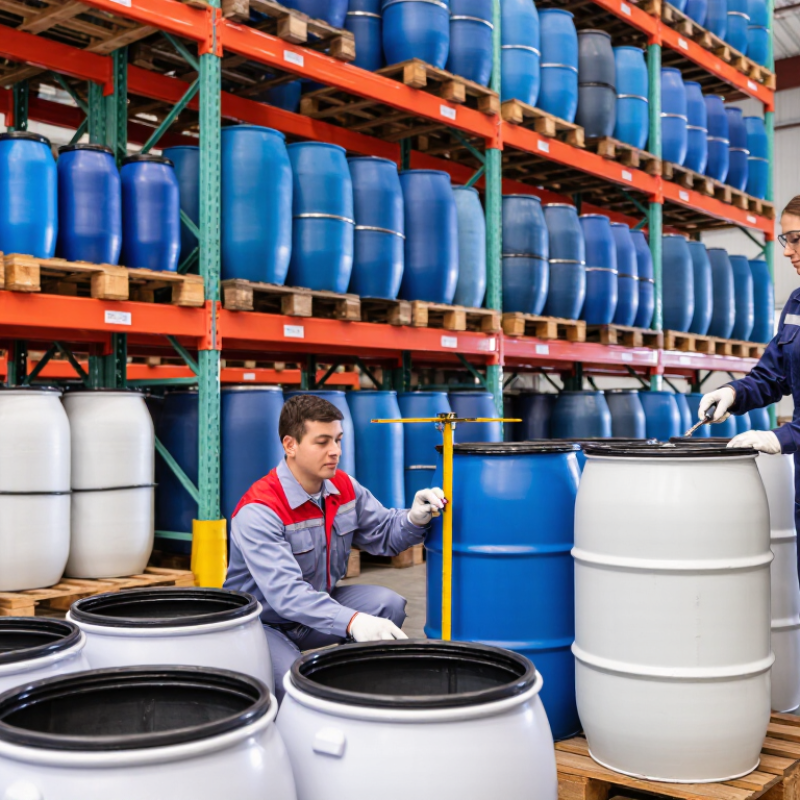
Open top plastic drums have a removable lid and a wide opening. This design supports easy filling, mixing, inspection, and cleaning. They are commonly used for water-based liquids, powders, food ingredients, industrial materials, and general storage. A tight lid and locking ring help reduce leakage during handling. However, an open top is not automatically suitable for every material.
From practical purchasing experience, drum selection should begin with the contents, not the appearance. Check whether the plastic resists moisture, oils, acids, or temperature changes. High-density polyethylene is widely used because it offers strength and chemical resistance. Confirm the actual wall thickness, lid seal, handle design, and stacking ability. A 120-liter drum may look convenient, but a full container can become difficult to move. Capacity needs careful thought.
Tips: Ask for material specifications, dimensional drawings, and sample testing before placing a large order. Inspect the drum for thin corners, uneven molding, and weak locking rings. Confirm whether the supplier performs leak, drop, and load tests. Food-related use requires suitable compliance documents. Do not rely only on photographs. One detail is often missed: check the pallet arrangement and transport space. Small design differences can increase shipping damage or handling costs. A reliable supplier should answer these questions clearly and provide consistent production records. “Best” depends on the application, and that judgment sometimes changes after real use.
Related Posts
-
Who Are the Top Open Top Plastic Drum Suppliers in China?
-

Top 10 Benefits of Using Plastic Drum Containers for Shipping
-

Top Industries to Watch in 2025 Global Market Trends and Predictions
-
China Top 10 Benefits of Using Stainless Steel IBC Tanks for Storage
-

How to Choose the Best Reconditioned Drums for Your Music Needs
-
Top 10 Benefits of Using Steel Tanks for Storage Solutions?



Get in touch with us,
We will contact you shortly!
What is the difference between Unline(Non-Epoxy Coated) or Lining(Epoxy Coated) Metal Drum?

What are Unline(Non-Epoxy Coated) and Lining(Epoxy Coated) drums compatible with?
What is the difference between Grade A and Grade B Metal Drum ?
What content is suitable to fill in a Recon Grade A or Grade B Drum?
What is the difference between Open Top and Close Top Drums and their usage?
What type of content are Metal or Plastic Drums suitable for?
Will there be any contamination in the reconditioned metal, plastic drums or IBC tanks?
What is the drum gauge(thickness) and weight for reconditioned metal drums?
Do you sell New Packaging Products too?
What additional services do you provide apart from selling reconditioned and new containers.?
Do you offer labelling and silkscreen on the containers ?
Are you able to ship overseas ?
Leading the Way
to Carbon Neutrality












