
2026 How to Choose the Best External Meter Box?

Choosing the right External Meter Box is not just a matter of appearance. It must protect electrical metering equipment while allowing safe, practical access for reading and maintenance. The U.S. Energy Information Administration’s Electric Power Annual 2022 reported about 119 million advanced meters in the United States. That scale reflects a more connected metering network, but it does not mean every property needs the same enclosure. Conditions matter.

Start with the installation site. A box mounted on a rain-exposed exterior wall faces different demands from one beneath a deep eave. Check the manufacturer’s stated material, weather-resistance rating, dimensions, and compatibility with the meter and cables. Look closely at the door, hinges, fixings, and space around conduit entries. Small details count. A cramped enclosure can make servicing awkward, even when the box itself appears sturdy.

Utility requirements also vary by location and installation. Confirm the permitted enclosure type and access arrangements with the relevant utility before buying. Product specifications and recognized test ratings are useful evidence, but marketing language alone is not. For corrosive coastal air, temperature extremes, or frequent impact risks, compare materials and construction carefully. No box is perfect. The sensible choice balances protection, fit, durability, and straightforward maintenance. This guide explains how to assess those factors and choose an External Meter Box for the conditions it will actually face.
2026 How to Choose the Best External Meter Box?

What an External Meter Box Is and Which Standards Apply

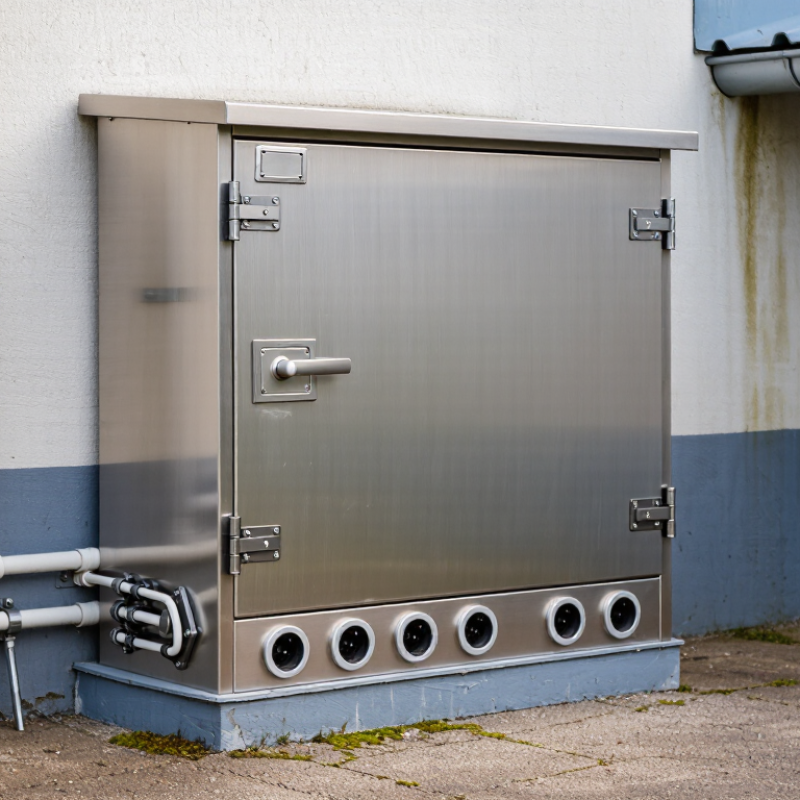
An external meter box is a weather-resistant enclosure that protects an electricity meter and, in some installations, associated terminals or service equipment. It is usually fixed to an outside wall, where utility staff can read or access the meter without entering the building. The enclosure must suit the meter and wiring arrangement; a box that looks large enough may still lack the correct mounting plate or cable entry points. Check the utility’s requirements before choosing one. Small details matter.

There is no single standard that applies everywhere. Depending on the country and product type, relevant references may include IEC 60529 for ingress protection ratings, IEC 62262 for impact resistance, or IEC 62208 for empty enclosures. National electrical rules and the local utility’s service manual may add requirements for materials, clearances, seals, and approved meter fittings. These references are not interchangeable, and their current editions should be confirmed for the installation location. A rating alone does not prove suitability. For example, an IP rating describes protection against dust and water under specified test conditions, not every outdoor hazard. Check the product documentation and ask a qualified electrician or the utility when requirements are unclear. It is easy to assume that “outdoor rated” settles the question; it often does not.


How to Assess the Installation Site and Environmental Conditions

2026 How to Choose the Best External Meter Box?
How to Assess the Installation Site and Environmental Conditions

Start with the exact mounting location, not just the site plan. Check whether the wall faces driving rain, afternoon sun, road spray, or irrigation. Look for roof runoff, low spots, and the likely flood level. Water travels. A box installed above a puddle may still sit beneath a dripping eave. For U.S. coastal projects, NOAA’s 2022 Sea Level Rise Technical Report projects 10–12 inches of average rise by 2050, relative to 2000. Local variation matters, so check site-specific flood and drainage information before setting the mounting height.

Match enclosure protection to the exposure. IEC 60529 defines IP ratings for protection against dust and water ingress; it does not rate resistance to salt corrosion, ultraviolet exposure, or internal condensation. That distinction is easy to miss. Near the coast, inspect for salt-laden air and choose materials and finishes rated for the actual exposure. In hot locations, note direct-sun hours and nearby heat sources. Shade helps, but trapped heat can still build behind a wall-mounted box.

Record the installation height, surface material, cable-entry direction, clearance, and access for meter reading or maintenance. A north-facing wall may stay cooler, while a shaded alcove may retain moisture. Neither detail decides the choice alone. One judgment call remains: drawings rarely capture every splash or drip. Photograph the site after rain, then compare observations with the enclosure’s rating and the applicable utility installation instructions.

2026 How to Choose the Best External Meter Box?

Assess the installation site and environmental conditions

The chart compares the two digits in selected IP ratings under IEC 60529. The first digit describes protection against solid objects and dust; the second describes protection against water. Higher digits indicate greater protection within that category. Check the actual site exposure, local electrical requirements, and the meter-box manufacturer’s specifications before choosing an enclosure.

How to Compare Box Materials, Weatherproofing, and Security

A good external meter box balances material, weather protection, and access control. Powder-coated steel is rigid and often economical, but scratched coating can expose metal to corrosion. Stainless steel resists corrosion better, though it costs more. UV-stabilized polymer avoids rust and is lighter, but check its impact rating and mounting strength. Small details matter.

Match the enclosure to the site, not just the label. NOAA’s 2023 U.S. billion-dollar disaster summary counted 28 weather and climate events, a reminder that exposed equipment faces varied conditions. For rain-prone locations, review the enclosure’s tested ingress rating and cable-entry seals. NEMA 250 defines enclosure types for environmental protection; compare the listed type with the actual risks, such as windblown rain or hose-down exposure. A rating can look reassuring, yet a poorly seated gasket defeats it. I still find that easy to underestimate.

Security needs similar scrutiny. Choose a box with a sturdy door, protected hinges, and a lock provision compatible with the utility’s access requirements. Tamper-resistant fasteners can discourage casual interference, but they do not make an enclosure secure by themselves. Check that the mounting surface is solid and that cables cannot pull the box out of alignment. Not just the label. Inspect seals, hinges, and fasteners periodically, especially after storms or maintenance.

2026 How to Choose the Best External Meter Box? - How to Compare Box Materials, Weatherproofing, and Security

Box Material Weather and Corrosion Performance Impact and Durability Security Considerations Typical Advantages Potential Limitations Best Suited For
Galvanized steel Resists corrosion when its zinc coating and painted finish remain intact. Scratches, cut edges, or damaged coatings can become vulnerable to rust, especially in damp or coastal environments. Rigid and generally resistant to everyday knocks. Dents or damaged coatings may need repair to protect the underlying steel. A strong enclosure can deter casual tampering, but security also depends on the lock, hinge design, mounting, and fasteners. Strong, widely used, and often a practical choice where a rigid metal enclosure is required. Can corrode if its protective finish is damaged; may be heavier than plastic alternatives. General outdoor installations where a rigid enclosure and maintained protective finish are appropriate.
Stainless steel Offers good corrosion resistance, but performance depends on the stainless-steel grade, finish, environment, and maintenance. Salt exposure and surface contamination can still cause corrosion or staining. Rigid and durable in normal service; surface scratches are possible. Can provide a robust enclosure, although the locking and fixing system remain essential to overall security. Useful in demanding environments where corrosion resistance is a priority. Often costs more than coated steel or polymer options; the appropriate grade should be selected for the exposure conditions. Locations with higher corrosion concerns, subject to suitable material grade and enclosure design.
UV-stabilized polycarbonate Does not rust. Outdoor suitability depends on the formulation, UV stabilization, seals, and the enclosure’s stated environmental rating. Can offer good impact resistance, but properties vary by design and temperature. Check the manufacturer’s impact and operating-temperature specifications. A lockable design may deter casual access; plastic walls and fixing points may offer less resistance to forced entry than a suitably constructed metal enclosure. Lightweight, non-corroding, and electrically non-conductive as a material. Can be affected by UV exposure if not designed for outdoor use; may be vulnerable to cutting or force depending on construction. Installations where low weight and corrosion resistance are useful and the enclosure meets local requirements.
Fiberglass-reinforced polyester (GRP) Does not rust and is commonly selected for outdoor or corrosive environments. Weather performance depends on the resin, UV protection, seals, and enclosure design. Rigid and durable, but resistance to impact and temperature extremes varies by product. Security depends on wall thickness, hinges, lock, and mounting. A reinforced enclosure may provide better resistance than a lightweight plastic design, but check tested specifications. Corrosion-resistant and electrically non-conductive as a material; suitable for a range of exposed locations when properly specified. Can cost more than some basic options; material and construction quality vary between enclosures. Outdoor sites where corrosion resistance and a non-metallic enclosure are priorities.

Selection note: Weatherproofing is a property of the complete assembled enclosure—not the material alone. Check the enclosure’s verified IP rating under IEC 60529, including its door, seals, cable entries, and installation orientation. Confirm meter-box dimensions, access, mounting, and material requirements with the local utility and applicable electrical rules. Choose a lock and fixing system appropriate to the site’s security needs.

How to Check Meter Compatibility, Capacity, and Utility Requirements

Before choosing an external meter box, confirm the exact meter type and its dimensions. Check the mounting pattern, terminal position, and required access space against the meter’s installation documentation. A box may look roomy but still block a cable entry or prevent the meter from seating correctly. Measure twice. A few millimeters can matter.

Next, match the box’s rated capacity to the electrical service. Check its voltage, current rating, number of meter positions, and space for any required components. Never assume a larger enclosure automatically supports a higher load. The rating must suit the meter and the installation, not just the household’s present needs. That is an easy detail to overlook.

Utility requirements can determine the final choice. Ask the local utility which enclosure types, sealing arrangements, clearances, and mounting heights it accepts. Requirements can vary by service area and may change, so verify them before ordering. If the documentation is unclear, send the utility the meter model and box specifications. A qualified electrician can also check the site, especially where weather exposure, wall construction, or cable routing creates complications. I would recheck those details even after measuring; site conditions have a way of making a neat plan less neat.

How to Verify Access, Maintenance, and Long-Term Durability

2026 How to Choose the Best External Meter Box?

Access should be easy for both routine readings and repairs. Stand where a meter reader would stand, then check that the door opens fully without hitting a fence, pipe, or parked vehicle. Can the meter be read without reaching over sharp edges? Small detail. It matters. Also confirm that the utility’s access and clearance requirements are met; these can vary by location.

Maintenance needs room, not just a working door. Check whether the meter and connections can be inspected without removing fixed panels. Hinges should move smoothly, and the latch should close securely after repeated use. Look for replaceable seals and surfaces that can be cleaned without special tools. A box that looks tidy on installation day may be awkward to service later. I might overlook that myself if I judged it only by appearance.

For long-term durability, consider the local exposure: direct sun, driving rain, frost, dust, or salty air. Inspect the enclosure’s material, finish, joints, and drainage details. Water should not collect around the base, and the door should keep its seal after normal wear. Ask how the enclosure resists corrosion and UV exposure, and check the maintenance guidance. No material is perfect. A sturdy box can still fail early if it is poorly installed or regularly knocked by equipment.

Get in touch with us,
We will contact you shortly!

Get in touch with us by filling up the enquiry form. We will contact you shortly!

    What is the difference between Unline(Non-Epoxy Coated) or Lining(Epoxy Coated) Metal Drum?

    What are Unline(Non-Epoxy Coated) and Lining(Epoxy Coated) drums compatible with?

    What is the difference between Grade A and Grade B Metal Drum ?

    What content is suitable to fill in a Recon Grade A or Grade B Drum?

    What is the difference between Open Top and Close Top Drums and their usage?

    What type of content are Metal or Plastic Drums suitable for?

    Will there be any contamination in the reconditioned metal, plastic drums or IBC tanks?

    What is the drum gauge(thickness) and weight for reconditioned metal drums?

    Do you sell New Packaging Products too?

    What additional services do you provide apart from selling reconditioned and new containers.?

    Do you offer labelling and silkscreen on the containers ?

    Are you able to ship overseas ?

    Leading the Way
    to Carbon Neutrality

    Drumming sustainability into every aspect of our operations, we strive to create a greener and more conscious future for generations to come.
    Contact Us
    WhatsApp
    Email
    Join Our Newsletter

    Sign up for our newsletter for exclusive discounts and latest news of new launches!

      Logo Logo Logo Logo Logo
      Scroll to Top