
How to Choose the Best Carbon Steel Pipe for Your Project?

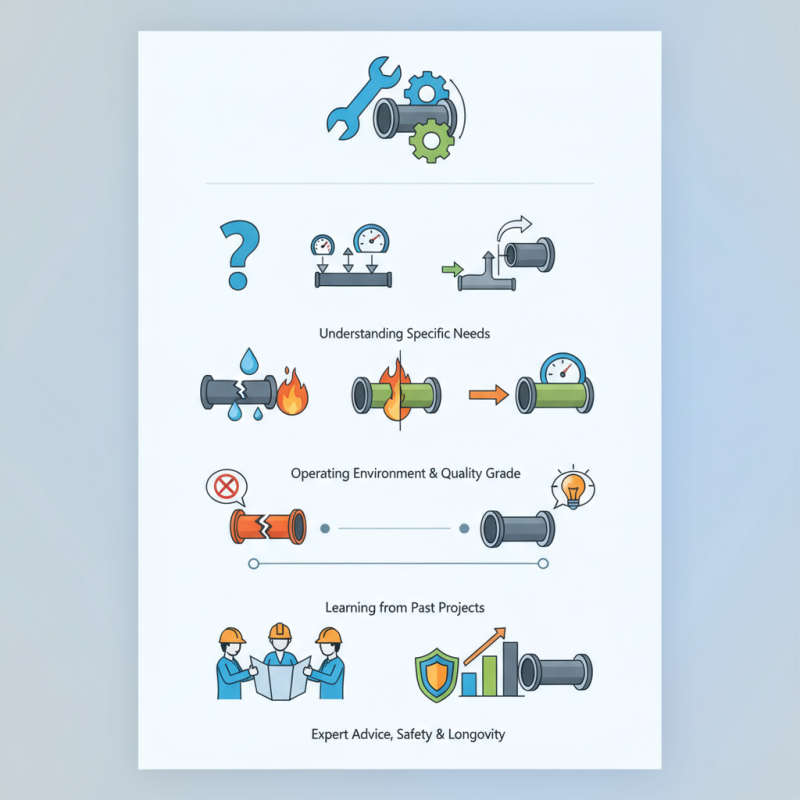
Choosing the right Carbon Steel Pipe is crucial for the success of any project. This selection can significantly affect the quality, durability, and overall cost. When faced with numerous options, decision-making becomes complex. Understanding your specific needs is essential. Different applications may require varied specifications.

Carbon Steel Pipe serves many purposes in construction and manufacturing. However, not all pipes are designed equally. Some may corrode quickly, while others may not support high-pressure situations well. It's important to assess the operating environment, such as exposure to moisture or extreme temperatures. Quality and grade of the pipe should align with the intended use.

Reflecting on past projects can provide valuable insights. You may recall instances where the wrong pipe choice led to costly issues. Learning from such experiences improves future decisions. Always seek advice from industry experts to ensure you choose wisely. A well-informed choice in Carbon Steel Pipe not only saves money but enhances safety and longevity.
How to Choose the Best Carbon Steel Pipe for Your Project?

Understanding Carbon Steel Pipe Types and Grades

When selecting a carbon steel pipe, understanding its types and grades is crucial. Carbon steel pipes fall into various categories, such as seamless and welded types. Seamless pipes are known for their strength and resistance to corrosion. Welded pipes, on the other hand, may have cost advantages but can exhibit weaknesses at the weld seam. Industry data indicates that seamless pipes can handle higher pressures and temperatures. For instance, the American Society for Testing and Materials (ASTM) outlines that seamless steel pipes, such as ASTM A106, can withstand critical applications.

Another essential factor is the grade of carbon steel. Grades vary significantly, impacting strength and durability. The A53 and A106 grades are commonly used for structural applications. According to a report by the World Steel Association, the A500 grade is preferred for structural purposes due to its versatility and cost-effectiveness. However, each project requires careful evaluation based on environmental conditions and intended usage. Choosing the wrong type or grade can lead to costly failures and safety hazards.

Understanding these nuances is vital. Engineers sometimes overlook how environmental factors affect material performance. For instance, specific grades may corrode faster in saline environments. Hence, thorough research is needed when selecting the best carbon steel pipe suited for your project. It's essential to consult trustworthy resources and consider field applications to make informed decisions.

How to Choose the Best Carbon Steel Pipe for Your Project?

Pipe Type Grade Applications Wall Thickness (inches) Diameter (inches)
Schedule 40 A106 Gr. B Oil, Gas, and Water Transport 0.280 2
Schedule 80 A106 Gr. C High Pressure Applications 0.375 3
ERW (Electric Resistance Welded) A53 Gr. A Structural Applications 0.206 4
Seamless A106 Gr. B High Temperature Services 0.360 5
Black Steel A53 Gr. B Heating and Cooling Systems 0.275 6

Evaluating Project Requirements for Steel Pipe Selection

When evaluating project requirements for selecting carbon steel pipes, several factors come into play. First, consider the application. Different projects demand various specifications. For instance, pipes used in oil and gas applications often undergo higher pressure and temperature conditions. According to the American Petroleum Institute (API), carbon steel pipes must meet strict standards to ensure safety and durability.

Next, the size and wall thickness of the pipes are crucial. The nominal bore and schedule numbers determine the flow capacity and pressure rating. A report by the American Society for Testing and Materials (ASTM) highlights that selecting the wrong dimensions can lead to operational failures. Incorrect sizing not only impacts efficiency but can also lead to increased costs in the long run.

Additionally, environmental factors are significant. Corrosion resistance might be necessary in specific environments. For example, projects near coastal areas might require additional protection against saltwater. Research from the National Association of Corrosion Engineers (NACE) suggests that untreated pipes in such conditions can deteriorate quickly, resulting in expensive repairs. Ensuring compatibility with the projected environment is crucial for long-term reliability.

Key Factors to Consider When Choosing Carbon Steel Pipes

When choosing carbon steel pipes, several key factors come into play. Thickness is crucial. A pipe's wall thickness affects its pressure rating and durability. According to the American Society for Testing and Materials (ASTM), certain applications require specific minimum thicknesses to meet safety standards. A thicker pipe can withstand higher pressures, making it suitable for critical systems.

The pipe's diameter also matters. Larger diameters can handle greater flow rates, which is vital in industrial settings. Research indicates that 6-inch pipes can carry 50% more fluid than 4-inch pipes. However, larger sizes can increase costs and complicate installation. Balancing size with function is key.

Material grade is another vital aspect. Different grades play a role in corrosion resistance and strength. For instance, API 5L Grade B is common for pipelines. This grade provides a solid strength-to-weight ratio, important for transporting fluids without leaks. However, not all projects require high-grade materials. Assessing the environment and intended use helps in making the right choice. Mistakes in selecting the appropriate pipe can lead to failures or inefficiencies, which can be costly.

Comparing Cost and Performance of Different Carbon Steel Pipes

When selecting carbon steel pipes for your project, cost and performance are crucial factors. Different types of carbon steel pipes, including seamless, welded, and spiral, have distinct benefits and drawbacks. Seamless pipes often offer higher strength but come at a premium price. On the other hand, welded pipes can be more affordable but may be weaker in high-stress applications. These aspects must align with your project’s requirements.

In terms of performance, consider the application. For fluid transport, the pipe’s diameter and wall thickness are essential. Thick walls provide better resistance but also increase costs. If you’re uncertain, seek expert advice as pipe selection can impact safety. Overlooking performance in favor of lower costs can lead to failures. It’s essential to find a balance that meets your needs while being budget-conscious. Remember, even minor cost savings could result in significant long-term consequences.

Best Practices for Sourcing and Testing Carbon Steel Pipes

When sourcing carbon steel pipes, it’s crucial to ensure their quality and suitability for the project. The American Society for Testing and Materials (ASTM) provides standards that are essential for evaluating these materials. Testing for yield strength, tensile strength, and ductility is an important first step. According to ASTM A106, pipes should have a minimum yield strength of 35,000 psi for seamless grades.

Purchasing from reputable suppliers is key. Look for vendors who comply with ISO 9001 standards and have a track record of quality assurance. It’s also advisable to request certificates of conformity. Yet, even well-established suppliers can have inconsistencies. Inspecting a sample batch before full procurement can help mitigate risks.

Additionally, non-destructive testing (NDT) methods like ultrasonic testing ensure the integrity of the pipes. Studies show that about 15% of carbon steel pipes fail to meet necessary quality benchmarks. Regularly revisiting sourcing strategies and testing protocols can bolster reliability. The right data-driven approach not only maximizes safety but ensures long-term project success.

Carbon Steel Pipe Quality Comparison

This chart compares the tensile strength of various grades of carbon steel pipes, showcasing the differences in mechanical properties that can influence your project selection.

Get in touch with us,
We will contact you shortly!

Get in touch with us by filling up the enquiry form. We will contact you shortly!

    What is the difference between Unline(Non-Epoxy Coated) or Lining(Epoxy Coated) Metal Drum?

    What are Unline(Non-Epoxy Coated) and Lining(Epoxy Coated) drums compatible with?

    What is the difference between Grade A and Grade B Metal Drum ?

    What content is suitable to fill in a Recon Grade A or Grade B Drum?

    What is the difference between Open Top and Close Top Drums and their usage?

    What type of content are Metal or Plastic Drums suitable for?

    Will there be any contamination in the reconditioned metal, plastic drums or IBC tanks?

    What is the drum gauge(thickness) and weight for reconditioned metal drums?

    Do you sell New Packaging Products too?

    What additional services do you provide apart from selling reconditioned and new containers.?

    Do you offer labelling and silkscreen on the containers ?

    Are you able to ship overseas ?

    Leading the Way
    to Carbon Neutrality

    Drumming sustainability into every aspect of our operations, we strive to create a greener and more conscious future for generations to come.
    Contact Us
    WhatsApp
    Email
    Join Our Newsletter

    Sign up for our newsletter for exclusive discounts and latest news of new launches!

      Logo Logo Logo Logo Logo
      Scroll to Top