How to Choose the Best 18650 Battery for Global Sourcing
Choosing the best 18650 Battery for global sourcing requires more than comparing capacity and price. A cell marked “3,000 mAh” may perform differently under real operating conditions. Discharge rate, internal resistance, cycle life, temperature range, and storage performance all influence its value. The right choice depends on the device, expected workload, shipping conditions, and target market.
A practical evaluation begins with a clear technical specification. Record the required voltage, continuous current, peak current, dimensions, terminal design, and protection requirements. Then request datasheets, test reports, safety documentation, and recent production samples from each supplier. Inspect the labeling carefully. Check the lot number, manufacturing date, insulation ring, wrapper condition, and measured voltage. A small difference in internal resistance can affect heat generation and runtime.
Supplier reliability matters as much as cell chemistry. Review factory quality controls, traceability systems, production consistency, and independent test results. Confirm that transport and market-entry requirements are addressed through current, applicable documentation. Requirements can vary by destination and product category, so professional verification remains necessary. Never rely on a polished catalog alone.
The process is not perfectly linear. Early samples can look excellent, yet later batches may reveal variation. That risk deserves attention. Use incoming inspection, sample retention, and periodic performance testing before approving large orders. Cost savings are attractive, but unstable capacity or weak safety controls can create expensive failures. A dependable sourcing decision balances measured performance, supplier evidence, compliance, and long-term support. That balance is the real foundation of global battery procurement.
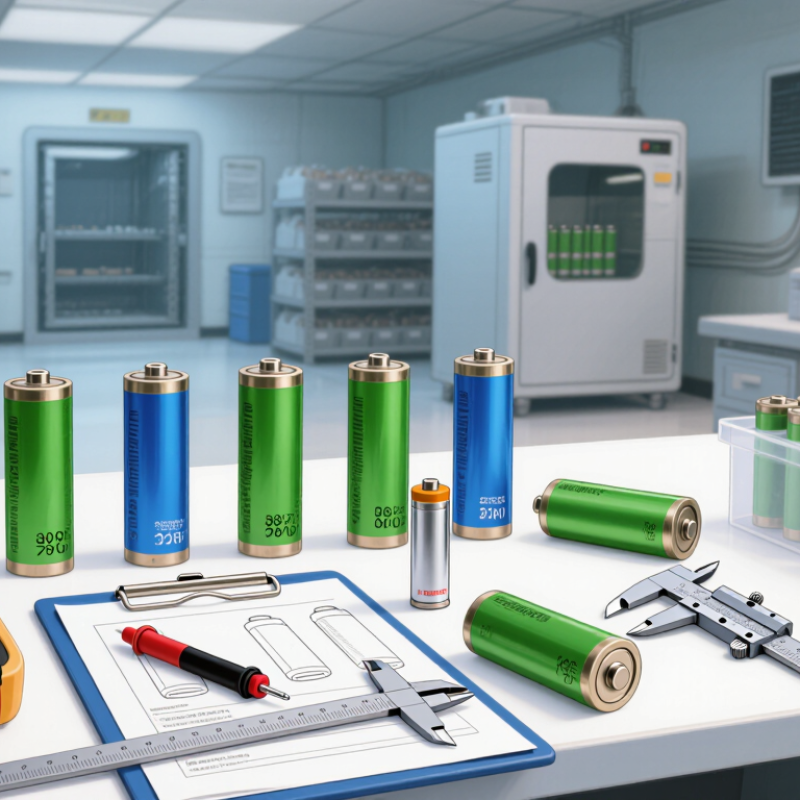
Define 18650 Requirements: 3.6–3.7 V Nominal Voltage and Capacity Targets
For global sourcing, define the 18650 requirement before requesting quotations. A nominal voltage of 3.6–3.7 V is typical for lithium-ion cells, but it is not the charging voltage. Most cells charge to 4.2 V, so specifications must separate nominal, maximum, and cut-off voltage. IEC 61960-3 requires capacity testing under defined conditions, including temperature, discharge current, and end voltage. Without these conditions, two “3,000 mAh” cells may not deliver equal energy.
Set capacity targets from the device load, not catalog claims. A 3.7 V, 3.0 Ah cell provides about 11.1 Wh under rated conditions. Real output falls with high current, cold temperatures, aging, and repeated cycling. Add a practical reserve, perhaps 10–15%, but validate it with samples. The International Energy Agency reported global battery demand above 750 GWh in 2023, showing why supply consistency and test traceability matter. Ask suppliers for capacity-distribution data, internal-resistance results, production dates, and test methods. A spreadsheet can look precise. Field testing may disagree.
Tips: Write the target as “3.6 V nominal, 3,000 mAh minimum at the stated test condition,” not simply “3,000 mAh.” Check whether capacity is rated at 0.2C or another discharge rate. Request safety documentation aligned with IEC 62133-2 and transport testing under UN 38.3. Do not ignore aging samples; a fresh cell can hide weak long-term performance.
Compare Energy Density, Cycle Life, and Discharge Ratings for Your Application
How to Choose the Best 18650 Battery for Global Sourcing
Compare Energy Density, Cycle Life, and Discharge Ratings for Your Application
Energy density determines runtime, but higher capacity is not always better. A typical 18650 cell stores roughly 9–13 Wh, based on a nominal voltage near 3.6 V and capacities from 2.5 to 3.6 Ah. The U.S. Department of Energy’s Battery Technology Status and Projections report shows that lithium-ion cell energy density continues approaching 300 Wh/kg in advanced designs. However, supplier claims may use optimistic laboratory conditions. Verify measured capacity at the intended discharge current and temperature.
Cycle life matters when replacement access is difficult. The International Energy Agency’s Global EV Outlook 2024 reports strong growth in lithium-ion deployment, but it also highlights chemistry and operating conditions as major performance variables. In practical sourcing, a cell rated for 800 cycles may deliver less when used near maximum voltage, high temperature, or its continuous discharge limit. Test samples under the real load profile. Small mistakes become expensive at volume.
Discharge ratings require careful reading. “Peak” current may last only seconds, while continuous current supports sustained operation. A 10 A device should not automatically use a cell labeled 10 A. Thermal rise, voltage sag, and protection limits still matter. IEC 61960-3 provides standardized capacity-testing methods, yet supplier reports can remain incomplete. Ask for independent test data, production-batch traceability, and safety documentation. A spreadsheet can still mislead. Test the cell.
How to Choose the Best 18650 Battery for Global Sourcing
Representative comparison of common 18650 cell chemistries by energy density, cycle life, and continuous discharge capability.
Values are representative midpoints from commonly published technical ranges. Cycle life refers to approximate cycles to 80% remaining capacity under controlled conditions, while discharge ratings indicate continuous current capability. Actual performance depends on cell construction, operating temperature, charge/discharge limits, and supplier specifications.
Verify Safety Compliance with IEC 62133-2, UN 38.3, and UL 1642
Selecting an 18650 battery for global sourcing requires more than comparing capacity and price. The IEA’s Global EV Outlook 2024 reported that global battery demand exceeded 750 GWh in 2023, rising about 40% year on year. This rapid growth increases pressure on suppliers, and shortcuts can appear in documentation.
Request the exact cell model, factory address, production date, and complete test reports. IEC 62133-2 evaluates safety risks such as overcharge, external short circuit, mechanical abuse, and forced discharge. Confirm that the report covers the same cell construction, chemistry, and protection design. A certificate can be real and still irrelevant.
UN 38.3 is different. It verifies transport readiness through tests for altitude simulation, temperature cycling, vibration, shock, external short circuit, impact, and overcharge. Ask for the UN 38.3 test summary before shipment. UL 1642 adds product safety evaluation for lithium batteries, including electrical, mechanical, and abnormal-operation testing. It may strengthen qualification, but it does not replace IEC or UN requirements. BloombergNEF’s 2024 Battery Price Survey reported average battery pack prices of 115 dollars per kWh, down 20% from 2023. Lower prices are attractive, but they should not reduce sampling, incoming inspection, or traceability. Check voltage consistency, internal resistance, weld quality, and lot labels. Some audits still miss mixed production lots. That is worth admitting.
Calculate Global Sourcing Cost Using MOQ, Incoterms, Duties, and Logistics Risks
How to Choose the Best 18650 Battery for Global Sourcing
The lowest unit price rarely means the lowest global sourcing cost. Calculate the full landed cost before approving an 18650 battery supplier. Multiply the quoted price by the MOQ, then add packaging, inspection, freight, insurance, import duties, brokerage, and local delivery. A small price difference can disappear after customs charges.
Incoterms define who pays and who carries risk. Under an arrangement where the seller delivers to your port, you may still manage customs clearance and inland transport. Confirm the destination, tariff classification, duty rate, and tax rules with a qualified customs professional. Freight costs can change sharply during peak seasons. Battery shipments may also face route restrictions, document reviews, or handling delays. My early estimates were too optimistic because I ignored storage fees during customs inspection.
Tips: Request a landed-cost worksheet with every charge listed. Test sample cells for capacity, internal resistance, voltage consistency, and temperature behavior. Compare the MOQ with your actual demand, not only the factory’s discount. Keep a contingency reserve of 10% to 15% for unexpected logistics costs. It is not perfect, but it is safer. Confirm transport documents and applicable safety requirements before payment, and record each assumption in writing.
How to Choose the Best 18650 Battery for Global Sourcing - Calculate Global Sourcing Cost Using MOQ, Incoterms, Duties, and Logistics Risks
Representative landed-cost comparison for international procurement. All amounts are shown in USD and are intended for sourcing evaluation rather than as supplier quotations.
| Battery Profile | Nominal Capacity | Continuous Discharge | MOQ | Indicative Unit Price | Incoterm | Freight & Handling per Unit | Customs Duty Rate | Destination Charges per Unit | Logistics Risk Reserve | Estimated Landed Cost per Unit | Estimated MOQ Budget |
| Standard energy cell For lighting, backup power, and low-drain devices | 2,600 mAh
3.6 V nominal | 5 A | 5,000 units | $1.45
EXW | EXW | $0.27 | 3.7% | $0.12 | 3.0%
Low | $1.96 | $9,800 |
| Balanced-capacity cell General-purpose option with a broad application range | 3,000 mAh
3.6 V nominal | 8 A | 3,000 units | $1.72
FOB | FOB | $0.29 | 3.7% | $0.14 | 4.0%
Medium | $2.31 | $6,930 |
| High-drain cell For power tools, mobility equipment, and high-load products | 2,500 mAh
3.6 V nominal | 20 A | 2,000 units | $2.05
FOB | FOB | $0.32 | 3.7% | $0.16 | 5.0%
High | $2.75 | $5,500 |
| Extended-runtime cell For products prioritizing maximum energy density | 3,500 mAh
3.6 V nominal | 10 A | 5,000 units | $2.20
CIF | CIF | $0.08 | 3.7% | $0.13 | 4.0%
Medium | $2.80 | $14,000 |
| High-volume budget cell For cost-sensitive products with stable demand forecasts | 3,000 mAh
3.6 V nominal | 10 A | 10,000 units | $1.86
FOB | FOB | $0.23 | 3.7% | $0.10 | 2.5%
Low | $2.31 | $23,100 |
Calculation basis: Estimated landed cost per unit = indicative unit price + freight and handling + customs duty + destination charges + logistics risk reserve. Customs duty is calculated on the declared customs value and should be replaced with the tariff rate applicable to the destination country, product classification, and origin. Freight assumptions reflect consolidated ocean shipments of lithium-ion cells; airfreight may be materially higher or unavailable for certain shipment configurations. Destination charges may include import processing, terminal handling, documentation, delivery, and inspection-related fees. Excludes VAT or GST, local warehousing, financing costs, product testing, certification, payment fees, and exchange-rate movements.