
How to Choose China Top Paper Cup Board Suppliers
Choosing reliable China top Paper Cup Board suppliers requires more than comparing prices on a product page. The right partner should understand cup forming, heat sealing, printing, and food-contact requirements. Paper Cup Board must offer stable stiffness, smooth coating, suitable moisture resistance, and clean cutting performance. A small defect can cause leakage, machine stoppages, or rejected cartons.
Look closely at the supplier’s manufacturing experience and quality system. Ask for technical data, recent test reports, production samples, and clear explanations of raw material sources. Verify basis weight, coating type, roll width, moisture content, and packaging protection. Independent certifications may support credibility, but they should match your market and application. A factory audit can reveal details that brochures hide, such as dusty storage areas or poorly wrapped rolls.
Samples matter most.
Test the board on your actual cup-making equipment. Check forming speed, rim sealing, print adhesion, odor, and performance with hot or cold beverages. Reliable suppliers communicate openly when limits exist. That honesty is valuable. However, no supplier should be trusted only because it uses words like “top” or “premium.” Pricing, lead time, complaint handling, and replacement policies also deserve careful review. Even experienced buyers can overlook seasonal capacity pressure or transport damage. A practical evaluation process reduces these risks and supports a longer, more stable supply relationship.
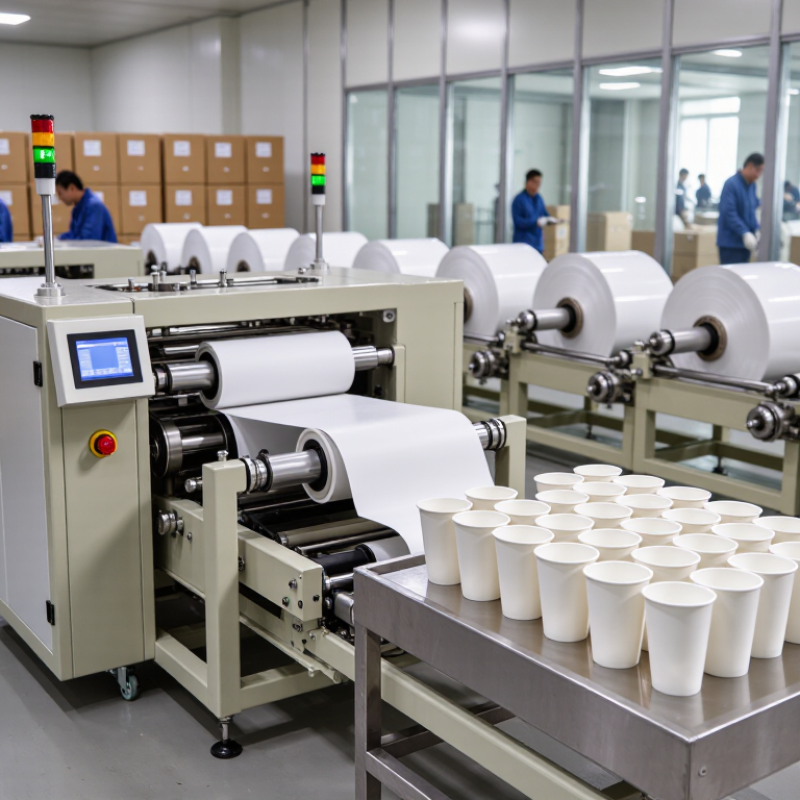
Understanding China’s Paper Cup Board Market
How to Choose China Top Paper Cup Board Suppliers
Understanding China’s Paper Cup Board Market
China’s paper industry is large, but cup board is only one specialized segment. The China Paper Association reported 129.65 million tonnes of paper and paperboard production in 2023. Domestic consumption reached 131.65 million tonnes. These figures show strong manufacturing depth, not automatic cup board expertise.
Market reports estimate the global paper cup market exceeded 12 billion US dollars in 2023. Forecasts vary, though. Some reports predict annual growth near 4% through 2030. This difference matters. A careful buyer should question optimistic supplier forecasts and request product-level evidence.
Ask suppliers for basis weight, moisture content, stiffness, and Cobb test results. A 190–350 gsm range commonly covers many cup applications, but the forming machine decides the practical grade. Request recent food-contact migration reports, coating specifications, and batch traceability records. Check whether the coating remains stable near hot liquids.
China’s supply network is competitive. Port access, converting capacity, and laboratory control can reduce delivery risk. Yet low prices may hide inconsistent coating thickness or weak edge performance. I have seen samples pass visual inspection but fail during high-speed forming. That weakness deserves attention.
Use third-party testing when the application involves heat, extended holding time, or printing. The best supplier is not always the largest one. It is the supplier that can repeat the same result across several production batches.

Defining Your Paper Cup Board Requirements
Choosing China top paper cup board suppliers starts with a clear technical brief. Define the cup sizes, board grammage, coating type, and required stiffness. A 6-ounce cup may need different forming performance than a 16-ounce cup. Your board should run smoothly on the intended machine, not only look good in a sample sheet.
Check the coating barrier carefully. It must resist leaks, heat, and common beverage conditions. Ask for food-contact documentation, batch test reports, moisture data, and production consistency records. Confirm sheet dimensions, roll or sheet packaging, printing requirements, minimum order quantity, and delivery schedule. I have found that small details, such as curl after storage, can affect forming speed. A perfect checklist does not exist. Recheck it after a trial run.
Tips: Send suppliers a sample cup, machine model, target grammage, and expected monthly volume. Request trial material before placing a large order. Compare forming results, not only price. Record leakage, sealing strength, odor, and surface defects. Keep one approved reference sample for future batch inspections. Be honest about your limits. Overly tight specifications may increase waste, while vague requirements create unstable quality.
Evaluating Supplier Quality and Production Capabilities
Choosing a top paper cup board supplier requires more than checking price or glossy samples. China’s large manufacturing base offers capacity, but capacity alone proves little. The China Paper Association reported paper and paperboard output of about 129.65 million tonnes in 2023. This scale makes supplier screening essential.
Request recent mill certificates, not only trading-company documents. Check basis weight, moisture, caliper, tensile strength, and Cobb60 water absorption. For coated board, inspect coating adhesion after die-cutting and forming. A practical trial should run on your actual cup machine. Record curling, edge cracking, sealing temperature, and leakage after filling. Small defects become expensive quickly. Ask for batch codes and retention samples. A reliable factory should connect each shipment with pulp, coating, and inspection records. ISO 9001 certification helps, but it does not replace process evidence.
Food-contact compliance needs equal attention. Require migration test reports for the intended beverage, temperature, and contact time. For fibre-based packaging, verify applicable requirements under local food-contact rules and ISO 18606 when compostability claims are relevant. The FAO Global Forest Products Facts and Figures 2023 report placed global paper and paperboard production above 400 million tonnes, reflecting a mature but highly varied supply chain. Audit production speed, laboratory equipment, maintenance records, and rejection rates. One weakness remains common: suppliers may present excellent samples while controlling production less carefully. A factory visit and an independent pre-shipment inspection can reveal that gap.
How to Choose China Top Paper Cup Board Suppliers - Evaluating Supplier Quality and Production Capabilities
| Evaluation Dimension | Recommended Qualification Benchmark | Evidence to Request | Why It Matters | Suggested Weight |
|---|---|---|---|---|
| Food-Contact Compliance | Paper cup board should be supported by applicable food-contact documentation for the destination market, such as EU Framework Regulation (EC) No. 1935/2004, Commission Regulation (EU) No. 10/2011 where plastic coatings apply, or FDA requirements for the United States. | Declaration of compliance, migration-test reports, coating specification, and updated compliance statements. | Confirms that board and coating materials are suitable for intended food and beverage contact. | 20% |
| Quality Management System | An active ISO 9001-certified quality management system with controlled procedures for incoming materials, production, testing, nonconformities, and corrective actions. | Current certificate, certification scope, audit body, internal inspection records, and corrective-action reports. | Shows whether quality is managed systematically rather than checked only before shipment. | 12% |
| Fiber and Pulp Traceability | The supplier should identify pulp origin, furnish composition, recycled or virgin content, and batch-level traceability. FSC Chain of Custody is advisable when certified sourcing is required. | Chain-of-custody certificate where applicable, pulp supplier records, batch coding, and traceability-test results. | Supports responsible sourcing, consistent board performance, and faster investigation of defects. | 10% |
| Basis Weight Availability | Common paper cup board grades generally fall within approximately 170–400 g/m², depending on cup size, stiffness requirements, coating structure, and converting process. | Technical data sheet, approved basis-weight tolerance, sample sheets, and laboratory measurement records. | Helps match board weight with cup strength, material cost, and forming performance. | 8% |
| Stiffness and Caliper Control | Supplier should control caliper, bending stiffness, moisture, and dimensional stability within agreed specifications and provide test methods used for each property. | Certificate of analysis, test-method references, control charts, and retained-sample results. | Stable stiffness and thickness reduce wall collapse, leakage risk, and problems during die-cutting or forming. | 10% |
| Barrier Coating Capability | Available coating structures should be clearly defined, including polyethylene-coated, water-based coated, or other approved barrier options. Single-side and double-side coating capability should be confirmed separately. | Coating construction, coating-weight specification, pinhole and adhesion test results, and food-contact documentation. | The barrier layer protects against liquid penetration and influences recyclability, sealing, and end-use safety. | 12% |
| Production Capacity | Capacity should be demonstrated by installed machine capability, normal operating output, available shifts, maintenance planning, and confirmed capacity during peak seasons rather than by a headline figure alone. | Equipment list, production records, utilization data, shift schedule, and capacity confirmation for the requested grade and width. | Reduces the risk of missed delivery dates and inconsistent quality during large or urgent orders. | 8% |
| Slitting and Sheet Conversion | Supplier should offer accurate roll slitting or sheet cutting, controlled edge quality, clean surfaces, and packaging suitable for moisture-sensitive paperboard. | Cut-size tolerances, edge-quality samples, packaging specification, and inspection records. | Consistent dimensions improve printing registration, die-cutting efficiency, and cup-forming yield. | 6% |
| Laboratory and Inspection Controls | A capable supplier should have routine controls for basis weight, moisture, caliper, Cobb water absorption, coating adhesion, surface appearance, and dimensional accuracy. | Laboratory equipment list, calibration records, inspection plan, sampling frequency, and batch release criteria. | Reliable testing identifies variation before board reaches the customer’s printing or cup-forming line. | 8% |
| Lead Time and Delivery Reliability | For established grades, a practical target is approximately 15–30 days after order and artwork or specification approval, subject to quantity, coating type, and shipping plan. | Historical on-time-delivery data, production schedule, export documents, and agreed delivery terms. | Predictable delivery supports inventory planning and prevents production interruptions. | 4% |
| Technical Service and Complaint Handling | Supplier should provide a named technical contact, clear sample-approval procedures, batch investigation, root-cause analysis, and corrective-action response. | Sample approval workflow, complaint-response template, corrective-action examples, and escalation contacts. | Effective communication reduces resolution time when defects occur in printing or cup conversion. | 2% |
| Total Suggested Evaluation Weight | 100% | |||
Checking Certifications, Pricing, and Supply Reliability
Choosing China’s top paper cup board suppliers requires more than comparing a low quotation. Certification records provide a practical starting point. The ISO Survey 2023 recorded 1,265,216 ISO 9001 certificates worldwide. However, certification alone does not prove consistent cup-stock quality. Check the certificate holder, manufacturing site, product scope, and expiry date. For food-contact board, request migration-test reports for the exact grade. FSC’s 2023 facts report also recorded more than 160 million certified forest hectares, making valid chain-of-custody documentation useful for traceability.
Pricing needs a clear calculation. Ask suppliers to state board weight, moisture range, coating type, sheet size, minimum order, packaging, delivery terms, and payment conditions. A cheaper quote may exclude inland freight or inspection fees. It may also use a thinner coating. Fastmarkets’ 2024 pulp market assessments showed continued price movement across major pulp grades, so quotations should include a validity period. Locking a price for three months may sound attractive, but it can hide adjustment clauses.
Supply reliability requires evidence, not promises. Review twelve months of production records, delivery performance, backup equipment, and raw-material storage. Request a trial order before signing a large contract. FAO forestry statistics place global paper and paperboard production above 400 million tonnes annually, yet capacity does not guarantee availability for your specification. I once treated a low quote as a clear win. The later delay cost more than the saving. That mistake still matters. Check twice.
How to Choose China Top Paper Cup Board Suppliers
A practical supplier-screening model gives the highest priority to supply reliability, followed by certification compliance and total pricing. Buyers should verify FSC chain-of-custody status, food-contact compliance, quality-management systems, production capacity, lead times, and price consistency before placing an order.
The percentages represent a practical procurement evaluation framework rather than company or brand market-share data.
Comparing Suppliers and Selecting the Best Partner
How to Choose China Top Paper Cup Board Suppliers
Comparing suppliers requires more than checking price lists. Smithers estimates that paper-based packaging will exceed US$500 billion globally by 2028. Demand is rising, but quality gaps remain. A suitable paper cup board supplier should provide stable basis weight, smooth coating, strong stiffness, and reliable heat-sealing performance. Ask for recent test reports covering Cobb value, moisture, thickness, and edge-wicking resistance. Then compare three to five suppliers using identical specifications. Do not compare different grades as if they were equal.
Factory experience becomes visible during sampling. A good board forms cleanly without cracking around the rim. It should also resist curling after filling with hot liquid. Request production samples, not only laboratory sheets. Check roll width, core size, pallet protection, and actual lead times. One delayed shipment can cost more than a small price difference. FAOSTAT recorded global paper and paperboard production at roughly 420 million tonnes in 2022, showing the scale of this supply chain. However, large capacity does not guarantee careful quality control. Review batch-traceability records, coating controls, and food-contact documentation. An independent laboratory can verify supplier claims before approval. I still recheck samples after transport, because humidity changes results. Perfect scorecards are impossible. Choose the partner that communicates problems early, corrects them with evidence, and can repeat the same performance across several deliveries.
Article Source:
Get in touch with us,
We will contact you shortly!
What is the difference between Unline(Non-Epoxy Coated) or Lining(Epoxy Coated) Metal Drum?

Unline drums with internally bare metal surface is more susceptible to corrosion and rust while Lining drums are internally coated with Phenolic Epoxy Coating to provide a non-reactive barrier between the drum surface and your product, less risk of contamination. Note: Our Unline drums are coated with an anti-rust agent after washing to reduce risk of rust.
What are Unline(Non-Epoxy Coated) and Lining(Epoxy Coated) drums compatible with?

In Singapore, Recon Unline Drums are usually more costly than Recon Lining Drums. Hence, we recommend Recon Unline Drums to fill aromatics like Thinner, Xylene, Toulene& other solvents like Hexane, BA, CA, EA, MC, White spirit, etc.
We recommend the lower-priced Recon Lining Drums to fill hydrocarbons like IPA, Methanol, Ethanoland oil-based products like diesel, petrol, lubricants, engine, hydraulic, base, transmission fluid, additives, waste oil, etc.;
What is the difference between Grade A and Grade B Metal Drum ?

Grading of used drums are usually based on physical conditions like rustiness, deformities and residual contents. Grade A drums are totally free from internal rust, serious dents and are easy to clean. Grade B drums have different degrees of rust internally and aesthetically inferior compared to Grade A drums.
What content is suitable to fill in a Recon Grade A or Grade B Drum?

Recon Grade A drum is suitable to fill more costly virgin grade products while Recon Grade B drum is more suitable for recycled or waste products.
What is the difference between Open Top and Close Top Drums and their usage?

Closed top drums are for water and other liquid products. Open Top drums can be used for liquid too but are primarily for more viscous products. The Open Top (or open head with a lid) allows you to get in and out of the drum with your product easier.
What type of content are Metal or Plastic Drums suitable for?

Metal drums offer additional protection when dealing with potentially flammable substances. They provide superior fire resistance, impact protection, and longevity for storing class 1, 2, and 3 volatile chemicals.
Plastic HDPE Drums are suitable for corrosive chemicals like acids, alkaline and also water-based products.
Will there be any contamination in the reconditioned metal, plastic drums or IBC tanks?

All our reconditioned containers (metal/plastic drums, carboys, IBC tanks) are washed thoroughly with specially formulated cleaning agent, rinsed with clean water, dried, and tested for possible leakages during the recondition process. Stringent quality inspection is being conducted 100% on every reconditioned product before they are qualified for sale & delivery.
What is the drum gauge(thickness) and weight for reconditioned metal drums?

Reconditioned metal drums gauge can be 0.9mm to 1.0mm all round. Their weight can vary from 16 to 18kg.
Do you sell New Packaging Products too?

Yes, we are also a distributor for new pallets, metal drums, plastic drums, carboys, IBCs and stainless-steel tanks.
What additional services do you provide apart from selling reconditioned and new containers.?

We are an NEA licensed toxic industrial waste collector, who can collect and dispose of used toxic waste containers in Singapore.
Do you offer labelling and silkscreen on the containers ?

We can provide labelling and silk-screening on the containers.
Are you able to ship overseas ?

Yes, we can arrange export our products to any country in the world.
Leading the Way
to Carbon Neutrality