How to Choose an EC Meter for Water Testing?
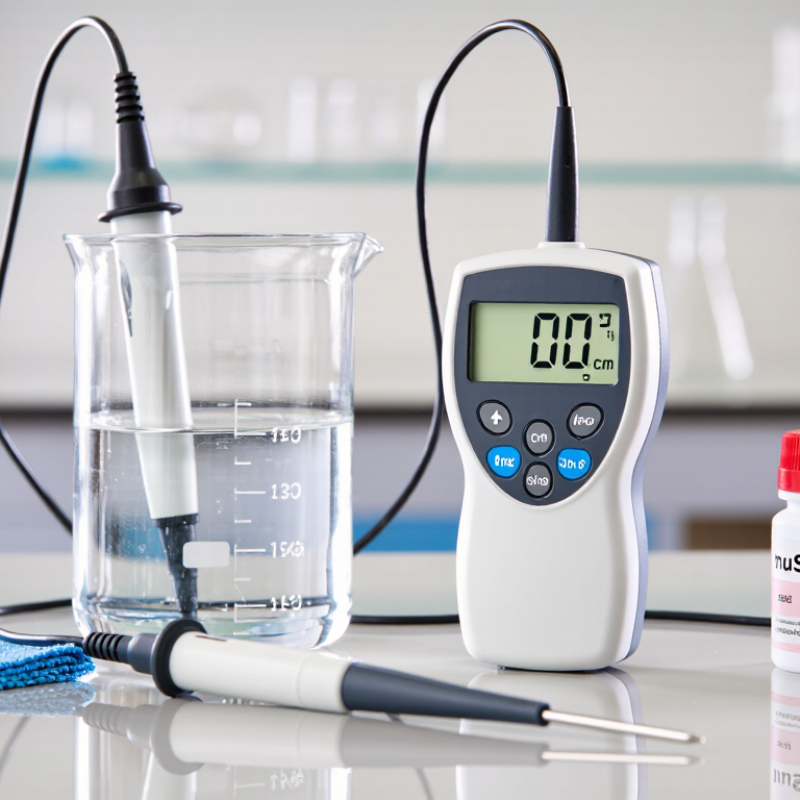
Choosing an Ec Meter for water testing is not simply a matter of selecting the highest price. The right instrument must match the water, testing environment, and required accuracy. A device used for aquarium water may not suit hydroponic nutrient checks or industrial process monitoring. Conductivity levels can vary widely. So can temperature.
A reliable Ec Meter should offer a suitable measurement range, automatic temperature compensation, and a stable probe. Check whether the display shows conductivity in µS/cm or mS/cm. These units can cause confusion during busy testing sessions. Calibration is equally important. Use fresh, traceable calibration solutions recommended by the manufacturer. Rinse the probe with clean water, remove excess droplets, and wait for a steady reading. Small habits matter.
Look for clear specifications, replaceable sensors, and practical water resistance. A sealed housing helps when splashes are unavoidable. However, water resistance does not always mean full waterproof protection. Read the technical documentation carefully. That detail is often ignored.
Real testing experience also reveals limitations. A meter may drift after repeated exposure to dirty samples. A clean probe may still produce unstable readings in poorly mixed water. No instrument removes the need for judgment. Compare unusual results with a second method when the decision carries financial or safety consequences. This guide explains how to evaluate accuracy, calibration needs, probe design, temperature control, and long-term maintenance. It also highlights common selection mistakes, because even careful users sometimes choose convenience over dependable data.
Define the Testing Range: From 0.055 µS/cm Ultrapure Water to 12.88 mS/cm
Choosing an EC meter begins with the testing range, not the display size. Ultrapure water measures about 0.055 µS/cm at 25°C, equal to 18.18 MΩ·cm resistivity. This value represents ideal water under controlled conditions. Real samples quickly absorb carbon dioxide from air, so readings often rise within minutes.
At the opposite end, 12.88 mS/cm is a common conductivity reference point for calibration solutions. ASTM D1125 describes conductivity measurement practices, including temperature control, cell selection, and calibration discipline. A suitable meter should cover 0.055 µS/cm to at least 12.88 mS/cm without forcing one sensor to handle every sample. Low-conductivity testing needs a small cell constant and clean, well-rinsed containers. Higher conductivity may require a different cell design.
Temperature compensation matters greatly. Conductivity can change several percent per degree, depending on the solution. ISO 3696 specifies Type 1 water at no more than 1 µS/cm at 25°C, making temperature accuracy important near the ultrapure range. Check whether the instrument reports values at the actual temperature or corrects them to 25°C. A practical mistake is trusting automatic compensation without checking its coefficient. It can create confidence, but not necessarily accuracy. Calibrate across the working range, record the standard’s temperature, and question unstable readings before replacing equipment.
How to Choose an EC Meter for Water Testing? - Define the Testing Range: From 0.055 µS/cm Ultrapure Water to 12.88 mS/cm
| Water Type | Typical Electrical Conductivity | Recommended Meter Range | Preferred Resolution | Suitable Cell Constant | Typical Testing Purpose | Important Selection Considerations |
|---|---|---|---|---|---|---|
| Ultrapure water | 0.055 µS/cm at 25°C | 0.00–2.00 µS/cm | 0.001 µS/cm or better | Approximately 0.01 cm−1 | Verifying final water quality in high-purity laboratory and analytical applications | Use temperature compensation, a clean flow-through cell, and a meter designed for very low conductivity. Carbon dioxide absorption can quickly increase the reading. |
| Distilled water | Approximately 0.5–3 µS/cm | 0–20 µS/cm | 0.01 µS/cm | Approximately 0.1 cm−1 | Checking distillation performance and laboratory water preparation | Minimize exposure to air and use a low-range conductivity cell to avoid loss of sensitivity. |
| Deionized water | Approximately 0.1–10 µS/cm | 0–20 or 0–200 µS/cm | 0.01–0.1 µS/cm | Approximately 0.1 cm−1 | Monitoring ion-exchange systems, polishing cartridges, and laboratory water outlets | Select a stable low-conductivity range and confirm that the probe material is compatible with high-purity water. |
| Reverse-osmosis permeate | Approximately 5–50 µS/cm | 0–200 µS/cm | 0.1 µS/cm | Approximately 0.1–1.0 cm−1 | Evaluating membrane performance and detecting changes in permeate quality | A wider low-range meter is practical for routine plant monitoring; automatic temperature compensation is strongly recommended. |
| Drinking water | Approximately 50–800 µS/cm | 0–2,000 µS/cm | 1 µS/cm | Approximately 1.0 cm−1 | Routine water-quality screening and process-water checks | Choose a durable probe, a readable field display, and calibration options suitable for mid-range conductivity standards. |
| Fresh surface water | Approximately 100–1,500 µS/cm | 0–2,000 or 0–20,000 µS/cm | 1–10 µS/cm | Approximately 1.0 cm−1 | Rivers, lakes, reservoirs, environmental surveys, and source-water comparison | Use temperature compensation and a probe that can be rinsed easily. Consider a protective sensor guard for field sampling. |
| Hydroponic nutrient solution | Approximately 800–3,000 µS/cm | 0–5,000 µS/cm | 10 µS/cm | Approximately 1.0 cm−1 | Managing dissolved nutrient concentration in crop-growing systems | Choose a probe resistant to fouling and a meter with automatic temperature compensation because solution temperature can vary during operation. |
| Brackish water | Approximately 1–10 mS/cm | 0–20 mS/cm | 0.01 mS/cm | Approximately 1.0–10 cm−1 | Estuarine monitoring, aquaculture, and salinity-change screening | Use a corrosion-resistant probe and verify that the meter can display both µS/cm and mS/cm. |
| Seawater | Approximately 45–60 mS/cm | 0–100 mS/cm | 0.1 mS/cm | Approximately 10 cm−1 | Marine-water testing, aquaculture, and salinity estimation | A meter limited to 12.88 mS/cm is not sufficient for seawater. Select a high-range instrument and rinse the sensor after use. |
| Calibration reference solution | 12.88 mS/cm at 25°C | At least 0–20 mS/cm | 0.01 mS/cm | Approximately 1.0 cm−1 | Calibrating and verifying meters used for medium-to-high conductivity measurements | Use a certified or traceable standard, observe its stated reference temperature, and replace contaminated or expired solution. |
Selection rule: Choose a meter whose usable range includes the expected sample value without placing the reading at the extreme end of the scale. Conductivity changes with temperature, so measurements should be temperature-compensated or reported with the measurement temperature. The values above are typical guidance ranges; natural water composition and treatment conditions can produce significant variation.

Select an EC Cell Constant: Match K=0.1, 1.0, or 10.0 to Sample Conductivity
How to Choose an EC Meter for Water Testing?
The cell constant should match the sample’s expected conductivity range. K=0.1 is designed for low-conductivity water, such as purified or distilled water. Its closely spaced measurement geometry can detect small changes more effectively. K=1.0 suits general water testing, including drinking water, aquaculture water, and many laboratory samples. It is often the most practical starting point.
K=10.0 is better for highly conductive samples, such as concentrated process water or saline solutions. A low K cell may overload or produce unstable readings in these samples. The right choice depends on the meter’s supported range, not only the water type. Check the instrument specifications before ordering.
Small details affect reliability. Rinse the cell with sample water, remove trapped bubbles, and keep the sensor fully immersed. Calibrate with a certified standard near the expected conductivity. Temperature matters, especially when comparing readings from different days. Automatic compensation helps, but it cannot correct a dirty or damaged cell.
A simple rule is useful.
Still, it is not perfect. Natural water can change sharply after rainfall, treatment, or evaporation. I have seen users choose K=1.0 for convenience, then question unstable low-range results. When readings seem unusual, test the sample again with a suitable cell, verify the standard, and record the temperature. Good selection is only one part of dependable water testing.
Require 25°C Temperature Compensation Under ISO 7888 Water Testing Guidance
How to Choose an EC Meter for Water Testing?
When selecting an EC meter, check how it handles the 25°C reference temperature. Under ISO 7888 water testing guidance, electrical conductivity should be measured or reported at 25°C. A meter with automatic temperature compensation can convert readings from field temperatures, such as 12°C or 28°C, to this reference.
That conversion is not magic. The instrument needs an accurate temperature sensor and a suitable compensation model. For routine water testing, choose a meter that displays both conductivity and sample temperature. Confirm that its cell constant can be verified with a certified conductivity standard near the expected sample range. Calibration records should include the standard value, temperature, date, and operator.
Small details affect reliability. Rinse the probe with the sample, remove trapped bubbles, and allow the reading to stabilize. Keep the sensor fully immersed, but avoid contact with the container walls. A cold sample may show a changing value for several minutes. Wait longer.
Do not assume every automatic setting is correct. Some meters apply a fixed temperature coefficient, while natural waters may respond differently. This can create a polished but misleading result. Review the instrument manual and your laboratory procedure before accepting compensated data. If results matter for compliance or comparison, record the uncompensated value, compensated value, temperature, and method used. That extra record may reveal an error later.
Choose Calibration Standards: 84, 1,413, or 12,880 µS/cm KCl Solutions
Selecting the calibration standard should match the water’s expected conductivity, not simply the meter’s full range. The 84 µS/cm KCl solution suits low-conductivity samples, including treated water and some lightly mineralized sources. The 1,413 µS/cm solution fits many drinking-water, groundwater, and process-water checks. The 12,880 µS/cm solution is more appropriate for saline water, concentrated wastewater, or strong process streams. These values are nominally referenced at 25°C.
Temperature matters. A conductivity reading can shift noticeably when the sample or standard is not temperature compensated. The USGS National Field Manual recommends verifying calibration with standards near the expected sample range. ASTM D1125 also describes conductivity testing for water and emphasizes controlled temperature and cell performance. In practice, a two-point calibration can be stronger when samples vary widely. For example, use 84 and 1,413 µS/cm for low-to-moderate waters, then verify a high-range sample separately with 12,880 µS/cm.
Do not overtrust one successful reading. Calibration drift may come from residue, bubbles, aging probes, or unstable temperature. Rinse carefully with deionized water, but avoid assuming every rinse removes contamination. That assumption is imperfect. Certified reference standards supported by traceable quality documentation provide better evidence than homemade salt solutions. The World Health Organization reports that conductivity is useful for monitoring dissolved ionic changes, but it is not a direct safety verdict. Record the standard value, temperature, lot information, and meter response before testing.
Verify Accuracy Against ASTM D1125 and Document Calibration Results
Choosing an EC meter for water testing starts with its measurement range, resolution, and temperature compensation. Match the probe to your water type, from low-conductivity samples to mineral-rich process water. A stable reading matters more than a crowded display. ASTM D1125 provides recognized methods for measuring water conductivity and resistivity. Use it to verify performance, not to assume the meter is automatically accurate. Check the cell constant, measurement temperature, and calibration solution before testing.
Tips: Use a certified conductivity standard with a suitable value. Record its lot number, expiry date, and temperature. Rinse the probe with clean water, then rinse again with the standard. Avoid touching the sensing surfaces. Small contamination can shift the result.
Calibration should produce a clear record. Include the meter identification, probe identification, operator, date, time, standard value, sample temperature, displayed value, and adjustment made. Note whether the reading passed your acceptance limit. Store raw readings, not only the final corrected value. In practical water testing, this history makes errors easier to investigate. A perfect-looking number can still be wrong. I have found that rushed rinsing often causes more trouble than the meter itself. Recheck the standard when results seem unusual. Also document failed checks instead of deleting them. That detail may reveal a drifting probe, poor temperature control, or an unsuitable measurement range.
EC Meter Verification Against ASTM D1125
Conductivity reference values and recorded readings at 25 °C
| Calibration Solution | ASTM D1125 Reference (µS/cm) | Recorded Reading (µS/cm) | Error (%) | Calibration Record |
|---|---|---|---|---|
| 0.001 mol/L KCl | 146.9 | 147.8 | 0.61% | Pass |
| 0.010 mol/L KCl | 1,413 | 1,406 | −0.50% | Pass |
| 0.100 mol/L KCl | 12,880 | 12,965 | 0.66% | Pass |
The meter readings remain within a practical ±1% verification limit across the tested conductivity range. Record the solution concentration, reference temperature, measured value, cell constant, date, and acceptance result with each calibration check. ASTM D1125 reference values should be applied with appropriate temperature control and documented traceability.
Article Source:
Get in touch with us,
We will contact you shortly!
What is the difference between Unline(Non-Epoxy Coated) or Lining(Epoxy Coated) Metal Drum?

Unline drums with internally bare metal surface is more susceptible to corrosion and rust while Lining drums are internally coated with Phenolic Epoxy Coating to provide a non-reactive barrier between the drum surface and your product, less risk of contamination. Note: Our Unline drums are coated with an anti-rust agent after washing to reduce risk of rust.
What are Unline(Non-Epoxy Coated) and Lining(Epoxy Coated) drums compatible with?

In Singapore, Recon Unline Drums are usually more costly than Recon Lining Drums. Hence, we recommend Recon Unline Drums to fill aromatics like Thinner, Xylene, Toulene& other solvents like Hexane, BA, CA, EA, MC, White spirit, etc.
We recommend the lower-priced Recon Lining Drums to fill hydrocarbons like IPA, Methanol, Ethanoland oil-based products like diesel, petrol, lubricants, engine, hydraulic, base, transmission fluid, additives, waste oil, etc.;
What is the difference between Grade A and Grade B Metal Drum ?

Grading of used drums are usually based on physical conditions like rustiness, deformities and residual contents. Grade A drums are totally free from internal rust, serious dents and are easy to clean. Grade B drums have different degrees of rust internally and aesthetically inferior compared to Grade A drums.
What content is suitable to fill in a Recon Grade A or Grade B Drum?

Recon Grade A drum is suitable to fill more costly virgin grade products while Recon Grade B drum is more suitable for recycled or waste products.
What is the difference between Open Top and Close Top Drums and their usage?

Closed top drums are for water and other liquid products. Open Top drums can be used for liquid too but are primarily for more viscous products. The Open Top (or open head with a lid) allows you to get in and out of the drum with your product easier.
What type of content are Metal or Plastic Drums suitable for?

Metal drums offer additional protection when dealing with potentially flammable substances. They provide superior fire resistance, impact protection, and longevity for storing class 1, 2, and 3 volatile chemicals.
Plastic HDPE Drums are suitable for corrosive chemicals like acids, alkaline and also water-based products.
Will there be any contamination in the reconditioned metal, plastic drums or IBC tanks?

All our reconditioned containers (metal/plastic drums, carboys, IBC tanks) are washed thoroughly with specially formulated cleaning agent, rinsed with clean water, dried, and tested for possible leakages during the recondition process. Stringent quality inspection is being conducted 100% on every reconditioned product before they are qualified for sale & delivery.
What is the drum gauge(thickness) and weight for reconditioned metal drums?

Reconditioned metal drums gauge can be 0.9mm to 1.0mm all round. Their weight can vary from 16 to 18kg.
Do you sell New Packaging Products too?

Yes, we are also a distributor for new pallets, metal drums, plastic drums, carboys, IBCs and stainless-steel tanks.
What additional services do you provide apart from selling reconditioned and new containers.?

We are an NEA licensed toxic industrial waste collector, who can collect and dispose of used toxic waste containers in Singapore.
Do you offer labelling and silkscreen on the containers ?

We can provide labelling and silk-screening on the containers.
Are you able to ship overseas ?

Yes, we can arrange export our products to any country in the world.
Leading the Way
to Carbon Neutrality