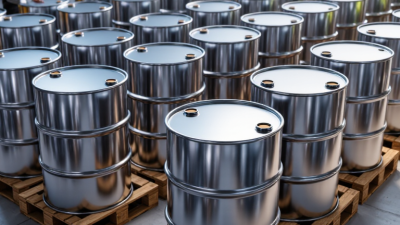
How to Choose the Right Stainless Steel Barrels for Your Business
Choosing the right stainless steel barrels starts with understanding what your business will store, move, or process. A barrel suited to dry ingredients may not fit a washdown area or frequent outdoor handling. Details matter. Consider the material grade, capacity, dimensions, lid or bung design, and interior finish together. Grades such as 304 and 316 are common options, but neither is automatically right for every product. Confirm chemical compatibility with a qualified supplier, especially when contents are acidic, salty, or otherwise reactive.
Think about daily use, not just the purchase price. Will staff lift the barrel by hand, stack it, or connect it to filling equipment? A small mismatch in diameter can disrupt a production line. A rough interior may also make cleaning harder. Ask suppliers for written specifications, material documentation, weld details, and guidance on cleaning and maintenance. If the barrels will hold food, beverages, or sensitive materials, verify that their design and documentation suit that application. Do not assume that “stainless” means maintenance-free. It does not. Even durable steel can stain, pit, or wear under unsuitable conditions.
There is no single best choice for every business. Compare a shortlist against your product, workspace, handling routine, and expected service life. A sample barrel or site check can reveal practical issues that a product sheet misses. Some details are easy to overlook. Careful questions now can prevent costly replacements later, though the final decision may still involve trade-offs.
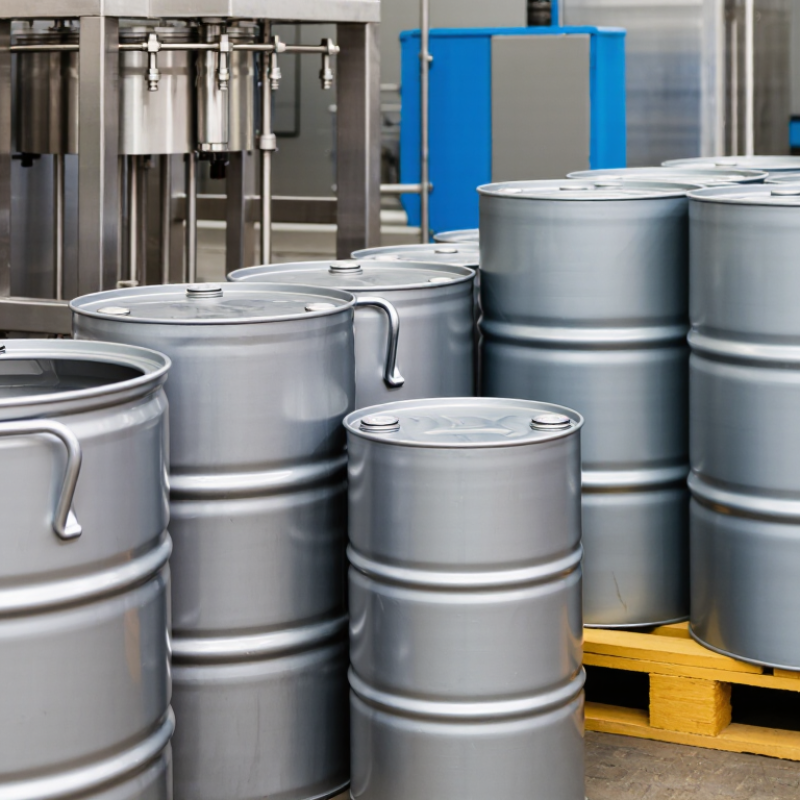
Identify Your Business’s Storage and Handling Requirements
Before selecting a stainless steel barrel, document what it will hold, how much, and for how long. Note the material’s acidity, salt content, viscosity, and storage temperature; these details can affect metal compatibility and seal performance. A barrel suited to a cool, dry ingredient may not suit a warm liquid or frequent washdowns. Check the recommended steel grade and interior finish with a qualified supplier, especially when contents are sensitive to contamination. Small details matter.
Plan around real handling conditions, not just the empty barrel’s dimensions. A filled barrel can be difficult to move by hand, so check its loaded weight against pallet, lift, and floor limits. Measure doorways, aisle turns, and storage bays. If workers will roll barrels, confirm that the rim and floor can handle repeated contact. Decide how barrels will be lifted, secured, and accessed, then match closures and fittings to that routine. These steps are easy to overlook.
Consider the storage area, too. Outdoor exposure, condensation, and cleaning chemicals can change maintenance needs. Stainless steel resists corrosion, but it is not immune to pitting, particularly with prolonged chloride exposure. Inspect welds, seams, and seals during routine checks. Even a careful plan can miss a cramped turning space or an awkward drain position; test the handling route with an empty barrel before ordering in volume.
| Business Requirement | Typical Barrel Choice | Capacity and Storage Considerations | Closure and Handling | Key Checks Before Purchase |
|---|---|---|---|---|
| Storing general-purpose liquids in a controlled area | Stainless steel tight-head barrel with bung openings | A 200 L (approximately 55 US gal) format is commonly used. Confirm the usable fill volume and allow space for safe filling and liquid expansion. | Bung openings support closed filling and dispensing systems. Confirm that pumps, fittings, and bung sizes match your equipment. | Check the liquid’s compatibility with the steel grade, closure, and any gasket material. Confirm the barrel’s dimensions fit storage racks and doorways. |
| Frequent access to solid or viscous contents | Stainless steel open-head barrel with a removable lid | Available in various capacities, including formats around 100–200 L. Choose a size that workers can safely open, inspect, and empty. | A removable lid and suitable closure ring provide wider access. Use lifting or handling equipment appropriate to the filled barrel’s weight. | Check lid and closure security, cleaning access, and whether the contents require a specific seal or contamination-control procedure. |
| Handling smaller batches or limiting the weight of individual units | Smaller stainless steel drum or barrel | Formats around 30 US gal (approximately 114 L) are available, though actual capacities vary. Smaller units can simplify batch separation and manual workflow planning. | Confirm the filled weight before planning manual movement. Use a drum trolley or other rated equipment where needed. | Compare the total filled weight—not just the empty-container weight—with site lifting limits and handling procedures. |
| Storing food, beverage, or other hygiene-sensitive products | Cleanable stainless steel barrel with a closure suited to the process | Select capacity according to batch size, turnover, and available cleaning and storage space. Avoid assuming all barrels have the same internal finish. | Choose an opening that supports the required inspection and cleaning method. Protect the barrel from contamination during filling and storage. | Verify material grade, surface finish, weld quality, cleanability, and gasket suitability against your process and applicable requirements. |
| Storing liquids that may cause corrosion | Barrel material selected for the specific chemical and service conditions | Capacity does not determine chemical suitability. Consider concentration, temperature, exposure time, and cleaning chemicals. | Check that valves, bungs, gaskets, and other wetted components are compatible as well as the barrel body. | Grade 316 stainless steel generally offers better resistance to chloride-related corrosion than grade 304, but neither grade is suitable for every chemical. Confirm compatibility with a qualified materials specialist. |
| Moving full barrels by forklift or storing them in stacks | Barrel designed and documented for the intended handling method | Plan for the filled mass, footprint, storage height, and clearances. Do not assume that a barrel is suitable for stacking based on its appearance. | Use compatible drum clamps, cradles, or lifting equipment. Follow the barrel’s rated handling and stacking instructions. | Confirm load ratings, pallet or rack compatibility, and site procedures. Inspect barrels and closures before movement. |
| Selection note: Barrel dimensions, usable capacity, material grade, and load ratings vary by design. Verify the manufacturer’s technical specifications and confirm compatibility with the contents, handling equipment, and storage conditions before purchase. | ||||
Compare Stainless Steel Grades and Corrosion Resistance
Choosing a stainless steel barrel starts with the liquid, cleaning routine, and storage conditions. Grade 304 suits many indoor applications involving water, oils, or mild products. It offers good general corrosion resistance and is widely used in fabricated containers. Grade 316 contains molybdenum, which improves resistance to chlorides and many more aggressive environments. For salty washdown areas or coastal storage, that difference can matter. Not always.
Grade 316 is not corrosion-proof. Warm chloride solutions, stagnant liquid, and residue trapped around welds can still cause pitting. Grade 304 may also perform poorly when exposed to repeated salt contact. A grade chart can make this seem simpler than it is. Check the actual chemical concentration, temperature, contact time, and cleaning agents before deciding. Small details matter.
Grade 430 is a lower-cost ferritic option for some dry, mildly corrosive settings, but it generally offers less corrosion resistance than 304 or 316. Its suitability depends on the barrel design and service conditions. Inspect welds, seams, and the interior finish, where deposits can collect. Ask for material documentation, and confirm that the stated grade covers the barrel’s product-contact surfaces. If the contents or cleaning method may change, allow for that uncertainty rather than choosing solely by purchase price.
Choose Barrel Capacity, Construction, and Closure Type
How to Choose the Right Stainless Steel Barrels for Your Business
Choose capacity around real batch sizes, filling limits, storage space, and handling routines. A barrel that is too large can leave unused headspace; an oversized full drum may also be awkward to move. For frequent transfers, smaller barrels can make handling easier. Fixed production lines may benefit from larger capacity and fewer changeovers. Measure doorways and routes, too.
Construction should match the product, cleaning method, and operating temperature. Check the steel grade and weld finish with a qualified supplier rather than assuming all stainless steel performs alike. The International Stainless Steel Forum’s Stainless Steel in Figures 2024 reports 58.4 million tonnes of global stainless steel production in 2023. That shows a broad supply base, not that every grade suits every use. Closure matters just as much: compare clamp, threaded, and removable-lid designs for sealing, inspection, and repeat cleaning. A neat specification can still overlook a dent-prone route or a hard-to-clean gasket.
Check Regulatory, Compatibility, and Cleaning Requirements
Before comparing barrel capacity or price, define what will be stored and where the barrel will operate. Food, beverage, cosmetic, and industrial uses can involve different documentation and hygiene expectations. Ask suppliers for material-grade records, weld details, surface-finish data, and traceability documents relevant to your market. Requirements vary by location and application. Have your quality or compliance lead confirm current rules; a familiar certificate may not cover every contact surface. Check lids, valves, and gaskets too. These small parts are easy to overlook.
Compatibility depends on the actual contents, not just the word stainless. Record concentration, pH, chloride level, temperature, and contact time, then compare them with the barrel’s technical data. Review detergents and sanitizers as well: a solution that cleans well can still pit metal or shorten gasket life. Test a representative cleaning cycle before committing to a large fleet. Look for smooth welds, accessible fittings, and interior geometry that drains without trapped pools. That sounds obvious, but awkward corners often stay wet. Set a written inspection routine for residue, corrosion, odor, and damaged seals, using records operators can maintain. Perfect procedures are rare. Revisit the plan when recipes or cleaning chemicals change.
How to Choose the Right Stainless Steel Barrels for Your Business
Check regulatory, compatibility, and cleaning requirements before choosing a barrel.
Typical Alloy Chemistry: 304 vs. 316 Stainless Steel
The chart shows the midpoints of typical ASTM A240 composition ranges for stainless steel sheet and plate: 304 chromium 18–20%, nickel 8–10.5%; 316 chromium 16–18%, nickel 10–14%, and molybdenum 2–3%. Molybdenum is not a specified addition for 304, so no value is plotted for that grade. These figures describe alloy chemistry, not regulatory approval. Confirm the required food-contact or other regulatory compliance, product compatibility, surface finish, weld quality, and cleaning procedure with your supplier.
Evaluate Suppliers, Lifecycle Costs, and Quality Controls
How to Choose the Right Stainless Steel Barrels for Your Business
A reliable choice starts with the job the barrel must do. Will it hold liquid, dry goods, or cleaning solutions? Compare material grade, wall thickness, capacity, closure type, and stacking needs. Ask suppliers for material certificates, dimensional tolerances, weld inspection details, and leak-test procedures. Clear answers matter. If a supplier cannot explain how defects are checked, pause before placing a large order.
Tips: Request a sample and inspect the rim, seams, and lid fit. Ask how replacement parts are handled. Keep the answers in writing; small details matter.
Compare lifecycle costs, not just the purchase price. Include cleaning time, transport, expected repairs, and the cost of downtime if a barrel fails. A lower quote may look attractive, but thin walls or inconsistent dimensions can complicate handling. Check how each supplier tracks production batches and resolves quality issues. A spreadsheet can still miss the awkward part: storage space or a lid that staff struggle to close. Test the barrel in your actual workflow, and revise your specifications if the first choice feels inconvenient.
Related Posts
-
China Top Stainless Steel Barrels Suppliers?
-
How to Choose the Right Stainless Steel Barrels for Your Needs?
-

2025 Top 5 Steel Barrels Innovations You Need to Know
-
2026 Best Water Barrels for Efficient Storage Solutions?
-
How to Choose the Right Stainless Steel IBC for Your Needs?
-
Top Plastic Tanks for Every Need Which One Is Right for You

Get in touch with us,
We will contact you shortly!
What is the difference between Unline(Non-Epoxy Coated) or Lining(Epoxy Coated) Metal Drum?

Unline drums with internally bare metal surface is more susceptible to corrosion and rust while Lining drums are internally coated with Phenolic Epoxy Coating to provide a non-reactive barrier between the drum surface and your product, less risk of contamination. Note: Our Unline drums are coated with an anti-rust agent after washing to reduce risk of rust.
What are Unline(Non-Epoxy Coated) and Lining(Epoxy Coated) drums compatible with?

In Singapore, Recon Unline Drums are usually more costly than Recon Lining Drums. Hence, we recommend Recon Unline Drums to fill aromatics like Thinner, Xylene, Toulene& other solvents like Hexane, BA, CA, EA, MC, White spirit, etc.
We recommend the lower-priced Recon Lining Drums to fill hydrocarbons like IPA, Methanol, Ethanoland oil-based products like diesel, petrol, lubricants, engine, hydraulic, base, transmission fluid, additives, waste oil, etc.;
What is the difference between Grade A and Grade B Metal Drum ?

Grading of used drums are usually based on physical conditions like rustiness, deformities and residual contents. Grade A drums are totally free from internal rust, serious dents and are easy to clean. Grade B drums have different degrees of rust internally and aesthetically inferior compared to Grade A drums.
What content is suitable to fill in a Recon Grade A or Grade B Drum?

Recon Grade A drum is suitable to fill more costly virgin grade products while Recon Grade B drum is more suitable for recycled or waste products.
What is the difference between Open Top and Close Top Drums and their usage?

Closed top drums are for water and other liquid products. Open Top drums can be used for liquid too but are primarily for more viscous products. The Open Top (or open head with a lid) allows you to get in and out of the drum with your product easier.
What type of content are Metal or Plastic Drums suitable for?

Metal drums offer additional protection when dealing with potentially flammable substances. They provide superior fire resistance, impact protection, and longevity for storing class 1, 2, and 3 volatile chemicals.
Plastic HDPE Drums are suitable for corrosive chemicals like acids, alkaline and also water-based products.
Will there be any contamination in the reconditioned metal, plastic drums or IBC tanks?

All our reconditioned containers (metal/plastic drums, carboys, IBC tanks) are washed thoroughly with specially formulated cleaning agent, rinsed with clean water, dried, and tested for possible leakages during the recondition process. Stringent quality inspection is being conducted 100% on every reconditioned product before they are qualified for sale & delivery.
What is the drum gauge(thickness) and weight for reconditioned metal drums?

Reconditioned metal drums gauge can be 0.9mm to 1.0mm all round. Their weight can vary from 16 to 18kg.
Do you sell New Packaging Products too?

Yes, we are also a distributor for new pallets, metal drums, plastic drums, carboys, IBCs and stainless-steel tanks.
What additional services do you provide apart from selling reconditioned and new containers.?

We are an NEA licensed toxic industrial waste collector, who can collect and dispose of used toxic waste containers in Singapore.
Do you offer labelling and silkscreen on the containers ?

We can provide labelling and silk-screening on the containers.
Are you able to ship overseas ?

Yes, we can arrange export our products to any country in the world.
Leading the Way
to Carbon Neutrality