How to Choose the Right Drum Container for Your Needs?

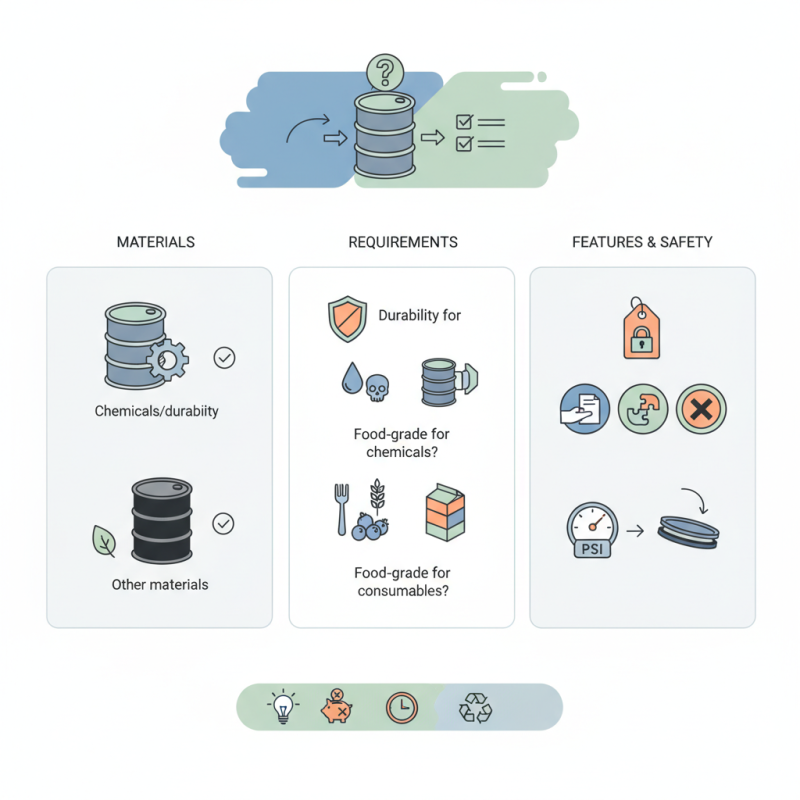
Selecting the right drum container is crucial for various applications. Whether you’re storing chemicals, food products, or other materials, the right choice ensures safety and efficiency. Drum containers come in different materials, sizes, and designs, each suited for specific needs.

Understanding your requirements is essential. Do you need a durable container for harsh chemicals? Or perhaps a food-grade option for consumables? Not all drum containers are created equal. Some might not meet your storage needs. Additionally, consider the environmental impact of your choice. Choosing recyclable materials can be beneficial.

Many overlook the importance of labeling and compatibility. A mismatched drum container can lead to hazardous situations. It’s worth reflecting on the specific features you need. Evaluate factors such as pressure ratings and sealing mechanisms. Taking these steps can prevent costly mistakes.
How to Choose the Right Drum Container for Your Needs?

Understanding the Different Types of Drum Containers Available

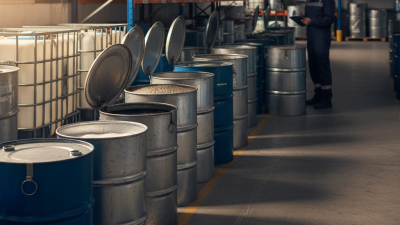
When choosing a drum container, understanding the various types is crucial. There are steel drums, plastic drums, and fiber drums. Steel drums are robust and ideal for heavy materials. They resist corrosion, making them suitable for chemicals. However, they can be heavy and hard to maneuver.

Plastic drums are lightweight and often used for liquids. They are less durable than steel but are great for transport. Consider their capacity and usage. Fiber drums are environmentally friendly and can be used for dry goods. They may not be as sturdy, raising questions about their longevity.

Choosing the right material is key to ensuring safety and efficiency.

Reflect on your specific needs. Think about the type of contents you will store. You might find one type seems perfect but doesn’t suit your requirements. Always weigh the pros and cons. It’s not just about the container but its overall impact on your operations.
Key Factors to Consider When Choosing a Drum Container

Choosing the right drum container involves several important factors. Material is key. Different materials, such as steel or plastic, offer varying levels of durability and resistance. Steel drums can handle heavy loads, while plastic ones are lighter and resistant to corrosion. Consider the contents you plan to store. Chemicals will require a container that meets specific safety standards.

Size is another crucial factor. A drum that is too small can lead to spills. Conversely, an oversized container may waste space and resources. Think about mobility as well. Some drums come with handles or wheels, making them easier to transport. This feature can simplify your operations significantly.

Also, consider sealing options. A good seal can prevent leaks and contamination. It's often about finding a balance. A container that is affordable but compromised in quality may cost more in the long run. Assess your specific needs carefully before making a decision. Finding the right fit often involves trial and error. Don't rush; take the time to evaluate various options thoroughly.

Assessing the Material Compatibility for Your Drum Container

When selecting a drum container, material compatibility is vital. Different materials react uniquely with various substances. For example, polyethylene is common for water-based liquids. However, it may not suit aggressive solvents. Consider what you will store.

Metal drums, like stainless steel, resist corrosion. They are ideal for chemicals. Yet, they may react with highly caustic substances. Analyze your contents before deciding. Plastic can be lighter and easier to handle, but ensure it meets your storage needs.

Test a small amount first, if unsure. Sometimes, a material seems suitable but fails in practice. Don't overlook the importance of temperature and pressure conditions. These factors can alter reactions over time. Reflect on past choices and learn from any mistakes made in your storage solutions.

How to Choose the Right Drum Container for Your Needs? - Assessing the Material Compatibility for Your Drum Container

Container Type Material Compatibility Typical Applications Capacity (Liters)
Open Head Drum Steel Excellent for oils and chemicals Industrial oils, lubricants 200
Closed Head Drum Polyethylene Good for acidic substances Acids, cleaning agents 220
Composite Drum Steel with Polyethylene Liner Versatile with a range of substances Hazardous chemicals 205
Fiber Drum Cardboard Suitable for dry materials Powdered ingredients, granules 180
Plastic Drum High-Density Polyethylene (HDPE) Good for a variety of chemicals Food products, non-hazardous chemicals 210

Evaluating Size and Capacity Requirements for Your Needs

How to Choose the Right Drum Container for Your Needs?

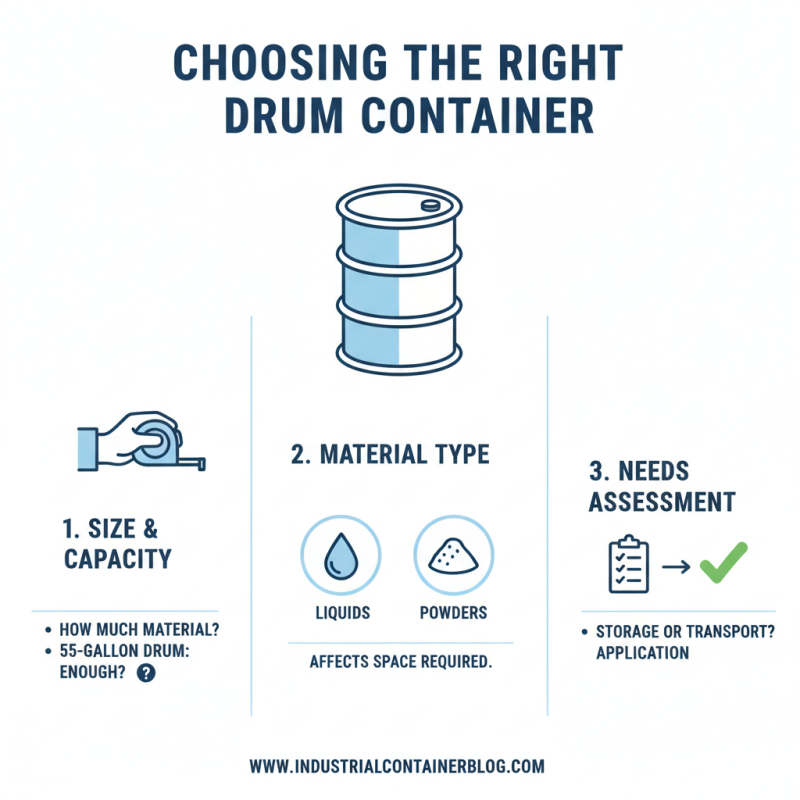
Choosing the right drum container hinges significantly on your size and capacity needs. To start, evaluate how much material you need to store or transport. Are you dealing with liquids or powders? Different materials could affect the overall space required. For instance, a 55-gallon drum may be perfect for some applications, but too small for others.

Consider the dimensions of the area where the drum will be used. Can it fit through doorways or into designated spaces? Sometimes, we overlook practical measurements. It's easy to assume a standard size will work, but dimensions matter. Also, think about future usage. Will your needs grow or remain stable?

Capacity stretches beyond mere numbers. The density of the material can greatly impact what fits in a specific volume. A heavier substance may require a smaller drum than anticipated. Reflect on past experiences with similar containers. Did you run out of space unexpectedly? Designing a plan based on what has worked—or not worked—before can guide your choice.

Analyzing Cost-Effectiveness and Lifespan of Drum Containers

How to Choose the Right Drum Container for Your Needs?

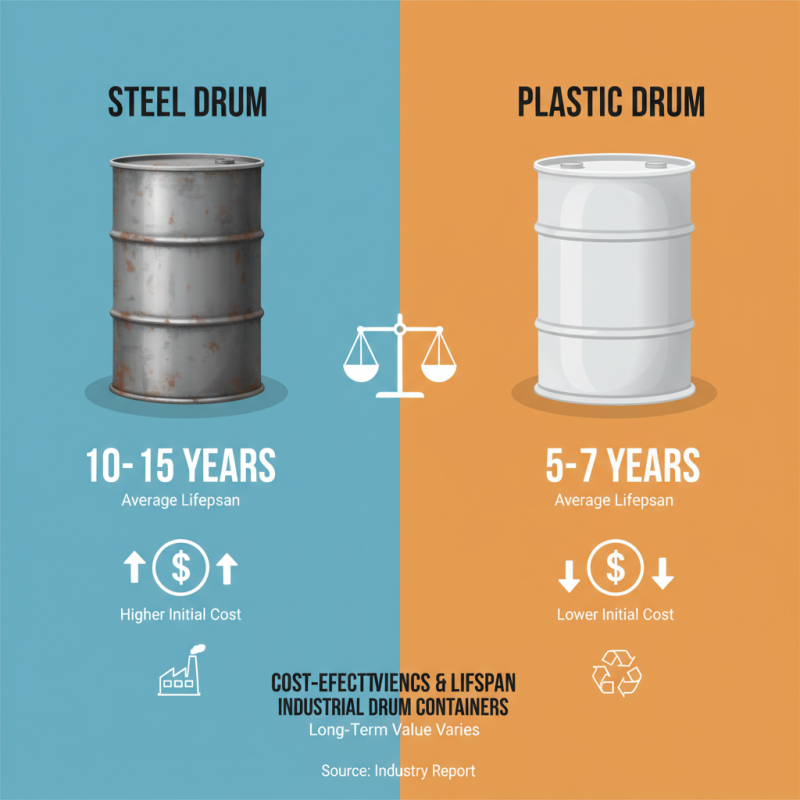
Choosing the right drum container involves careful consideration of cost-effectiveness and lifespan. Many industries utilize drum containers for storage and transportation. According to a recent industry report, the average lifespan of a steel drum is about 10 to 15 years, while plastic drums may last only 5 to 7 years. This variability impacts long-term costs significantly.

When analyzing cost-effectiveness, initial purchase price matters. Steel drums can cost between $200 to $300 each, while plastic drums range from $50 to $150. However, maintenance expenses and potential disposal costs must not be overlooked. A well-maintained steel drum can prevent leaks, while a damaged plastic drum may lead to costly hazardous waste fees.

Additionally, many companies struggle with finding the right balance between durability and cost. It's not always clear which container will provide the best value over time. Investing in a more expensive container might seem impractical at first, yet the potential savings from fewer replacements could prove beneficial. Evaluating these factors carefully can lead to better choices in drum container selection.

Get in touch with us,
We will contact you shortly!

Get in touch with us by filling up the enquiry form. We will contact you shortly!

    What is the difference between Unline(Non-Epoxy Coated) or Lining(Epoxy Coated) Metal Drum?

    What are Unline(Non-Epoxy Coated) and Lining(Epoxy Coated) drums compatible with?

    What is the difference between Grade A and Grade B Metal Drum ?

    What content is suitable to fill in a Recon Grade A or Grade B Drum?

    What is the difference between Open Top and Close Top Drums and their usage?

    What type of content are Metal or Plastic Drums suitable for?

    Will there be any contamination in the reconditioned metal, plastic drums or IBC tanks?

    What is the drum gauge(thickness) and weight for reconditioned metal drums?

    Do you sell New Packaging Products too?

    What additional services do you provide apart from selling reconditioned and new containers.?

    Do you offer labelling and silkscreen on the containers ?

    Are you able to ship overseas ?

    Leading the Way
    to Carbon Neutrality

    Drumming sustainability into every aspect of our operations, we strive to create a greener and more conscious future for generations to come.
    Contact Us
    WhatsApp
    Email
    Join Our Newsletter

    Sign up for our newsletter for exclusive discounts and latest news of new launches!

      Logo Logo Logo Logo Logo
      Scroll to Top