
How to Choose the Best Industrial Bearings for Your Needs?

Choosing the right Industrial Bearings can seem daunting. These components are crucial for the efficiency of machinery. Selecting the wrong type can lead to increased downtime and costs.

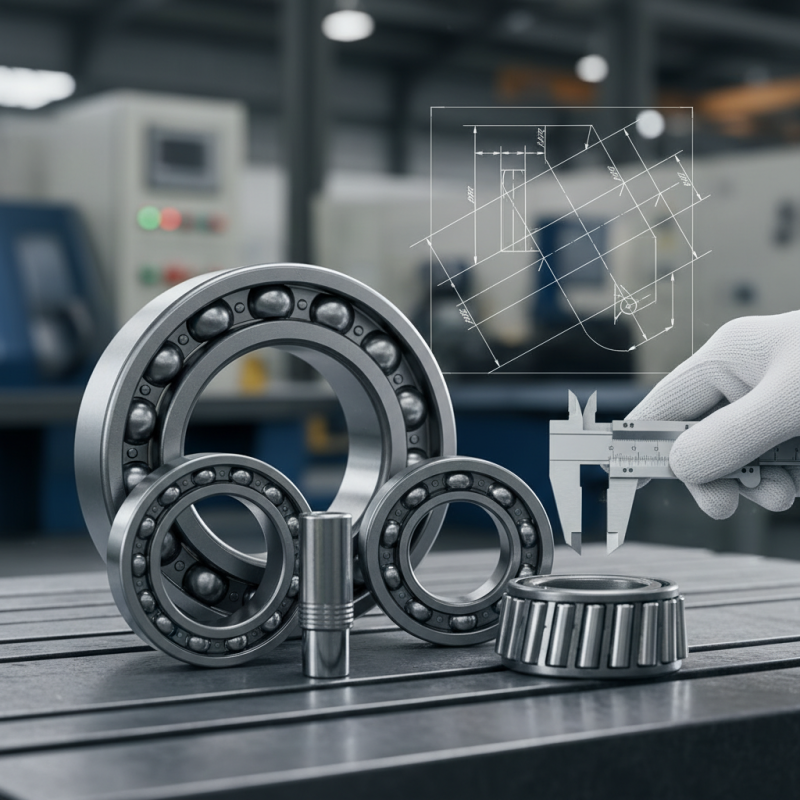
Understanding the specifications and application requirements is vital. Different industries demand various types of industrial bearings, such as spherical, deep groove, or tapered. Your choice should align with the specific workload and environmental conditions.

There is always room for improvement in your selection process. Consider consulting experts or reviewing case studies to gain insights. The goal is to achieve reliability and performance in your operations. Each choice shapes how equipment performs; every detail matters.
How to Choose the Best Industrial Bearings for Your Needs?

Understanding Different Types of Industrial Bearings and Their Applications

Choosing the right industrial bearings is crucial for optimal performance. Various types of bearings serve different purposes. Roller bearings are designed to support heavy loads, while ball bearings reduce friction for smoother operation.

Consider your application when selecting bearings. For high-speed machinery, angular contact bearings are ideal. They maintain stability and handle radial and axial loads efficiently. On the other hand, sleeve bearings are simpler and work well in low-speed scenarios.

It’s essential to evaluate environmental conditions too. Humidity or temperature fluctuations can impact bearing performance. Regular maintenance checks can prolong bearing life. However, not every bearing will meet every need perfectly. Reflect on your specific requirements and challenges to make an informed choice.


Key Factors to Consider When Selecting Industrial Bearings

When selecting industrial bearings, several key factors must be considered. Load capacity is crucial. It determines how much weight the bearing can withstand. According to a report from the International Journal of Engineering Research and Applications, choosing a bearing with insufficient load capacity can lead to premature failure and increased downtime.

Material is another critical factor. Different applications require different materials. For instance, stainless steel is ideal for corrosive environments. Yet, it may not always be the best choice for high-speed applications. Understanding the specific requirements of your machinery can guide your material selection.

**Tip:** Always consult engineering guidelines specific to your industry.

Maintenance requirements should also be factored in. Some bearings require more frequent lubrication and monitoring. Overlooking maintenance can lead to significant operational issues. An estimated 30% of bearing failures are caused by improper maintenance practices, according to industry studies.

**Tip:** Implement a regular maintenance schedule to extend bearing life.

In some situations, it’s easy to overlook the small details. Even minor misalignments can cause major problems. Choosing the right bearing involves weighing these factors carefully. Each component matters to the overall system performance.

Assessing Load Capacity and Durability in Bearing Selection

Choosing the right industrial bearings requires a deep understanding of load capacity and durability. Load capacity refers to how much weight a bearing can support without failure. It is crucial to know the expected forces it will face in operation. Overloading a bearing can lead to premature wear or catastrophic failure. Understanding dynamic and static load ratings helps make informed decisions.

Durability is equally important. The material of the bearing directly impacts its lifespan in harsh conditions. High-quality steel or ceramic materials offer greater resistance to wear and environmental factors. Operators need to consider the operating temperature and exposure to moisture or chemicals. These environmental factors can compromise the bearing's integrity over time.

It's also essential to reflect on the application. A bearing that works in one environment may not perform well in another. Users often overlook the importance of proper lubrication. Inadequate lubrication can shorten bearing life. Analyzing all these factors ensures you select the best bearing for your specific needs. The right choice can save time and reduce costs in the long run.

Evaluating Cost-Effectiveness and Maintenance Requirements of Bearings

When selecting industrial bearings, cost-effectiveness and maintenance are crucial factors. The upfront price may be tempting, but consider the long-term implications. High-quality bearings might seem costly, yet they can save money through fewer replacements and repairs. Take into account their lifespan and performance under pressure. Cheap options often lead to frequent breakdowns, ultimately increasing operational costs.

Maintenance requirements also play a vital role. Some bearings need regular lubrication and checks, which can strain resources. Others are designed for minimal upkeep, making them attractive for busy operations. Evaluate your team's capacity for maintenance versus the reliability you desire. A bearing that requires frequent attention can disrupt workflows.

Tips: Choose bearings suitable for your specific application. Analyze the operating environment, load capacity, and even temperature conditions. Don't ignore supplier recommendations, but always cross-reference with your experience. Sometimes, subjective evaluations lead to the best decisions. Pay attention to how your bearings perform over time. Reflect on previous choices and learn from those experiences. Always aim for a balance between cost, durability, and maintenance needs.

How to Choose the Best Industrial Bearings for Your Needs? - Evaluating Cost-Effectiveness and Maintenance Requirements of Bearings

Bearing Type Cost Range (USD) Load Capacity (lbs) Maintenance Requirements Lifespan (Years)
Ball Bearings $10 - $150 100 - 4000 Low; periodic lubrication 5 - 20
Roller Bearings $20 - $250 500 - 8000 Moderate; regular inspection needed 3 - 15
Thrust Bearings $30 - $400 200 - 5000 High; frequent maintenance recommended 2 - 12
Spherical Bearings $50 - $300 300 - 6000 Moderate; lubricate every 6 months 4 - 18
Magnetic Bearings $200 - $2000 Varies significantly Very low; advanced monitoring required 10 - 25

Best Practices for Sourcing and Purchasing Quality Industrial Bearings

When sourcing industrial bearings, quality is paramount. Reliable suppliers often have certifications like ISO 9001, ensuring adherence to international standards. According to a recent industry report, around 40% of bearing failures can be traced back to poor quality manufacturing processes. This emphasizes the need for diligence when selecting a supplier. Check for their experience in the field; established companies often have a proven track record.

Consider the materials and designs that fit your specific requirements. Different applications may require unique bearing types, such as deep groove ball bearings or cylindrical roller bearings. A study by the National Institute of Standards and Technology shows that using the correct bearing can extend equipment life by over 30%. Researching these technical specifications is crucial for optimal performance.

Your supplier should provide comprehensive product data. This includes detailed specifications and test results. Transparency in these areas builds trust and ensures you are making informed purchasing decisions. Regular communication with your supplier can help address concerns about product durability and performance. The goal is to navigate the complex landscape of industrial bearings effectively, acknowledging that what works well in one situation may not be suitable in another.

Get in touch with us,
We will contact you shortly!

Get in touch with us by filling up the enquiry form. We will contact you shortly!

    What is the difference between Unline(Non-Epoxy Coated) or Lining(Epoxy Coated) Metal Drum?

    What are Unline(Non-Epoxy Coated) and Lining(Epoxy Coated) drums compatible with?

    What is the difference between Grade A and Grade B Metal Drum ?

    What content is suitable to fill in a Recon Grade A or Grade B Drum?

    What is the difference between Open Top and Close Top Drums and their usage?

    What type of content are Metal or Plastic Drums suitable for?

    Will there be any contamination in the reconditioned metal, plastic drums or IBC tanks?

    What is the drum gauge(thickness) and weight for reconditioned metal drums?

    Do you sell New Packaging Products too?

    What additional services do you provide apart from selling reconditioned and new containers.?

    Do you offer labelling and silkscreen on the containers ?

    Are you able to ship overseas ?

    Leading the Way
    to Carbon Neutrality

    Drumming sustainability into every aspect of our operations, we strive to create a greener and more conscious future for generations to come.
    Contact Us
    WhatsApp
    Email
    Join Our Newsletter

    Sign up for our newsletter for exclusive discounts and latest news of new launches!

      Logo Logo Logo Logo Logo
      Scroll to Top