
How to Choose 3 1/8 Inch Thermal Paper Rolls

Choosing the right 3 1 8 Inch Thermal Paper roll is less simple than matching a width.

A roll may fit the printer but still print poorly. The core can be too large. The paper can curl, fade, or jam during busy service. These small failures matter at a checkout counter, ticket booth, or kitchen station.

Thermal-printing specialist Dr. Robert L. Hargrove says, “Paper quality is part of printer performance, not a separate purchase.” That principle deserves attention. The printer model, roll width, outer diameter, core size, and paper length must work together. A standard 3 1/8-inch roll usually measures about 80 millimeters wide, but specifications can vary slightly.

Look beyond size. Check the thermal coating and image contrast. A dark receipt should appear quickly, without excessive heat or repeated passes. For restaurants, moisture resistance can protect printed orders near steam and spilled drinks. For retail counters, smooth unwinding helps prevent sudden interruptions.

Chemical composition also deserves review. BPA-free and phenol-free options may better support workplace and customer preferences. Ask suppliers for product specifications, compliance statements, and storage guidance. Reliable documentation is more useful than vague claims.

Storage is easy to underestimate. Keep rolls sealed, dry, and away from sunlight. Heat exposure can darken unused paper before it reaches the printer. I have seen purchasing decisions focus only on price. That approach can become expensive after jams, faded records, and wasted staff time.

Some details remain easy to overlook. Printer compatibility should be tested with a sample roll. A perfect specification sheet cannot reveal every real-world problem. This guide explains how to compare 3 1 8 Inch Thermal Paper Rolls carefully, practically, and with fewer assumptions.
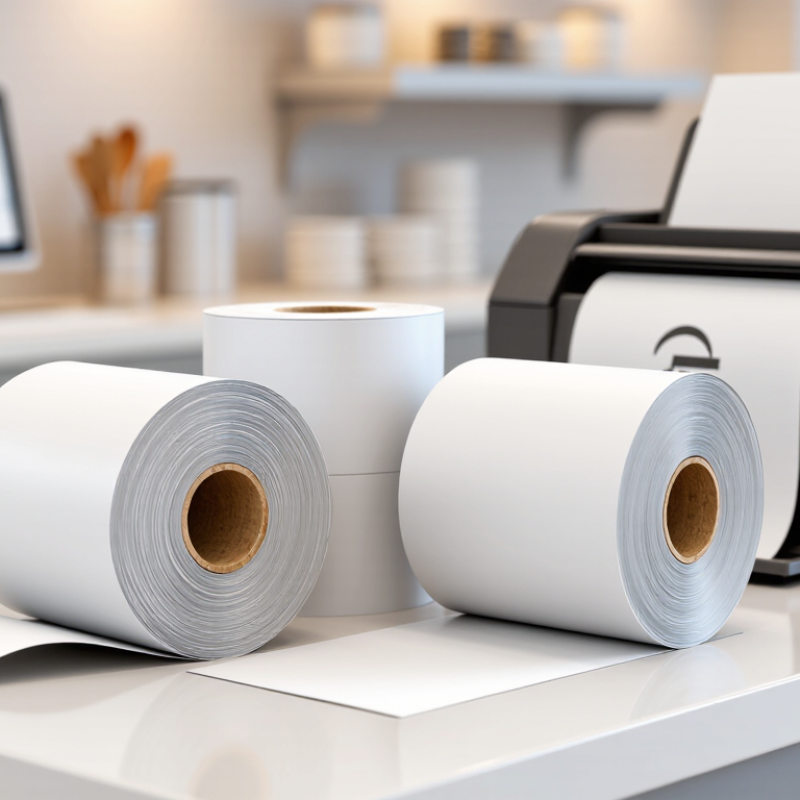
How to Choose 3 1/8 Inch Thermal Paper Rolls

Understand 3 1/8-Inch Thermal Paper Roll Specifications

How to Choose 3 1/8 Inch Thermal Paper Rolls

A 3 1/8-inch roll usually means a paper width near 79.4 millimeters. Many suppliers list it as 80 millimeters. That small difference can matter. Check the printer manual before ordering, especially when the paper guide is narrow.

Specification details deserve more attention than the label. Confirm roll width, outside diameter, core diameter, roll length, and paper thickness. Common core sizes include 7/16 inch and 1 inch, but they are not interchangeable. A thicker 80 gsm roll may provide stronger receipts, yet it holds less length than a 48 gsm roll with the same outside diameter. Measure the maximum roll diameter in millimeters. Do not rely on appearance.

Thermal sensitivity also affects daily performance. A suitable grade should create dark, even text at the printer’s normal heat setting. Excessive heat can blur fine characters and shorten printhead life.

Smithers’ The Future of Thermal Papers to 2028 identifies point-of-sale receipts and labels as important demand areas. Grand View Research’s 2024 market report projects thermal paper growth of about 6.8% annually through 2030. These figures reflect expanding use, but they do not guarantee compatibility.

A useful admission: width alone has misled me during roll checks. Test one roll for feeding, image contrast, curl, and storage stability before purchasing in bulk. Keep samples away from sunlight, moisture, plasticizers, and high temperatures. Test it properly.


Confirm Printer Compatibility and Roll Dimensions

How to Choose 3 1/8 Inch Thermal Paper Rolls

Confirm printer compatibility before buying a 3 1/8 inch thermal paper roll. The stated width equals 79.375 millimeters, while many receipt printers specify 80 millimeters. That small difference may still cause feeding problems. Check the printer manual, slot width, and maximum roll diameter. Measure the existing roll with a ruler, not only its label.

Core size matters too. Common cores include 12.7 and 25.4 millimeters, but they are not interchangeable in every printer. A roll that fits the compartment may still fail if the spindle is too large. Confirm the winding direction and print-side position. The coated side should face the thermal head. Test it by scratching the paper lightly with a fingernail; the dark mark should appear clearly.

Industry reports support careful specification checks. Grand View Research estimates the global thermal paper market reached about 4.1 billion U.S. dollars in 2023, with continued growth through 2030. Smithers’ thermal printing market analysis also identifies retail receipts and transport tickets as major application areas. High-volume use makes roll length important. A 3 1/8 inch roll with a larger diameter can reduce replacements, but it may exceed the printer’s limit. I have seen “universal” rolls jam smaller compartments. That assumption needs questioning. Verify width, core, diameter, paper coating, and heat sensitivity before ordering.

Choose the Right Paper Quality and Coating

How to Choose 3 1/8 Inch Thermal Paper Rolls

Choosing a 3 1/8 inch thermal roll starts with its coating, not its width. The heat-sensitive layer controls image density, print speed, and resistance to fading. A well-balanced coating produces sharp receipts with less energy and fewer dark streaks. A weak coating may look acceptable at first. It can fade under sunlight, heat, or friction. Smithers’ The Future of Thermal Printing to 2028 identifies continued demand for reliable thermal media across retail, transport, and service applications. That demand makes coating consistency increasingly important.

Look for a smooth base stock and an even thermal layer. Rough paper can increase printhead wear and create uneven black areas. A protective topcoat helps resist moisture, oil, and fingerprints. It matters when receipts sit in wallets, glove compartments, or busy counters. For sensitive records, ask for testing data on image stability, humidity, and light exposure. The European Commission’s Regulation (EU) 2016/2235 restricts BPA in thermal paper to 0.02% by weight, so compliance documentation deserves attention.

Test before buying in bulk. Print dense graphics, small text, and long receipts using the actual printer. Check the roll after several weeks, not only immediately. I have found that a bright image can still fade too quickly. Storage also matters: keep rolls sealed, cool, and away from direct light. A coating designed for speed may not provide the best archival performance. Choose according to use, handling conditions, and the level of evidence supplied by the converter.

Compare Core Sizes, Lengths, and Pack Options

How to Choose 3 1/8 Inch Thermal Paper Rolls

A 3 1/8-inch roll is usually 80 mm wide, but width alone does not guarantee compatibility. Check the printer manual, spindle, and maximum roll diameter before ordering. Core size matters most. Common options include 7/16-inch, 1/2-inch, and larger 1 1/2-inch cores. A tight core may not fit the spindle. A loose core can wobble during printing. I have seen this small mismatch cause faded lines and unnecessary paper jams.

Length depends on paper thickness and roll diameter. Standard options often range from about 80 to 230 feet. Longer rolls reduce replacement frequency, which helps busy counters and dispatch desks. However, they may exceed the printer’s roll compartment. Thermal paper industry research from Smithers, including The Future of Thermal Papers to 2028, identifies retail and transaction printing as important demand applications. That supports choosing capacity based on daily receipt volume, not guesswork.

Pack size affects cost, storage, and waste. Ten-roll packs suit small offices or occasional use. Twenty-five or fifty-roll cases can lower the unit price for high-volume operations. The Federal Reserve’s 2023 Diary of Consumer Payment Choice reported cash in 18% of consumer payments, showing that printed transaction records still have practical relevance. Store unopened rolls in a cool, dry cabinet. Near a window is a poor choice. I would compare usable length, core dimensions, and case quantity together; the cheapest pack is not always the most efficient.

How to Choose 3 1/8 Inch Thermal Paper Rolls

Comparison of common core sizes, roll lengths, and case pack options

For 3 1/8-inch thermal rolls, a smaller core is commonly paired with a longer roll length, while larger cores can improve compatibility with printers that require more internal clearance. The examples compare typical roll configurations and standard case quantities; always confirm the printer’s maximum roll diameter and required core size before ordering.

Evaluate Storage Conditions, Safety, and Cost

Choosing 3 1/8 inch thermal paper rolls starts with storage, not price. Keep unopened cartons near 18–25°C, with relative humidity around 40–60%. Store them flat, away from windows, heaters, plasticizers, oils, and cleaning chemicals. Direct sunlight can fade the coating before the roll reaches the printer. I have seen receipts turn gray after sitting beside a warm loading dock. That mistake is expensive.

Safety also deserves careful checking. The U.S. Environmental Protection Agency’s 2015 report, Bisphenol A Alternatives in Thermal Paper, evaluated 19 potential alternatives and highlighted differences in hazard profiles. In Europe, Commission Regulation (EU) 2016/2235 restricted bisphenol A in thermal paper to 0.02% by weight from January 2020. Ask for current safety documentation, coating information, and test data. “Phenol-free” alone may not explain the complete formulation. Labels can be incomplete.

Cost needs more than a low carton price. Compare roll length, core size, winding quality, jam frequency, and usable impressions. Smithers’ 2024 thermal paper market analysis identifies continued demand from retail, transport, and payment applications, increasing pressure on material efficiency. A longer roll may reduce replacement labor, but only if the printer accepts its diameter. Calculate cost per 1,000 printed meters, not cost per roll. I still check three sample rolls before ordering. Small differences matter. A roll that saves money but creates fading, dust, or frequent jams is not truly economical.

How to Choose 3 1/8 Inch Thermal Paper Rolls: Evaluate Storage Conditions, Safety, and Cost
Evaluation Dimension Relevant Data Recommended Selection Why It Matters Potential Risk or Cost Impact
Paper Width 3 1/8 inches nominally equals 79.375 mm. Many point-of-sale systems describe this size as 80 mm. A small width difference can cause paper tracking problems, incomplete printing, or sensor errors. Incorrect width may create waste and service interruptions even when the roll appears visually compatible.
Core Diameter Common receipt-roll cores are approximately 12.7 mm or 25.4 mm inside diameter, depending on the printer. The core controls how securely the roll sits and whether the printer can feed the paper smoothly. A mismatched core can cause slipping, skewing, or failure to fit inside the printer.
Roll Length and Maximum Roll Diameter Actual length varies by paper thickness and roll diameter. Longer rolls generally reduce roll-change frequency but may not fit every printer. Roll capacity affects staff workload, transaction speed, and the number of replacement rolls required. Shorter rolls may cost more per printed foot because packaging and handling costs are spread over less paper.
Storage Temperature For unused thermal rolls, a controlled indoor environment around 18–25°C is a practical target. Avoid prolonged exposure to heat. Heat can darken the coating prematurely and reduce image quality before use. Heat-damaged inventory can become unusable, increasing replacement and disposal costs.
Relative Humidity A moderate range of approximately 40–60% relative humidity is commonly used for indoor storage. Excess moisture can affect paper curl, feeding performance, coating stability, and print contrast. Very dry or humid conditions may increase jams, paper deformation, and inventory loss.
Light and Chemical Exposure Thermal coatings are sensitive to ultraviolet light, solvents, oils, plasticizers, adhesives, and some cleaning chemicals. Exposure may cause fading, background darkening, discoloration, or reduced readability. Receipts exposed to chemicals may become unreadable even when the paper is otherwise new.
Thermal Coating and Safety Thermal paper may use color developers such as BPA, BPS, or alternative chemistries. “Phenol-free” is a specific claim and should be supported by supplier documentation. The coating can transfer from paper to skin, so material transparency is important for frequent handling. Unverified claims can create compliance, procurement, and workplace-safety concerns.
Print Contrast and Image Durability Thermal print quality depends on printer temperature, print speed, coating sensitivity, storage, and exposure conditions. High contrast improves scanning and reduces transaction errors. Low-quality or unsuitable paper may require slower printing, more replacements, or reissued receipts.
Cost per Usable Length Compare rolls using the same unit of length rather than price per package alone. This calculation reveals whether a lower-priced roll actually provides better value. Short rolls, excessive packaging, and high shipping weight can raise the effective operating cost.
Inventory and Shelf-Life Planning Thermal paper performance declines over time when exposed to heat, humidity, light, or chemicals; the exact retention period depends on the paper formulation and storage. Controlled inventory reduces the chance of using aged or environmentally damaged rolls. Overbuying may reduce the apparent unit price but increase waste and write-offs.

Get in touch with us,
We will contact you shortly!

Get in touch with us by filling up the enquiry form. We will contact you shortly!

    What is the difference between Unline(Non-Epoxy Coated) or Lining(Epoxy Coated) Metal Drum?

    What are Unline(Non-Epoxy Coated) and Lining(Epoxy Coated) drums compatible with?

    What is the difference between Grade A and Grade B Metal Drum ?

    What content is suitable to fill in a Recon Grade A or Grade B Drum?

    What is the difference between Open Top and Close Top Drums and their usage?

    What type of content are Metal or Plastic Drums suitable for?

    Will there be any contamination in the reconditioned metal, plastic drums or IBC tanks?

    What is the drum gauge(thickness) and weight for reconditioned metal drums?

    Do you sell New Packaging Products too?

    What additional services do you provide apart from selling reconditioned and new containers.?

    Do you offer labelling and silkscreen on the containers ?

    Are you able to ship overseas ?

    Leading the Way
    to Carbon Neutrality

    Drumming sustainability into every aspect of our operations, we strive to create a greener and more conscious future for generations to come.
    Contact Us
    WhatsApp
    Email
    Join Our Newsletter

    Sign up for our newsletter for exclusive discounts and latest news of new launches!

      Logo Logo Logo Logo Logo
      Scroll to Top