
China Top Thread Fix Kit Manufacturers and Suppliers
China’s thread repair industry includes manufacturers and suppliers serving automotive workshops, machinery plants, maintenance teams, and distributors. A Thread Fix Kit may contain taps, inserts, installation tools, and a storage case, but the exact contents vary. For buyers, that difference matters. A neat product photo cannot confirm thread accuracy or insert strength.
This guide introduces China-based suppliers and the details worth checking before requesting a quotation. Compare supported thread sizes, base materials, insert types, and tool dimensions. Ask whether the supplier can provide inspection records, material information, and sample kits for evaluation. Clear answers are useful. Vague claims are not.
Look closely at practical details. Do the taps arrive protected from rust? Are the size markings easy to read under workshop lighting? Can replacement inserts be ordered later? These small points affect daily use. They also reveal how carefully a supplier considers the buyer’s work.
Still, no single checklist can guarantee a good purchase. Product quality may differ between batches, and a catalog does not prove performance. Not quite. Buyers should verify specifications directly and test samples in realistic repair conditions. The profiles ahead offer a starting point for comparing China’s Thread Fix Kit manufacturers and suppliers, while leaving room for careful questions and independent checks.
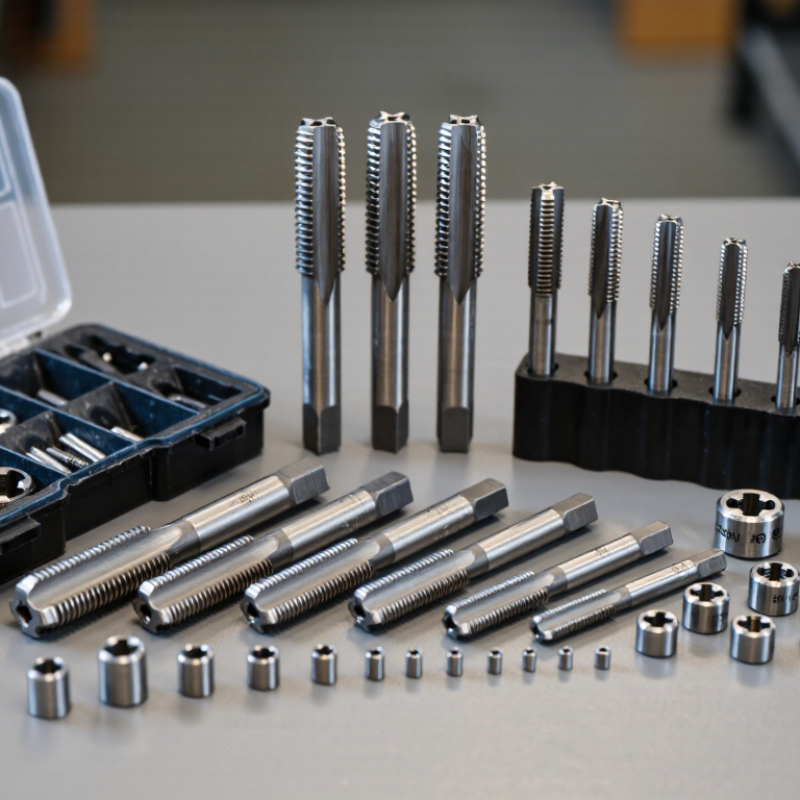
China Thread Repair Kits: 60° ISO Metric Thread Profiles and Core Components
China Top Thread Fix Kit Manufacturers and Suppliers
A reliable thread repair kit starts with the profile, not the packaging. ISO 68-1 specifies a 60° basic profile for ISO metric screw threads. ISO 261 sets preferred diameter-and-pitch combinations, while ISO 965 covers tolerance classes. These standards help buyers check whether a repair insert suits the damaged thread. The angle matters.
Most kits contain wire inserts, a correctly sized drill, a special tap, an installation mandrel, and a tang-removal tool. Each part has a distinct job. The drill prepares the damaged hole; the tap cuts a seat for the insert. The mandrel winds the insert into place, and the tang tool removes its driving tab. A clean, square start is essential. Even a small misalignment can leave a fastener feeling tight before it reaches full engagement.
When comparing suppliers in China, ask for dimensional inspection records and clear kit contents. Confirm the insert’s nominal diameter, pitch, and length, rather than relying on a broad compatibility label. ISO standards define the thread system, but they do not guarantee every kit’s machining quality. That distinction is easy to miss. I would also verify sample parts with a thread gauge; paperwork alone can look reassuring, but it cannot reveal a rough tap or uneven insert. There is no universal kit for every repair.

M6×1, M8×1.25, and M10×1.5: Common Kit Sizes and Repair Applications
China Top Thread Fix Kit Manufacturers and Suppliers
M6×1, M8×1.25, and M10×1.5: Common Kit Sizes and Repair Applications
M6×1, M8×1.25, and M10×1.5 are common coarse metric thread sizes, but they are not interchangeable. ISO 261:1998 lists these preferred diameter-and-pitch combinations: M6 uses a 1 mm pitch, M8 uses 1.25 mm, and M10 uses 1.5 mm. Small differences matter. A repair tap with the wrong pitch can damage the remaining threads instead of restoring them.
M6 kits often suit small covers, housings, and brackets. M8 repairs are common on equipment mounts and medium-sized assemblies, while M10 kits may be selected for larger fixtures or machine components. These are starting points, not load ratings. The base material, hole condition, engagement depth, and fastener specification all affect suitability. ISO 965-1:2013 describes the metric thread tolerance system, a useful reference when checking fit. In practice, matching the nominal size alone is an easy mistake. Inspect the damaged hole and confirm the pitch before choosing an insert, drill, or installation tool. There is no shortcut here.
Thread-Insert Choices: 1D, 1.5D, and 2D Lengths for Different Repairs
China Top Thread Fix Kit Manufacturers and Suppliers
Thread-insert length should match the repair, not just the kit. Here, “D” means the fastener’s nominal diameter. A 1D insert is roughly as long as that diameter and can suit shallow, lightly loaded repairs. A 1.5D insert offers more thread engagement for many general-purpose fixes. A 2D insert may help where stronger engagement is needed and the surrounding material allows a deeper hole. More length is not always better.
Tips: Check the drilled-hole depth, component thickness, and screw length before installation. Keep chips out of blind holes. The insert must not sit proud or bottom out; either can affect the fastener’s fit.
When comparing thread-fix kits from manufacturers and suppliers in China, check that the kit specifies insert lengths, drill sizes, and installation tools clearly. Match the insert to the parent material and expected load, and follow the kit’s instructions for tapping and fitting. A careful measurement beats a guess. In practice, the repair can still be imperfect if the original hole is distorted or too close to an edge. Inspect alignment and test the fastener gently before returning the part to service.
Evaluating Chinese Suppliers: ISO 965 Tolerances, Materials, and Quality Checks
When evaluating Chinese thread-fix kit suppliers, check the thread designation and tolerance class against ISO 965-1:2013. For example, 6H is commonly specified for internal metric threads, while 6g is used for external threads. Ask for inspection records showing pitch diameter, pitch, and fit—not just a statement that parts “meet ISO.” A plug gauge should enter smoothly without rocking; a tight or loose fit can signal a poor tap or inconsistent insert.
Material claims need evidence. Request the insert alloy specification, heat-treatment details where applicable, and batch traceability. ISO 898-1:2013 sets a minimum tensile strength of 800 MPa for applicable property-class 8.8 steel fasteners; this figure applies to fasteners, not automatically to repair inserts. Suppliers should test the actual kit components and identify which standard covers each part. A certificate alone is not enough. Even careful sampling can miss variation between batches.
Tips: Ask for a recent dimensional report and a sample kit. Check the tap, drill, and insert together in a scrap block of the intended material. Record the gauge results and installation torque. Small details matter. A supplier’s process may look excellent on paper, yet one unclear tolerance can still cause rework.
China Top Thread Fix Kit Manufacturers and Suppliers
ISO 965 Internal Thread Tolerance Grades: Reference Comparison
The chart compares the tolerance-grade numbers in example ISO 965 internal thread classes. For the same nominal diameter, pitch, and tolerance position, a higher grade number generally corresponds to a wider tolerance. The grade number is not a tolerance value in millimetres: actual limits depend on the thread specification. When evaluating suppliers, confirm the specified thread class and verify parts with suitable calibrated gauges.
From Tooling to Export: Comparing Kit Compatibility and Supplier Capabilities
Thread repair kits can look similar in a catalog, yet compatibility depends on more than the listed thread size. Check the thread standard, pitch, insert length, and recommended drill diameter against the repair task. A kit for a small aluminum housing may not suit a deeper repair in a steel component. Confirm that the tap, installation tool, and inserts are designed to work together. Fit matters.
Supplier capability also shows in the details behind the tooling. Ask how dimensions are checked, how replacement inserts are packed, and whether product specifications stay consistent across batches. For export orders, clarify carton quantities, labeling, lead times, and which shipping documents the supplier can provide. A polished sample is useful, but it cannot prove every production batch will match. Request measurable specifications and inspect a sample where practical.
Tips: Share the exact thread size, pitch, base material, and repair depth before requesting a quotation. Ask for a clear kit contents list and a compatibility chart. Check that the tools feel aligned during a trial installation, without forcing them. Even experienced buyers can miss a pitch mismatch when comparing crowded product tables, so keep the original fastener nearby for a final check.
| Kit Type | Typical Application and Compatibility | Common Kit Components | Supplier Capability to Compare | Evidence to Request |
|---|---|---|---|---|
| Wire thread insert repair kit | Repairs damaged internal threads by installing a wire insert. Kits are specific to thread size and pitch; metric and Unified sizes are not interchangeable. | Matching STI tap, installation tool, inserts, and— for tang-style inserts— a tang break-off tool. Drill size and tool configuration depend on the specified thread. | Availability of the required thread series, size range, insert material, and replacement inserts. | Size-and-pitch list, kit contents, insert material specification, and a sample kit or component inspection record. |
| Solid thread insert kit | Repairs an internal thread using a solid insert with an external thread. The prepared hole and installation steps depend on the insert design. | Typically includes the specified insert and installation tooling; drilling, counterboring, or tapping tools may be included or supplied separately. | Ability to supply the complete tooling combination for the chosen insert design and thread specification. | Installation instructions, tool list, dimensional drawing, and confirmation of which preparation tools are included. |
| Thread chaser or thread-restoring kit | Used to clean or reform lightly damaged threads. It does not replace missing thread material in a severely stripped hole. | Thread-restoring taps, dies, or files in the listed sizes and thread forms. | Coverage of the required thread forms and clear size identification on tools and packaging. | Size chart, thread-form details, tool markings, and guidance distinguishing restoration tools from thread-replacement kits. |
| Spark-plug thread repair kit | Designed for spark-plug port repairs rather than general-purpose fastener holes. Compatibility depends on the engine application and required reach. | Application-specific inserts and installation tooling; included components vary by kit configuration. | Ability to identify application limits and provide the correct insert dimensions and installation procedure. | Application chart, insert dimensions, instructions, and confirmation of compatibility for the intended cylinder head. |
| Supplier documentation and export support | Relevant to any kit type; compatibility should be confirmed against thread standard, nominal size, pitch, and repair method before ordering. | Product drawings, itemized packing list, installation instructions, and packaging appropriate to the order. | Document control, inspection records, sample availability, export packing, and ability to provide shipment documents requested by the buyer. | Current specification sheet, sample inspection report, packaging details, and a written list of available export documents. |
| Compatibility note: Kit contents and supported sizes vary by supplier and configuration. Verify the exact thread standard, nominal diameter, pitch, repair method, and included tooling against the supplier’s current documentation before purchase. | ||||
Article Source:
Get in touch with us,
We will contact you shortly!
What is the difference between Unline(Non-Epoxy Coated) or Lining(Epoxy Coated) Metal Drum?

Unline drums with internally bare metal surface is more susceptible to corrosion and rust while Lining drums are internally coated with Phenolic Epoxy Coating to provide a non-reactive barrier between the drum surface and your product, less risk of contamination. Note: Our Unline drums are coated with an anti-rust agent after washing to reduce risk of rust.
What are Unline(Non-Epoxy Coated) and Lining(Epoxy Coated) drums compatible with?

In Singapore, Recon Unline Drums are usually more costly than Recon Lining Drums. Hence, we recommend Recon Unline Drums to fill aromatics like Thinner, Xylene, Toulene& other solvents like Hexane, BA, CA, EA, MC, White spirit, etc.
We recommend the lower-priced Recon Lining Drums to fill hydrocarbons like IPA, Methanol, Ethanoland oil-based products like diesel, petrol, lubricants, engine, hydraulic, base, transmission fluid, additives, waste oil, etc.;
What is the difference between Grade A and Grade B Metal Drum ?

Grading of used drums are usually based on physical conditions like rustiness, deformities and residual contents. Grade A drums are totally free from internal rust, serious dents and are easy to clean. Grade B drums have different degrees of rust internally and aesthetically inferior compared to Grade A drums.
What content is suitable to fill in a Recon Grade A or Grade B Drum?

Recon Grade A drum is suitable to fill more costly virgin grade products while Recon Grade B drum is more suitable for recycled or waste products.
What is the difference between Open Top and Close Top Drums and their usage?

Closed top drums are for water and other liquid products. Open Top drums can be used for liquid too but are primarily for more viscous products. The Open Top (or open head with a lid) allows you to get in and out of the drum with your product easier.
What type of content are Metal or Plastic Drums suitable for?

Metal drums offer additional protection when dealing with potentially flammable substances. They provide superior fire resistance, impact protection, and longevity for storing class 1, 2, and 3 volatile chemicals.
Plastic HDPE Drums are suitable for corrosive chemicals like acids, alkaline and also water-based products.
Will there be any contamination in the reconditioned metal, plastic drums or IBC tanks?

All our reconditioned containers (metal/plastic drums, carboys, IBC tanks) are washed thoroughly with specially formulated cleaning agent, rinsed with clean water, dried, and tested for possible leakages during the recondition process. Stringent quality inspection is being conducted 100% on every reconditioned product before they are qualified for sale & delivery.
What is the drum gauge(thickness) and weight for reconditioned metal drums?

Reconditioned metal drums gauge can be 0.9mm to 1.0mm all round. Their weight can vary from 16 to 18kg.
Do you sell New Packaging Products too?

Yes, we are also a distributor for new pallets, metal drums, plastic drums, carboys, IBCs and stainless-steel tanks.
What additional services do you provide apart from selling reconditioned and new containers.?

We are an NEA licensed toxic industrial waste collector, who can collect and dispose of used toxic waste containers in Singapore.
Do you offer labelling and silkscreen on the containers ?

We can provide labelling and silk-screening on the containers.
Are you able to ship overseas ?

Yes, we can arrange export our products to any country in the world.
Leading the Way
to Carbon Neutrality








