
China Best Solar Power System for RVs Buying Guide
Choosing a Solar Power System For Rv can feel simple until the campsite becomes quiet and cloudy. A dependable setup must match your travel habits, roof space, battery needs, and available sunlight. This guide examines China-made RV solar systems with practical buying decisions in mind. It focuses on performance, component quality, safety, and long-term value.
Real-world use matters. A 400-watt array may run lights, phones, a router, and a small refrigerator. It may not support an air conditioner for an entire night. Battery capacity, inverter efficiency, wiring, and weather conditions can change the result. Small details matter. A loose connector can waste energy. Poor ventilation can shorten battery life. Clear installation instructions also make a difference during roadside repairs.
Manufacturers in China offer many system sizes and configurations. Some provide flexible panels, lithium batteries, MPPT controllers, and monitoring apps. Buyers should check test reports, warranty terms, production experience, and after-sales support. Look for recognized safety standards where applicable, and confirm whether the supplier can provide traceable specifications. Marketing claims are not always complete. I have found that estimated daily output often looks better than real campsite performance. That gap deserves attention.
This introduction sets a practical direction for comparing complete kits and individual components. It considers different RV layouts, seasonal travel, power budgets, and installation limits. The best choice is not always the largest system. It is the system that works predictably, remains serviceable, and fits your actual journey. Expect trade-offs. That is normal.
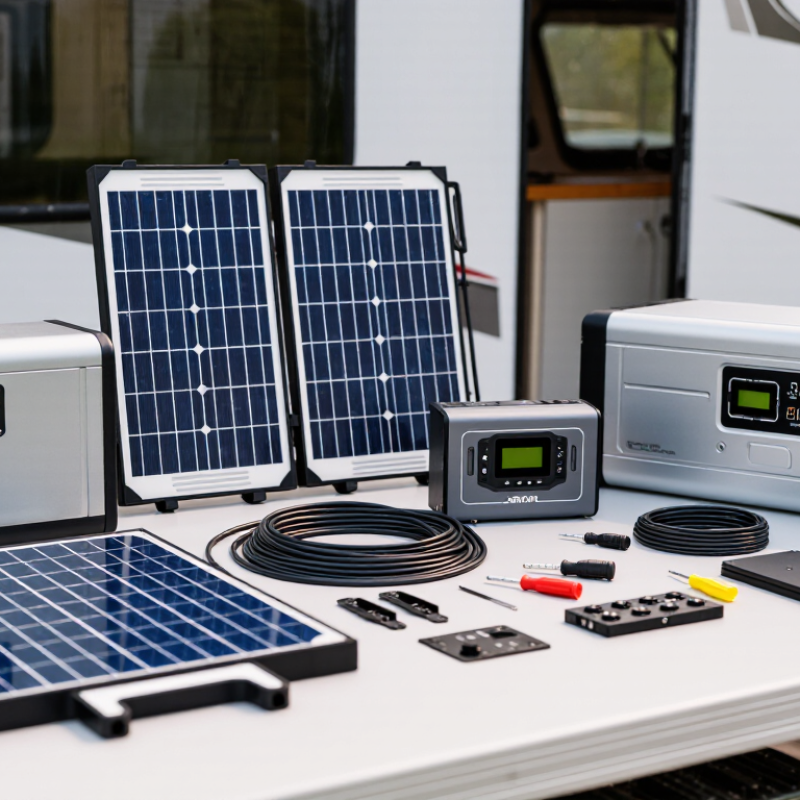
Assess RV Energy Needs: Size a 200–600 W Solar Array
China Best Solar Power System for RVs Buying Guide
Sizing an RV solar array starts with measured energy use, not roof space. List each appliance, its wattage, and daily operating hours. A 12-volt compressor refrigerator may consume 400–800 watt-hours daily, depending on weather and ventilation. Add lights, water pumps, fans, device charging, and an inverter’s standby draw. A small setup may need 200 watts. Regular off-grid camping often suits 400–600 watts.
daily watt-hours ÷ peak sun hours ÷ 0.75.
The final factor allows for wiring, controller, temperature, and cloudy-weather losses. For example, 1,200 watt-hours divided by four sun hours and 0.75 requires about 400 watts. Panel ratings are laboratory figures. Real output can disappoint under roof shade, dust, low winter sun, or poor panel angles. My early estimates were too optimistic because I ignored evening inverter use.
Tips: Track battery usage for three camping days before buying. Check the roof after noon for shadows from vents and air conditioners. Leave space for safe wiring and future expansion. Confirm that the charge controller matches the array voltage and current. A 600-watt array will not solve every problem. Heavy heating appliances can exceed its daily production quickly. Reduce unnecessary loads, and size the battery to cover overnight demand.



Get in touch with us,
We will contact you shortly!
What is the difference between Unline(Non-Epoxy Coated) or Lining(Epoxy Coated) Metal Drum?

What are Unline(Non-Epoxy Coated) and Lining(Epoxy Coated) drums compatible with?
What is the difference between Grade A and Grade B Metal Drum ?
What content is suitable to fill in a Recon Grade A or Grade B Drum?
What is the difference between Open Top and Close Top Drums and their usage?
What type of content are Metal or Plastic Drums suitable for?
Will there be any contamination in the reconditioned metal, plastic drums or IBC tanks?
What is the drum gauge(thickness) and weight for reconditioned metal drums?
Do you sell New Packaging Products too?
What additional services do you provide apart from selling reconditioned and new containers.?
Do you offer labelling and silkscreen on the containers ?
Are you able to ship overseas ?
Leading the Way
to Carbon Neutrality