
China Top 10 Seamless Carbon Steel Pipe Suppliers
Choosing a reliable Seamless Carbon Steel Pipe Supplier requires more than comparing prices. Buyers must examine steel chemistry, manufacturing routes, heat treatment, testing records, and delivery performance. A pipe may look flawless outside, yet contain inconsistent wall thickness or incomplete traceability.
The World Steel Association reported global crude steel production of approximately 1.89 billion tonnes in 2023. Its October 2024 Short Range Outlook also projected global steel demand growth in 2025. These figures indicate continued pressure on mills, raw-material planning, and quality control. The U.S. Geological Survey’s Mineral Commodity Summaries further highlights steel’s dependence on iron ore, metallurgical coal, and recycled scrap. Supply conditions can affect both cost and lead time.
Technical compliance matters. ASTM A106, ASTM A53, API 5L, and EN standards serve different applications. A qualified supplier should provide mill test certificates, heat numbers, hydrostatic results, dimensional reports, and third-party inspection access. Small details matter. A stamped heat number can protect an entire project.
Quality expert W. Edwards Deming stated, “Quality comes not from inspection, but from the improvement of the production process.” His principle remains highly relevant to seamless pipe manufacturing. Inspection catches problems, but process discipline prevents many of them.
This ranking considers production capacity, export experience, certification systems, product range, and customer feedback. It is not perfect. Supplier performance can change with ownership, equipment upgrades, or market conditions. Therefore, readers should verify current certificates and project references before signing contracts. The following China-based suppliers represent notable options for oil and gas, construction, boiler, energy, and mechanical engineering applications.
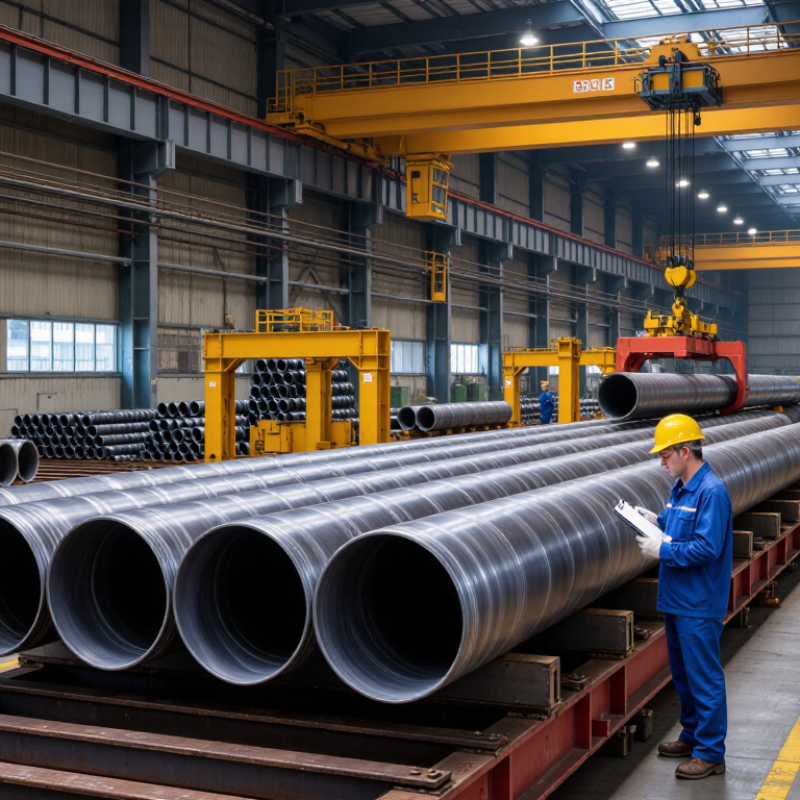
Seamless Carbon Steel Pipe Basics: Grades, Sizes, and ASTM Standards
Seamless carbon steel pipe is manufactured without a welded seam, giving it consistent strength under pressure. Common grades include ASTM A106 Grade B for elevated-temperature service and ASTM A53 for general mechanical applications. ASTM A333 is often selected for low-temperature conditions. Grade selection should match temperature, pressure, fluid, and corrosion exposure. A familiar grade is not automatically the correct grade.
Pipe size includes outside diameter and wall thickness. Schedules such as SCH 40, SCH 80, and SCH 160 indicate increasing wall thickness, though exact dimensions depend on nominal pipe size. For example, a 2-inch pipe does not measure exactly 2 inches outside. This detail causes costly ordering errors. ASTM specifications also define testing, chemistry, tensile strength, and manufacturing requirements. They do not replace a project-specific engineering review.
Tips: Request the material test certificate, heat number, dimensional report, and hydrostatic test record. Check whether the certificate matches the delivered markings. Confirm NDE requirements, end finishes, length tolerance, and packing before shipment. A qualified supplier should explain deviations clearly, not hide them in technical language. In practice, documentation can look complete while one key requirement is missing. Review it line by line. Temperature data is sometimes overlooked. That small oversight may affect service reliability.



Get in touch with us,
We will contact you shortly!
What is the difference between Unline(Non-Epoxy Coated) or Lining(Epoxy Coated) Metal Drum?

What are Unline(Non-Epoxy Coated) and Lining(Epoxy Coated) drums compatible with?
What is the difference between Grade A and Grade B Metal Drum ?
What content is suitable to fill in a Recon Grade A or Grade B Drum?
What is the difference between Open Top and Close Top Drums and their usage?
What type of content are Metal or Plastic Drums suitable for?
Will there be any contamination in the reconditioned metal, plastic drums or IBC tanks?
What is the drum gauge(thickness) and weight for reconditioned metal drums?
Do you sell New Packaging Products too?
What additional services do you provide apart from selling reconditioned and new containers.?
Do you offer labelling and silkscreen on the containers ?
Are you able to ship overseas ?
Leading the Way
to Carbon Neutrality