
China Top 10 Green Machine Optical Sorter Manufacturers
China’s optical sorting industry is changing how recyclers and food processors manage mixed materials. This article introduces the China Top 10 Green Machine Optical Sorter Manufacturers, focusing on practical capabilities rather than promotional claims. Each manufacturer is examined through equipment design, sorting accuracy, service experience, and application coverage.
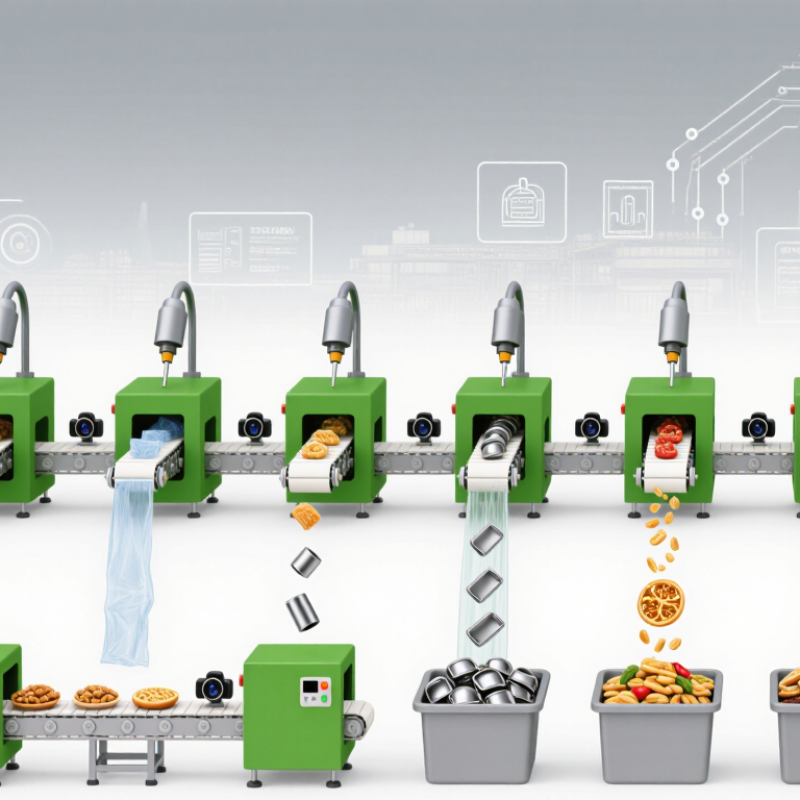
The Green Machine Optical Sorter can identify differences in color, shape, size, and material composition. In a recycling line, cameras inspect items moving rapidly across a conveyor. Air jets then remove selected contaminants within milliseconds. Food processors may use similar systems to separate stones, discolored grains, or foreign particles. Real performance depends on lighting, calibration, belt speed, and material consistency. Small details matter.
Not every supplier offers the same level of support. Some provide strong hardware but limited operator training. Others respond quickly but lack broad project experience. This comparison considers installation guidance, software updates, spare parts, warranty clarity, and after-sales communication. Factory visits, test reports, and customer feedback can strengthen evaluation, although public information is sometimes incomplete. That limitation deserves attention.
No ranking is flawless. Buyer priorities differ.
A reliable selection should match the sorter with the material, throughput, contamination level, and local service conditions. Readers should verify technical specifications directly with manufacturers before making decisions. The following overview aims to provide a balanced starting point for buyers, engineers, and distributors assessing China’s Green Machine Optical Sorter manufacturing landscape.
What Green Machine Optical Sorters Are and How They Work
Green machine optical sorters are automated systems that identify and separate materials by color, shape, size, and composition. They are widely used in recycling plants, food processing, and industrial material recovery. A typical unit includes a conveyor belt, lighting system, optical sensors, software, and precisely placed air nozzles.
Materials pass beneath controlled illumination at a steady speed. Cameras and spectral sensors capture reflected light from each item. The software compares these signals with programmed quality targets. When the system detects a selected material, compressed air pushes it into another outlet. Dark plastic, clear packaging, paper, and unwanted fragments may follow different paths. Accurate results depend on belt loading, material spacing, dust control, and stable lighting.
Tips: Keep the belt evenly loaded and clean the sensor window frequently. Calibrate the sorter when material color or moisture changes. Test samples manually, because software can misread dirty or overlapping items. In practical operation, small objects sometimes escape detection, especially when they are hidden beneath larger pieces. This is a real limitation, not a simple maintenance mistake. Operators should record error patterns and adjust speed, air pressure, or recognition settings carefully. Excessive air pressure can waste energy and disturb correctly sorted materials. Sensor data helps, but experienced observation remains important.

Key Criteria for Evaluating Chinese Optical Sorter Manufacturers
Evaluating Chinese optical sorter manufacturers requires more than comparing catalog prices. Start with the sorting task: material type, particle size, moisture, color variation, and expected throughput. Ask for test results using your own samples. Factory videos are useful, but they cannot replace a controlled trial.
Examine the sensor system in detail. RGB cameras may handle visible color differences, while near-infrared sensors can identify some material variations. Check resolution, response speed, air-jet timing, and rejection accuracy under continuous operation. Request measurements for both false rejects and missed contaminants. Small errors become expensive at high volume. Pay attention to dust protection, lighting stability, and access to wear parts.
A reliable manufacturer should provide traceable quality records, clear installation requirements, and documented maintenance procedures. Verify production capacity through an on-site audit or an independent inspection. Ask how software updates, remote diagnostics, training, and spare parts are managed. Certifications matter, but their scope should match the machine and destination market. A polished demonstration can still hide difficult cleaning or unstable feeding. No supplier performs perfectly in every material. That is why acceptance criteria, sample reports, warranty terms, and response times should be written before purchase. Cost per hour is often more revealing than the initial quotation.
China’s Top 10 Green Machine Optical Sorter Manufacturers
China’s Top 10 Green Machine Optical Sorter Manufacturers are gaining attention in recycling, food processing, and industrial material recovery. Their equipment commonly uses high-resolution cameras, near-infrared sensors, and air-jet rejection systems. These technologies identify color, shape, polymer type, and surface differences at high belt speeds. Cleaner separation can reduce manual sorting and lower material waste.
A reliable manufacturer should provide more than attractive machine photos. Factory testing, sample trials, calibration records, and clear performance data matter. Buyers should ask about throughput, recognition accuracy, compressed-air use, belt width, and maintenance access. A well-designed control cabinet should support quick adjustments during changing material conditions. Remote diagnostics can also shorten downtime, especially for overseas facilities.
Real operating experience reveals practical differences. Dust, moisture, mixed packaging, and uneven feeding may reduce sorting accuracy. No ranking is perfect. Some manufacturers communicate technical limits better than others, while certain machines perform differently after installation. Buyers should inspect production lines, request verified samples, and review service response times. Spare valve kits, lighting modules, and sensor protection deserve attention before signing a contract. Careful comparison helps users choose equipment that fits their material stream, labor capacity, and long-term environmental targets.
China Top 10 Green Machine Optical Sorter Manufacturers - China’s Top 10 Green Machine Optical Sorter Manufacturers
| Ranking | Evaluation Dimension | Typical Industry Specification | Green Manufacturing Relevance | Recommended Verification Point |
|---|---|---|---|---|
| 1 | Energy efficiency | Lower-power LED lighting and optimized air systems | Reduces electricity consumption during continuous sorting operations. | Request measured power consumption per operating hour and per tonne of material. |
| 2 | Sorting accuracy | Common commercial target: 90%–99%, depending on material and contamination level | Higher accuracy reduces reprocessing, waste, and unnecessary transport. | Review test results using the customer’s actual feedstock and impurity profile. |
| 3 | Throughput capacity | Approximately 2–15 tonnes per hour, depending on belt width, material density, and configuration | Higher throughput can improve resource recovery while lowering energy use per tonne. | Confirm capacity under real operating conditions rather than empty-belt ratings. |
| 4 | Detection technology | Color cameras, near-infrared sensors, hyperspectral sensing, or combined systems | Multi-sensor detection improves recovery of recyclable materials and reduces reject volumes. | Check the detectable material types, particle-size range, and sensor resolution. |
| 5 | Compressed-air consumption | Typically about 0.2–0.6 m³/min for medium-scale equipment, depending on ejector design | Efficient valves and optimized nozzle layouts reduce operating emissions and utility costs. | Ask for air consumption at the intended pressure, usually around 0.6–0.8 MPa. |
| 6 | Material compatibility | Common applications include plastics, glass, metals, minerals, grains, and food products | Broad compatibility allows one facility to recover more material streams. | Verify whether the machine supports wet, dusty, mixed-size, or irregularly shaped materials. |
| 7 | Operating stability | Industrial systems commonly use enclosed electrical cabinets, belt tracking, and automatic fault alerts | Stable operation minimizes downtime, waste accumulation, and repeated start-up energy use. | Review uptime records, maintenance intervals, alarm functions, and spare-part availability. |
| 8 | Environmental protection | Typical features include dust-resistant enclosures, sealed sensor windows, and washable contact areas | Protection from dust and moisture extends service life and reduces replacement waste. | Confirm the enclosure rating, cleaning procedure, and allowable temperature and humidity range. |
| 9 | Control and connectivity | Touchscreen control, recipe management, remote diagnostics, and production-data export | Real-time monitoring supports process optimization and prevents unnecessary machine operation. | Check compatibility with plant-management systems and availability of remote technical support. |
| 10 | Lifecycle sustainability | Modular components, replaceable wear parts, software upgrades, and documented maintenance plans | Longer equipment life lowers embodied carbon, disposal volume, and total resource consumption. | Evaluate warranty terms, upgrade paths, repairability, and the availability of recyclable components. |
Note: The figures shown are general industry reference ranges for optical sorting equipment. Actual performance depends on material composition, particle size, moisture, belt speed, contamination level, machine configuration, and site conditions.
Core Technologies and Applications of Optical Sorting Equipment
China Top 10 Green Machine Optical Sorter Manufacturers
Core Technologies and Applications of Optical Sorting Equipment
Optical sorting equipment is moving beyond simple color detection. Modern systems combine RGB cameras, near-infrared sensors, hyperspectral imaging, and laser profiles. These tools identify color, polymer type, moisture, shape, and surface defects. FAO data reports that 13.2% of food was lost before retail in 2021. Better sorting can separate damaged produce and reduce unnecessary handling. Yet sorting cannot repair weak storage or poor collection systems. That limitation deserves attention.
For recycling plants, performance depends on stable feeding, accurate classification, and rapid pneumatic ejection. NIR sensors identify many plastics, while metal detection and air jets remove unwanted materials. The European Environment Agency reported an EU municipal waste recycling rate of about 49% in 2022. Optical sorters can separate bottles, films, paper, glass, and organic contaminants. Operators should measure purity and recovery together. Chasing one number may hide material losses. A clean laboratory result can mislead. Real waste is dusty, crushed, wet, and inconsistent.
Tips: Test representative samples before selecting equipment. Include labels, dark objects, moisture, and mixed materials. Request verified results, not showroom speed. Check accuracy at the planned belt width and throughput. Schedule lens cleaning and sensor calibration. Small errors accumulate. The UNEP Food Waste Index Report 2024 estimated 1.05 billion tonnes of food waste in 2022. Pilot trials should run across several shifts. One perfect sample proves little.
How to Select the Right Chinese Optical Sorter Manufacturer
China Top 10 Green Machine Optical Sorter Manufacturers
Selecting a Chinese optical sorter manufacturer requires more than comparing catalog prices. The Global E-waste Monitor 2024 reported 62 million tonnes of e-waste in 2022, but only 22.3% was formally recycled. This pressure increases demand for accurate separation, especially in mixed plastics, metals, textiles, and electronic components. Confirm whether the manufacturer has tested your actual material, not a clean showroom sample. Ask for results covering purity, recovery, throughput, moisture, dust, and particle-size variation.
Check the machine’s sensor configuration carefully. Near-infrared, RGB cameras, electromagnetic systems, and artificial intelligence serve different materials. A credible supplier should explain detection limits in plain language. Request a recorded factory trial using at least several hundred kilograms of your feedstock. Inspect the reject stream afterward. Small missed pieces can damage product value. Very high advertised accuracy may hide ideal laboratory conditions. That deserves doubt.
The World Bank’s What a Waste 2.0 projects municipal waste could reach 3.4 billion tonnes annually by 2050. Service capacity therefore matters as much as hardware. Review spare-parts availability, remote diagnostics, operator training, software updates, and response times. Verify quality systems, export documentation, electrical compatibility, and installation records in similar plants. I once treated throughput as the main measure. That was too simplistic. Stable performance during dust, vibration, and changing material composition is usually more valuable than a higher figure on paper. A short pilot may reveal the truth.
Article Source:
Get in touch with us,
We will contact you shortly!
What is the difference between Unline(Non-Epoxy Coated) or Lining(Epoxy Coated) Metal Drum?

Unline drums with internally bare metal surface is more susceptible to corrosion and rust while Lining drums are internally coated with Phenolic Epoxy Coating to provide a non-reactive barrier between the drum surface and your product, less risk of contamination. Note: Our Unline drums are coated with an anti-rust agent after washing to reduce risk of rust.
What are Unline(Non-Epoxy Coated) and Lining(Epoxy Coated) drums compatible with?

In Singapore, Recon Unline Drums are usually more costly than Recon Lining Drums. Hence, we recommend Recon Unline Drums to fill aromatics like Thinner, Xylene, Toulene& other solvents like Hexane, BA, CA, EA, MC, White spirit, etc.
We recommend the lower-priced Recon Lining Drums to fill hydrocarbons like IPA, Methanol, Ethanoland oil-based products like diesel, petrol, lubricants, engine, hydraulic, base, transmission fluid, additives, waste oil, etc.;
What is the difference between Grade A and Grade B Metal Drum ?

Grading of used drums are usually based on physical conditions like rustiness, deformities and residual contents. Grade A drums are totally free from internal rust, serious dents and are easy to clean. Grade B drums have different degrees of rust internally and aesthetically inferior compared to Grade A drums.
What content is suitable to fill in a Recon Grade A or Grade B Drum?

Recon Grade A drum is suitable to fill more costly virgin grade products while Recon Grade B drum is more suitable for recycled or waste products.
What is the difference between Open Top and Close Top Drums and their usage?

Closed top drums are for water and other liquid products. Open Top drums can be used for liquid too but are primarily for more viscous products. The Open Top (or open head with a lid) allows you to get in and out of the drum with your product easier.
What type of content are Metal or Plastic Drums suitable for?

Metal drums offer additional protection when dealing with potentially flammable substances. They provide superior fire resistance, impact protection, and longevity for storing class 1, 2, and 3 volatile chemicals.
Plastic HDPE Drums are suitable for corrosive chemicals like acids, alkaline and also water-based products.
Will there be any contamination in the reconditioned metal, plastic drums or IBC tanks?

All our reconditioned containers (metal/plastic drums, carboys, IBC tanks) are washed thoroughly with specially formulated cleaning agent, rinsed with clean water, dried, and tested for possible leakages during the recondition process. Stringent quality inspection is being conducted 100% on every reconditioned product before they are qualified for sale & delivery.
What is the drum gauge(thickness) and weight for reconditioned metal drums?

Reconditioned metal drums gauge can be 0.9mm to 1.0mm all round. Their weight can vary from 16 to 18kg.
Do you sell New Packaging Products too?

Yes, we are also a distributor for new pallets, metal drums, plastic drums, carboys, IBCs and stainless-steel tanks.
What additional services do you provide apart from selling reconditioned and new containers.?

We are an NEA licensed toxic industrial waste collector, who can collect and dispose of used toxic waste containers in Singapore.
Do you offer labelling and silkscreen on the containers ?

We can provide labelling and silk-screening on the containers.
Are you able to ship overseas ?

Yes, we can arrange export our products to any country in the world.
Leading the Way
to Carbon Neutrality