
China Top 10 Electric Block Machine Manufacturers

China is a major sourcing hub for concrete production equipment, but choosing a supplier takes more than comparing prices. The right Electric Block Machine should match your required block dimensions, daily output, available floor space, and local material mix. Cement quality, aggregate size, and moisture can all affect production results. Small details matter.

This guide to China’s top 10 Electric Block Machine manufacturers introduces companies for buyers to investigate, not a guaranteed ranking of quality. It considers product range, manufacturing experience, customization options, technical support, and the clarity of available specifications. These points can help narrow a shortlist, but they cannot replace direct verification. Ask for machine videos, component details, installation requirements, and references from comparable projects. Where possible, inspect the factory or arrange an independent assessment.

A reliable supplier should explain production capacity and operating requirements in practical terms, rather than relying on broad promises. Buyers should also confirm spare-parts availability, training, warranty scope, and response times before placing an order. No list is perfect. Company information and product lines can change, and a machine that performs well in one plant may not suit another. Use this overview as a starting point, then compare each option against your site conditions, budget, and production goals.
China Top 10 Electric Block Machine Manufacturers

What Electric Block Machines Are and How They Work

An electric block machine turns a measured mix of cement, sand, aggregate, and water into compact masonry units. Electric motors power the mixer and forming system, while a control panel lets operators manage the production cycle. The mix should hold its shape when pressed, rather than crumble or slump. Small changes matter.

In a typical cycle, the operator fills a mold and starts compaction. Depending on the machine design, vibration and hydraulic pressure work together to settle the material into the mold’s corners. The head then lifts, and the fresh block is released onto a pallet. Mold dimensions determine the block’s shape, but careful feeding helps keep its edges consistent.

The machine does not correct a poor mix. Too much water can weaken freshly formed blocks; too little may leave rough faces or incomplete corners. Operators often check moisture by hand and adjust the batch when sand conditions change. That judgment takes practice. After molding, blocks need controlled curing so they gain strength without drying too quickly. Actual settings vary with the mix, mold, and machine, so trial batches and routine inspections remain useful—even when the control panel makes production look simple.


China’s Electric Block Machine Manufacturing Landscape

China’s Electric Block Machine Manufacturing Landscape

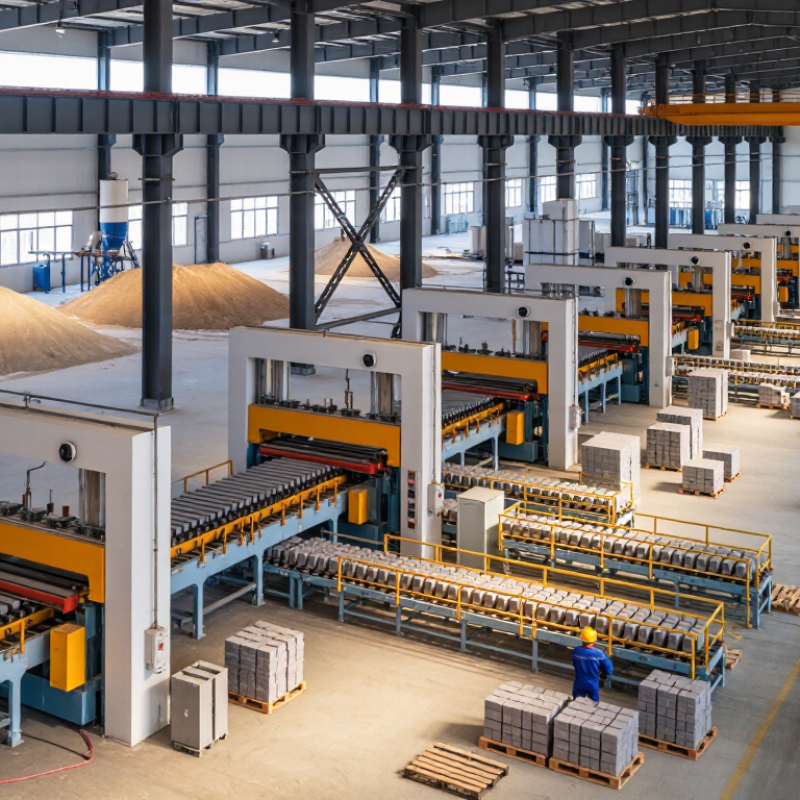
China’s electric block machine manufacturing landscape includes compact units for small yards and automated lines for larger plants. Many manufacturers combine steel frames, electric motors, hydraulic systems, and interchangeable molds. The machine is only part of the setup. Aggregate grading, moisture, and curing conditions also affect block consistency.

Buyers often compare output claims, mold-change time, power needs, and access to replacement parts. Ask how production figures were measured, and whether they reflect a full shift or ideal conditions. Practical checks matter. Observe a test run, inspect welds and guards, and listen for uneven vibration or unusual motor noise. These details can reveal more than a polished specification sheet.

Production capabilities vary across suppliers, and not every factory serves the same level of automation. A smaller workshop may offer flexible mold options, while a larger operation may provide integrated batching and stacking equipment. Neither choice is automatically better. Site layout, operator skills, and local maintenance support should guide the decision. Some brochures still leave important questions unanswered; buyers may need to request clearer details on wear parts, installation, and realistic cycle times.

China Top 10 Electric Block Machine Manufacturers – China’s Electric Block Machine Manufacturing Landscape

Common nominal widths of concrete masonry units (CMUs) provide a useful reference for the range of block formats that electric block machines may be configured to produce. These are standard product dimensions, not manufacturer-specific data.

Reference dimensions: common nominal CMU sizes are 4, 6, 8, and 12 inches wide, with a typical nominal face size of 16 × 8 inches. Actual dimensions are generally smaller to accommodate mortar joints; available formats vary by market and product specification.

Criteria for Evaluating Leading Chinese Manufacturers

China Top 10 Electric Block Machine Manufacturers

Criteria for Evaluating Leading Chinese Manufacturers

A useful evaluation starts with the machine’s actual output, not a headline capacity figure. Ask for production data using the block size, mix, and shift length you expect. Request a sample run and check dimensions, edge quality, and consistency across several blocks. A clean sample is helpful, but it does not prove stable performance over a full shift. Numbers matter.

Review the electric drive, hydraulic system, mold-change process, and controls as one working setup. Ask how operators identify faults and which wear parts need regular replacement. Clear maintenance schedules and readable manuals can matter more than extra automation. Check whether the supplier can provide installation guidance, training, and spare-part lead times in writing. Small details count. Compare warranty terms carefully, and speak with customers using similar materials and production volumes where possible. Factory visits can reveal practical details, such as how parts are stored and finished. Still, one visit is only a snapshot. A supplier may look capable while leaving unclear costs, so record unanswered questions before making a decision.

China Top 10 Electric Block Machine Manufacturers - Criteria for Evaluating Leading Chinese Manufacturers

This table is a suggested, evidence-based framework for comparing manufacturers; it does not rank or report verified performance for any specific company. The weights are indicative and total 100 points. Compare production figures only when machine configuration, block dimensions, mix, curing conditions, and operating time are stated.

Evaluation Criterion Suggested Weight Evidence to Request How to Evaluate
Product range and configuration 18 points Machine configuration options, compatible mold formats, block type and size range, and documented customization limits. Check that the proposed configuration matches the buyer’s products and production requirements. Confirm which accessories and molds are included in the quotation.
Verified production capacity 15 points Cycle-time records and output data specifying block dimensions, number of blocks per cycle, operating hours, and whether figures are theoretical or demonstrated. Compare like-for-like figures. Request a witnessed production test using an agreed product and mix; do not compare hourly claims with daily claims without reconciling operating time.
Product quality and consistency 12 points Test reports for sample blocks, dimensional inspection records, and details of the applicable product specification and test methods. Verify that test results identify the tested product and method. Assess strength, dimensions, appearance, and batch-to-batch consistency against the buyer’s requirements and applicable local standards.
Automation and process control 12 points Process description, control-system functions, operating and fault records, and details of manual tasks required during normal production. Confirm which stages are automated, such as batching, feeding, pressing, and pallet handling. Evaluate controls through a machine demonstration rather than relying only on feature lists.
Energy and resource use 10 points Measured electricity consumption and, where applicable, water and compressed-air use, with the production conditions and measurement period stated. Compare consumption per operating hour or per accepted block under equivalent conditions. Treat figures without a stated measurement method as unverified.
Build quality and component documentation 10 points Equipment drawings, maintenance schedules, component specifications, safety documentation, and inspection or commissioning records. Review documentation for completeness and consistency with the supplied machine. Inspect the frame, guards, hydraulic and electrical systems, and accessible service points where possible.
Installation, training, and technical support 8 points Installation scope, training plan, support channels, response arrangements, and availability of technical documentation in the required language. Confirm responsibilities, timelines, and any travel or service charges in writing. Assess whether operators and maintenance personnel will receive appropriate training.
Spare parts and maintenance support 5 points Recommended spare-parts list, lead-time estimates, maintenance intervals, and procedures for ordering parts. Check that critical wear parts are identified and that the proposed support arrangement fits the buyer’s location and planned operating schedule.
Safety and regulatory documentation 5 points Risk information, machine operating instructions, guarding details, emergency-stop information, and certificates or declarations relevant to the destination market. Verify documents against the specific machine and the destination market’s requirements. Do not treat a general certificate as proof that every market requirement is met.
Commercial terms and project transparency 5 points Itemized quotation, scope of supply, delivery schedule, payment terms, warranty conditions, acceptance criteria, and exclusions. Compare quotations on the same scope and delivery basis. Ensure performance commitments, commissioning requirements, and remedies are clearly documented.
Total suggested weighting 100 points Use the same evidence checklist and scoring approach for every manufacturer being considered.

Profiles of Ten Notable Chinese Electric Block Machine Manufacturers

China’s electric block-machine sector includes manufacturers with different strengths, and a useful profile looks beyond catalogue photos. One supplier may specialize in compact machines for small yards. Another may build high-output lines with automated material feeding. A third may emphasize interchangeable molds. Some focus on hydraulic systems; others offer simpler controls that are easier to maintain. These distinctions matter on a real production floor.

Other profiles include manufacturers serving custom projects, makers of mobile equipment, and suppliers pairing presses with batching systems. One group may stand out for practical operator training. Another may provide detailed spare-parts support. A tenth might offer flexible configurations for buyers balancing output, floor space, and budget. Check the details. Ask for cycle-time data, sample-block measurements, and a clear account of what the quoted line includes. A polished demonstration is helpful, but it cannot replace a factory visit or a trial using the intended mix.

Experience also means noticing small limitations. A machine that performs well with one aggregate blend may need adjustment with another. Noise, cleaning access, and mold-change time can be easy to overlook. Compare service response times and request references from similar installations. The strongest manufacturer profile is not necessarily the one with the largest machine; it is the one whose equipment and support fit the buyer’s actual operating conditions.

Comparing Manufacturers by Capacity, Technology, and Service Support

When comparing China’s top electric block machine manufacturers, judge capacity under your actual production conditions. Advertised daily output may assume long shifts, a particular block size, and minimal changeovers. Ask for hourly output, mold-change time, and reject rates. A machine producing hollow blocks may run differently from one making paving units. Request a production trial using your mix and aggregates. Numbers matter. So do the conditions behind them.

Tips: Compare the control system, vibration settings, and hydraulic consistency. Ask whether operators can adjust recipes without specialist help. A neat brochure can still leave practical questions unanswered.

Service support matters after delivery. Check installation guidance, operator training, spare-part availability, and typical response times for technical questions. Clarify what the warranty covers and which parts are considered consumables. For a fair comparison, ask each manufacturer to quote the same output target, mold configuration, and service scope. Then compare operating needs, not just purchase price. A remote factory may offer strong capacity but slower support; that trade-off deserves attention. Even careful estimates can miss local downtime, so leave room for revision.

Get in touch with us,
We will contact you shortly!

Get in touch with us by filling up the enquiry form. We will contact you shortly!

    What is the difference between Unline(Non-Epoxy Coated) or Lining(Epoxy Coated) Metal Drum?

    What are Unline(Non-Epoxy Coated) and Lining(Epoxy Coated) drums compatible with?

    What is the difference between Grade A and Grade B Metal Drum ?

    What content is suitable to fill in a Recon Grade A or Grade B Drum?

    What is the difference between Open Top and Close Top Drums and their usage?

    What type of content are Metal or Plastic Drums suitable for?

    Will there be any contamination in the reconditioned metal, plastic drums or IBC tanks?

    What is the drum gauge(thickness) and weight for reconditioned metal drums?

    Do you sell New Packaging Products too?

    What additional services do you provide apart from selling reconditioned and new containers.?

    Do you offer labelling and silkscreen on the containers ?

    Are you able to ship overseas ?

    Leading the Way
    to Carbon Neutrality

    Drumming sustainability into every aspect of our operations, we strive to create a greener and more conscious future for generations to come.
    Contact Us
    WhatsApp
    Email
    Join Our Newsletter

    Sign up for our newsletter for exclusive discounts and latest news of new launches!

      Logo Logo Logo Logo Logo
      Scroll to Top